


Meta's Metaverse Reality Check: Inside the $70 Billion Strategic Pivot That's Reshaping XR
Meta's metaverse division is facing a dramatic financial reckoning that's sending shockwaves through the spatial computing industry. The company's Reality Labs unit is preparing for substantial budget reductions that could fundamentally reshape the future of virtual and augmented reality development. After years of massive investments with limited returns, Meta is reportedly planning to slash billions from its metaverse budget, with potential cuts reaching 30% by 2026. The market's reaction has been telling—Meta's stock jumped 5.7% on the news, suggesting investors have long been skeptical of the company's ambitious virtual world vision. This strategic pivot represents more than just cost-cutting; it signals a fundamental shift in how Big Tech approaches emerging technologies and long-term innovation bets.
The financial reality behind the cuts
Let's be brutally honest about what we're looking at here—these numbers tell a sobering story about what happens when ambitious vision meets unforgiving market realities. Reality Labs has burned through more than $70 billion since 2021, with annual losses consistently ranging from $10-16 billion. To put this unprecedented spending in perspective, Meta's Reality Labs division has been spending approximately $20 billion annually on XR development—more than NASA's entire annual budget and representing one of the largest R&D investments in tech history.
The division's most recent quarterly loss hit $4.4 billion, underscoring just how quickly these experimental projects consume capital without generating meaningful returns. What makes these figures particularly striking is their sustained nature combined with the strategic timing of the pivot. This isn't happening because Meta lacks resources—quite the opposite. Meta's core advertising business continues to thrive, with advertising accounting for approximately 99% of total revenue. The company is essentially making a calculated decision: "We have the money, but we're choosing to allocate it differently."
The proposed cuts represent a fundamental reassessment of technological priorities rather than financial desperation. CEO Mark Zuckerberg has requested that executives find at least 10% in budget cuts across the company, but the metaverse teams are being asked to go much deeper—potentially hitting 30% reductions. These reductions will likely include layoffs starting as early as January, affecting teams working on Quest headsets, Horizon Worlds, and other VR initiatives. This timing suggests Meta is preparing for a fundamentally different approach to innovation—one focused on measurable returns rather than speculative futures.
What this means for Meta's VR and AR hardware
The budget cuts reveal crucial insights about market adoption patterns and consumer behavior that extend far beyond Meta's internal decisions. Meta's Quest headsets, despite technological improvements, haven't achieved the mass adoption needed to justify such massive capital allocation. Here's what makes this particularly telling: Meta dominates hardware shipments with 74.6%-77% market share, yet still struggles to reach sustainable profitability. This market dominance without profitability reveals fundamental challenges with the VR value proposition itself, not just Meta's execution.
The contrast becomes even more stark when examining specific product performance. Horizon Worlds, Meta's social VR platform, is expected to see significant budget cuts, reflecting the platform's struggle with sustained user engagement. Meta's Horizon Worlds has struggled with low user engagement and minimal adoption despite aggressive marketing campaigns. The challenge isn't just building virtual spaces—it's creating experiences compelling enough to change daily user behavior patterns.
However, the cuts aren't uniform across all hardware initiatives, and this selectivity reveals Meta's evolving understanding of consumer preferences. The company's Ray-Ban smart glasses represent a genuine success story that's informing future strategy. Ray-Ban Meta glasses sold more than 2 million units since October 2023, demonstrating consumer appetite for augmented experiences that enhance rather than replace reality. The key differentiator? These glasses integrate seamlessly into existing lifestyles rather than requiring behavior changes.
This success hasn't gone unnoticed in Meta's strategic planning. Meta has extended its partnership with Luxottica until 2030, suggesting these more consumer-friendly devices will continue receiving investment even as immersive VR projects face the chopping block. This represents a profound shift from "destination technology" that requires dedicated time and space, toward "always-on technology" that enhances everyday activities.
The strategic pivot toward AI integration
Meta's budget reallocation reflects a broader recognition that artificial intelligence offers more immediate paths to user value and business sustainability than virtual worlds. Meta is now heavily investing in developing large AI models, AI chatbots, and AI-enabled hardware, positioning artificial intelligence as the primary driver of future innovation. This shift acknowledges a crucial difference: AI can enhance Meta's existing platforms immediately, while the metaverse requires users to adopt entirely new behaviors and hardware.
The practical implications of this pivot extend beyond just reallocating engineering resources. Meta is now focusing on integrating AI into its existing platforms and developing AI-powered features that can enhance user experience in both real and virtual spaces. This means AI chatbots that provide immediate utility, computer vision systems that understand real-world contexts, and recommendation algorithms that create value within existing user workflows rather than requiring new ones.
The communication shift from Meta's leadership has been equally dramatic and revealing. Zuckerberg has largely stopped mentioning the metaverse in public and on company earnings calls, instead focusing discussions on AI capabilities and more practical AR applications. When a CEO stops discussing what was supposed to be the company's transformational future, it signals not just tactical adjustments but fundamental strategic recalibration.
This pivot represents more than following market trends—it acknowledges that technological capabilities must align with user readiness and business models. This development's significance in AI history cannot be overstated; it solidifies AI's position as the dominant technological frontier of this decade. Meta's experience demonstrates that even unlimited resources can't accelerate market adoption beyond natural user behavior evolution.
Industry implications and competitive landscape
Meta's strategic retreat is forcing the entire XR ecosystem to confront uncomfortable truths about market timing, user adoption patterns, and sustainable business models. The timeline for widespread adoption and commercial viability of the metaverse is far longer than initially anticipated, forcing industry participants to reassess their own investment strategies and timelines. This reality check comes at a crucial moment when the spatial computing market size is projected to surge from $20.43 billion in 2025 to $85.56 billion by 2030, suggesting the underlying potential remains strong despite current challenges.
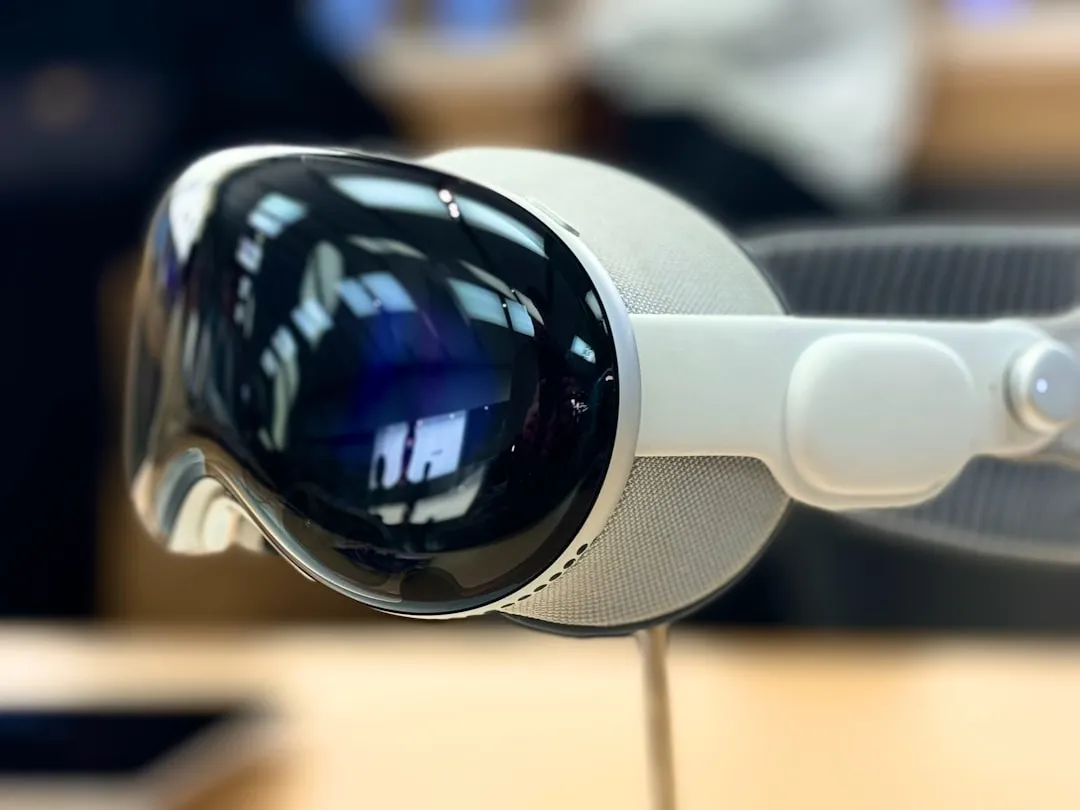
The competitive dynamics reveal why Meta's approach may have been fundamentally flawed from the beginning. Major competitors like Apple and Microsoft took approaches more focused on augmented reality and enterprise applications, which now appears prescient given market response patterns. Apple's Vision Pro strategy, while not a runaway success, focuses on productivity and mixed reality rather than pure virtual worlds, potentially creating more sustainable adoption paths.
Yet even Apple's premium approach faces similar market headwinds, providing additional validation for Meta's pivot. Apple's Vision Pro secured 5.2% market share in 2024, though Apple Vision Pro's shipments fell 43% quarter-over-quarter in Q4 2024. This demonstrates that even Apple's marketing prowess, premium positioning, and ecosystem integration can't overcome fundamental market readiness issues.
The broader lesson emerging from these market dynamics concerns the relationship between technological possibility and user adoption timelines. Experts predict that while the metaverse as a virtual world may take decades to materialize, the integration of AI into immersive technologies will continue to advance. This prediction aligns perfectly with Meta's new strategy of combining AI capabilities with practical AR applications, potentially creating sustainable business models rather than speculative investments.
What comes next for spatial computing?
Meta's budget cuts may paradoxically benefit the broader XR ecosystem by forcing a more realistic, sustainable approach to innovation and market development. The key takeaway is a clear shift from speculative, high-cost investments in a distant metaverse future to a pragmatic, AI-first approach focused on immediate returns. This recalibration could lead to sustainable innovation cycles rather than the boom-and-bust patterns that have characterized VR development for decades.
The AI integration pathway offers genuinely promising opportunities for practical spatial computing applications. Instead of asking users to adopt completely new interaction paradigms, the industry is moving toward technology that intelligently enhances existing behaviors and workflows. The Ray-Ban smart glasses success demonstrates this approach has genuine market traction—people want technology that improves their actual lives rather than replacing them with virtual alternatives.
Despite the dramatic budget reductions, Meta hasn't abandoned its long-term AR vision entirely. Meta plans to release its first consumer AR glasses around 2027, suggesting the company still sees AR as a viable long-term platform. The crucial difference now is that these devices will likely emphasize practical AI-powered features—visual search, real-time translation, contextual information overlay—rather than immersive virtual experiences or social VR environments.
For developers, entrepreneurs, and enterprises in the XR space, Meta's pivot creates both immediate challenges and longer-term opportunities. While reduced funding from Meta may impact some VR-focused projects, the shift represents a fundamental change in Meta's technical priorities that could actually lead to more sustainable business models. Companies building AI-enhanced AR experiences for practical, everyday use cases are likely to find more receptive markets than those focused purely on immersive virtual environments.
The focus on AI-enhanced experiences rather than purely immersive virtual environments represents more than tactical adjustment—it's recognition that successful technology adoption follows user needs rather than forcing users to adapt to technological capabilities. This isn't a retreat from innovation; it's innovation that serves human behavior patterns rather than attempting to reshape them entirely.











Comments
Be the first, drop a comment!