



The Meta Quest 3S just dropped to its lowest price ever at $249 for Cyber Monday, down from the usual $299, creating the most compelling entry point into modern VR we've seen to date. Here's what makes this significant—we're not just talking about another routine discount. This aggressive pricing puts a flagship VR headset in direct competition with traditional gaming consoles, fundamentally altering how consumers approach their holiday entertainment purchases.
This pricing strategy represents Meta's broader gamble on democratizing mixed reality technology. When a headset powered by the same Snapdragon XR2 Gen 2 processor as the premium Quest 3, complete with 8GB of RAM and color passthrough cameras, costs less than many gaming controllers, it signals a watershed moment for VR accessibility. The timing couldn't be more strategic—holiday shoppers are actively comparing entertainment options, and these price points are reshaping entire category perceptions.
How Aggressive Holiday Pricing is Reshaping Tech Competition
The current retail landscape reveals sophisticated strategies that extend far beyond simple discounts. Major retailers are leveraging VR headsets as unexpected traffic drivers, with Amazon moving over 30,000 units in just a few days during their Black Friday promotion alone.
What's particularly compelling is how bundle strategies vary across retailers. Amazon offers the 128GB model for $250 plus a $50 credit, while Best Buy includes free games alongside identical discounting. These variations reflect retailers learning to use cutting-edge technology as promotional anchors that drive broader shopping behavior across multiple product categories.
The 256GB variant's pricing at $330 with Batman: Arkham Shadow bundled ($50 value) plus three-month Meta Horizon+ subscriptions ($24 value) demonstrates how hardware subsidization can create effective value propositions. This approach mirrors traditional gaming console economics, but VR technology has now matured enough to support this business model at scale.
The Broader Market Implications of Console-Competitive Pricing
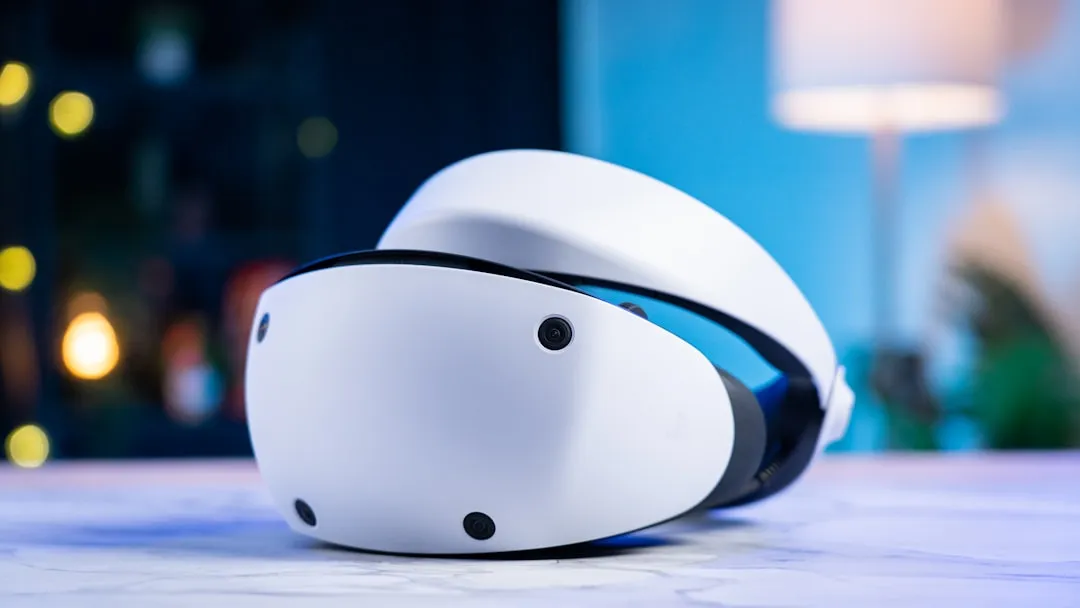
At $249, the Quest 3S sits just $50 above the discontinued Quest 2 while delivering specs that approach the $599 Quest 3. This positioning creates pressure across multiple categories. Nintendo, Sony, and Microsoft must now consider how VR pricing affects their own value propositions, while competitors like PlayStation VR2 at $399 (requiring a PS5) and Apple's Vision Pro at $3,499 face increased scrutiny over their cost-benefit equations.
The technical specifications justify this market disruption. The Quest 3S delivers 1832×1920 pixels per eye with a 96-97° field of view, wireless design eliminating cables and external sensors, and over two hours of battery life. The Snapdragon XR2 Gen 2 processor provides double the graphical processing power of previous generations, while external USB-C battery packs can extend sessions indefinitely.
CNET's VR expert Scott Stein captured the market significance perfectly, calling it "by far the best value in VR" and noting that it represents "a really good upgraded device with a lot of headroom for mixed-reality evolution in the years to come."
What This Pricing Strategy Reveals About Industry Evolution
Meta's willingness to subsidize hardware costs reflects confidence in their long-term platform strategy. By running what amounts to a loss-leader play, they're betting on software sales, content subscriptions, and developer ecosystem growth to generate sustainable revenue streams. Recent data supports this approach: Meta captured 70.8% market share in Q3 2024, with global AR/VR headset shipments growing 12.8%.
This aggressive pricing also establishes new precedents for how emerging technologies transition from early adopter markets to mainstream acceptance. When premium mixed reality features become accessible during promotional periods, adoption curves can accelerate dramatically. The Quest 3S's success at removing cost barriers could influence pricing strategies for future tech categories, from AR glasses to neural interfaces.
The competitive response will be telling. Traditional console manufacturers have built their ecosystems around hardware subsidization, but VR's wireless, standalone nature creates different economic dynamics. Meta's approach essentially forces competitors to justify premium pricing through demonstrably superior experiences rather than relying on established brand loyalty or exclusive content libraries.
Setting Consumer Expectations for Technology Value
Modern shoppers increasingly expect premium features at accessible price points, particularly during promotional periods. The Quest 3S at $249 doesn't just offer good value—it fundamentally alters expectations about what cutting-edge technology should cost. This creates ripple effects across consumer electronics, from smartphone pricing to laptop positioning.
The success of these VR pricing strategies provides crucial market research at scale. Meta and retailers are gathering data about price sensitivity, adoption patterns, and usage behaviors that will inform future product development. If consumers respond positively to mixed reality at these price points, we're likely to see similar aggressive pricing become standard practice for next-generation technologies.
PRO TIP: Maximizing Your Investment at These Price Points
The 128GB model serves most users perfectly—VR games are generally smaller than traditional console titles, and cloud storage makes content management flexible. However, if you're planning deep ecosystem engagement, the 256GB model's current pricing offers superior long-term value.
Don't overlook the Meta Horizon+ subscription trial, providing access to 40+ rotating games. Combined with the included Batman: Arkham Shadow, you're looking at immediate content worth more than the hardware discount itself.
The Long-Term Vision Behind Aggressive Pricing
This isn't just about holiday sales—it's about establishing VR as a legitimate alternative to traditional entertainment setups. Meta's pricing strategy suggests they view 2025 as a pivotal year for mainstream VR adoption, with hardware accessibility serving as the crucial catalyst.
The Quest 3S at $249 represents more than exceptional value; it's evidence of an industry confident enough in its content ecosystem and technological maturity to prioritize market expansion over short-term profits. When flagship VR performance becomes available at console-competitive pricing, we're not just witnessing a good deal—we're observing the foundational pricing that could define how an entire generation approaches digital entertainment.
At these price points, the Meta Quest 3S isn't just the best VR headset deal we've seen—it might be the pricing strategy that finally brings virtual reality to everyone.














Comments
Be the first, drop a comment!