


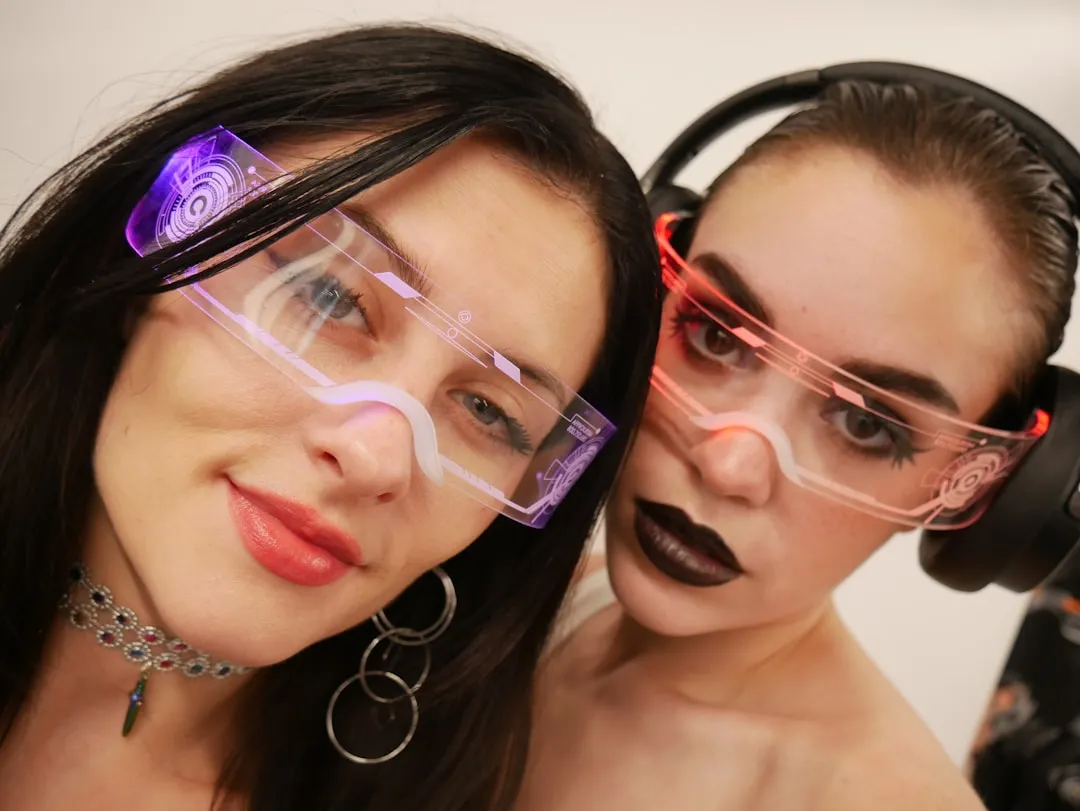
The world of smart glasses continues to evolve at breakneck speed, and the Viture Luma Ultra represents one of the most ambitious attempts yet to bridge the gap between promising technology and practical everyday use. What's fascinating about these glasses is how they embody both the incredible potential and the current growing pains of AR/VR wearables. While early reviews suggest initial challenges that might leave some users questioning their investment, the underlying technical foundation reveals something genuinely compelling about where this technology is heading.
Here's what caught my attention: a surprise Cyberpunk collaboration and expanded spatial content promises suggest these glasses could evolve into truly exceptional smart eyewear. That's not just marketing speak—it represents a crucial evolution from basic display applications toward immersive, interactive experiences that could finally justify the premium pricing and technical complexity. The company behind these devices has been quietly refining display technology since 2021, building the kind of real-world development experience that shows in genuinely impressive specifications and thoughtful hardware design.
The technical foundation here demonstrates serious engineering ambition. We're talking about advanced Sony micro-OLED displays that deliver an exceptional 1250 nits of brightness, creating what amounts to a massive 152-inch virtual screen experience that rivals traditional large-format displays. Now, I know what you're thinking—we've heard big promises about virtual displays before. But there's something fundamentally different about how Viture has approached the display technology and spatial computing integration that positions these glasses as more than just another expensive tech demo.
What makes the technical foundation so compelling?
Let's dig into what actually makes these glasses tick, because the engineering decisions here reveal genuine sophistication. The Viture Luma Ultra builds on dual Sony micro-OLED displays with 1920×1080 pixel resolution per eye—impressive specs that become truly noteworthy when you consider the birdbath optical system. This approach projects content directly into your field of view, creating that illusion of a massive virtual screen floating in space with remarkable visual clarity under optimal conditions.
The real innovation lies in the camera array architecture. We're looking at three front-facing cameras working in sophisticated coordination—one RGB sensor and two depth cameras that enable genuinely advanced spatial awareness capabilities. This isn't just incremental improvement over basic head tracking; the system supports full six degrees of freedom tracking, allowing natural movement through virtual spaces in ways that earlier generations of smart glasses simply couldn't achieve.
Physical comfort receives notable attention in the design approach. At nearly 80 grams with magnetic nose pads in various sizes, Viture clearly learned from earlier iterations where weight distribution and fit were major obstacles to extended use. The OLED displays deliver rich colors and decent blacks under ideal lighting conditions, while that impressive brightness specification isn't just a numbers game—it represents luminance levels that can actually compete with ambient lighting in real-world environments.
How does the ecosystem expand functionality?
Here's where Viture's strategy becomes genuinely interesting, transforming these glasses from simple display devices into the centerpiece of a comprehensive wearable computing platform. The Pro Neckband serves as the crucial companion device, functioning as a wearable computer with 12GB RAM and 256GB storage that essentially creates a standalone system with impressive processing capabilities.
The magic happens when you realize what this ecosystem approach enables. The neckband runs on Android OS and provides access to the Google Play Store, which means you're not just limited to whatever applications Viture decides to develop. You've got access to the entire Android ecosystem, reimagined through this unique massive virtual display paradigm that follows your head movements and responds to spatial positioning.
The connectivity strategy demonstrates impressive platform agnosticism. Users can connect to Android, iOS, Mac, and Windows devices, which addresses one of the biggest limitations of earlier smart glasses—platform lock-in that restricted practical applications. Gaming enthusiasts benefit from support for Steam Link and Xbox Remote Play, opening up entertainment possibilities that extend far beyond traditional mobile display limitations.
The Pro Mobile Dock extends this ecosystem approach even further, providing up to 20 hours of usage while supporting various HDMI and USB-C devices with full HD output at up to 120Hz. What emerges is a modular system that can adapt to dramatically different use cases—from casual media consumption to serious productivity workflows to immersive gaming sessions that leverage the full technical capabilities.
Where do current limitations create challenges?
Let's address the elephant in the room, because understanding these limitations is crucial for setting realistic expectations about what the Luma Ultra can actually deliver today. The hand tracking functionality, while technically impressive on paper, suffers from high latency and accuracy issues, with hands displayed as basic dots rather than detailed representations. This isn't a minor inconvenience—it fundamentally limits how naturally users can interact with virtual interfaces and creates frustration when trying to perform precise gestures.
The content ecosystem presents an even more significant barrier to adoption. Currently, only two applications support the advanced 6DoF and hand tracking features: an Angry Birds-based mini-game and a solar system visualization. That's a shockingly limited content library for a device that costs as much as a high-end laptop and promises revolutionary spatial computing experiences.
Battery performance delivers another reality check that affects practical usability. Real-world testing yields about an hour and a half of active use, falling well short of the manufacturer's claimed four-hour battery life. The device also generates noticeable heat during operation, which affects comfort during extended sessions and raises questions about thermal management in the compact form factor.
Visual quality comes with its own set of compromises that impact the user experience. The image becomes increasingly blurry towards the edges, and the system requires darker environments for optimal viewing since the glasses lenses dampen ambient light. Additionally, the operating system feels more like a smartphone interface operated with a laser pointer rather than something designed for intuitive spatial interaction.
What does the Cyberpunk collaboration promise?
Here's where things get genuinely intriguing and potentially transformative for the platform's future. The unexpected partnership with the Cyberpunk franchise isn't just another licensing deal—it represents a fundamental shift in content strategy that directly addresses the most significant limitation we identified: the sparse application ecosystem that fails to showcase the device's spatial computing capabilities.
This collaboration suggests Viture is evolving beyond basic productivity applications toward immersive entertainment experiences that could finally justify the technical complexity and premium pricing structure. Industry observers note this partnership signals the potential for truly exceptional smart eyewear, and the strategic implications go far beyond simple content addition. Cyberpunk's dystopian aesthetic and narrative complexity seem perfectly suited to demonstrate spatial computing capabilities in ways that educational solar system apps and mini-games simply cannot match.
What's particularly promising is how this directly addresses the content desert that currently undermines the device's value proposition. With only minimal applications currently supporting advanced features, the development of comprehensive spatial experiences through established entertainment properties could fundamentally transform user engagement and showcase why someone would invest in this technology platform.
The collaboration also demonstrates a maturation in Viture's platform strategy. Rather than trying to build compelling content experiences entirely in-house—a notoriously difficult and expensive endeavor—they're leveraging established entertainment properties that already have proven audience appeal and sophisticated world-building. This approach could accelerate content development timelines while ensuring higher production values that actually compete with traditional entertainment options for user attention and engagement.
Where does this technology lead us next?
The Viture Luma Ultra occupies a fascinating position at a critical inflection point in smart glasses evolution. While initial experiences may disappoint some users expecting polished, mainstream-ready experiences, the underlying hardware foundation—those sophisticated cameras, high-resolution displays, and processing capabilities—provides a surprisingly solid platform for continued software and content development.
The device's broad compatibility across multiple platforms and ecosystems positions it strategically for wider adoption as content libraries expand and software matures beyond current limitations. Unlike many first-generation devices that feel like expensive tech demonstrations with limited upgrade paths, the Luma Ultra's modular ecosystem approach and robust technical specifications suggest genuine potential for evolution into something practically useful for everyday computing tasks.
The success of initiatives like the Cyberpunk collaboration will likely determine whether these glasses fulfill their promise as genuinely exceptional smart eyewear or remain an expensive niche product for early adopters. Early adopters and AR enthusiasts may find value in the current offering, particularly when paired with the full ecosystem of accessories that unlock more advanced spatial computing capabilities.
For mainstream consumers, the calculation involves betting on Viture's ability to execute on expanded spatial content and improved software experiences. The substantial investment required for the complete system—glasses, neckband, and accessories—puts this firmly in early adopter territory. However, the Cyberpunk collaboration suggests Viture understands that compelling content, not just impressive specifications, will ultimately determine success in this emerging market. For those willing to invest in that potential, the Viture Luma Ultra offers a genuine preview of wearable computing's future—complete with both its promise and current limitations.

Comments
Be the first, drop a comment!