


HTC Vive Eagle US Price and Specs: Is the 9 Premium Worth It?
HTC's Vive Eagle AI smart glasses are now available for preorder in the US through Amazon, priced at $499 with units shipping September 1, 2026. The HTC Vive Eagle US price lands $200 above the entry-level Ray-Ban Meta, per Android Authority today. That gap is the central question: what, beyond privacy claims, HTC is actually offering for the extra $200.
The hardware is close to Meta's cheaper glasses on most dimensions. The bigger differences are video quality, AI back-end flexibility, and HTC's privacy pitch, which lands at an unusually pointed moment. Meta is currently facing a US class action lawsuit over how footage from its glasses was handled by overseas contractors, TechCrunch reported four months ago.
The display-free smart glasses market grew 210% year-over-year in Q1 2026, with Meta holding 84% of the category, according to Counterpoint data cited by HardwareZone two weeks ago. HTC is entering a market one company effectively owns, and asking buyers to pay more to do it.
HTC Vive Eagle vs. Ray-Ban Meta: what the specs actually show
The similarities are real. The Vive Eagle's medium frame weighs 48.8 grams, and HardwareZone found that puts it in roughly the same range as the Ray-Ban Meta Gen 2. Both shoot 12MP photos at the same resolution, HardwareZone confirmed two weeks ago after reviewing both devices.
The video gap is harder to dismiss. The Vive Eagle records at 1,512 x 2,016 at 30fps; Ray-Ban Meta Gen 2 maxes out at 3K (2,384 x 3,168), per HardwareZone. For anyone prioritizing camera output, the cheaper device is the stronger one.
Under the hood, the Vive Eagle runs Qualcomm's Snapdragon AR1 Gen 1 with 4GB of RAM and 32GB of storage, which HardwareZone described as broadly in line with what buyers should expect from this generation of display-free glasses. Where HTC separates itself is AI flexibility: the Vive Eagle pairs HTC's own Vive AI assistant with optional access to Google Gemini and ChatGPT, Android Authority reported today. By contrast, Meta's AI features run through Meta's own services rather than offering model choice on-device, the EFF documented four months ago. That openness doesn't map to a tidy dollar figure, but it's a real structural difference.
One distribution constraint worth noting: the Vive Eagle is currently available only through Amazon in the US, based on the Amazon listing cited by Android Authority. The EFF noted four months ago that Meta's Ray-Ban and Oakley partnerships have made Meta's glasses the dominant and most widely recognized option in the category. For a product where many buyers still want to try before purchasing, online-only is a real disadvantage.
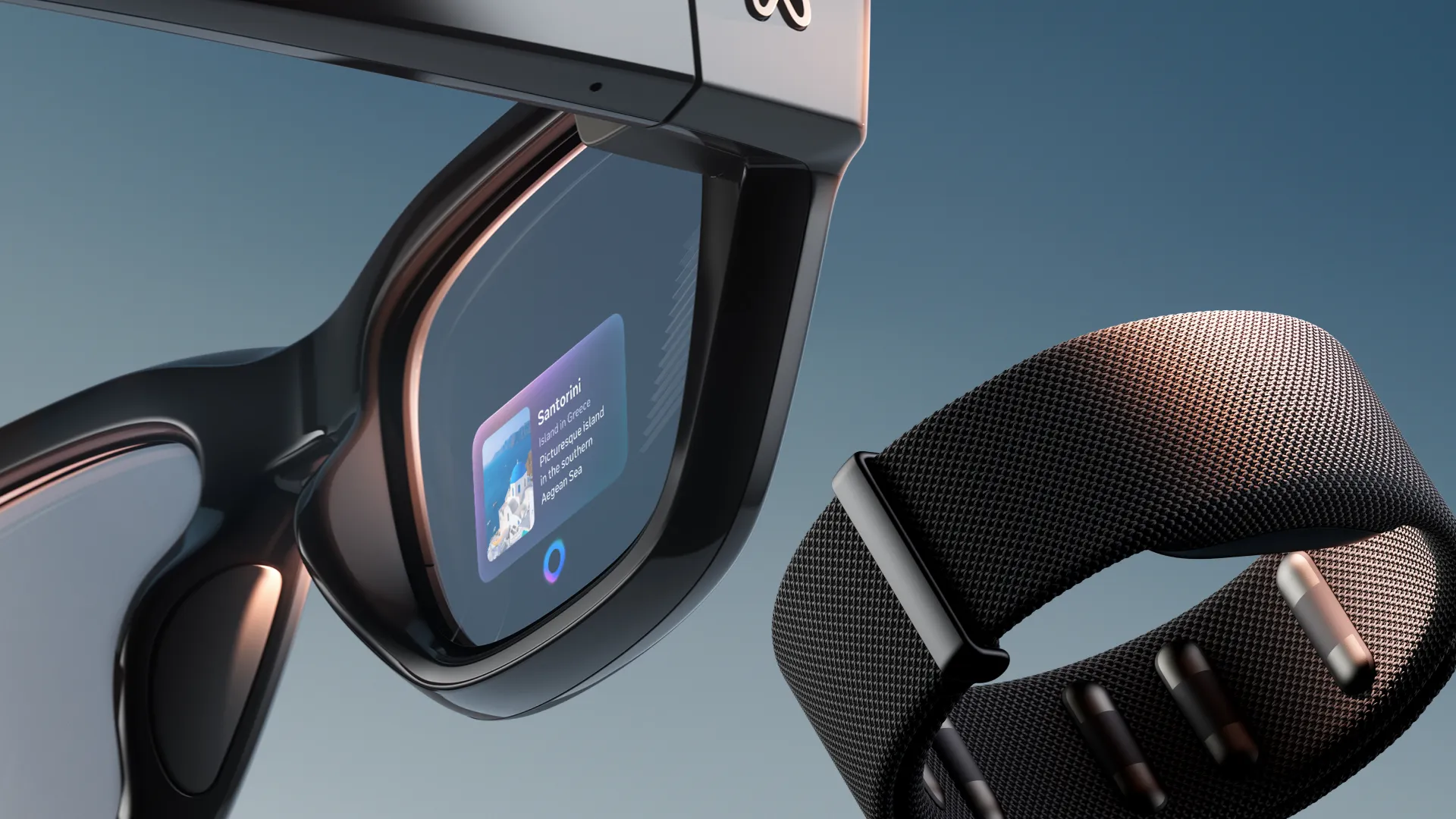
What the Vive Eagle does: voice-first AI, no display by design
HTC made a deliberate choice to leave out a display. At the Japan launch event in April, HTC's Charles Huang said voice is the best interface for AI at this stage, and that a display would add weight, drain battery, generate heat, and still deliver a poor user experience given current display technology. A display-equipped successor remains a future option, Mogura VR reported two months ago. The stated design goal was glasses comfortable enough to wear from waking to sleep, practical daily use rather than a stepping stone toward augmented reality.
The AI feature set is built around that philosophy. The Vive Eagle handles real-time translation in 13 languages and voice-triggered photo capture, Android Authority noted. Hands-free note-taking with speaker identification, conversation transcription, and summarization are also included, with data protected by AES-256 encryption and stored locally on the device, per HardwareZone. The audio hardware uses a beamforming mic array, one directional and three omnidirectional microphones, with open-ear stereo speakers tuned around voice interaction rather than music.
Battery life is rated at 4.5 hours of continuous audio playback and over three hours of voice calls from a 235mAh cell, with magnetic fast charging from empty to 50% in ten minutes, HardwareZone found. The glasses carry an IP54 water resistance rating, per Android Authority.
One detail HTC has not adequately addressed: the Vive AI Plus subscription comes as a 24-month trial bundled with the glasses, according to HardwareZone. HTC had not publicly detailed what the service costs after month 25, or whether core AI features remain functional without it. For a $499 device, that missing pricing information is material.
HTC's privacy pitch: hardware commitments vs. self-reported claims
Start with what can be verified in the hardware. The Vive Eagle's recording LED is physically linked to a sensor that disables the camera if the light is blocked, and the camera shuts off automatically when the glasses are removed, Mogura VR reported two months ago. Notes and transcriptions are encrypted with AES-256 and stored locally on the device rather than in the cloud, per HardwareZone. These are architecture decisions, not policy language.
Beyond the hardware, HTC's privacy commitments are self-reported and should be read as such. The company states that Vive AI holds ISO 27001 and ISO 27701 certifications and that user data will not be sold or used to train AI models, according to Mogura VR. Those certifications are meaningful. No independent audit of HTC's actual data practices has been published.
The contrast with Meta is grounded in documented reporting and active litigation, though some of the sharpest claims are still allegations. A US class action lawsuit alleges that Meta violated privacy laws and engaged in false advertising after an investigation found contractors at a Kenya-based subcontractor reviewing footage from users' glasses, including nudity and other intimate content, via an AI data pipeline that users cannot opt out of, TechCrunch reported four months ago. The UK's Information Commissioner's Office opened a parallel investigation. The lawsuit is particularly striking given Meta had marketed its glasses as "built for your privacy," according to Fortune three months ago.
The EFF separately documented how Meta's AI features route footage to Meta's servers by default, and how recorded audio from Meta AI conversations is saved unless manually deleted each time, per the EFF four months ago. Meta's privacy controls aren't entirely fixed: users can disable cloud media syncing through the Meta AI app settings, which narrows the gap somewhat, the EFF noted. HTC's edge is that the safer defaults are built in rather than opt-in.
Both devices look like ordinary glasses. Smart glasses are designed to be easy to miss, with indicator lights that most bystanders around the wearer won't notice, the EFF observed. That's a shared characteristic of the category. What buyers still can't verify for HTC: whether its local-storage and no-training commitments survive future software updates and policy changes.
What remains unresolved before September
The market HTC is entering grew 210% year-over-year in Q1 2026, per Counterpoint data via HardwareZone, and Meta, despite its legal troubles, sold over seven million smart glasses in 2025, TechCrunch reported four months ago. HTC is asking buyers to pay a $200 premium in a category that Meta built on brand recognition and distribution scale, largely on privacy defaults that can't yet be independently verified.
The specs and privacy positioning together suggest HTC is targeting users who care more about local AI processing than camera performance, and who are prepared to trust a newer entrant's data commitments without the benefit of independent audits or a long US track record.
Three things will clarify the picture heading into September 1: US hands-on reviews of AI feature performance in English-language contexts; HTC's disclosure of Vive AI Plus pricing before the 24-month trial expires; and whether HTC expands US availability beyond Amazon. None of those are settled yet.
HTC's pitch is strongest where Meta looks weakest: privacy defaults. But until independent reviews test the software and HTC explains what happens after the two-year AI trial, the premium rests partly on trust in a category where, as Fortune noted three months ago, companies have made identical promises before.



Comments
Be the first, drop a comment!