


Halliday G2 Smart Glasses Pre-Orders Open at 9 With AI Meeting Focus
Halliday opened pre-orders today for the G2, camera-free AI smart glasses built around a single workplace promise: that an AI processing your meeting audio in real time can catch the decisions that slip through, the action items nobody writes down, and the topics that got tabled but never resolved, according to Android Authority. The glasses cost $599, ship in September, and carry no camera a deliberate choice Halliday says was made for both privacy and battery efficiency, per The Verge.
The launch positions meeting assistance as the lead use case for Halliday G2 AI smart glasses at a moment when the broader smart-glasses market is under sharper scrutiny than at any point in the category's history. Based on brief hands-on coverage rather than full-day reviews, the core software remains untested in typical work conditions which is either a reason to wait or a reason to get in early at a $100 discount, depending on your tolerance for first-wave hardware.
At $599, this isn't aimed at general consumers. It's a device for managers, consultants, and anyone on multilingual teams who spends enough hours in meetings to feel the friction Meeting Flow is designed to reduce.
How Halliday smart glasses Meeting Flow works
Meeting Flow uses audio captured through a four-microphone array and surfaces information directly in the wearer's eyeline, so there's no phone to glance at, no laptop lid to crack open, The Verge reports. Three sub-features do the structural work: Thread Tracker, Decision Confirmation, and Commitment Check, per Android Authority.
Halliday's own example, echoed in early hands-on coverage, illustrates the concept: Thread Tracker might log that a team meeting moved from budget allocations to new hires. Decision Confirmation could flag that the group agreed all new hires should be finished by a specific date. Commitment Check then verifies whether that action item was assigned to a named person with a deadline before anyone leaves the room. After the meeting, the companion app generates post-meeting transcripts and structured summaries automatically, according to Android Authority. Those descriptions come from Halliday's launch materials and early hands-on accounts; no independent accuracy data has been published.
The pitch is conceptually distinct from laptop transcription tools. Unlike those, Halliday is using the display itself as the interface the wearer doesn't break eye contact with the room to check notes.
The concept is only as good as the execution, though. The four-mic array has a stated pickup range of up to two meters, Android Authority notes adequate for a small conference room, but untested against crosstalk, heavy accents, technical jargon, or a noisy open-plan office. There are no published figures for transcription accuracy or action-item extraction. And Meeting Flow works only for the person wearing the glasses; whether other participants accept having their speech captured through a device they may not notice and whether legal or compliance teams will permit it is a separate hurdle that hardware specs don't resolve.
What the hardware actually improved
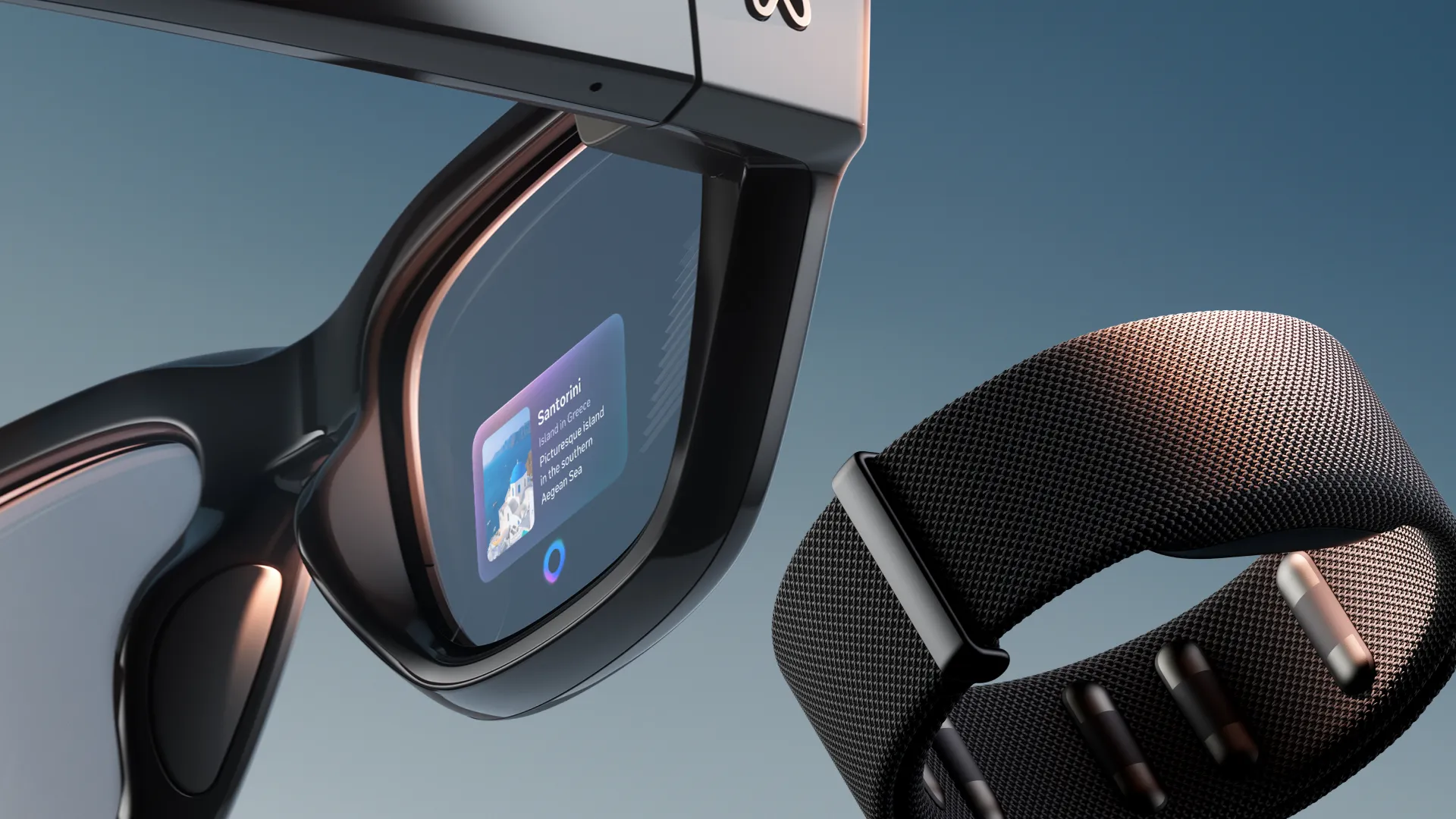
The original Halliday glasses used a small, repositionable display window that a Verge reviewer found physically uncomfortable after just 30 minutes, The Verge reported. The G2 replaces it with a binocular waveguide system, putting a dedicated micro-LED projector in each lens. The displays are monochrome green, running at 600 x 300 pixels per eye at up to 1,600 nits peak brightness, per Android Police.
The Verge's hands-on described the G2 as a clear improvement over the original noticeably lighter than comparable display glasses and easily visible inside a dark bar though sunlight performance wasn't tested, which is a meaningful gap for anyone using these in daylight offices or outdoors. Halliday told The Verge the four-mic array picked up voice commands through ambient bar noise and that battery life runs about 12 hours of typical use. Frame weight is targeted below 50 grams, Android Authority reports.
What a 30-minute bar demo can't tell you: how readable monochrome green captions are under standard office fluorescents after hour three of back-to-back meetings, or how much a heads-up display pulls your attention when you're also supposed to be running the room. Those questions won't have answers until September shipments begin and independent reviewers get extended time with the device.
The privacy question camera removal doesn't fully answer
Halliday's decision to omit a camera was explicit. The company cites both privacy and battery life as the rationale, The Verge notes. Six weeks ago, EFF's Threat Lab confirmed through static analysis that Meta's smart-glasses companion app contained code capable of converting faces into unique biometric signatures for identification. That code was only removed after WIRED reported it and public pressure mounted, according to the EFF.
In that context, building a camera-free work device rather than a wearable camera platform is a deliberate market signal. It may matter as much to enterprise procurement teams as to privacy-conscious individuals.
Removing the camera doesn't remove the microphone. The G2 still relies on four always-on mics processing meeting audio, and none of the launch coverage reviewed here addresses where that audio is processed, how long transcripts are retained, whether participants must consent, or what enterprise compliance controls exist. For a personal productivity device used in one-on-one conversations, those may be manageable questions. For organizations in healthcare, finance, or legal the same industries most likely to have professionals who spend all day in meetings they are prerequisites. Halliday hasn't answered them publicly, and that gap could prove to be the most significant adoption barrier the product faces.
Halliday G2 pre-order price and who should consider it
Pre-orders opened today with a $10 refundable deposit that locks in a $100 discount off the $599 retail price. Prescription lenses are available at additional cost. Full shipments begin in September 2026, per Android Police.
Beyond Meeting Flow, the G2 includes real-time translation across more than 45 languages, live captioning, phone call handling, notification cards, a Cheatsheet teleprompter mode for speakers, and a Stealth display mode that dims the screen in low-light settings to reduce visibility to others, according to Android Authority and Android Police. Halliday is treating those as all-day utility features around its meeting-focused pitch the justification for wearing the glasses throughout the day so they're already on when a meeting starts.
At $599, The Verge noted the G2 "comes with a pretty steep price tag for the average person." The product appears aimed less at casual consumers than at professionals who spend much of the day in meetings, have real pain around missed action items or lost context, and work somewhere that wearing glasses to a conference room won't draw comment.
The questions worth answering before committing: How accurate is transcription against real accents and jargon? Are monochrome green captions readable under office lighting for hours at a stretch? Can the AI reliably distinguish who committed to what across a six-person conversation? And perhaps most practically will the other people in your meetings consent to having their speech processed by a device they can't see?
Independent reviews are unlikely before units ship in September. That's when the software claims get tested against something other than a bar demo, and when the compliance questions will start mattering to the organizations most likely to buy this at scale.




Comments
Be the first, drop a comment!