


Pimax Crystal Pro vs Steam Frame: Wireless PC VR Compared
Pimax has unveiled the Crystal Pro, a wireless PC VR headset built around technology it calls Native Foveated Streaming, designed to send the GPU's native image to the headset within the eye-tracked focus area without the video encoding most wireless headsets rely on, according to Pimax. The announcement sets up a direct Pimax Crystal Pro vs Steam Frame contest for the future of wireless PC VR, arriving just over four weeks after Valve's headset went on sale.
Steam Frame launched on September 14, 2026, as a standalone SteamOS headset that also streams PC VR over Wi-Fi (heise online). Pimax frames Crystal Pro as a direct answer to a question posed in its own launch video: what if a headset could cut the cable and still send the image with no visual compression, according to PC Gamer.
What follows is a look at the specs, the mechanics behind each company's wireless approach, and the costs of choosing one path over the other.
Pimax Crystal Pro vs Steam Frame: standalone flexibility versus PC VR fidelity
Crystal Pro requires a PC for operation. It connects through a bundled Wi-Fi 6E adapter, an optional 60G AirLink kit, or a wired DisplayPort 1.4a cable, but there's no configuration where it runs without a PC somewhere in the chain (heise online).
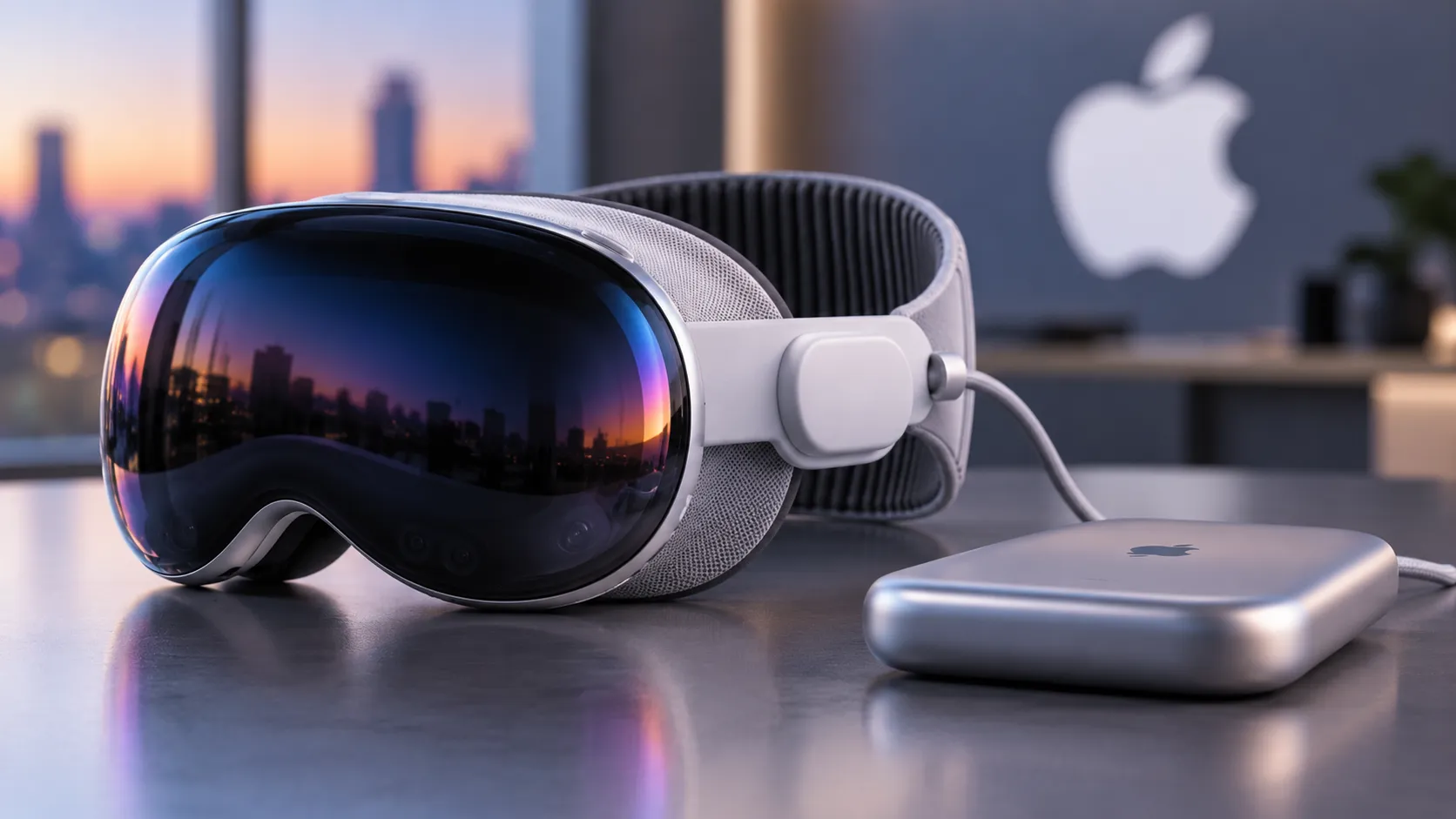
Steam Frame takes the opposite approach. It runs on a Snapdragon 8 Gen 3 chipset with 16GB of RAM and SteamOS, letting it function as a fully standalone device while also streaming from a PC when one's available (UploadVR). It skips physical PC inputs entirely, with no DisplayPort or HDMI, putting its full weight behind the wireless link (UploadVR).
Pimax isn't stopping at the headset. The company is also building the Spation, a mini-PC pairing an AMD Ryzen 7 9800X3D with either an AMD RX 9070 XT or Nvidia RTX 5070 Ti, and running Windows or SteamOS (Pimax). Pimax hasn't framed Spation as part of a broader strategy, but pairing a headset that requires a PC with a dedicated PC of Pimax's own design is a notable step beyond selling hardware for someone else's rig.
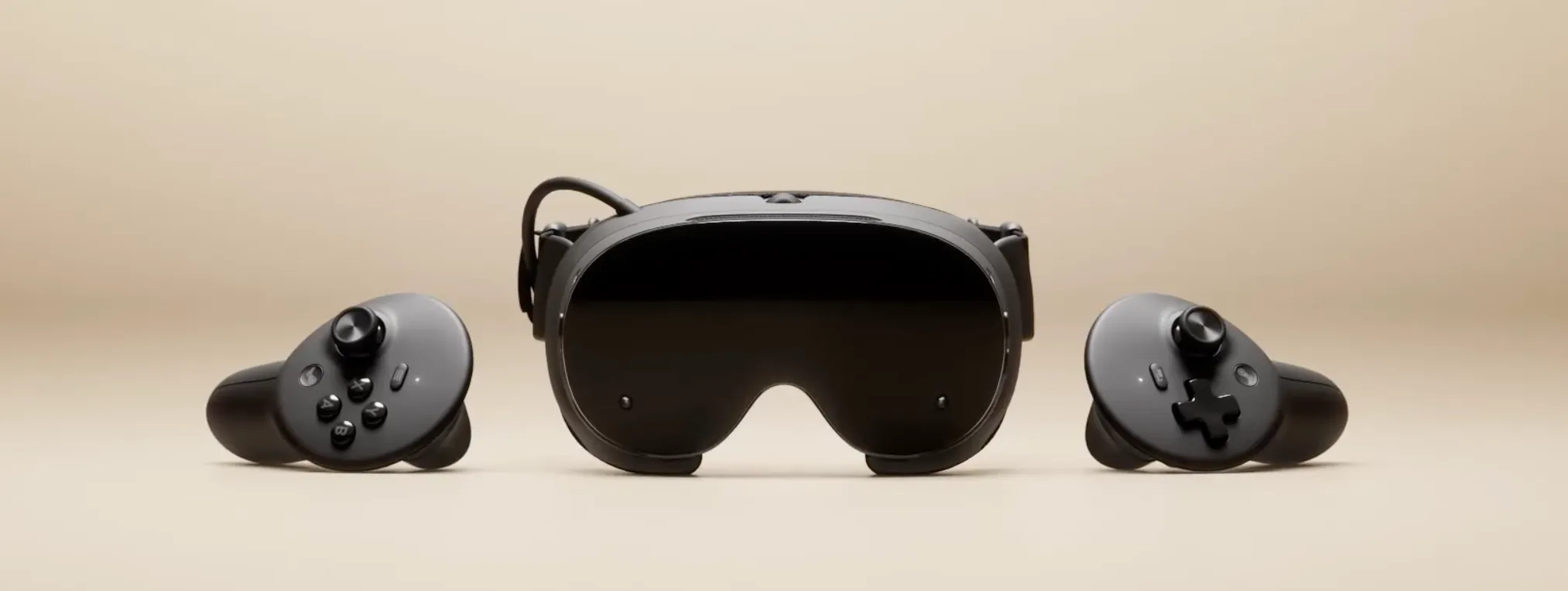
Both headsets also use combinable controllers. Crystal Pro's controllers clip together into a single gamepad for use outside VR, and Steam Frame's controllers are designed the same way, with PC Gamer noting Pimax's version takes inspiration from Valve's approach (PC Gamer). Crystal Pro's tracking also relies on SLAM 2.0, combining four cameras, a motion sensor, and infrared illumination for low-light use (PC Gamer).
Steam Frame is designed to work without a PC nearby; Crystal Pro is designed around a PC and an optional 60GHz link to it. Nearly every other engineering choice in this comparison flows from that split.
How Pimax's native foveated streaming works
Conventional wireless VR has to compress video, because Wi-Fi doesn't have the bandwidth to carry raw, uncompressed frames. That encode-and-decode cycle is the dominant source of latency in popular wireless VR systems, according to UploadVR.
Steam Frame's PC-streaming mode works around this with a dedicated 6GHz Wi-Fi 6E link and eye tracking that encodes the gaze area at higher resolution while the rest of the frame streams lower-res (UploadVR; PC Gamer).
Pimax's optional 60G AirLink kit takes a different route. It uses a 60GHz, 2x2 MIMO connection with combined throughput of up to 6 Gbps, and according to Pimax it sends native-resolution image data to the eye-tracked focus area without the video encoding step Wi-Fi streaming requires (Pimax). That claimed native-resolution AirLink mode tops out at 90Hz, a ceiling tied to the streaming kit itself rather than the headset's display, which supports refresh rates up to 120Hz (Pimax).
Pimax claims the kit adds under 2 milliseconds of transmission latency. PC Gamer reports the company's own presentation put the figure at 1.8ms, against 12ms for standard Wi-Fi streaming, though independent testing of that number isn't available yet (PC Gamer; heise online). Pimax isn't promising to eliminate the compression tax everywhere, only where the eyes happen to be pointed.
Pimax Crystal Pro resolution and display specs against Steam Frame
Crystal Pro uses 2880x2880 QLED panels per eye, paired with aspheric glass lenses, a 110-degree horizontal field of view, 35 pixels per degree, and Mini-LED backlighting with 576 dimming zones per eye at 200 nits (Pimax).
Steam Frame uses 2160x2160 LCD panels per eye with pancake lenses. Valve describes those lenses as delivering very good sharpness across the full field of view, while noting the field of view itself, roughly 110 degrees horizontal and vertical, is slightly narrower than the Index (UploadVR).
Both headsets support refresh rates from 72Hz to 120Hz. Steam Frame adds an experimental 144Hz mode, while Crystal Pro tops out at 120Hz, and its claimed native-resolution focus-area streaming over 60G AirLink only reaches 90Hz (UploadVR; Pimax).
That resolution lead comes with real physical limits. A 60GHz radio doesn't penetrate walls, reaches only a few meters, and needs a clear line of sight between transmitter and headset, which is why Pimax added dual antennas intended to offset the limitation rather than eliminate it (heise online). Crystal Pro's numbers on paper are genuinely higher. Whether they hold up depends on a dedicated 60GHz line-of-sight setup that Steam Frame's Wi-Fi 6E link doesn't need.
Price, setup, and availability
Crystal Pro starts at $1,399 for the base wireless kit, $1,899 bundled with the 60G AirLink kit, or $599 for the AirLink kit alone, with delivery not scheduled until early 2027 (Pimax; heise online). Adding AirLink to the base configuration costs an extra $500.
Steam Frame has been on sale since September, priced at €1,060 for the 256GB model and €1,280 for the 1TB model (heise online). Pimax lists its pricing in dollars, Valve in euros, so a direct comparison isn't possible without a currency conversion.
Weight and power tell a similar story. Steam Frame's full system weighs 440 grams with a replaceable 21.6Wh rear battery, which Valve and UploadVR describe as the lightest fully-featured standalone headset to date. Crystal Pro has no onboard battery at all; power comes from an included 16,000mAh pocket pack, and Pimax hasn't disclosed how long it lasts on a charge (Pimax; heise online).
Steam Frame is built to work standalone, without a PC in the connection chain. Crystal Pro requires a PC in the connection chain, and its 60G AirLink setup requires the transmitter and headset to maintain a short, clear line of sight. Buyers also face a wait until early 2027 for delivery.
What's still unverified
Compared on confirmed specifications alone, Crystal Pro's panels pack more pixels, and its optional 60G AirLink promises native-resolution delivery inside the eye-tracked focus area. Steam Frame is the one actually shipping, running standalone without a PC in the connection chain.
Pimax's performance claims, the sub-2ms added latency, the 6 Gbps throughput, the native-resolution streaming, all originate with the company itself. No independent test of the 60G AirLink kit has been published yet (heise online). Crystal Pro is scheduled to arrive later, so testing of Steam Frame may be available before Pimax's headset ships.
Several questions won't get answered until that testing happens: whether the 60GHz link holds its claimed latency figures in an ordinary room, how image quality looks outside the eye-tracked focus area, how SLAM 2.0 tracking performs without a controlled setting, how reliably the line-of-sight connection holds up around furniture and moving users, and how long Crystal Pro's pocket battery actually lasts on a charge. Until independent reviewers get hands-on time, Crystal Pro's numbers remain unverified.






Comments
Be the first, drop a comment!