



App to Detect Meta Glasses Nearby Has a Critical Blind Spot
A free Android app called Nearby Glasses has circulated as a privacy tool for the smart-glasses era: scan for Bluetooth signals, get an alert when Meta Ray-Ban or Snap glasses are within range. If you're looking for an app to detect Meta glasses nearby, this is currently the main option. It has a critical blind spot.
Tested against Meta Ray-Ban Gen 2, the app detected nothing. Not because no glasses were present, but because paired glasses stop broadcasting the Bluetooth signals the app depends on, Mobile Hacker reported last month. That's the scenario the app is supposed to solve: glasses in active use, connected to a phone, potentially recording.
Meta shipped more than seven million pairs of its AI glasses in 2025 and says millions of people use them every day, according to Meta's FAQ published this month. The glasses look like ordinary eyewear, a design feature the EFF noted earlier this year that means most people near a wearer don't realize a camera is involved.
Two notice mechanisms are supposed to fill that gap: the Nearby Glasses detection app and Meta's built-in recording LED. Neither holds up well under scrutiny.
Why a Meta smart glasses detection app misses paired devices
Nearby Glasses works by monitoring Bluetooth Low Energy advertisement packets, short broadcast signals that devices emit when looking to pair or reconnect. When the app spots a manufacturer identifier linked to Meta or Snap hardware, it fires a notification. Users can also add custom identifiers to broaden coverage, according to reporting on the app's launch.
The problem is what happens once the glasses are paired. Meta Ray-Ban Gen 2 stops broadcasting advertisement packets entirely after connecting to a phone, making the device invisible not only to Nearby Glasses but to general-purpose Bluetooth scanners as well, per Mobile Hacker's testing last month. This is not a bug. It is how the hardware is designed to work.
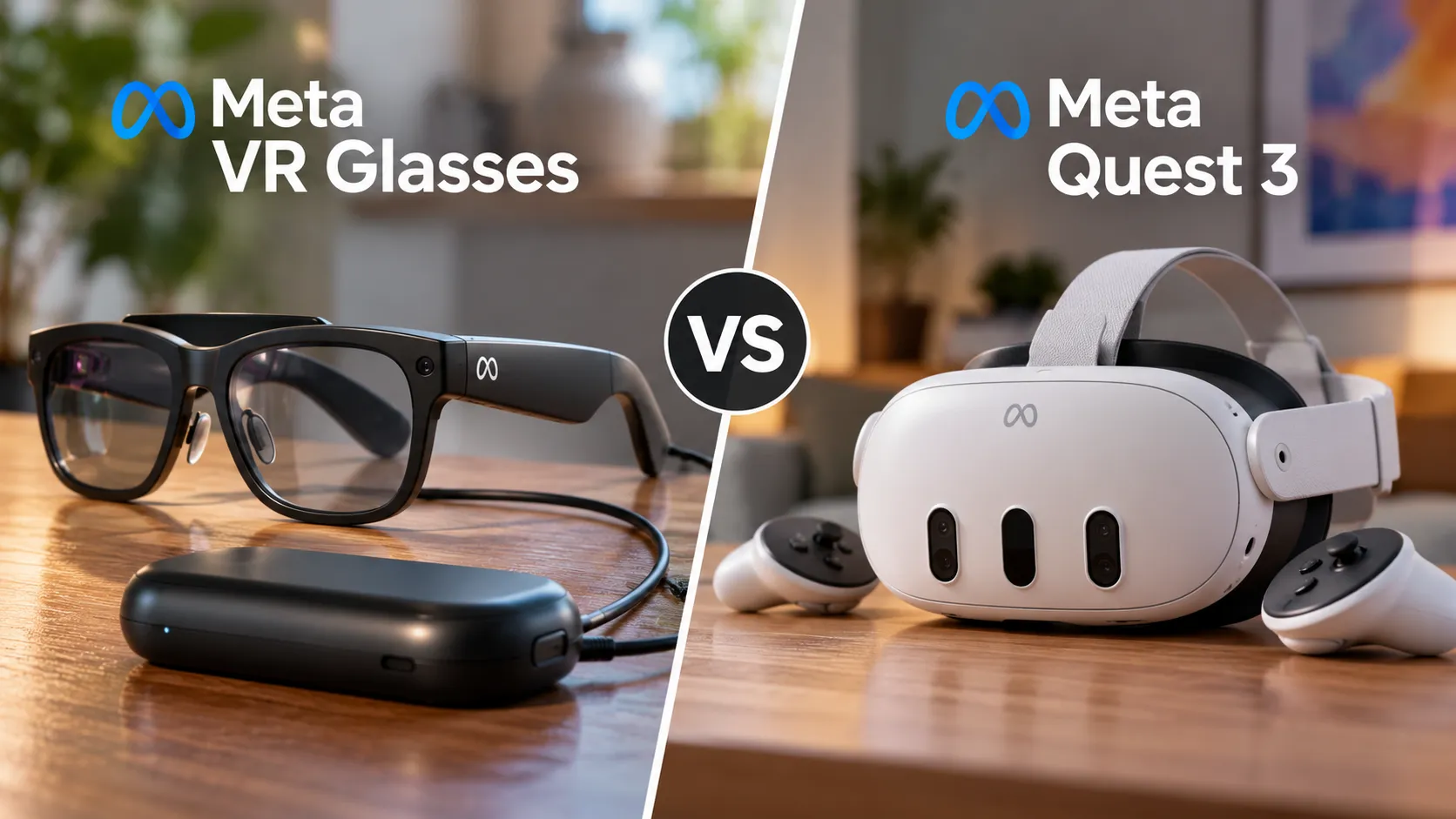
When the app does pick up a signal, reliability breaks down in two directions. False positives are a known issue: the app's developer acknowledged that a Meta Quest VR headset can trigger the same alert as camera glasses, and TechCrunch's own field test produced zero alerts while walking through a city neighborhood, per Mobile Hacker's writeup. In the other direction, BLE advertisement packets follow predictable formats and can be spoofed using a smartphone, an ESP32 microcontroller, or a Flipper Zero. A proof-of-concept built for the Flipper Zero successfully flooded the Nearby Glasses app with phantom detections, Mobile Hacker demonstrated.
An app that misses real devices and fires on fake ones is not a reliable privacy tool. It may still detect unpaired devices from other manufacturers in environments without signal spoofing. That's a narrow use case, and Mobile Hacker's tester noted the testing covered only Meta Ray-Ban Gen 2, so results may vary with other hardware.
What Meta's recording LED actually does in practice
Meta's designed answer to bystander awareness is a small white LED on the glasses frame. It blinks briefly when a photo is taken and continuously during video recording. Covering or blocking the LED disables the camera. The LED has no off switch, and Meta describes this as a core privacy-by-design feature built into every pair, per its FAQ this month.
The practical case against that framing is substantial. The photo blink lasts a fraction of a second, too brief for a bystander to notice, interpret, and react before the capture is complete, MediaNama reported this month. In daylight, the small light is hard to see at all. Recording can start with a tap on the temple or a "Hey Meta" voice command; there is no raised phone, no pointed camera, no gesture that signals anything is happening.
Regulators in Ireland and Italy questioned whether the LED functions as effective bystander notice when the first Ray-Ban Stories launched in 2021, saying Meta had provided no field testing to support that claim. The objection has not been resolved. Earlier this year, during a social-media addiction trial in Los Angeles, Judge Carolyn Kuhl ordered Meta's team to remove their glasses from the courtroom, declining to accept the blinking light as adequate assurance and citing concerns that jurors could be identified by wearers, MediaNama reported.
Meta has since updated second-generation glasses to disable the camera if tampering with the LED is detected. The company also says it removes listings for LED-blocking products and pursues legal action against sellers, according to its FAQ. Despite that, LED-blocking stickers remain openly listed on Amazon India. One product, marketed for "discreet recording in business meetings," showed more than 100 purchases in a single month, MediaNama found. The anti-tampering update applies to second-generation hardware only; the more than seven million first-generation pairs already in circulation have no auto-disable. Meta has not confirmed whether commercially available stickers defeat the second-generation detection mechanism.
Last October, the University of San Francisco warned students after a man wearing Ray-Ban glasses was reportedly filming women and distributing the footage, MediaNama reported. An ad hoc campus warning is what notice looks like when the built-in mechanism fails.
What happens after someone records you
Detection apps and indicator lights address the moment of capture. The privacy exposure doesn't stop there.
Footage captured through Meta glasses stays on the device unless the wearer imports it or invokes AI features. When they do use Meta AI, by voice command or otherwise, that content is transmitted to Meta's servers. No AI processing runs locally on the device, the EFF noted earlier this year. Meta's terms acknowledge that content shared with AI may go through human review, automated or manual.
That process has already surfaced in reporting. A Swedish journalism investigation, covered by the BBC and MediaNama, found that contractors at a Nairobi-based firm were annotating footage captured through the glasses, including sensitive material. Meta said the practice falls within its stated terms of use.
The longer-term concern involves facial recognition. Two Harvard researchers demonstrated that a recognition tool linked to a Meta glasses feed could identify strangers within seconds, a capability Meta is reportedly considering for future models, MediaNama reported this month. More than 70 civil-liberties organizations have written to Mark Zuckerberg urging Meta not to pursue it, warning it would make harassment and stalking substantially easier. Facial recognition is not a current feature. The research demonstrates the distance between what the hardware already makes possible and what bystanders have any means to know or prevent.
What the law covers and what it leaves out
Bystanders seeking legal recourse have limited options. India's Digital Personal Data Protection Act, 2023, imposes no obligation on wearers to disclose that they are recording in public. The IT Act and Bharatiya Nyaya Sanhita cover specific categories of harm, including private-area capture, obscene content, and voyeurism, rather than general ambient recording in public spaces, MediaNama reported.
India is one jurisdiction, but the pattern is recognizable elsewhere. Privacy law was built around narrower, more legible harms: a person pointing a camera, a device that looks like a recording device. Ambient wearable recording, hands-free and indistinguishable from ordinary glasses, doesn't fit those frameworks cleanly. Courts are improvising with ad hoc orders. Universities are sending warnings after incidents occur. The gap between what the hardware enables and what the law addresses is not a problem unique to any single country.
Where that leaves bystanders
Neither notice mechanism has cleared the bar that regulators identified five years ago: field-tested evidence that it actually works. The detection app fails at the radio layer once glasses are paired. The LED fails at the human-perception layer once it blinks faster than a bystander can register. The anti-tampering update on second-generation hardware is a genuine improvement. It doesn't reach first-generation glasses, and LED-blocking accessories remain for sale.
Regulators asked for evidence in 2021 that bystanders receive usable notice. The hardware has shipped at scale since then. That evidence has not appeared.



Comments
Be the first, drop a comment!