


The AR Glasses Occlusion Problem Explained: Causes and Fixes
AR glasses don't just show imperfect images. They actively mislead the brain about where things are in space. A study published earlier this year has now documented that failure precisely enough to give hardware engineers a concrete target, and separate work on display components and waveguide optics is beginning to address it at the hardware level, though no complete solution exists yet.
The AR glasses occlusion problem sits at the intersection of perception science and display engineering. It is not a question of whether users can see virtual content clearly enough. It is a question of whether virtual content appears to exist in the right location relative to the real world. Brightness and resolution don't fix it. Occlusion geometry does.
What the perceptual research found
The brain uses multiple cues simultaneously to locate objects in space. Stereopsis, the slight positional difference between what each eye sees, and occlusion, whether one object is physically blocked by another, are among the most powerful. In AR, these two cues can contradict each other directly.
When a virtual object is rendered behind a real surface without being visually blocked by it, stereopsis and occlusion send conflicting signals. Researchers call this a stereopsis-occlusion conflict, or STOC. A within-subjects study published in Virtual and Augmented Reality earlier this year manipulated the depth relationship between virtual targets and real occluders, measuring both target discrimination time and subjective comfort under the same conditions. STOC was found to impair both performance and comfort, with reduced performance correlated with decreased comfort.
To interpret the mechanism, the researchers applied a Bayesian depth cue combination model to their results. The model suggests that perceived distance of the target may be underestimated under STOC conditions, which could account for the declines in both performance and comfort, a finding grounded in established depth perception science. The study was conducted in a controlled lab setting, and how the effect scales across headset types, ambient environments, and broader user populations remains an open question.
The practical implication is specific. Unmanaged occlusion doesn't just look odd. It may create a calibration error in the user's spatial model of the scene, so that every interaction with a virtual object is built on a mistaken estimate of where that object actually sits.
Why the AR glasses occlusion problem isn't just a brightness issue
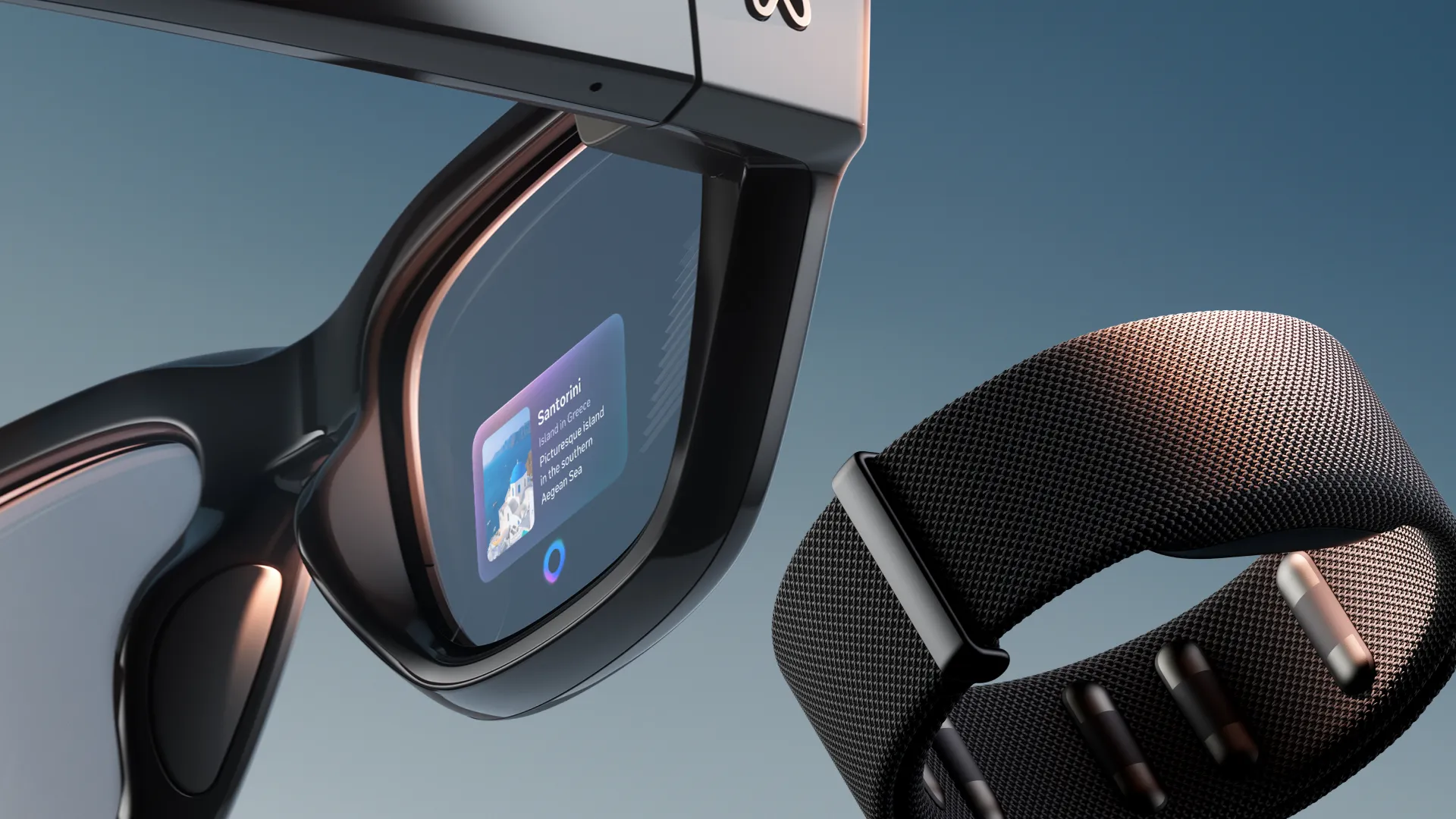
The core challenge for optical see-through AR is structural. The lenses are transparent by design, so the user can see the real world. That same transparency means virtual objects are always composited over a live background the display has no control over. Without effective occlusion, virtual objects can appear transparent or inconsistent with their physical environment, as research on LC dimmer technology published in mid-2025 describes.
A dynamic liquid crystal dimmer detailed in that paper addresses this through segmented dimming. Rather than tinting the entire lens, it selectively reduces background light in specific zones of the field of view, locally raising contrast for virtual content only where needed. The panel operates above 120 Hz and defaults to full transparency when unpowered, a deliberate safety design so that a battery failure doesn't obscure the user's view of the real world.
The engineering involves a real tradeoff that the published data does not fully resolve. The two liquid crystal modes tested offer different points on a contrast-versus-transmission spectrum. Across tested cell gap configurations, the clearest dark state achieves a contrast ratio of 40:1 but clear-state transmission drops to 37.2%; the configuration with 56.5% clear-state transmission yields a contrast ratio of just 3.6:1, per the same research. A configuration aggressive enough to make virtual objects appear solid also dims the real world noticeably. How this performs under rapid head motion, changing outdoor lighting, or the thermal and power constraints of a device worn for hours is not addressed by the available evidence.
Cleaning up the optical baseline
Getting occlusion right requires that the real world arrives through the display geometry without distortion in the first place. Current waveguide AR displays introduce their own spatial errors: chromatic dispersion that splits colors along edges, ghost images from parasitic diffraction orders, and geometric distortion of the see-through view that alters how real objects appear to be positioned. Any of these can add noise to the depth cue conflicts described above.
A metasurface coupler design published in late 2025 in Nanophotonics targets see-through fidelity directly. The out-coupler preserves more than 90% of angle-averaged zeroth-order transmission for the see-through path while suppressing parasitic diffraction orders, the source of ghosting, by a factor of 10 to 40 times. Point-spread function and modulation transfer function analyses confirm virtual image quality approaching the diffraction limit. Fewer false spatial cues introduced by the display stack means the perceptual system has cleaner input to work with.
A separate mid-2025 analysis of waveguide display performance in SID Symposium Digest identified the rainbow effect and gaze-dependent color and luminance nonuniformity as additional artifacts that shift as the user's eyes move. The authors propose a binocular compensation method that uses the slightly different views from each eye to even out brightness without requiring higher output power. These are enabling conditions for coherent depth perception, not proof that STOC itself has been solved. The optical work reduces the noise the display introduces; it doesn't replace the need for active occlusion handling.
What a working occlusion stack would require
The three research threads above correspond to distinct stages of the same pipeline, not independent fixes. A device that handles occlusion correctly would need all of them working in sequence: scene geometry understood well enough for the dimmer layer to act on the right zones; background light selectively suppressed in those zones; virtual imagery delivered without the waveguide adding its own spatial errors; and the visual boundary where real and synthetic meet handled smoothly enough that the seam doesn't break spatial coherence.
That last step has its own evidence base. A within-subjects study published in IEEE TVCG earlier this year compared three edge-rendering techniques for the boundary between a real body and a virtual background in video pass-through VR. Hard cutout masks scored significantly lower on presence and embodiment than a dithered edge approach, which produced no significant difference from full soft blending while being computationally more efficient. The setting was VR pass-through, not optical see-through AR, so the findings don't transfer directly. But users' sensitivity to visual seams shows up consistently across both contexts, and edge treatment is a rendering problem that sits alongside the hardware problems, not inside them.
Each layer of the stack is improving on its own terms. What the research does not yet show is a system where perceptual researchers, display engineers, and rendering teams have optimized simultaneously against the same target: spatial coherence for the user.
What the research suggests to watch for
The picture through mid-2026 is clarifying, not resolved. Researchers now have a specific mechanism to design toward: STOC may cause users to underestimate target distance in a predictable direction, degrading both comfort and performance in tandem, per the May study. That is a more precise engineering target than the general observation that AR feels spatially off.
On the hardware side, the inverse-designed waveguide coupler achieves greater than 90% see-through transmission with an order-of-magnitude reduction in parasitic diffraction, according to the Nanophotonics research, and the LC dimmer work demonstrates segmented occlusion control above 120 Hz, though the contrast-versus-transparency tradeoff remains unresolved in the published data.
The research points toward specific indicators worth tracking in next-generation AR hardware: whether a device implements local dimming or selective occlusion rather than full-lens tinting; whether the see-through view stays geometrically stable as gaze shifts; whether ghosting is visibly suppressed; and whether real-virtual boundaries use gradient transitions rather than hard cuts. Those features correspond directly to the failure modes the research has documented. A device that instead leads with display brightness and pixel count numbers is not addressing the underlying problem the evidence identifies.





Comments
Be the first, drop a comment!