


Even Realities G2 Smart Glasses: A Camera-Free Productivity Tool
The Even Realities G2 smart glasses launched into a market where Meta has sold over 7 million camera-equipped Ray-Bans and holds an estimated 80% of AI glasses sales, according to BBC reporting from earlier this year. Even Realities is betting that a camera-free design can appeal to professionals who want heads-up information without the social friction of recording hardware. That bet is looking less contrarian than it did a year ago.
The G2 has no camera and no speakers, both omissions by design. Even Realities targets the glasses at people who spend significant time in meetings, giving presentations, and traveling across language barriers, TechCrunch reported this week. That framing matters: the G2 isn't trying to be a general-purpose AI companion. It's a productivity tool worn on your face, and evaluating it on any other terms gets the comparison wrong.
Smart glasses have a trust problem, and it's accelerating
The backlash against camera-equipped smart glasses has moved from social media complaints to institutional action. Texas Attorney General Ken Paxton launched a formal investigation into Meta's glasses earlier this year, calling them "a privacy nightmare," and claiming the devices "can easily invade personal privacy by collecting biometric data and recording Texans without their knowledge or consent," Computerworld reported. Philadelphia courts banned recording-enabled Meta glasses from city courthouses. MSC Cruise Line prohibited smart glasses in all public areas.
The sole visible privacy signal on Meta's glasses is a small LED that activates during recording. A cottage industry of modification services, using drills and dental probes and advertised on Meta's own platforms, sprung up to disable that light, with dozens of DIY tutorials appearing on YouTube. Meta responded this week with a mandatory software update that disables the camera if the LED is physically tampered with, and announced legal action against people who promote such services, Engadget reported. That a workaround market required a technical crackdown is not a minor footnote. It's a measure of how far trust in the dominant model has eroded.
There's a deeper layer. WIRED discovered dormant facial recognition code, labeled "NameTag," hidden inside Meta's AI companion app; Meta quietly removed it the day after the story published, Computerworld reported. The EFF has argued that adding face recognition to smart glasses would "obliterate the privacy of everyone" not just those who choose to wear them. Privacy advocates note that camera-equipped glasses aren't just a recording tool; paired with identification capability, they become something qualitatively different. Meta has reportedly been exploring adding facial recognition to a future version of its glasses, BBC reported earlier this year.
Even's design choice sidesteps this entire problem by construction. The Android Police reviewer noted that people still asked whether the G2 was recording them, but when told there was no camera, that was the end of it, the review found. With Meta glasses, that reassurance isn't structurally available.
What the Even Realities G2 smart glasses do instead of recording
Even stripped out the two components most likely to make bystanders uneasy, then built inward: a silent, glanceable display layer visible only to the wearer. The feature set is designed around professional contexts.
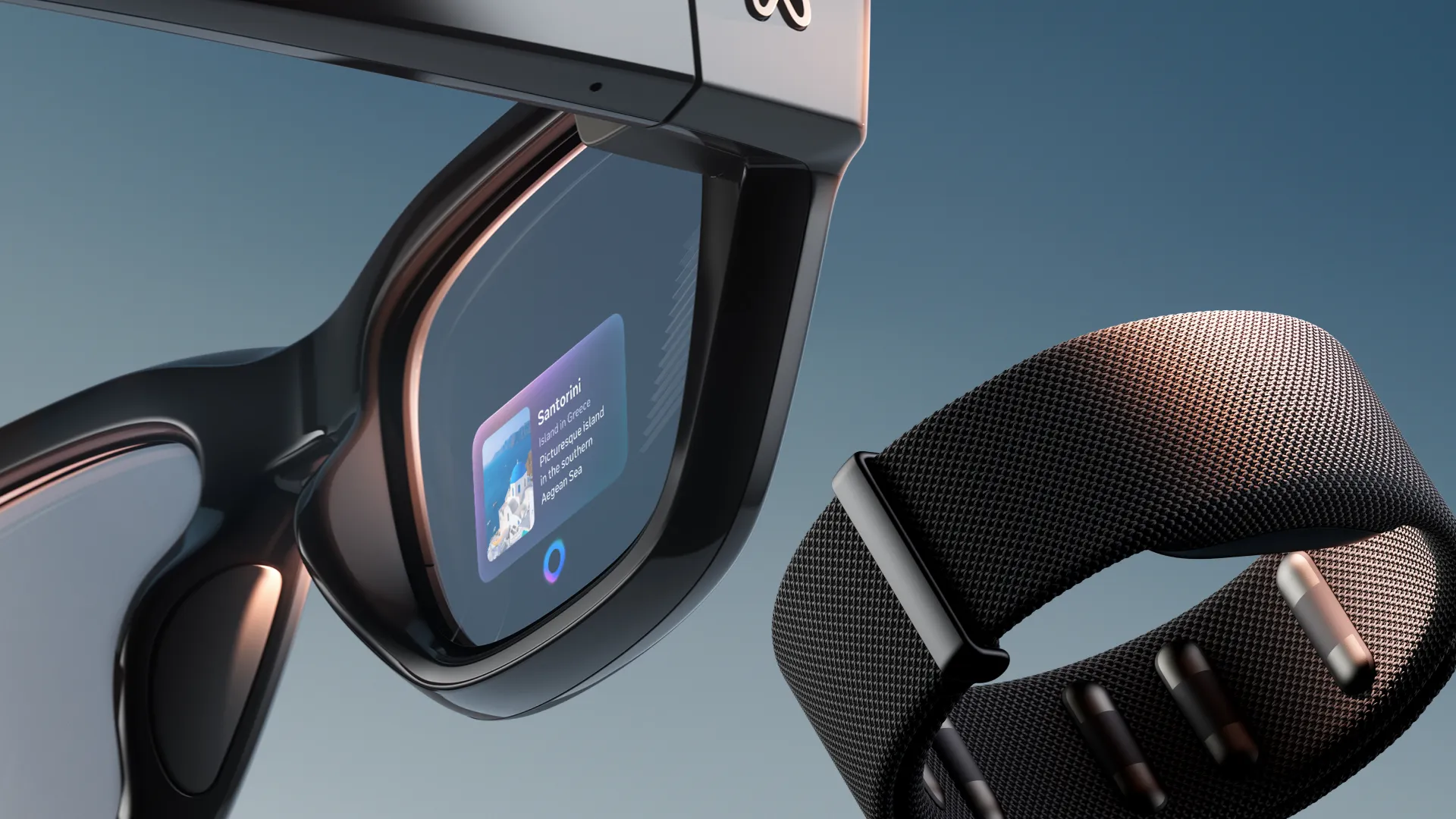
A long press on the temple control opens a menu with real-time language translation, live conversation transcription via Conversate, a teleprompter mode, a to-do list, and turn-by-turn HUD navigation. A double tap surfaces a dashboard showing upcoming calendar events, stock prices, and news. The built-in Even AI assistant runs across all of these, TechCrunch reported this week.
Conversate is worth examining on its own. It started as a live transcription feed. Even since added a "prep notes" mode: users can upload documents before a meeting, and the AI references that material during the conversation or surfaces real-time explainer bubbles as topics arise, TechCrunch reported. That's a different use case than capture. It's augmented listening context delivered silently to the wearer without recording anyone in the room.
The tradeoff is real and shouldn't be minimized. No camera means no visual search, no scene recognition, no photo or video capture. For meeting-heavy, presentation-heavy, multilingual use cases, that's an acceptable exchange. For anyone who wants a general-purpose AI assistant on their face, it isn't.
One privacy caveat survives the camera removal. The G2 has four microphones and a cloud-connected AI assistant. Features like translation and transcription depend on microphone input, and the absence of a lens eliminates the most visible privacy risk without closing the question of what happens to what the glasses hear.
Hardware that works, software that sometimes doesn't
The G2 is a meaningful hardware step up from its predecessor. Display area is 75% larger, brightness climbs from 1,000 to 1,200 nits, and the refresh rate jumps from 20Hz to 60Hz. Microphone count doubled from two to four. The magnesium alloy frame with titanium arms weighs 35–36 grams, carries an IP65 durability rating, and comes in two frame styles, per both TechCrunch and Android Police. Android Police's reviewer wore them all day without major comfort issues; neither outlet reported the frames drawing attention as anything other than regular glasses. The included case holds a 2,000mAh battery and can recharge the glasses seven times before needing a wall outlet, Android Police confirmed.
For a device whose entire value proposition rests on productive utility rather than the novelty of recording, software reliability isn't just a convenience issue. TechCrunch's reviewer reported that early Bluetooth disconnections were severe enough to nearly abandon the G2, and that Even AI frequently failed to activate or mishear commands outdoors despite the four-microphone array, though connectivity improved considerably over several months of use, TechCrunch noted. That trajectory is encouraging. The current state is not yet consistent enough for workflows with no tolerance for dropped interactions.
Ecosystem gaps compound the friction. HUD navigation works only through Even's proprietary app; Google Maps and Apple Maps aren't supported, TechCrunch reported. Phone notifications appear on the lens but can't be replied to and can't be pinned as persistent widgets, Android Police found. In bright rooms, brightness requires manual adjustment through the companion app. None of these are individually disqualifying. Together, they add friction to a device built to reduce it.
The G2 is priced at $599, with an optional companion ring, the R1, at an additional $249.
Whether camera-free smart glasses can survive the market
Reviewers at both TechCrunch and Android Police concluded the G2 is worth buying despite its software gaps. Android Police called it a "great buy" as a smartwatch alternative, and concluded that a camera isn't needed to make smart glasses genuinely useful. TechCrunch's reviewer agreed with Even's direction, if not its current execution consistency.
The competitive picture is harder. Amazon's camera-less Echo Frames have been effectively discontinued, with the company reportedly developing camera-equipped models for both consumer and enterprise use, Computerworld reported. Samsung's forthcoming smart glasses include cameras. Google and Apple are reportedly both developing smart glasses, and the BBC noted that those products are all expected to offer AI and augmented reality features that typically require a camera. Even sits alongside a small cluster of camera-free holdouts, including MIRA, Dymesty, Lucyd, and Huawei's Eyewear 2, in an explicit minority.
Researchers estimate up to 100 million people could buy smart glasses within the next few years, BBC reported. If even a fraction of that group actively prefers not to wear a recording device in professional or social settings, Even's addressable audience is real. Whether the software matures fast enough to reach them and whether the trust problems around camera glasses intensify or fade as the category normalizes will determine whether Even's approach looks prescient or merely principled. Those aren't the same thing commercially, and the G2's software gaps are currently the main reason the question remains open.

Comments
Be the first, drop a comment!