


Samsung Android XR Glasses Price: Why Samsung Charges More Than Meta
Samsung said this week its forthcoming Android XR smart glasses will land in "the premium range" at "a reasonable level," 9to5Google reported. Meta's non-display glasses start at $299. Samsung has not disclosed an exact Samsung Android XR glasses price, a firm launch date, or full compatibility details, only a fall release window, per Android Authority.
Samsung is not positioning the first-gen product as an affordable experiment, Android Authority reported. The pricing signal is deliberate. Understanding what drives it means looking at how Samsung has designed the product, what the hardware actually delivers, and what remains unconfirmed before launch.
What Samsung said about Samsung smart glasses pricing
Samsung's own language is the most reliable signal available. The company is targeting "a reasonable level" within "the premium range," 9to5Google reported this week. The wording offers more insight into Samsung's positioning than its final retail price will, but it does suggest the company expects to land above Meta's $299 baseline. Pricing rumors place the glasses in the $379–$499 band, according to VR.org earlier this month, though that figure comes from speculative pre-launch inference rather than any Samsung disclosure. If those estimates prove accurate, the glasses would sit below the $799 Ray-Ban Display glasses that VR.org cited as the current market ceiling.
The gap between "premium range" and a verified retail price could still shift. What the language confirms is the positioning choice: Samsung is not building a gadget to compete with Meta on price. It is building a Galaxy ecosystem add-on, and the premium framing is baked into that pitch from the start.
Samsung smart glasses vs Meta: ecosystem depth over price competition
Samsung described its glasses as "made by a smartphone specialist" and as "an extension of the experience centered on the smartphone, rather than being a post-smartphone device," 9to5Google reported. That language reads as a pointed contrast with Meta, which has built its glasses to function as a relatively standalone accessory.
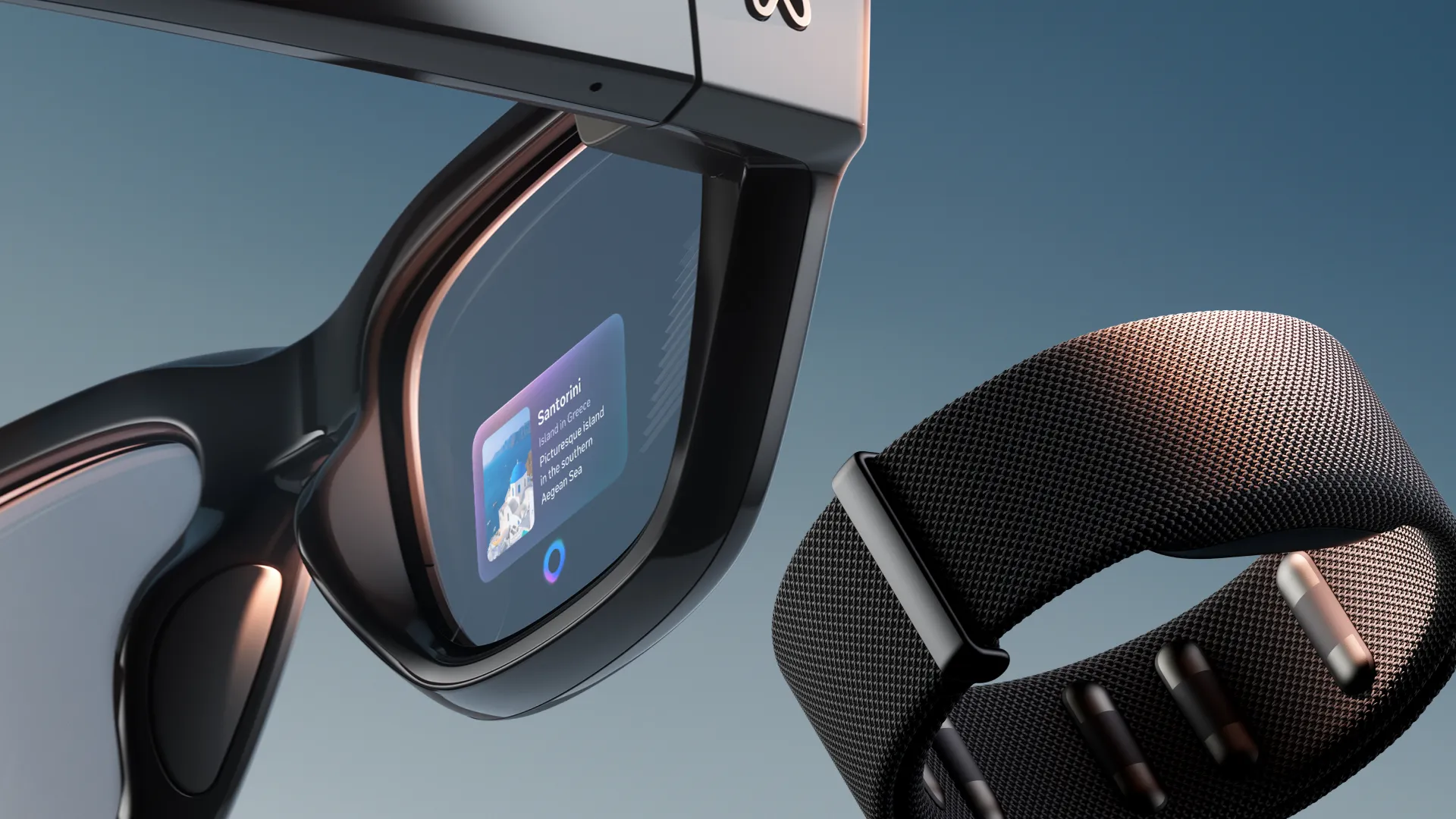
The Galaxy integration shown at Unpacked this week was specific. Wear OS watch gestures control the glasses directly; photos captured by the glasses appear as notifications on a connected phone; the built-in speakers yield priority to Galaxy Buds when both are in use, per 9to5Google. Gemini is accessible via a frame tap or "Hey Google," handling directions, texts, and photo capture without reaching for a phone, according to the Google Blog.
Samsung hinted the full experience relies on pairing with a Samsung phone and Galaxy Watch, Android Authority reported. That said, Google confirmed at I/O earlier this year that the glasses pair with both Android and iOS phones, per the Google Blog. Basic connectivity is broader than Samsung-only. Based on the watch controls, Buds handoff, and phone notification demos, Samsung appears to be reserving some of its best tricks for Galaxy users.
That architecture is not a flaw in the design. It is the design. Samsung is building glasses for people already inside the Galaxy ecosystem, the same way Apple builds AirPods for iPhone users: technically compatible with other devices, but optimized in ways that reward staying in the family. Samsung users in that position have more to gain from tight integration and fewer alternatives that offer it, which makes them the likeliest buyers at a premium price.
Samsung XR glasses release date and hardware: battery, durability, and the no-display decision
No display is the most visible hardware decision Samsung has made, and it is not an oversight. Display-equipped glasses are being held back primarily to keep battery consumption under control, Android Authority reported last week. Google confirmed the same sequencing at I/O earlier this year: audio glasses launch first this fall, with display glasses to follow, per the Google Blog. A 2027 timeline for the display follow-on is rumored, according to VR.org, though neither Samsung nor Google has confirmed that year.
The battery targets are ambitious for the form factor. Samsung is aiming for at least nine hours under heavy use, with a charging case rated for up to seven full recharge cycles, per Android Authority. To get there, Samsung assembled a 50-engineer joint team with Google and Qualcomm, internally called "Power Camp," dedicated to streamlining every data pipeline and squeezing the most from available battery capacity.
On durability, Samsung says the glasses are built to Galaxy smartphone standards: resistant to rain, sweat, dirt, sand, and moisture, with a corrosion-resistant hinge, Android Authority reported. Samsung also claims the glasses are lighter and more comfortable than Meta's current offerings, per 9to5Google, a claim worth holding until independent reviewers test a shipping unit.
Samsung's case for charging more rests on battery longevity, build quality, and ecosystem depth rather than a longer feature list. Meta's $299 glasses offer cameras, audio, and an AI assistant at a lower price, per 9to5Google. Whether Samsung's argument holds depends on where the final number lands and whether the hardware performs as described outside a controlled demo.
Privacy as a prerequisite for daily wear
Camera-equipped glasses with always-on voice access carry a genuine adoption barrier. It is not a technical one. Public comfort with being recorded is a different problem than waterproofing, and Samsung appears to understand that. The company says recording disables automatically when the privacy light is obscured or when the glasses are not being worn, per 9to5Google.
A premium product people are reluctant to wear in a coffee shop does not justify its price. The privacy safeguards are not a feature footnote; they are a condition for the product being useful outside a controlled setting.
Samsung is also borrowing trust from the Galaxy brand, framing the glasses as built to Galaxy smartphone standards, per 9to5Google. For buyers who have owned Samsung phones for years, that framing reduces the perceived risk of adopting a new form factor at a premium price. It is exactly the kind of work a first-gen product needs its brand to do.
What the fall launch still has to answer
Samsung has signaled premium positioning and outlined its hardware and ecosystem arguments. What it has not confirmed: the retail price, the exact launch date within the fall window, which Galaxy-specific features require a Galaxy Watch versus a Galaxy phone, and whether iOS pairing at launch means a full companion app or a limited experience, per Android Authority.
The rumored $379–$499 range from VR.org provides a frame for interpreting the eventual number. A price closer to $379 would suggest Samsung is willing to compete for a broader audience. A price at $450 or above signals confidence in the Galaxy ecosystem argument and acceptance of a narrower initial market.
Beyond price, the launch will need to resolve whether the nine-hour battery claim holds up in reviews, how deep the compatibility gap between Galaxy and iOS users actually runs, and whether Samsung ships the Gentle Monster and Warby Parker designs at a single capability tier or fragments the SKU story on day one. Those answers, more than the price tag itself, will determine whether Samsung's premium bet lands.




Comments
Be the first, drop a comment!