


Samsung Galaxy Glasses vs Meta Glasses: Price, Specs, and Translation
Samsung and Google previewed Galaxy Glasses at I/O in May with a live translation demo that, according to VR.org, nothing else in the smart glasses category currently matches for polish. Meta holds roughly 82% of the global market and is already shipping at scale, per Counterpoint Research via VR.org. Samsung Galaxy Glasses have not shipped a single unit. That gap is the whole story heading into Galaxy Unpacked on July 22 in London, where confirmed specs, pricing, and developer platform details are expected, per VR.org.
What the translation demo showed
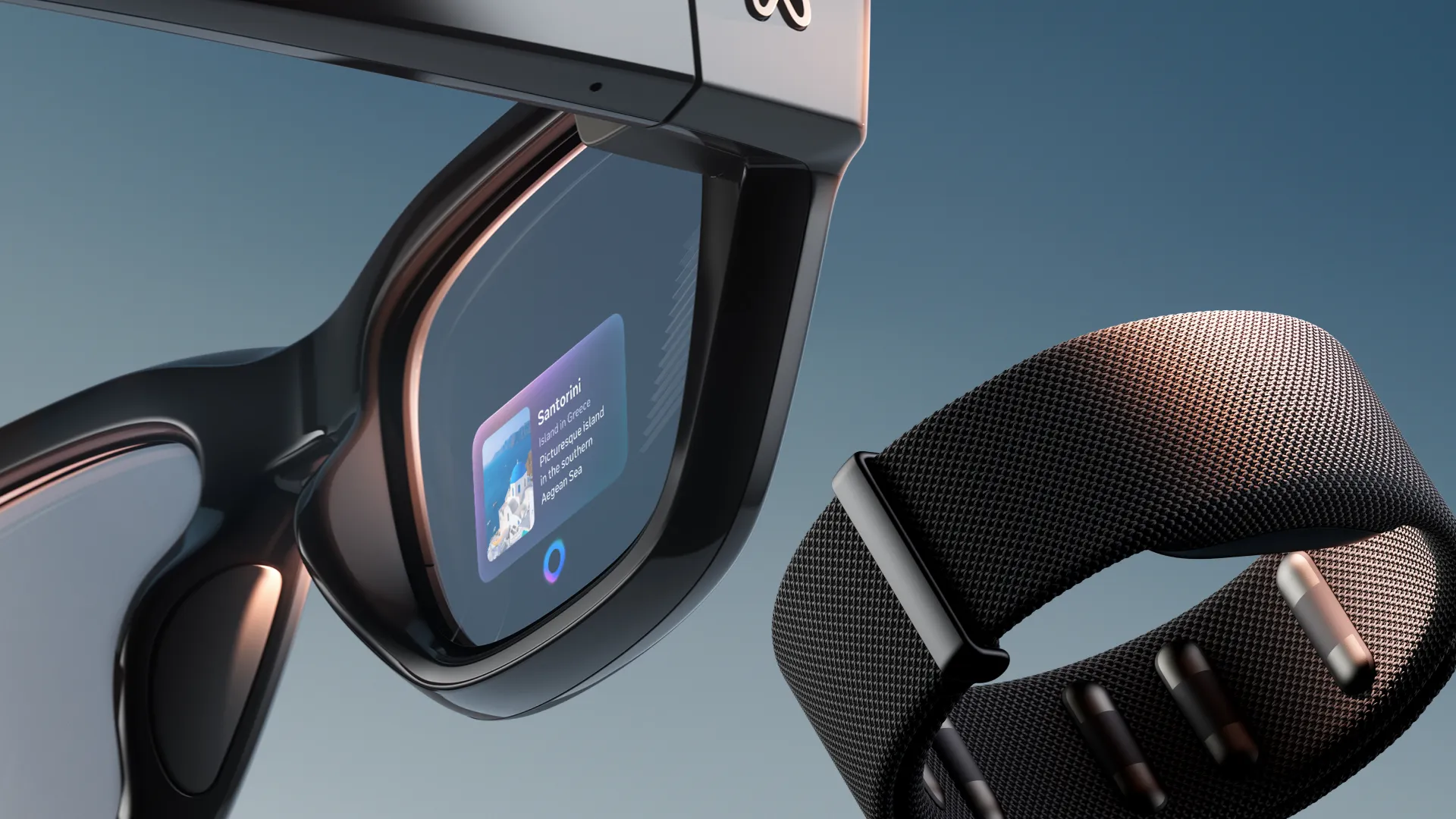
At I/O in May, Gemini translated a live conversation in real time and piped tone-matched audio to the wearer's ear, with no visible interface and no phone interaction required. VR.org called it the killer feature of the Galaxy Glasses pitch and said nothing in the category does this yet at a comparable level of polish. Meta has not publicly demonstrated a glasses-native, tone-matched live translation experience of the same kind.
That specific capability is the clearest answer to what would pull a buyer toward Samsung's glasses over Meta's. Not the design partnerships with Warby Parker and Gentle Monster. Not the Android XR platform ambitions. The feature that matters is a conversational translation experience that works without taking out your phone.
The demo was a controlled stage presentation, and that caveat is worth holding onto.
Why audio-first hardware suits translation better than a camera-first device
Meta has spent five years positioning smart glasses as a camera you wear, with AI layered on top, according to VR.org. Samsung's framing is different. As VR.org put it, Galaxy Glasses are closer to "the assistant you wear," with Gemini as the primary interface rather than one capability among many.
Translation fits that framing well. In a multilingual conversation, a display splits your attention between a screen and a person. Audio-only translation, heard only by the wearer, keeps the exchange natural. A research paper published in late 2025 on Zenodo proposing a smart glasses system for multilingual communication found that audio-based translation with display that activates only when necessary can reduce visual burden and improve usability and social acceptability. That research evaluates design principles, not Galaxy Glasses specifically, but it supports the underlying architecture: for translation, ears-first is a more practical approach than a screen.
Android XR glasses running Gemini 2.5 Pro support real-time translation alongside navigation, messaging, and notification summaries, per VR.org's May coverage. The supporting features are real. Translation is the one that creates a distinct reason to own this device.
Samsung Galaxy Glasses vs Meta Glasses: specs, price, and market position
Here is what is known and what is still unconfirmed before July 22.
- Shipping status: Galaxy Glasses previewed at I/O in May, with a fall window confirmed; Meta is shipping now
- Form factor: Audio-only confirmed for the 2026 Samsung SKU, with a display-equipped follow-on rumored for 2027; Meta offers camera-first options at both the $299 and $799 price points
- Price: Galaxy Glasses rumored at $379–$499; Meta's non-display glasses at $299, Ray-Ban Display at $799
- Key differentiator: Live translation demo via Gemini 2.5 Pro, with tone-matched in-ear audio; Meta has not shown a comparable glasses-native translation experience
- Unknowns: Battery life, microphone performance in noise, phone-to-frame latency, app support at launch
Pricing figures are still unconfirmed rumors, per VR.org. If they hold, Galaxy Glasses would sit between Meta's two products while offering neither a camera nor a display.
On silicon, a Snapdragon AR1-class chip is expected, with compute-heavy tasks offloaded to a paired phone. Google confirmed at I/O that the glasses will pair with iPhones as well as Android phones. The Android XR stack is a three-party build: Samsung on hardware, Google on the OS and Gemini, Qualcomm on silicon, as VR.org reported.
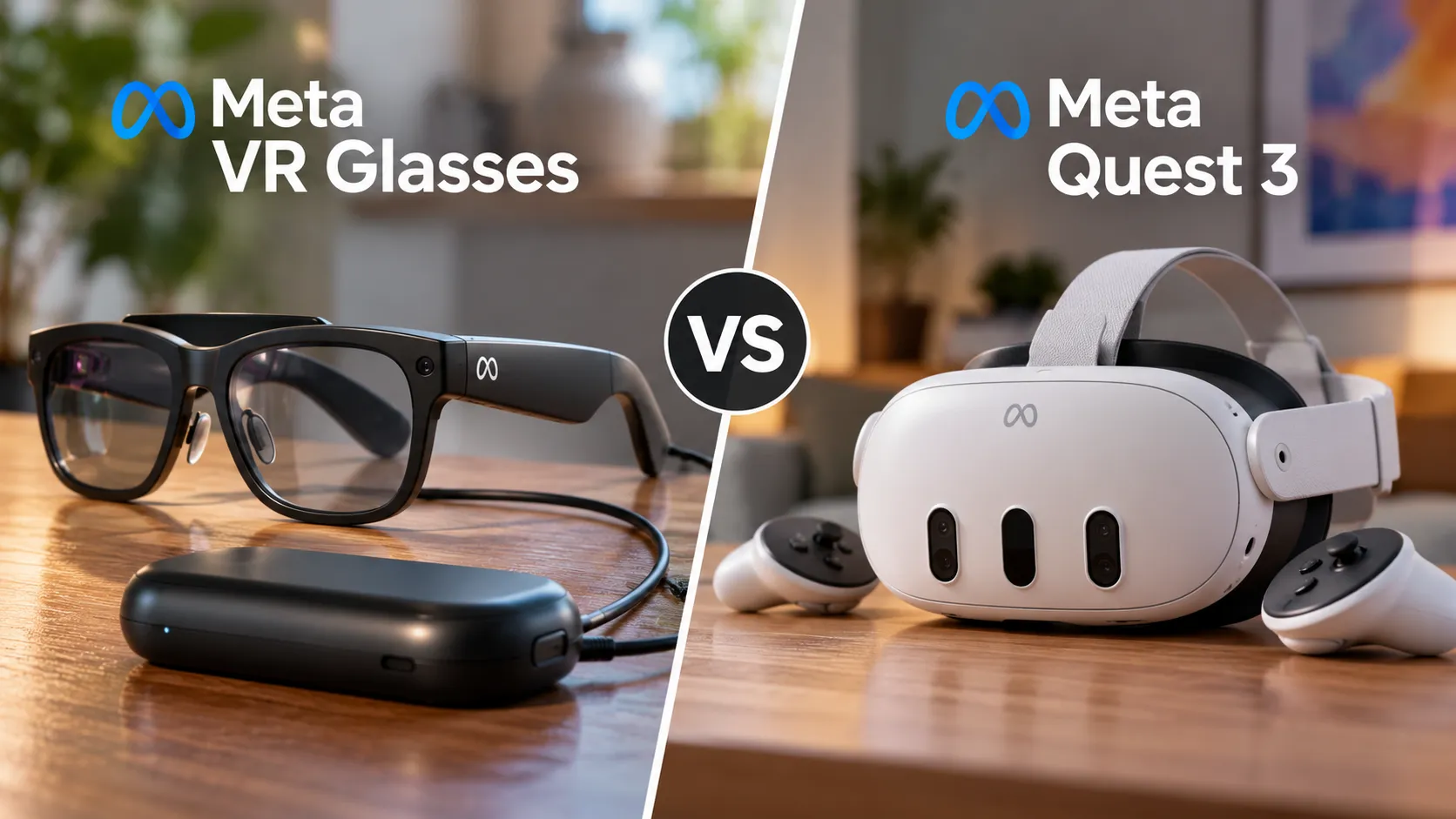
For market context: Counterpoint Research via VR.org put Meta at roughly 82% of the global smart glasses market in the second half of 2025. EssilorLuxottica sold more than seven million Ray-Ban and Oakley smart glasses that year, more than tripling its prior annual total. Meta reportedly paused its planned early-2026 expansion into the UK, France, Italy, and Canada due to limited inventory. Meta is reportedly scaling toward ten million units of annual production capacity by end of 2026, per VR.org. Snap's Spectacles sit at $2,195 targeting true AR; Xreal Aura takes the tethered puck route at under $1,500. Galaxy Glasses, if priced as rumored, would occupy an AI-first audio tier that no current product clearly owns.
Three things July 22 needs to answer
Galaxy Unpacked is thirteen days away. Three questions remain open, and two of them bear directly on whether the translation experience is a sellable product or a well-produced demo.
Translation performance under real conditions. The I/O demo controlled for noise level, connectivity, and language pairs. Phone-to-frame latency, microphone quality, and ambient noise rejection will all determine whether live translation works in the environments where it would actually matter. Battery behavior during continuous translation, a sustained high-compute task, has not been publicly specified. These are not secondary spec questions.
Confirmed price and hardware specs. At a rumored $379–$499, Galaxy Glasses would be asking buyers to pay more than Meta's baseline product on the strength of AI capability alone. That premium needs publicly confirmed battery life, weight, and audio hardware to justify itself. July 22 is where that either happens or does not.
App support at launch. The Jetpack XR SDK is in Developer Preview 4, per VR.org. Whether Google has established clean capability handling for audio-only frames will determine whether Galaxy Glasses arrive with a meaningful third-party app ecosystem or just the first-party Gemini experience. Google's longer-term aim, as VR.org reported, is for Android XR to become the default platform for non-Meta eyewear makers, the same way Android became the default platform for non-Apple phones. That is a multi-year strategy. It does not answer the question of what developers can actually ship this fall.
The Google Glass precedent and what's different this time
Google Glass was demoed in 2012, shipped to developers in 2013, and never became a consumer product. The parallel is imperfect but not irrelevant. Galaxy Glasses carry a more conventional form factor, a more focused use case, and a price point designed for the mass market rather than the developer preview crowd. VR.org noted that Gemini is genuinely capable at the live-translation and visual-question tasks that make smart glasses feel useful rather than gimmicky.
Whether that capability survives contact with a noisy restaurant, a crowded transit station, or a fast-moving multilingual conversation is what Galaxy Unpacked, and then reviewers, will need to show. The demo was in May. The product ships in the fall. July 22 is the first chance to close the gap between those two things.




Comments
Be the first, drop a comment!