



Meta smart glasses privacy concerns in Europe: Germany's recording-light test
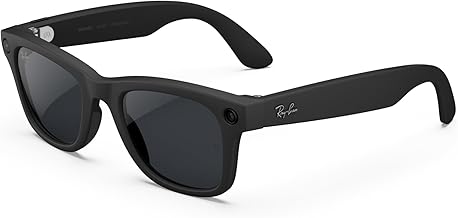
Thomas Fuchs did not mince words. Hamburg's data protection commissioner told German broadcaster ARD in an interview last week that Meta's smart glasses amount to "disguised cameras," argued they could fall foul of a German law written to catch hidden recording devices tucked into everyday objects, and said an outright ban "could be possible" (UC Today; PetaPixel). That single interview captures the moment Meta smart glasses privacy concerns tipped from public unease into active regulatory scrutiny across Europe, though Fuchs is far from alone in raising them. A product-design debate over a small LED light has turned into a regulatory one, with implications for how the whole bloc treats cameras that look nothing like cameras.
France's data regulator, CNIL, warned three months ago that the devices create a "significant risk" of surveillance that is "almost invisible and omnipresent" and could reshape society in ways that are hard to reverse (PetaPixel). In the Netherlands, digital rights group Bits of Freedom has asked for restrictions on par with those governing stalkerware, telling Dutch broadcaster NOS that a world where everyone wears recording glasses means losing "complete privacy on the street" (PetaPixel). And the European Data Protection Board, which brings together data protection authorities from across the EU, is expected to publish a report on the technology by the end of summer, according to Euractiv reporting cited by PetaPixel.
None of this settles whether Meta's glasses get banned, redesigned, or left largely alone. It does clarify what's actually being tested: whether "notice," the legal idea that people should know when they're being recorded, can survive a camera small enough to disappear into an ordinary pair of glasses.
Why are Meta smart glasses facing privacy concerns in Europe?
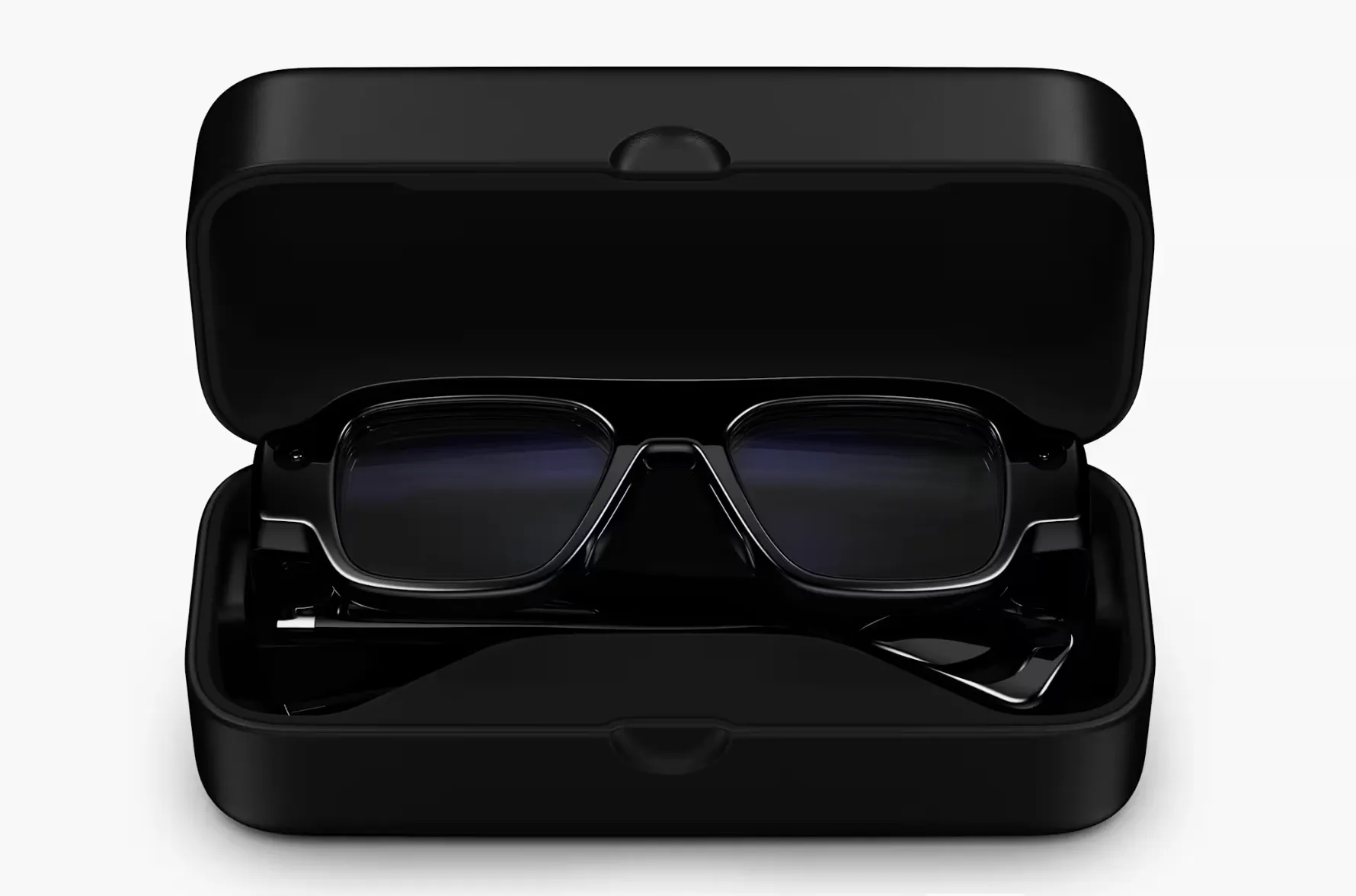
The core problem is a design one before it's a legal one. Raising a phone to eye level is a visible, almost theatrical gesture that tells the people around you that recording might be happening. Smart glasses remove that cue entirely, because they're built to pass as an ordinary pair of glasses, not a camera. As Jakub Zientala, founder of the EU public affairs consultancy Ungovern, put it to UC Today: "Smart glasses remove that gesture. They look like ordinary eyewear" (UC Today).
That abstract worry turned concrete after German digital rights group HateAid reported that police in Potsdam had received complaints from young women who said they had been secretly filmed by male strangers wearing Meta glasses at a public swimming pool (PetaPixel). These are allegations, not adjudicated findings; no court or regulator has confirmed exactly what happened at the pool. But they've given Germany's broader concerns a face, and it shows in how the country's regulators now talk about the technology.
Scale is part of why regulators are treating this as more than a niche gadget problem. Ray-Ban Meta smart glasses have sold more than 2 million units worldwide, according to the preprint's citation of sales figures reported by V.Magazine, and competitors including Xiaomi, Rayneo, and Rokid have all launched their own camera-equipped eyewear (arXiv preprint). The products are no longer confined to prototypes or one-off demonstrations; they're sold widely enough to make the issue commercially significant rather than a hypothetical for privacy scholars. Regulators are responding to a documented gap between what the hardware signals and what the people around it can actually perceive, plus a documented incident in Potsdam that suggests the gap has real consequences.
Are Meta smart glasses recording indicators visible enough?
Fuchs told ARD that his own office ran tests and found the LED indicator on Meta's glasses too faint to reliably see in normal daylight (UC Today). That testing came from Hamburg's data protection authority, a regional German body, not from Ireland's Data Protection Commission, which is Meta's lead regulator across the EU. The finding lands on exactly the question Irish regulators had already raised, and it's why the smart glasses recording indicator has become the narrowest and most testable part of the whole dispute.
Academic research points in the same direction independently. A study of 525 people, split between smart-glasses wearers and bystanders, found that only 41.3% of bystanders and just 35.3% of wearers considered the LED indicator sufficient (arXiv preprint). Even people who own and use the product don't fully trust its own warning light. The study was conducted in China through surveys and interviews, so it can't be read as a direct measure of European opinion or a predictor of how EU courts would rule, but it suggests dissatisfaction with this kind of indicator isn't unique to Germany or to one regulatory culture.
Meta has already changed the hardware once under pressure. After Ireland's DPC questioned whether the original indicator gave bystanders adequate warning, Meta introduced a larger, blinking light along with tamper-detection measures aimed at making the light harder to disable or cover (UC Today). Hamburg's daylight test doesn't automatically settle whether that revised indicator meets a legal notice standard. It does raise the question of whether "the light exists" is enough to satisfy one in the first place.
Beyond the light: data use, accountability, and the AI question
A brighter LED, even a perfect one, only solves half the problem. It addresses notice at the instant a recording starts, not what happens to the footage afterward. The reporting raises two different regulatory questions: whether people receive meaningful notice at the moment of recording, and what happens to their personal data after capture. Hamburg's authority has already moved on to the second one.
Hamburg's DPA is investigating whether footage collected through the glasses feeds into AI training pipelines (PetaPixel). Ireland's DPC sought information from Meta after reports surfaced that sensitive footage captured through the AI-enabled glasses could be reviewed by contractors in Kenya (UC Today). Meta's response has been that shared content passes through filtering, including face blurring, and that captured media stays on the user's device unless they actively choose to share it (UC Today).
The UK's Information Commissioner's Office wrote to Meta earlier this year, following separate reporting on how sensitive smart-glasses footage was handled, and said products processing personal data need to keep users in control and offer genuine transparency (UC Today). The cited reporting describes inquiries and warnings here, not a final finding against Meta.
There's also a practical accountability gap that no amount of hardware polish fixes on its own. Even someone confident they were filmed without consent may struggle to prove it happened, identify the person wearing the glasses, or show that footage was later used or shared, as UC Today notes in describing the limits victims face (UC Today). A visible light might deter casual misuse, but it doesn't create a paper trail.
The 525-person study puts a number on how sharply this asymmetry is felt. Bystanders consistently demanded stronger data-sharing controls and more prior consent than wearers said they were willing to provide, and the gap was widest in a hypothetical gym scenario involving strangers, producing the largest gaps of any scenario tested across data sharing, content transparency, prior consent, and proactive notification (arXiv preprint). It's a Chinese sample describing a hypothetical, not a European field study, so it shouldn't be read as proof of what French or German bystanders would say specifically. But it illustrates, with real numbers, why a wearer's comfort and a bystander's comfort tend to pull in opposite directions.
What could EU smart glasses regulation actually require?
The EDPB's coming report isn't automatically binding law. It's a coordinating document from a body that brings European data authorities together, and its practical weight depends on what national regulators do with it once it lands (PetaPixel). Beyond that report, there are several plausible routes an EU-level response could take, and they aren't mutually exclusive.
One is national action: individual data protection authorities, like Hamburg's or Ireland's, using their existing enforcement powers against Meta directly. Another is coordinated interpretation, where multiple national regulators converge on a shared reading of existing privacy rules without any new legislation being written. A third is context-specific restriction, limiting or banning recording in defined settings such as hospitals, schools, or changing rooms rather than regulating the product itself. A fourth, and the slowest, is new EU-wide legislation or technical standards applied uniformly across the bloc. Fuchs has said he's already discussing policy approaches with Irish counterparts, which matters because Ireland regulates Meta as its lead EU authority (UC Today). That kind of coordination could push toward one of the first two routes, though coordination between regulators doesn't by itself create a binding rule.
The ban-versus-redesign debate
Not everyone thinks prohibition is the right tool, even among people who take the privacy risk seriously. Zientala argues a ban "should be the last option," not "the first response to every new technology that creates a risk" (UC Today). His alternative is a set of design mandates: a tamper-resistant indicator bright enough to see outdoors, automatic shutdown if the light is covered or damaged, and audible alerts in especially sensitive settings such as hospitals, schools, or changing rooms. His underlying logic is straightforward: "The less visible the camera becomes, the more visible the warning must be" (UC Today).
The academic research offers some support for that kind of tiered approach, with the same caveat that it's a Chinese study and a preprint, not a finalized measure of European preferences. Researchers tested twelve privacy mechanisms and found that a context-adaptive model, favoring passive visibility in public spaces, structured negotiation in semi-public ones, and automatic recording restrictions in sensitive environments like gyms or changing rooms, matched different protections to different settings rather than applying one rule everywhere (arXiv preprint). Geofencing-based controls scored highest of all twelve mechanisms tested, suggesting that automatically restricting recording in defined sensitive zones lands better with both wearers and bystanders than asking people to negotiate consent in the moment.
The realistic fight isn't over whether smart glasses can exist. It's over whether the EU imposes enforceable design and data-handling standards, better indicators, contextual restrictions, limits on downstream data use, before any government reaches for prohibition.
What comes next
Based on the evidence so far, the more probable near-term outcome is mandated design change rather than an outright ban, though that's an inference from the available reporting, not a confirmed trajectory. Germany has provided the clearest public discussion of possible restrictions of any European jurisdiction so far, built on Fuchs's daylight visibility test and his explicit hidden-camera legal theory (UC Today). France and the Netherlands have applied real political pressure through CNIL's warnings and Bits of Freedom's campaigning, but the cited reporting describes warnings and advocacy, not a confirmed formal proceeding against Meta in either country (PetaPixel).
What remains genuinely open is whether the EDPB's report carries any binding weight, whether Germany's hidden-camera statute will actually be tested against Meta's product in court rather than in interviews, and whether the calls for bans coming out of France and the Netherlands turn into government action or stay public pressure that fades once headlines move on.
If mandated design changes are where this lands, brighter and tamper-resistant indicators, automatic shutdown triggers, and context-specific restrictions in places like hospitals and changing rooms, that would still mark something new. It would give regulators, rather than Meta's product designers alone, a much larger say in what counts as adequate warning when a camera has been built to look exactly like a pair of glasses.



Comments
Be the first, drop a comment!