


Apple Vision Pro surgery study explained: what UCSD found
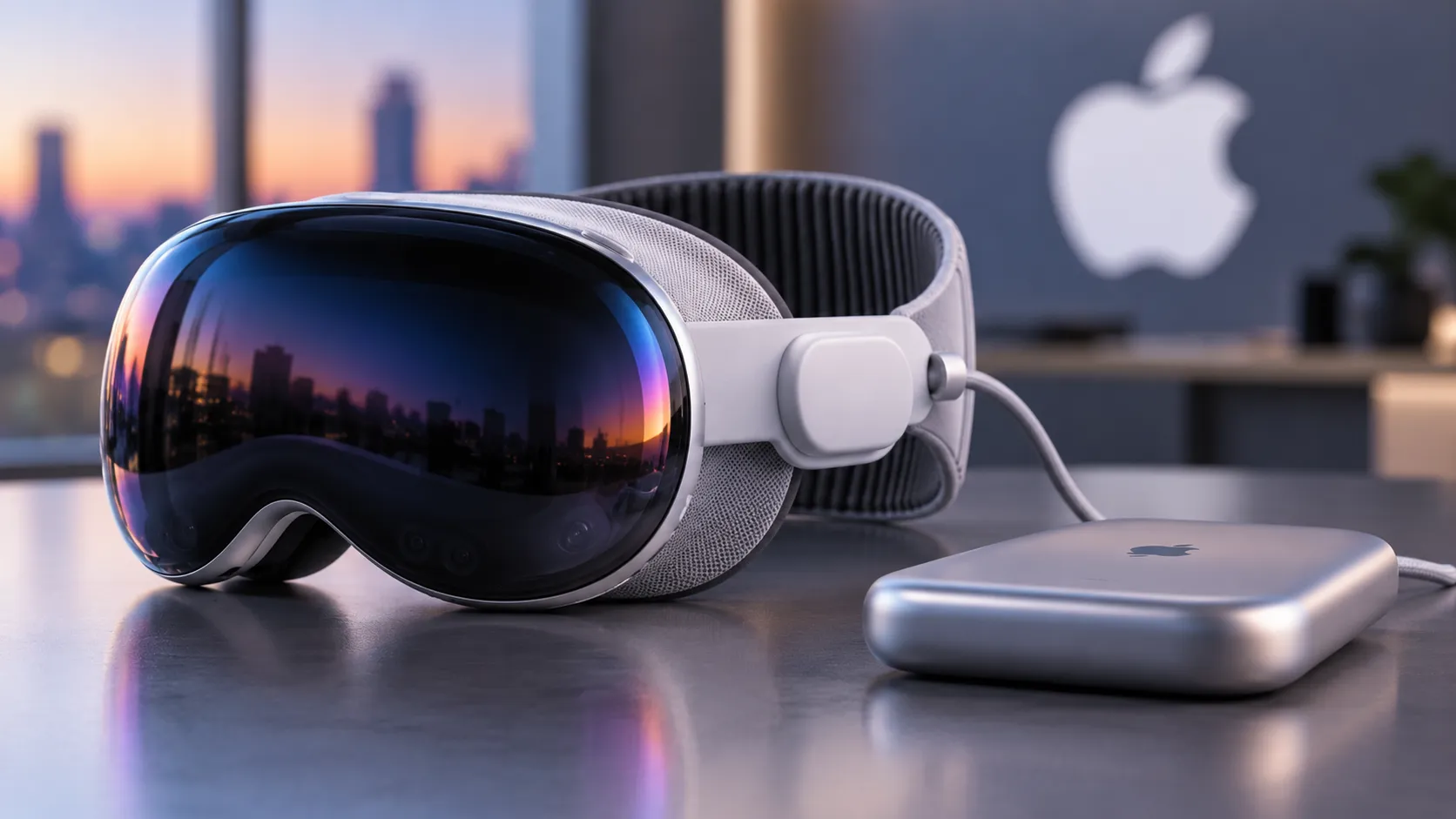
An Apple Vision Pro surgery study out of UC San Diego's Shiley Eye Institute has surgeons trading a shared operating-room monitor for a headset, and reporting they preferred the switch on nearly every measure researchers tracked. Every participating surgeon said they preferred operating with the Vision Pro, and the trial found operating times ran 19% shorter in the headset group, UC San Diego Health reported.
UC San Diego Health announced the clinical trial in 2024, framing it as one of the first formal attempts to test spatial computing hardware inside a working operating room. Vision Pro had already carved out a niche in cataract procedures elsewhere, according to UC San Diego Health, but this trial targeted something narrower: endoscopic dacryocystorhinostomy, a tear-duct procedure that's a mouthful to say and hadn't previously been evaluated with Apple's headset.
Researchers compared 16 surgeries performed using the Vision Pro against 16 size-matched control cases done with a standard monitor setup, each involving two primary surgeons assisted by three attending surgeons, per UC San Diego Health. Across all 32 cases, researchers reported full functional success with no complications, along with reduced surgeon workload and improved ergonomics, UC San Diego Health said.
Apple Vision Pro vs. traditional monitor-based surgery
The setup difference is the whole story here, and it's a fairly simple one. In the control procedures, the operating and assisting surgeon shared a single 32-inch 4K monitor mounted at the head of the table.
To actually look at it, both had to rotate their upper bodies roughly 90 degrees away from their forward-facing posture, UC San Diego Health noted. Ninety degrees is a lot to ask of someone holding an instrument near a patient's eye. Do that repeatedly over a procedure and the toll on neck, shoulders, and focus adds up.
With the Vision Pro, each surgeon instead saw an individually positioned, spatially anchored image in their own field of view, researchers noted. No shared screen, no twisting away from the surgical field, eliminating monitor sharing and body rotation entirely.
That's a plausible mechanism behind the workload and ergonomics improvements researchers reported. Whether it also explains the 19% time difference is a separate question, and one the available reporting doesn't fully settle.
What the study can and can't tell you
It's worth being precise about what a 16-versus-16 comparison actually proves. Researchers describe the control group as "size-matched," UC San Diego Health said, which suggests they selected comparable cases rather than randomly assigning surgeons to one setup or the other. Beyond that, the available reporting doesn't spell out the full study design, so the 19% figure is best treated as an observed result in a small, matched comparison rather than proof the headset caused the time savings.
Small matched comparisons like this one carry a familiar limitation. Surgeon familiarity, case complexity, and how a team's routine shifts over the course of a study can all nudge operating times in ways that have nothing to do with the equipment. None of that makes the result wrong; it just means the finding reads as promising rather than settled, at least until a larger or randomized trial replicates it.
Then there's the cost claim, the detail most likely to get repeated without scrutiny. Researchers describe the Vision Pro as costing less than 1% of what they call "relevant conventional surgical equipment," UC San Diego Health reported. Exactly which equipment is being compared isn't specified, and the figure doesn't appear to account for software licensing, sterile-workflow adaptations, IT integration, or how often a headset needs replacing in clinical use. None of those costs are necessarily large, but they're unaccounted for, which makes the 1% number a comparison against specific hardware rather than a full economic case.
Worth flagging too: Apple Vision Pro's own price has moved since launch, climbing from $3,499 to a $3,699 starting price amid a global shortage of processors and memory, according to UC San Diego Health. Consumer reviews routinely knock the device for being heavy and expensive, which makes its "bargain" framing in an operating room a genuine contrast worth noting, not a contradiction to wave away.
The rest of the evidence: not the same study, not the same claim
The UCSD comparison isn't happening in isolation. Apple Vision Pro is showing up across several corners of medicine, and these studies test different things. Stacking them together doesn't add up to one big trial. It maps out several small, separate ones.
The closest parallel comes from general surgery. A study published in Surgical Endoscopy in mid-2025 describes what it calls the first U.S. series of minimally invasive general-surgery cases performed using the headset, covering 41 procedures across three attending surgeons and four trainees, according to the study. Open-source software let each surgeon position up to three virtual displays in their own field of view.
Researchers reported no intraoperative complications, zero 30-day morbidity or mortality, and a mean workload score of 22.3 on the NASA Task Load Index, which they characterize as indicating low perceived mental workload. There was no significant difference in workload scores between attending surgeons and trainees. The authors call the work a proof of concept and flag its single-center design and small sample size as limitations, per the study.
A different application shows up in a 2024 case report on neurosurgical planning. Before performing a ventriculoperitoneal shunt placement on a patient with hydrocephalus, clinicians used the Vision Pro to visualize and manipulate a 3D model of the patient's anatomy, using that view to plan the surgical approach and entry point, according to the case report. That happened before surgery, not during it, which makes it a fundamentally different use case than UCSD's intraoperative comparison.
Afterward, clinicians rated the 3D models as realistic (4.5 out of 5), found the real-world view display natural (4.3 out of 5), and reported no eye strain or fatigue (4.5 out of 5). The survey reflects one-time user impressions from a single case, not a measurement of planning accuracy or clinical outcomes.
A third strand of research tests the headset for training rather than live surgery. A 2025 pilot study had 42 intensivists use the Vision Pro paired with a wireless ultrasound probe to practice central-line placement on a mannequin, according to the study. Both junior and senior participants gave high usability ratings, with no significant differences between experience levels, and researchers noted strengths in intuitive handling, ergonomics, and precise image placement.
The same study flagged image resolution in the near field and depth perception as unresolved challenges. Since this was simulated work on a mannequin rather than a clinical procedure, it belongs in a different evidentiary category than either the UCSD or general-surgery studies.
Where this leaves the evidence
Put together, these studies show Apple Vision Pro is technically adaptable to a range of surgical and medical settings, but adaptability isn't the same as proven benefit. Each one measures something different: intraoperative display replacement in eye and general surgery, preoperative planning in neurosurgery, and simulated skills training in critical care. None of them corroborate each other in the way a multi-site trial would.
The UCSD trial's most defensible finding is narrow. In a 32-case comparison of one specific eye procedure, replacing a shared monitor with an individually positioned headset display was associated with shorter operating times, lower reported workload, and unanimous surgeon preference, UC San Diego Health reported. That's a real result worth taking seriously. It isn't yet evidence that Vision Pro improves surgical outcomes broadly, and the cost comparison driving headlines rests on a comparator that still hasn't been fully identified.
What would move this from promising to settled is straightforward: larger trials that control for surgeon experience and case variation, a fuller accounting of software and integration costs beyond the headset's price tag, and clinical testing of the depth-perception limits already flagged in simulation work. Until then, Apple Vision Pro has a credible foothold in a handful of narrow surgical applications. It hasn't yet earned the broader claim that keeps getting handed to it.


Comments
Be the first, drop a comment!