


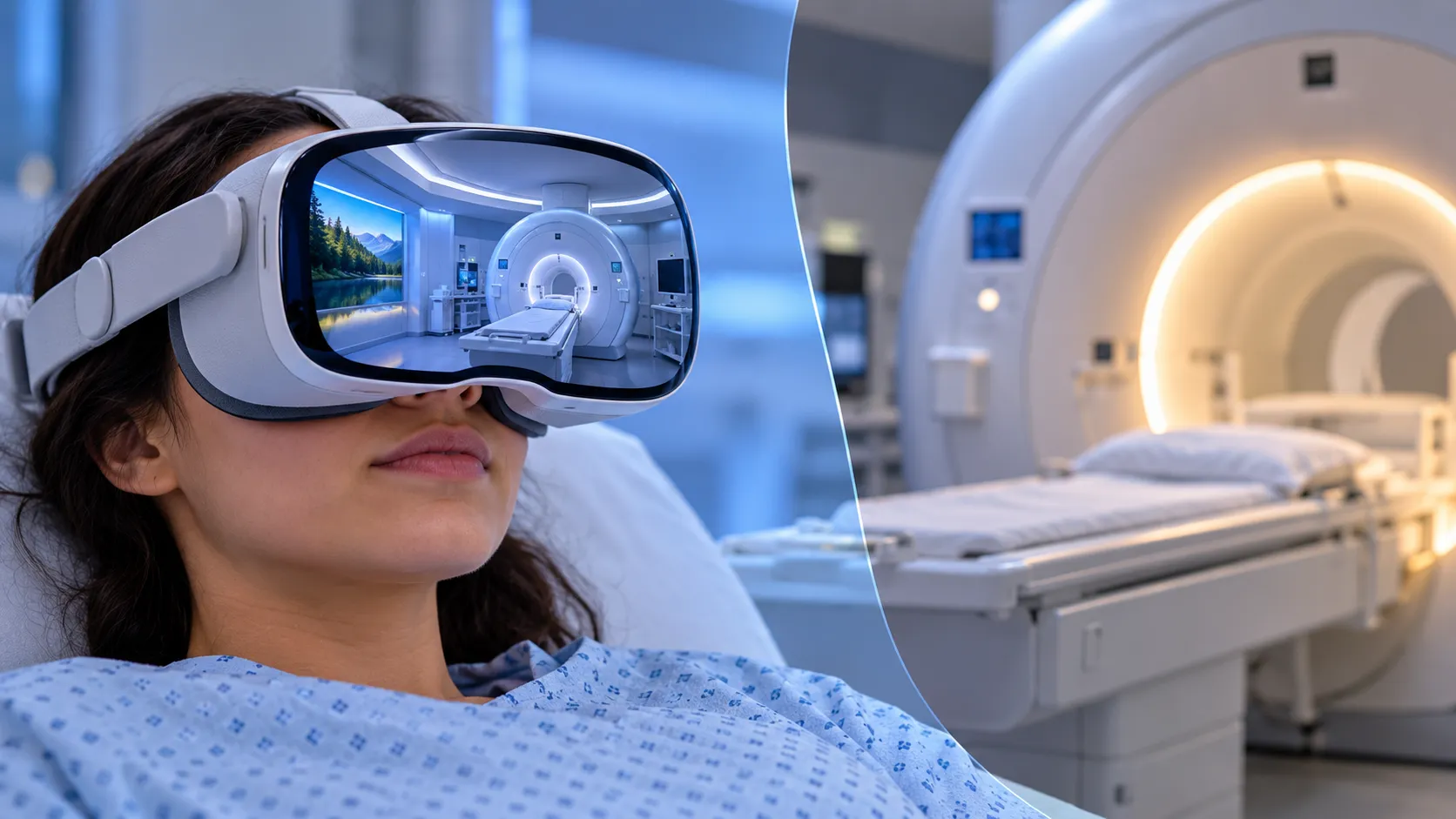
Three cardiomyopathy patients who had refused cardiac MRI scans because of claustrophobia put on VR headsets, trained inside a simulated hospital and scanner, and then, on exam day, climbed into the real machine and finished their scans without cancellations or complications. It is direct, if extremely narrow, evidence that virtual reality for MRI anxiety might help patients who otherwise cannot tolerate the scan.
The researchers describe cardiac MRI as an important tool for diagnosing and assessing cardiac disease and note that claustrophobia affects up to 10% of patients undergoing the procedure. That's a meaningful barrier to a valuable diagnostic test.
The three-patient preliminary feasibility study, published in 2024, is only one version of what "VR" means in this research. The term covers at least three distinct approaches: multi-session exposure therapy, a one-time virtual tour, and immersive procedural education. They are not interchangeable, and they are not equally tested for cardiac imaging.
This piece looks at what the cardiac-specific evidence actually shows, what related research on general MRI, PET-CT, and cardiac procedures can and can't confirm, and why lower anxiety scores and completed scans can be two different outcomes.
Three patients, one small study
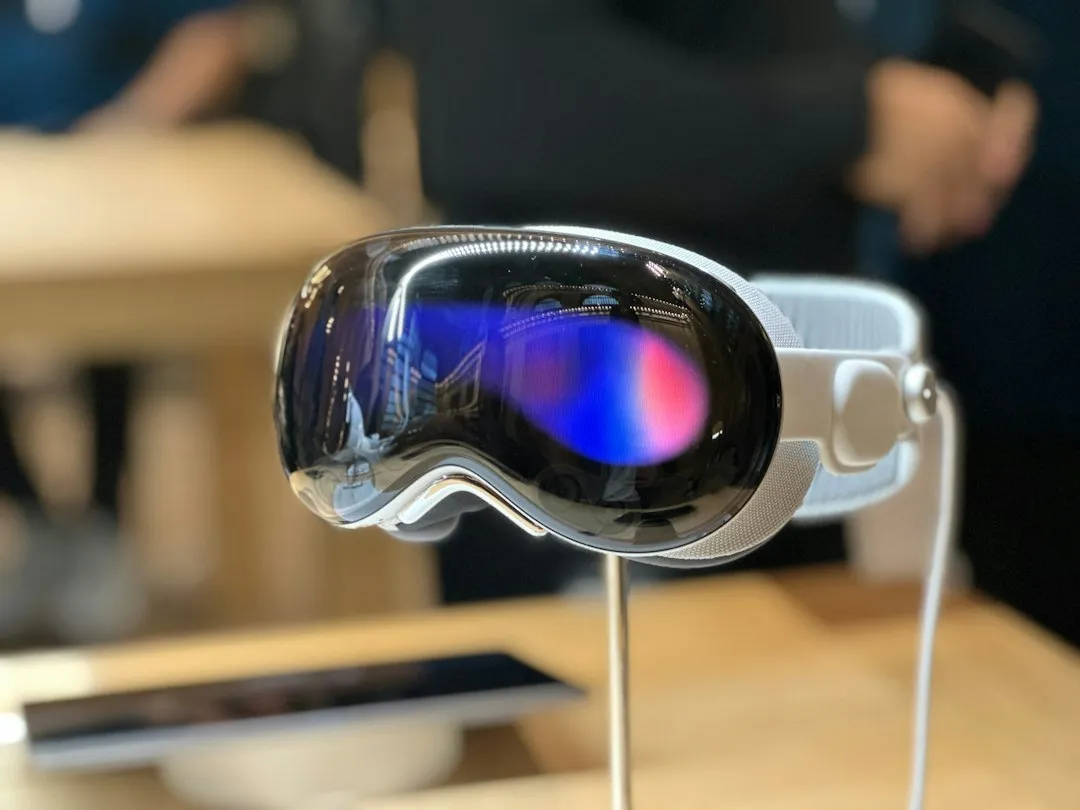
The intervention in the 2024 study was specific: three patients who had initially refused cardiac MRI trained in a metaverse-based virtual hospital using a headset at set intervals ahead of their scheduled exam.
Training took place one week, three days, and one day before the real scan. Patients experienced the process from a first-person perspective, including entering the simulated scanner, following instructions, and hearing realistic MRI sounds.
On exam day, all three entered the actual scanner and completed the scan without cancellations or complications. Their State-Trait Anxiety Inventory scores fell from an average of 72 out of 80 before the first simulation to 41 before the real cardiac MRI.
The study also reports that the resulting cardiac MRI images were of high quality and could be accurately interpreted.
The result is encouraging, but the design cannot establish whether VR caused the improvement. There was no comparison group of similarly claustrophobic patients who underwent another form of preparation or simply returned for a second attempt.
Among the research discussed here, this is the only study that directly combines cardiac MRI, claustrophobia, and VR preparation. Everything else provides context for interpreting those three cases.
Virtual reality exposure therapy for MRI: what the evidence shows
Cardiac imaging aside, the broader MRI literature offers a sharper picture, and it complicates the story rather than simplifying it.
A pilot study published in 2026 tested Virtual Reality Exposure Therapy, or VRET, built around one psychoeducation session followed by four exposure sessions inside a life-sized, sound-accurate virtual scanner. That's a structured therapy protocol, not a quick preview, and its participants were claustrophobic patients rather than a cardiac-specific population.
Across all participants, phobia and state-anxiety scores dropped significantly after treatment, with p values of 0.002 and less than 0.001, respectively.
The study had no untreated control group, so those results show a before-and-after change rather than proving VR caused the improvement.
The more interesting result appears when researchers separated patients according to whether they eventually completed MRI. Among those who successfully underwent the scan, phobia scores were significantly lower after treatment, at p = 0.026, but state-anxiety scores were not significantly different, at p = 0.888, according to the pilot study.
A patient can therefore report less MRI-related phobia while still experiencing substantial anxiety when the real scan arrives. Reduced anxiety scores and successful completion do not necessarily move together.
A newer pediatric study adds another caution. Researchers studied 79 children ages 6 to 12 who had initially been scheduled for sedated MRI and gave them a brief psychological intervention involving psychoeducation, cognitive restructuring, relaxation, and graded exposure. One group also received a VR simulation.
Anxiety and claustrophobia fell in both groups, and only 5.3% ultimately required sedation, but researchers found no significant advantage from adding VR to the psychological preparation. Because there was no untreated control group, the study cannot establish how much improvement resulted from the preparation itself, but it found no clear incremental benefit from the VR component.
Compare those structured approaches with a lighter-touch intervention tested in PET-CT imaging.
Researchers created a single virtual walkthrough covering the patient journey from reception to lying inside the scanner and tested it primarily for acceptability rather than clinical effectiveness, according to a 2025 PET-CT pilot study.
Participants rated the virtual tour positively, with an average experience score of 4.30 out of 5. Heart rate was also significantly lower during the real PET-CT than during the virtual tour, at p = 0.01.
That's a feasibility signal, not proof that the tour reduces anxiety or improves completion rates across a broader patient population. The researchers themselves called for a multicenter study before drawing firmer conclusions.
These approaches differ in kind, not just in scale. VRET is structured exposure therapy delivered over multiple sessions. The pediatric intervention combines VR with broader psychological preparation. The PET-CT tour is primarily an orientation tool.
None has been directly compared against the others in cardiac MRI patients.
What adjacent cardiac procedures do, and don't, tell us
Cardiac MRI isn't the only place VR has appeared in cardiac care.
An American Heart Association scientific statement on patient education for pediatric heart disease cites a randomized study of adults undergoing cardiac catheterization. In that trial, 64 patients received either standard preparation or standard preparation plus a site-specific immersive VR experience.
The VR group had a significantly greater reduction in anxiety, better procedural understanding, and slightly higher satisfaction than controls. Anxiety fell by 5.1 points in the VR group compared with 4.0 in the control group, with p = 0.03. Procedural understanding and satisfaction were also significantly higher.
Those findings come from cardiac catheterization, however, not from lying inside an enclosed MRI scanner. Catheterization presents a different environment and different sources of anxiety, so the results cannot simply be transferred to claustrophobic cardiac MRI patients.
The most systematic cardiac evidence cited here comes from surgery rather than imaging.
A systematic review and meta-analysis pooled nine randomized trials covering 888 adult cardiac surgery patients. Seven studies included in the anxiety analysis showed a nonsignificant trend toward lower preoperative anxiety with VR, with a standardized mean difference of -0.23 and a 95% confidence interval from -0.50 to 0.04.
Four studies measuring satisfaction similarly produced a nonsignificant pooled result, with an SMD of 0.36 and a wide confidence interval from -0.65 to 1.38.
VR was generally well tolerated across the trials, with only mild and transient adverse events reported.
That's useful reassurance about feasibility and tolerability in cardiac surgery, but it does not show that VR reliably resolves claustrophobia during cardiac MRI.
Taken together, these adjacent studies suggest VR can be acceptable and useful in some cardiac settings. They don't establish that it is an effective treatment for cardiac MRI claustrophobia.
Why scan completion, not just anxiety scores, is the real test
Reduced anxiety and a successfully completed scan are not the same outcome, and the VRET data illustrate that gap directly.
Phobia scores fell significantly among patients who completed their MRI after VRET, while their state-anxiety scores did not. A patient can therefore still feel anxious and nevertheless complete the scan, or show improvement on one psychological measure without the same change appearing on another.
Completion alone also isn't the only useful endpoint.
The 2024 cardiac MRI feasibility study reported that all three patients completed their scans and that the resulting images were of high quality and suitable for interpretation. That's encouraging, but three successful scans cannot establish how reliably the approach protects image quality across a wider claustrophobic population.
The PET-CT researchers suggested reduced anxiety-related movement could potentially improve imaging, but their pilot did not directly test whether the virtual tour improved diagnostic image quality.
A larger MRI trial should therefore measure several outcomes together: anxiety, completion, cancellations, motion artifacts, diagnostic image quality, need for sedation, and any adverse effects.
What comes next
The next cardiac MRI study needs to measure more than whether patients enter the scanner.
A useful trial would need a comparison group so researchers can separate the effect of VR training from ordinary familiarization, repeat scheduling, psychological preparation, or another intervention.
It should track completion and cancellation rates alongside anxiety and claustrophobia scores, while also measuring image quality, motion artifacts, sedation use, adverse events, and the number of training sessions required.
The 2024 cardiac MRI study used three VR sessions. The 2026 VRET pilot used psychoeducation plus four exposure sessions. The pediatric MRI study found no clear additional advantage from adding VR to a broader psychological intervention. Those protocols have not been tested head to head.
Which patients stand to benefit most also remains unclear. People with diagnosed claustrophobia, patients with a previous aborted MRI, children otherwise scheduled for sedation, and the broader population referred for MRI may respond differently.
So does the choice between a brief virtual tour and a multi-session exposure protocol.
For now, the strongest conclusion is narrower than the technology's promise: VR can prepare some patients for intimidating procedures, and three previously MRI-refusing cardiac patients successfully completed scans after immersive training. Controlled evidence showing that VR itself reliably improves cardiac MRI completion, anxiety, or image quality is still missing.



Comments
Be the first, drop a comment!