



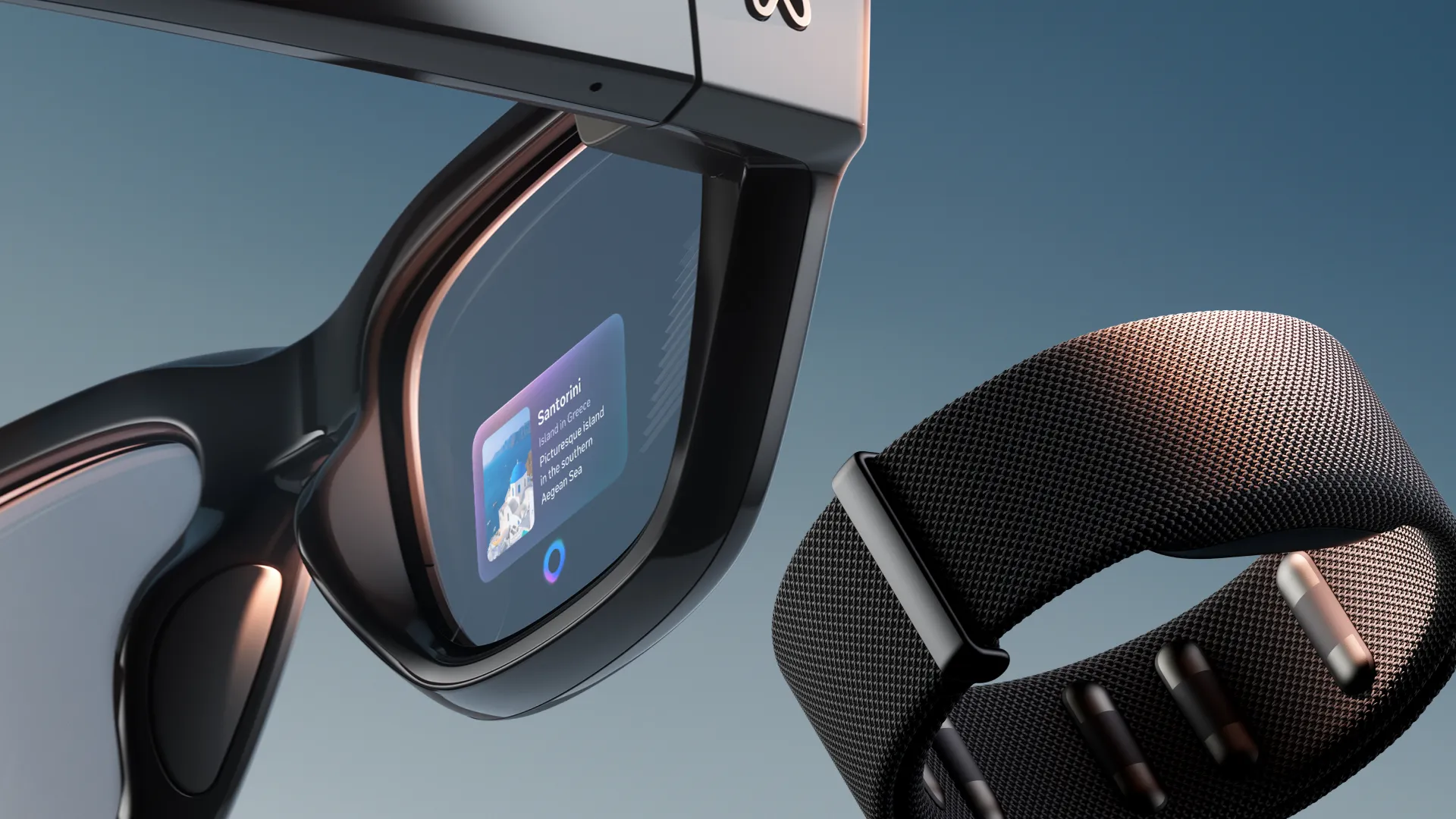
Norway is moving to tighten its rules for smart glasses, with facial recognition emerging as the clearest potential target. The government is considering a ban on features that identify other people in public, but it has not proposed outlawing smart glasses or wearable cameras themselves.
In an Aug. 25 announcement on smart glasses, Digitalisation Minister Karianne Tung said Norway wants stronger regulation as artificial intelligence becomes more tightly integrated with cameras, microphones, and other sensors in everyday wearables.
No draft law, effective date, or enforcement framework has been published. The government plans to convene an expert group to develop regulatory options, then study and consult on any proposals it decides to pursue.
Why facial recognition is the target
Tung's concerns extend beyond glasses to wearables that combine AI with cameras and microphones. The restriction she has identified most specifically is facial recognition used to identify other people in public spaces, which she presented as one possible rule rather than settled policy.
Norway is not starting from a regulatory vacuum. In a June 24 parliamentary response, Tung said remote biometric identification without consent would already be unlawful in many circumstances under the country's technology-neutral privacy rules.
Smart glasses create a more practical problem because bystanders may struggle to tell whether a device is capturing audio, video, or other information about its surroundings. Existing privacy law can apply to the technology while still leaving questions about transparency, enforcement, and what additional safeguards may be needed.
Norway is already pushing some of those decisions down to institutions. Tung has urged public- and private-sector leaders to decide whether smart glasses should be permitted in workplaces and other premises. Education Minister Kari Nessa Nordtun has separately encouraged Norwegian schools to address smart glasses in their codes of conduct.
Norway's Consumer Council wants stronger action. Digital policy director Finn Lutzow-Holm Myrstad has urged retailers to stop selling smart glasses until the legal framework becomes clearer.
A facial-recognition ban would not stop recording
Facial recognition and recording are separate capabilities. Prohibiting a device from identifying someone would not, by itself, prevent a wearer from taking photos, video, or audio without that person's knowledge.
That distinction is especially important with smart glasses. A phone pointed at someone is relatively conspicuous; eyewear with an embedded camera can be much harder to recognize as a recording device. Facial recognition adds another layer by potentially connecting an image of an unknown bystander to an identity.
Myrstad has pointed to Meta's work on facial-recognition technology as evidence of that risk. The capability is not currently available to consumers, however. Meta told The Guardian that its glasses do not have facial recognition technology, while separate reporting has documented patents and internal work exploring how such features could function.
Even without facial recognition, wearable cameras raise questions about consent. Norway has not said whether future rules could extend beyond real-time identification to recording, storage, or sharing. That boundary could determine whether the country regulates a particular biometric capability or moves toward broader restrictions on wearable-camera use.
Accessibility complicates any broader approach. Smart glasses can support navigation, scene descriptions, transcription, and other assistance for blind, low-vision, deaf, and hard-of-hearing users. Restricting a biometric feature is therefore very different from restricting the underlying hardware.
Australia shows three regulatory paths
Norway is not alone in trying to determine where wearable cameras fit within existing privacy law. Australia's parallel debate shows how differently governments can approach the same technology.
One option is to restrict the hardware itself. Australian Greens lawmakers, with backing from some independents, plan to propose a 12-month import moratorium on wearable recording devices while stronger privacy protections are considered.
The Australian government has not adopted that approach. Attorney-General Michelle Rowland said on Aug. 31 that an import ban is not part of the current privacy-law consultation, although the government has not ruled out other measures.
A second approach is to regulate conduct rather than hardware by targeting nonconsensual recording, storage, and sharing. A third is to put more responsibility on manufacturers. Australia's eSafety commissioner has called for automatic facial blurring and clearer recording indicators, shifting some privacy protection into the design of the product itself.
Local authorities can also move faster than national governments. Brisbane City Council has already begun banning nonconsensual filming at public pools. Smart glasses can still be brought into the facilities; the rule targets recording people without permission rather than possession of the device.
Together, those measures illustrate three different regulatory levers: restrict the hardware, restrict how it is used, or require stronger privacy safeguards in the product itself.
Norway still has to draw the line
Norway's policy is still taking shape. The expert group is expected to work quickly and recommend regulatory options before the government decides whether new rules should be developed and sent through consultation.
Where regulators draw the technical boundary could have direct consequences for XR development. A narrow prohibition focused on facial identification might require feature-level restrictions or regional controls. Rules covering recording, storage, or sharing could reach camera APIs, operating-system permissions, enterprise policies, and the way devices signal capture to people nearby.
Workplaces may move before national legislation does. Hospitals, schools, government offices, research facilities, businesses handling confidential information, and other sensitive environments can set their own rules for when camera-equipped glasses may be worn or used.
For developers and hardware makers, that means privacy may increasingly have to be treated as a systems-design problem rather than a policy document added after launch. Recording indicators, bystander protections, permission controls, regional feature restrictions, data-retention settings, and enterprise administration could all become part of the product architecture.
The challenge will grow as smart glasses become less conspicuous and the AI behind them becomes better at interpreting what a wearer sees. The more seamlessly these devices blend into everyday life, the harder it becomes for everyone around the wearer to understand when sensing, recording, or identification is taking place.
Norway has not banned smart glasses, and it has not yet written the rule that would govern them. The more consequential question is where it ultimately draws the boundary between seeing, recording, and identifying — distinctions that could shape not only how smart glasses are used, but what XR platforms are built to allow in the first place.


Comments
Be the first, drop a comment!