


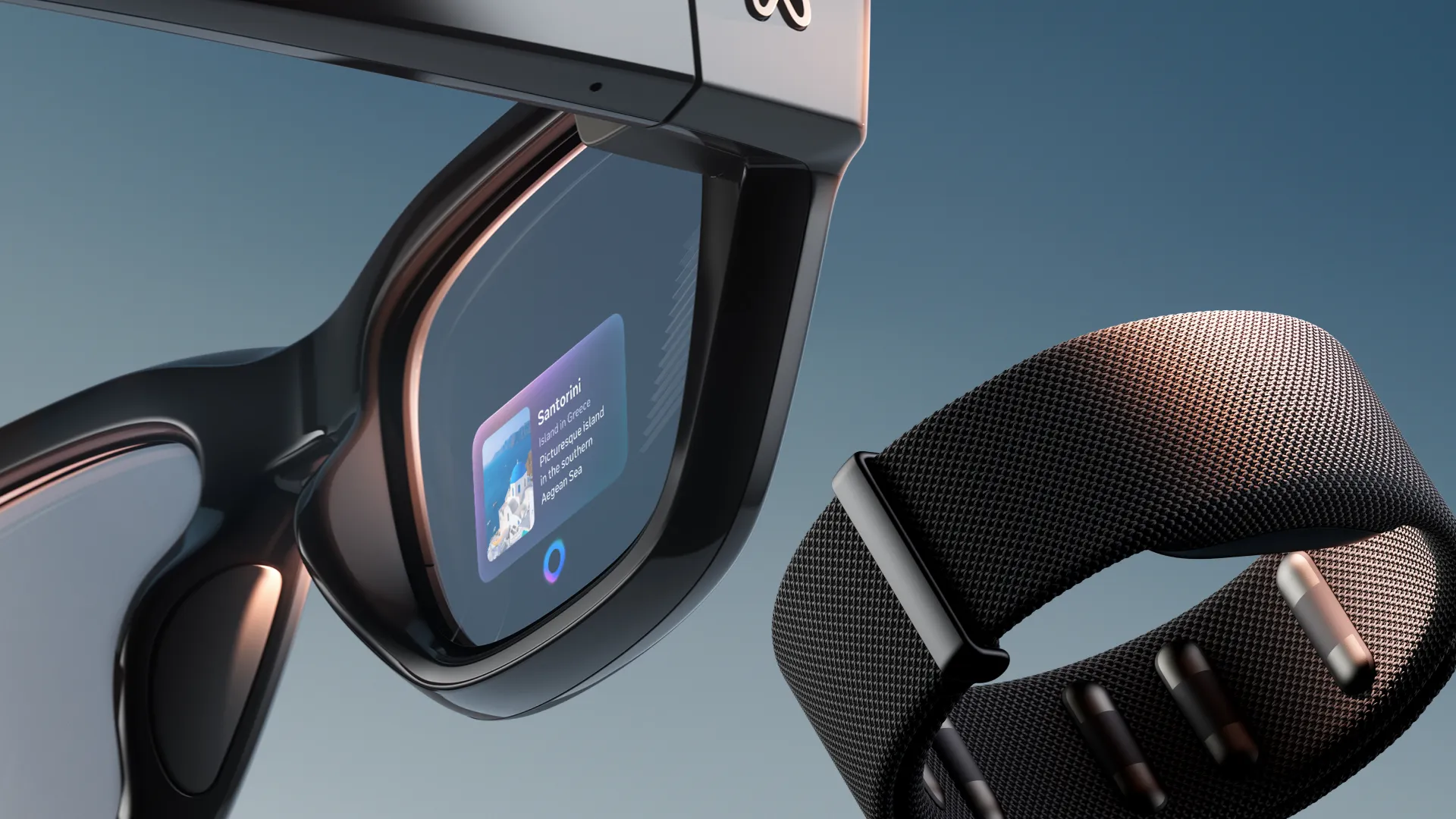
Security researchers found functional facial-recognition code in Meta AI, the companion app used with Meta's smart glasses. The unreleased system could convert a face into a biometric signature, compare it with stored faceprints and alert the wearer when it recognized someone.
Meta removed the code from the app on June 5, one day after WIRED published its findings. The feature had never been enabled for ordinary users, and Meta later described it as exploratory rather than a finished product.
EFF's Threat Lab independently verified the code through static analysis and said the recognition system was present and active but not exposed to consumers.
An outside researcher demonstrated that the underlying pipeline worked by manually adding a face to the app's database in debug mode. When that face appeared again, the system produced a "Person recognized" alert.
That makes the distinction important: Meta had built a testable facial-recognition system into software distributed to users' phones, but it had not released a consumer facial-recognition feature.
What Meta smart glasses facial recognition could do
EFF said the system represented faces as a series of 2,048 numbers describing facial features, then compared newly detected faces with entries already stored in the database.
WIRED reported that Meta called the system NameTag internally.
The software was designed to recognize people seen through the glasses' camera and alert the wearer when it found a match. Faces it did not recognize could also be cropped, indexed and stored locally for later processing, according to WIRED.
Meta removed nearly all of those components in the June 5 Meta AI update. WIRED's follow-up analysis found that the update stripped out the facial-recognition libraries, recognition process, alert system and folder intended to store cropped faces and biometric signatures.
A few dormant references remained, including a debug-menu label and a link designed to open a recognized person's profile.
Meta spokesperson Andy Stone told WIRED after the removal that the feature was "purely exploratory" and that no final decision had been made about whether to release anything.
The company has not announced NameTag as a consumer feature since then.
Why face matching raises different privacy questions
Recording someone and identifying someone are different capabilities.
A camera can capture a stranger in public without knowing who that person is. Facial recognition can potentially connect the image to an identity and other information associated with that person.
That difference drove opposition before the code was discovered.
In April, a coalition led by the ACLU, ACLU of Massachusetts and New York Civil Liberties Union called on Meta to abandon facial recognition for its glasses. The letter was signed by 75 organizations.
The groups argued that such a system could allow a glasses wearer to identify strangers at places such as protests, medical clinics and businesses and potentially connect their names with information available elsewhere.
The coalition also raised concerns about risks to immigrants, religious minorities, LGBTQ+ people, people of color and others who may rely on being able to move through public spaces without being automatically identified.
Those are the organizations' stated concerns, not evidence that NameTag was used that way. The system never became publicly available.
WIRED also reported on an internal Meta planning document that discussed the timing of a possible facial-recognition launch in relation to expected opposition from civil-society groups. That document reflected internal planning, not a confirmed launch schedule.
Meta has used facial recognition before
This was not Meta's first encounter with facial-recognition technology or the legal questions surrounding it.
Facebook agreed in 2020 to a $650 million settlement of a class-action lawsuit alleging that its photo-tagging facial-recognition system violated Illinois' Biometric Information Privacy Act. A federal judge gave the settlement final approval in February 2021.
Later that year, Meta announced it would shut down Facebook's broad Face Recognition system and delete more than 1 billion stored facial-recognition templates.
At the time, Meta said it was moving away from broad identification while continuing to explore narrower uses of facial recognition, particularly approaches that could operate privately on a person's own device.
NameTag fits that history more closely than a completely new direction. WIRED reported that the faceprint database used by the unreleased system was stored on the user's phone, although Meta did not answer several questions about where the faceprint data would come from or whether any information could eventually reach its servers.
What removing NameTag did not change
Removing NameTag did not remove the cameras, microphones or cloud-processing features already built into Meta's glasses.
Meta's current privacy documentation says photos and videos captured for a user's gallery remain on the glasses until the wearer chooses to import them to the phone through the Meta AI app.
Once imported, they are stored in the phone's photo library.
Some features work differently.
Meta's current Cloud Media support page says certain functions, such as asking the glasses by voice to send a photo, can require photos or videos to be uploaded to Meta's cloud for processing and temporary storage.
Meta says Cloud Media is stored for up to 30 days before automatic deletion. Users can turn Cloud Media processing off under the glasses' privacy settings in the Meta AI app.
Turning it off can affect features that depend on cloud processing.
Meta also says users can delete voice recordings associated with Meta AI. Once the underlying information is deleted, Meta says it will not be used for future model training, although deleting data does not reverse learning already incorporated into a trained model.
These data flows are separate from facial recognition. Removing NameTag did not remove them.
What owners can control and what bystanders can see
Glasses owners have controls for captures, voice settings, notifications, Cloud Media and other information shared with Meta.
Bystanders have fewer controls because they do not own the device.
Meta uses a capture LED on the front of its AI glasses to signal when the camera is taking a photo or recording video.
Earlier privacy reporting raised concerns that the light could be covered or modified. Meta now says current glasses disable the camera when the capture LED is blocked.
In Meta's July explanation of its AI-glasses privacy features, the company also said it was expanding that protection so physical tampering with or destroying the LED can disable the camera.
That does not give a bystander control over whether someone chooses to record them in the first place, but it changes the older claim that simply hiding the indicator reliably defeats the safeguard.
Meta's own guidance tells users to ask permission before taking photos or video around other people and to avoid recording in places where people have an expectation of privacy.
What Meta says about facial recognition now
Meta's current public smart-glasses pages do not offer facial identification as a consumer feature.
Its current prototype-testing policy also states that photos and videos captured during product testing are not used for facial recognition.
That is more explicit than Meta's position was when the NameTag code surfaced in June, but it is not the same as a permanent commitment never to develop facial recognition for glasses.
Meta executives have continued discussing the technology publicly.
In July, WIRED reported that Meta CTO Andrew Bosworth described how a potential face-recognition system could work while Meta continued to characterize NameTag itself as an unreleased or exploratory feature.
Meta has not announced a launch date, opt-in system or supported use case for NameTag.
What's still unresolved
The clearest fact is that Meta built a functional but unreleased facial-recognition system for its smart-glasses ecosystem and distributed much of its underlying code inside the Meta AI app.
The code was removed after WIRED's June report and EFF's analysis. Ordinary users never received access to the feature.
What remains unknown is whether Meta will revive NameTag or a similar system, what data sources a future version would use and what consent controls would apply to the wearer and to people being identified.
Meta's current product and testing documentation says facial recognition is not an active feature and that prototype-test media is not used for facial recognition.
For now, the facial-recognition system uncovered in June is gone from the consumer app. What has not disappeared is Meta's broader interest in glasses that can understand what the wearer sees, along with the privacy questions that become sharper if those glasses eventually move from recognizing objects and surroundings to identifying people by name.












Comments
Be the first, drop a comment!