


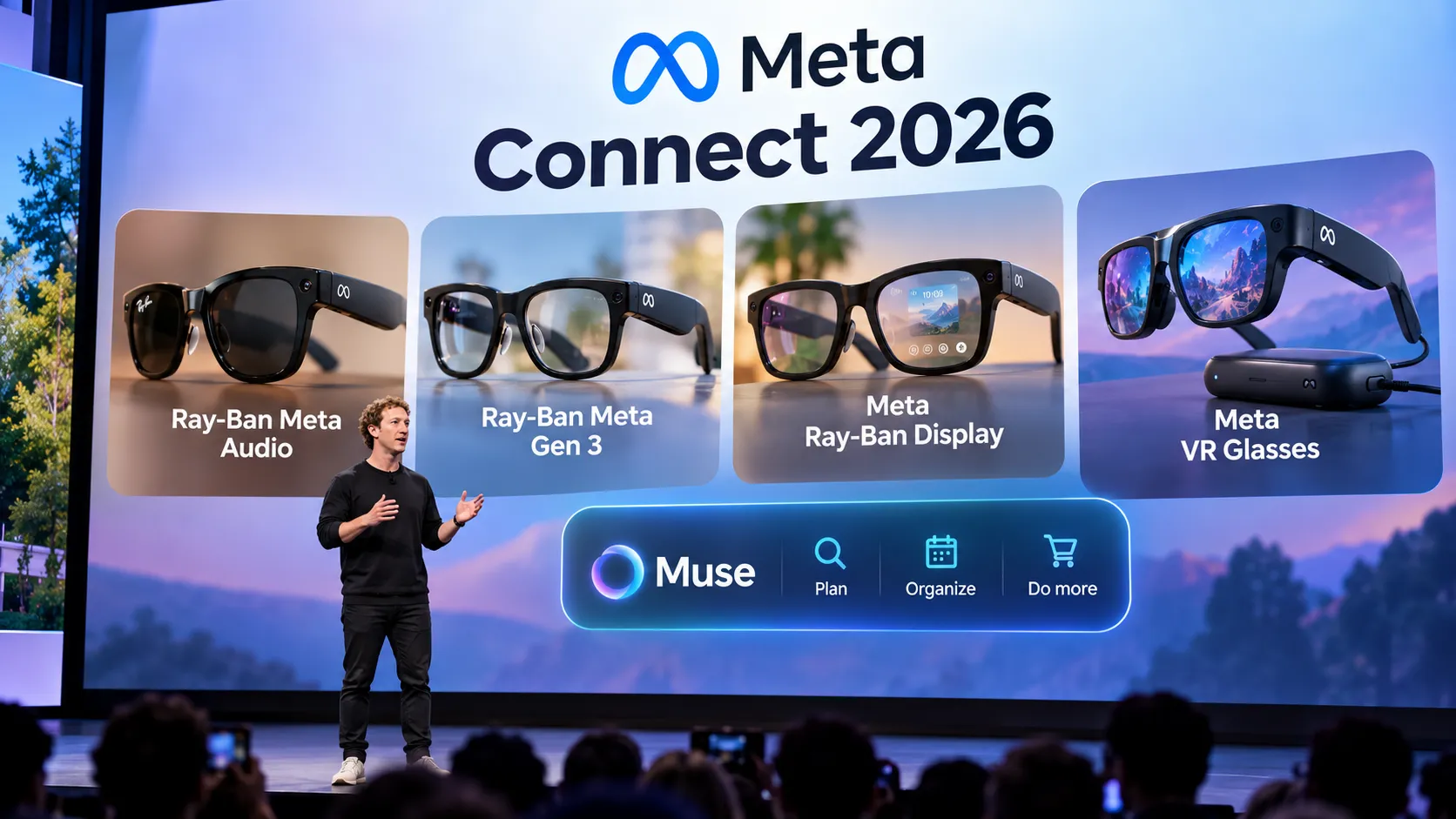
Live coverage of Meta Connect 2026, updated Sept. 25.
At Connect 2026, Meta put its Muse personal AI agent at the center of a hardware lineup spanning everyday glasses and a new VR device. The pitch is less about replacing VR than extending Meta's AI across phones, glasses and headsets.
Muse launched Sept. 8 as a personal AI agent that can handle tasks such as booking travel, filling out forms and making purchases. Meta says it is now available in the U.S., Canada and Mexico, with more markets coming.
The hardware announcements range from $249 Meta Glasses to $1,299.99 Meta VR Glasses arriving in spring 2027. In between are new Ray-Ban Meta Audio glasses, Ray-Ban Meta Gen 3 and expanded availability for Meta Ray-Ban Display.
Meta Connect 2026 live updates: what Muse can already do
Muse is the clearest example of something already shipping.
Meta launched Muse Sept. 8 on iOS, Android and muse.ai, with WhatsApp available as another way to communicate with it. Meta's Connect materials now list the agent as available in the U.S., Canada and Mexico.
Muse goes beyond answering questions. It can open its own browser, fill out forms, send emails, book travel and complete purchases after getting approval for sensitive actions.
For shopping, Muse supports Link by Stripe, which can generate a one-time-use virtual card so the merchant does not receive the user's real card number. Meta also announced additional shopping partners at Connect, including Walmart, Best Buy, Sephora, Ulta, Wayfair and others, with Shop Pay and PayPal joining its payment options.
Expedia is coming for travel planning, while Instacart, Notion, GitHub, Box and other services are also being integrated.
Muse runs inside what Meta calls Muse Secure VM, a dedicated cloud-based virtual machine containing its browser and connected data. A separate Sentinel agent has to approve actions before they reach the internet, and Muse asks the user before sensitive steps such as sending an email or completing a purchase.
Users choose which services Muse can access and what it can do with each one. Meta also provides an audit trail of actions and says users can opt out of having Muse interactions used to train its AI models.
One privacy feature is still coming rather than available now. Meta says Muse Confidential VM will arrive later this year with the entire virtual machine encrypted using a key held only by the user, which Meta says would prevent even the company from accessing its contents.
Muse is also coming to Meta's AI glasses for hands-free help with tasks, calendars and longer-term goals. Meta has not announced a date for that integration.
Meta's glasses lineup runs from $249 to $799
Connect added several products and expanded others.
Ray-Ban Meta Audio: Starts at $349. Preorders are open, with shipping Oct. 13. Meta rates the camera-free glasses for up to 12 hours of use plus another 48 hours from the charging case.
Ray-Ban Meta Gen 3: Starts at $449 and is available now. It keeps the 12-megapixel camera, adds 3K video, a customizable action button and up to nine hours of battery life.
Meta Adventurer: Starts at $249 with a plug-in case. Preorders are open, with sales beginning Oct. 23.
Meta Ray-Ban Display: Starts at $799 in the U.S. Online ordering is now available there. The glasses are also on sale in Canada and the U.K., with France, Italy and Germany following Oct. 13.
Meta says it will offer more than 100 AI-glasses combinations across Ray-Ban, Oakley and Meta Glasses by the end of 2026.
Ray-Ban Meta Audio is Meta's first camera-free glasses model. It weighs 43 grams and comes in Clubmaster and Burbank styles. The lack of a camera distinguishes it from the rest of Meta's mainstream AI-glasses lineup.
Ray-Ban Meta Gen 3 keeps a camera and adds a six-microphone array that Meta says reduces more than 90% of background noise. Meta also plans to add Dolby Atmos spatial-audio capture to its AI glasses later this year.
Meta Adventurer is now the company's least expensive Meta Glasses model. Meta is also expanding its glasses lineup into Singapore, South Korea, Mexico and the United Arab Emirates, with additional markets planned.
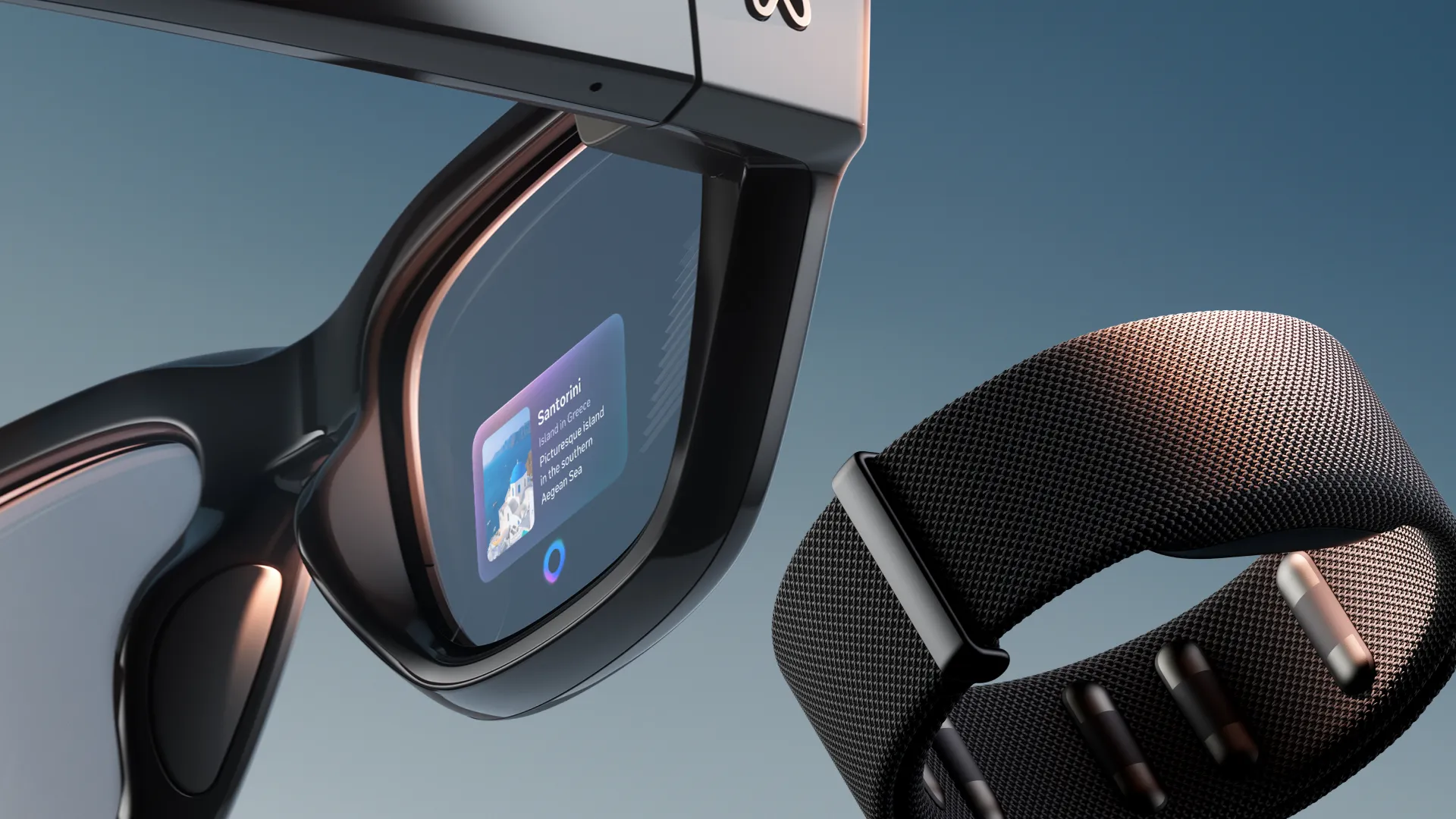
Meta Ray-Ban Display received its own set of updates. Cycling and public-transit navigation arrives later in September in the U.S. and Canada, while walking directions can use landmarks instead of relying only on street names.
A Hologram feature will create a photorealistic digital version of the wearer for video calls. Early access begins on WhatsApp in the U.S. later this fall.
Meta also announced an FDA-cleared hearing-enhancement feature for adults with perceived mild to moderate hearing loss. It arrives on supported Meta Glasses in the U.S. later this year before expanding to Ray-Ban Meta Gen 3 and Ray-Ban Meta Audio.
Meta says hearing enhancement will cost $149.99 as an add-on or come with a Meta One subscription. It is eligible for HSA and FSA reimbursement where the user's plan allows.
Meta VR Glasses trade headset weight for a tethered puck
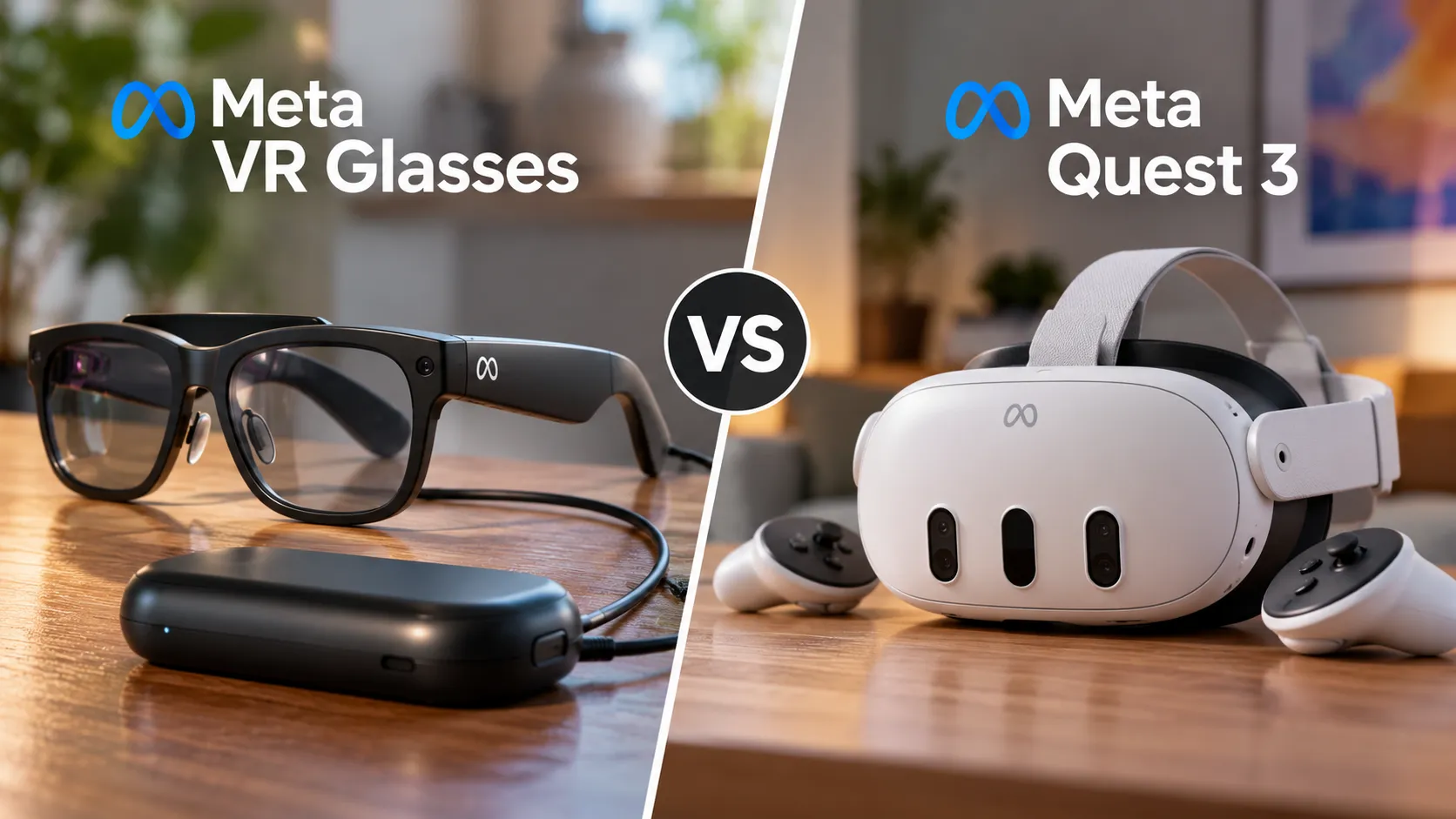
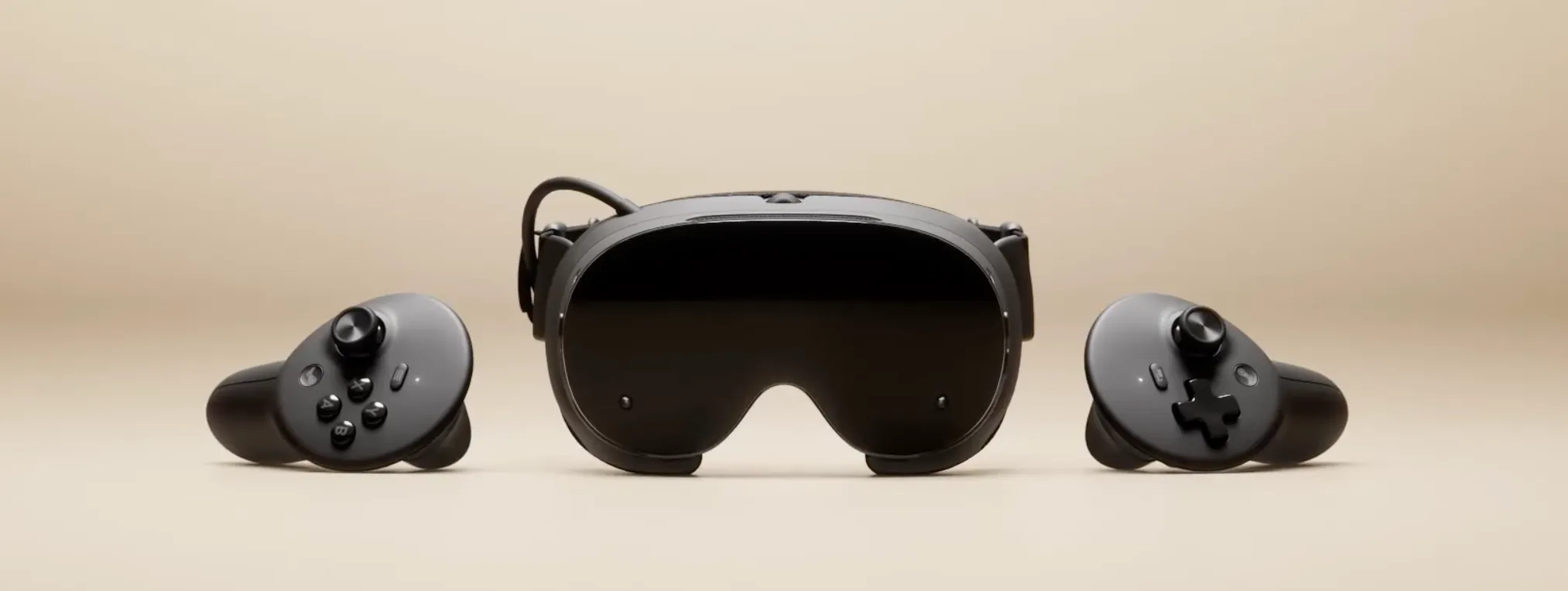
Meta VR Glasses were the largest hardware reveal, but they will not arrive until spring 2027.
The glasses weigh about 100 grams, roughly five times less than Meta Quest 3. Meta achieves that by moving the processor, battery and storage into a separate puck connected by an optical tether.
Meta VR Glasses use micro-OLED panels with what Meta calls a 5K Infinite Display and 37 pixels per degree. The frames support Dolby Vision and contain Dolby Atmos spatial audio.
The puck runs Qualcomm's Snapdragon Reality Elite processor. Meta rates its battery for up to three hours of continuous high-resolution media playback and supports 45W fast charging.
Eyes and hands are the primary controls. Meta says users can open apps, search, adjust virtual windows and play supported games without holding controllers.
More than 75 games are planned to support hand-only play at launch. Touch Plus controllers remain compatible for games that require traditional inputs.
The glasses also run the same Horizon operating system, store and development platform as Quest. Meta released its v207 developer tools at Connect so developers can begin preparing apps before the hardware ships.
Productivity is another major focus. Meta says users can connect the glasses to a Windows PC or Mac, arrange multiple virtual displays and turn a flat surface into a virtual keyboard and touchpad.
Meta has also built a Meta AI agent into the VR Glasses operating system. That is separate from the announced Muse integration for Meta's AI-glasses lineup, which Meta still describes as coming later.
Movies, games and live sports are part of the VR push
Meta is positioning VR Glasses as a media device as much as a gaming headset.
Disney+ subscribers in select countries will be able to stream 3D versions of movies including The Avengers and Black Panther beginning in November.
Meta also says VR Glasses are the first IMAX Enhanced-certified VR device.
Additional entertainment partnerships include Prime Video, YouTube, DirecTV, AMC+, Crunchyroll, Plex and Tubi. Peacock, HBO Max and Paramount+ are among services expected to offer 3D content.
Sports are another focus. Meta says VR Glasses users will eventually be able to watch more than 100 live sporting events per year through partnerships involving MLB, NBC Sports, TNT Sports and UFC.
ESPN is also bringing immersive sports streams with 8K, 180-degree viewing, beginning with college football before expanding to additional sports in 2027.
Xbox Cloud Gaming will provide another way to play games on the device, although access and playtime remain subject to Microsoft's current cloud-gaming terms rather than being included simply because someone owns the glasses.
Meta VR Glasses will cost $1,299.99 when they go on sale in spring 2027.
Muse Charm is still only a preview
Zuckerberg ended the keynote with a brief look at Muse Charm, a small dedicated device for interacting with Muse.
Meta describes it as a pocket-sized product built around its real-time voice model. Engadget's demonstration coverage also showed a small display, microphones, speakers and a fingerprint sensor.
Unlike Meta's new glasses, Charm does not have a launch date or announced price.
Meta says it will share more information later this year.
That leaves Connect 2026 split into three timelines: Muse and Ray-Ban Meta Gen 3 are available now; products such as Ray-Ban Meta Audio, Meta Adventurer and several software features arrive over the coming weeks or later this year; and Meta VR Glasses remain a spring 2027 product.
The connecting idea is Muse, but the integrations are not all finished. Meta has a personal agent running on phones and the web today, AI glasses integration still coming and a separate Meta AI experience built into its next VR platform. Whether those pieces feel like one continuous assistant will become clearer only as the promised integrations ship.




Comments
Be the first, drop a comment!