


Virtual reality training in hospitality: promise and limits
Hilton used to spend four hours training staff on customer-service basics in a classroom. Working with training firm SweetRush, the hotel chain cut that down to 20 minutes using a system where trainees speak their responses to a digital guest inside a 3D environment, accessible by VR headset or a standard web browser, and receive a pass/fail grade plus personalized feedback from a large language model (Hotel Management Network, last year). That's the kind of result that makes virtual reality training in hospitality sound like a solved problem. It isn't, not quite, but the underlying idea has enough going for it to warrant a closer look.
Hilton and SweetRush have worked together since 2015, and this latest system arrived as the hotel chain wrestled with staff shortages, a problem much of the industry still shares (Hotel Management Network, last year). Training people faster and at scale, without pulling managers off the floor to run live scenario drills, has obvious appeal for an employer trying to fill open roles. A separate hotel-industry study comparing VR training against traditional classroom methods found VR came out ahead on knowledge retention, skill development, and employee satisfaction (hotel-industry study, last year).
Put those two data points together and the shape of this piece comes into focus: one hotel brand quietly building VR into onboarding, and a wider body of research trying to determine whether that instinct holds up industry-wide, not just at a single company with resources to spare.
The research behind that question isn't uniform, and it's worth saying so before going further. It spans a peer-reviewed hotel-industry study built on a mixed-methods comparison, a mixed-reality thesis commissioned by a single Scandic property and tested on five employees, a controlled experiment run across departments in the technology sector rather than hospitality, and a press release from Transfr, a VR training vendor, describing gains from its own healthcare simulations.
Those sources carry different weight. A vendor announcing results from its own product isn't the same as an independent study, and a five-person qualitative test isn't the same as a controlled trial. Keeping that hierarchy straight matters more here than in most technology coverage, because the headline numbers are easy to quote and easy to flatten into something they don't quite say.
How virtual reality training improves hospitality skills, and why hotels are a natural fit
Hotels have a structural training problem that manuals can't fully solve: good service depends on judgment under pressure, not just memorized steps. Hilton's system lets trainees rehearse handling a guest with an unmet special request, with the LLM scoring the spoken response and generating personalized feedback (Hotel Management Network, last year). That's a genuinely different kind of practice than reading a script or watching a video.
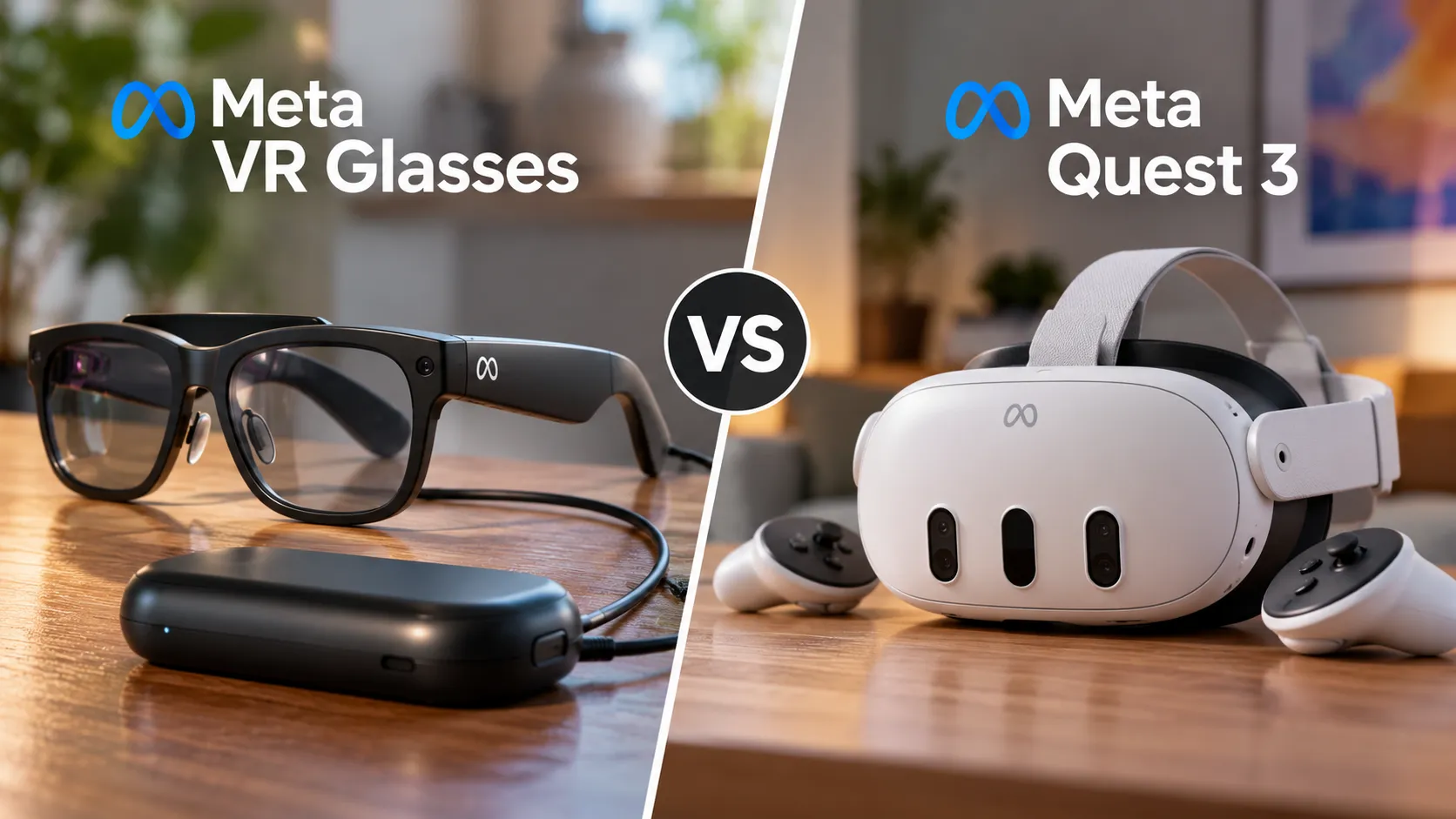
A separate project, a mixed-reality prototype commissioned by Scandic Hamburger Börs and built for the Meta Quest 3 headset, tested hotel employees on safety-protocol scenarios pulled from Scandic's internal training materials (Theseus thesis, last year). Worth flagging up front: this is mixed reality, blending digital elements into a physical space, not the fully enclosed VR environment Hilton uses. The two systems solve related problems but aren't interchangeable, and that distinction matters when comparing results across the research.
Safety protocol is exactly the kind of scenario that's hard to rehearse live: high-stakes, low-frequency, and not something a hotel wants to simulate with an actual hostile guest. All five participants in that test said the difficult situations portrayed were important to prepare for in their jobs, and all five said they could handle similar situations based on the training (Theseus thesis, last year). That's a small sample, but it points to scenario relevance holding up even before anyone assesses how realistic the interaction felt.
Hilton's system has one more practical advantage: it works through a headset or a standard web browser, from any location, using existing technology (Hotel Management Network, last year). For a brand managing training consistency across hundreds of geographically scattered properties, that flexibility matters nearly as much as the immersion itself.
The evidence across industries for VR training
The hotel-industry study mentioned earlier found VR participants showed notable improvements in customer service, crisis management, and job performance compared with peers trained by traditional methods (hotel-industry study, last year). That's the strongest hospitality-specific evidence in this research set, since it's a peer-reviewed comparison rather than a single-company case study or vendor claim.
Outside hospitality, a controlled experiment across technology-sector departments randomly assigned employees to either VR or traditional training. The VR group reported significantly higher engagement, skill acquisition, and job satisfaction, while the traditionally trained group showed no comparable gains (Management Dynamics, in 2024). It's not a hospitality study, but the design is tighter than most of what's available on hotels specifically, and the direction of the result lines up.
Transfr, a company that builds VR career-training simulations, reported learning-gain advantages over slide-based instruction in healthcare training: 43% versus 26% on a blood-pressure module, 17% versus 10% on respirations and pain, and 37% versus 25% on temperature (Transfr via Training Industry, in 2024). Those numbers are useful context for what's technically achievable with immersive simulation, but they come from the company's own press release about its own product, covering learning gains specifically, not job satisfaction or engagement. Read them as a claim worth verifying independently, not as proof on par with the peer-reviewed studies.
Line those three up and a pattern emerges, though it's narrower than it first appears. On learning gains specifically, the hotel study and Transfr's figures both point toward VR outperforming passive instruction. On engagement and satisfaction, the hotel study and the technology-sector experiment both show gains, but Transfr's release doesn't speak to that question at all. None of the three connects any of this to downstream business outcomes: guest-satisfaction scores, turnover, or safety incidents. That gap is the honest limit of what this evidence currently supports.
What VR training for hospitality staff can, and cannot, teach
The grading system in Hilton's tool is only part of the story. The Scandic-commissioned thesis argues that AI-driven, natural-language-processing characters can respond dynamically to a trainee's speech and movement, and that some of the underlying language models can detect toxicity or profanity, a capability with obvious use in simulating a hostile guest (Theseus thesis, last year). That's the promise: an AI layer that turns a static scenario into something closer to responsive coaching, adjusting to what a trainee actually says rather than running a fixed script.
The same prototype supplies the clearest caution in this entire research set. Of five hotel-service employees who tested it, only one found the simulated customer encounter realistic. Three felt annoyed, two felt frustrated, and two felt mildly threatened during the interaction (Theseus thesis, last year).
Those numbers come from a genuinely small, exploratory test, five minutes of interaction per participant, and shouldn't be extrapolated to every VR or MR hospitality tool. But they're also the only data point in this research that directly asks trainees how the simulated human felt, rather than measuring test scores or satisfaction surveys, and the answer wasn't flattering.
The thesis's own working hypothesis was that mixed reality removes the physical risk of a hostile live encounter but doesn't yet match the reliability of a human-acted scenario (Theseus thesis, last year). That's a fair summary of where this technology stands: useful for practicing a decision tree under simulated pressure, not yet proven to replicate the texture of an actual difficult guest. Those are different claims, and conflating them is where a lot of the marketing around this technology gets ahead of what's actually been tested.
Personalized VR training for different learning styles
A study using the Kolb Learning Style Inventory, run with hotel management students and restaurant staff, found that divergent learners, people who favor observation and reflection, engaged more readily with VR instruction (Research in Hospitality Management, last year). Hands-on learners benefited too, but needed additional coaching to get there, which suggests VR isn't a universal fit even within a single training cohort.
The same research found that prior exposure to VR substantially improved training outcomes (Research in Hospitality Management, last year). That finding raises a question worth testing directly rather than assuming: how much of any measured "VR advantage" reflects familiarity with the medium itself, rather than the training content inside it. Until someone isolates that variable, organizations adopting VR should budget time to orient new users before judging results against a control group that's never worn a headset.
Cost and friction show up as real barriers, not hypothetical ones, in two separate sources. The technology-sector study identified high upfront costs, technical limitations, and a learning curve for employees adapting to VR environments (Management Dynamics, in 2024). The Scandic thesis independently flags hardware cost as an obstacle, noting the required headsets are too expensive for a casual user, on top of development friction like capped API interactions for the conversational characters used to build hostile-guest scenarios (Theseus thesis, last year).
None of this settles the science on matching VR training to individual learning styles. But the directional evidence points toward treating VR as one component in a blended program, paired with hands-on coaching for kinesthetic learners and a proper orientation period for anyone new to headsets, rather than a wholesale replacement for classroom instruction.
The open questions worth watching
Across hospitality, technology, and healthcare settings, the most consistent finding in this research is that VR training tends to outperform slide-based or classroom instruction on learning gains, and in two of the three sectors studied, on engagement and satisfaction too (hotel-industry study; Management Dynamics; Transfr via Training Industry). That's a meaningful result, but it's narrower than "VR training works," and the evidence hierarchy matters: a peer-reviewed hotel study and a controlled tech-sector experiment carry more weight than a vendor's own press release, even when the numbers point the same direction.
The least resolved question is whether AI-driven characters can convincingly stand in for a difficult human interaction. A five-person hotel-service test suggests they currently can't, reliably, and that gap between decision-making practice and interpersonal realism is where hospitality leaders should stay skeptical of vendor pitches (Theseus thesis, last year).
Nothing in this research connects VR training to guest-satisfaction scores, turnover, or long-term retention on the job. That's the open research question worth watching before anyone treats this technology as proven ROI rather than a promising pilot. It's a gap in the literature, not evidence against the technology, but it means the business case still rests more on plausibility than on measured outcomes.
For HR teams weighing this, the useful starting question isn't whether to buy headsets. It's which repeatable, high-stakes scenarios, service recovery, safety protocol, guest escalation, are worth building first, and whether they get tested against both new hires and veteran staff before rolling out further. Given how thin the evidence on AI grading reliability still is, checking that scoring against human managers before trusting it at scale seems like a reasonable safeguard, even if no study in this research set has tested that specific step. The technology is far enough along to justify a pilot. It isn't far enough along to justify skipping one.

Comments
Be the first, drop a comment!