


AR glasses are facing a display problem—and the answer might be coming from an unexpected direction. While major tech companies battle over microLED technology and holographic waveguides, a Chinese company called Appotronics just demonstrated something that could change the entire trajectory of wearable AR. Their laser-powered optical engine prototype doesn't just incrementally improve existing technology; it tackles the fundamental physics problems that have kept AR glasses bulky, power-hungry, and impractical for everyday use.
The market opportunity couldn't be clearer. IDTechEx research projects AR headset shipments will reach approximately 35 million units annually by 2036, with the combined AR and VR device market expected to surpass $22 billion in revenue by that same timeframe. Yet here we are, still struggling with the basic engineering challenges of making displays bright enough for daylight use without draining batteries or generating uncomfortable heat. What makes Appotronics unexpected isn't just their laser expertise—it's their ability to solve problems that have stumped much larger competitors with far bigger R&D budgets.
The laser advantage that changes everything
Appotronics unveiled their breakthrough at SPIE Photonics West 2026, showcasing a Laser+LCoS optical engine prototype that fundamentally reimagines how AR displays work. The company's strategy centers on transitioning the industry away from LED-based solutions toward laser-driven systems, and the technical specifications reveal why this matters for overcoming the three critical barriers that have kept AR glasses niche: size constraints, thermal management, and power efficiency.
Their prototype achieves an impressive 8 lumens per watt efficiency while maintaining a compact 1.4 cubic centimeter volume—that's smaller than most people expect when they hear "laser projection system." The real breakthrough lies in how laser technology eliminates fundamental inefficiencies that plague LED systems. Unlike LEDs, lasers provide natural polarization and exceptional collimation, which means you can skip the bulky polarization conversion components that typically eat up space and drain power. This creates a cascading effect: smaller optical engines enable lighter frames, reduced power requirements extend battery life, and improved thermal characteristics make all-day comfort genuinely achievable.
What makes this particularly compelling is Appotronics' manufacturing foundation. This isn't a startup trying to figure out laser projection—the company is reported to hold a dominant share of China's laser movie-projector market (commonly reported as ~70–80% share for laser projectors); Appotronics sells high-brightness professional projectors (examples show models up to ~25,000 ANSI lumens) and advertises very high contrast figures (e.g., 100,000:1). Their 20-year history in laser projection provides the manufacturing expertise, supply chain relationships, and quality control processes that most AR companies are still building from scratch. When you're scaling consumer electronics, that operational infrastructure becomes crucial for managing costs and ensuring consistent performance.
The laser-driven approach enables longer battery life and reduced thermal loads, making all-day wearability genuinely feasible for consumer devices. This addresses one of the most fundamental barriers to mainstream adoption—devices that become uncomfortably warm after extended use, limiting real-world applications to short demonstration periods rather than practical daily computing.
Solving the speckle problem that stumped others
Here's where things get technically interesting. One of the biggest hurdles for laser-based AR displays has been speckle—those annoying visual artifacts that make laser projections look grainy. Appotronics tackled this with a dedicated Laser Speckle Reducer module that dramatically cuts speckle contrast from around 35% down to approximately 13%.
This speckle reduction breakthrough represents more than just improved image quality—it's the key that unlocks laser technology's competitive advantages without the visual compromises that have historically limited laser displays to industrial applications. The module works alongside the laser+LCoS combination to deliver superior brightness and a significantly wider color gamut compared to existing LED-based solutions. The result is displays that can actually compete with bright daylight conditions—a persistent weakness that's plagued every AR device I've tested.
What's remarkable about the development timeline is how it positions Appotronics to capitalize on the current market window. Mass production of the laser+LCoS engine could be achieved within approximately one year, contingent on further refinement of the speckle reduction technology and sufficient market demand from clients. That's lightning-fast compared to the multi-year development cycles we typically see for entirely new display technologies, and it suggests they've already solved the hardest engineering challenges.
Why LCoS beats microLED for full-color AR
While the industry has been captivated by microLED technology, Appotronics is betting on a different approach that might prove more practical for mass consumer adoption. Chen Menghao notes microLED faces efficiency and manufacturing challenges as pixel pitch shrinks; independent analyses show efficiency and yield can fall at sub-5 µm pitches, but the precise 'below 10%' figure at 4 µm depends heavily on color, process and vendor and is not a settled, universal number. The remaining 90% of energy gets converted to heat—exactly what you don't want sitting on someone's face.
LCoS technology offers a fundamentally different advantage: it maintains constant power consumption regardless of how many pixels are illuminated. This characteristic becomes crucial when you consider that AR applications often involve bright, colorful graphics that would push microLED power consumption through the roof. Instead of powering individual LEDs for each bright pixel—which creates exponential increases in heat and power draw—LCoS displays modulate light rather than generate it, maintaining consistent energy usage regardless of content brightness.
This efficiency advantage extends beyond just power consumption to enable entirely new categories of AR experiences. When you're displaying a full-color map overlay, watching a bright video clip, or running immersive gaming applications, microLED systems have to power every single LED pixel individually. That's where the heat and power consumption spiral out of control, forcing device makers to limit display brightness, restrict application types, or accept uncomfortably short battery life.
The performance comparison is striking. The laser+LCoS engine prototype demonstrates double the system optical efficiency of competing technologies while providing superior brightness, wider color gamut, and reduced energy consumption. Those aren't incremental improvements—they're the kind of performance leaps that typically define new product categories and enable mass market adoption.
What this means for the AR industry
Appotronics' approach represents more than just another display technology—it's a potential paradigm shift that could accelerate mainstream AR adoption by removing the fundamental barriers that have kept AR glasses in enterprise and enthusiast niches. The combination of compact size, high efficiency, and manufacturing scalability addresses the three biggest obstacles to consumer AR glasses: form factor acceptability, all-day battery life, and cost-effective mass production.
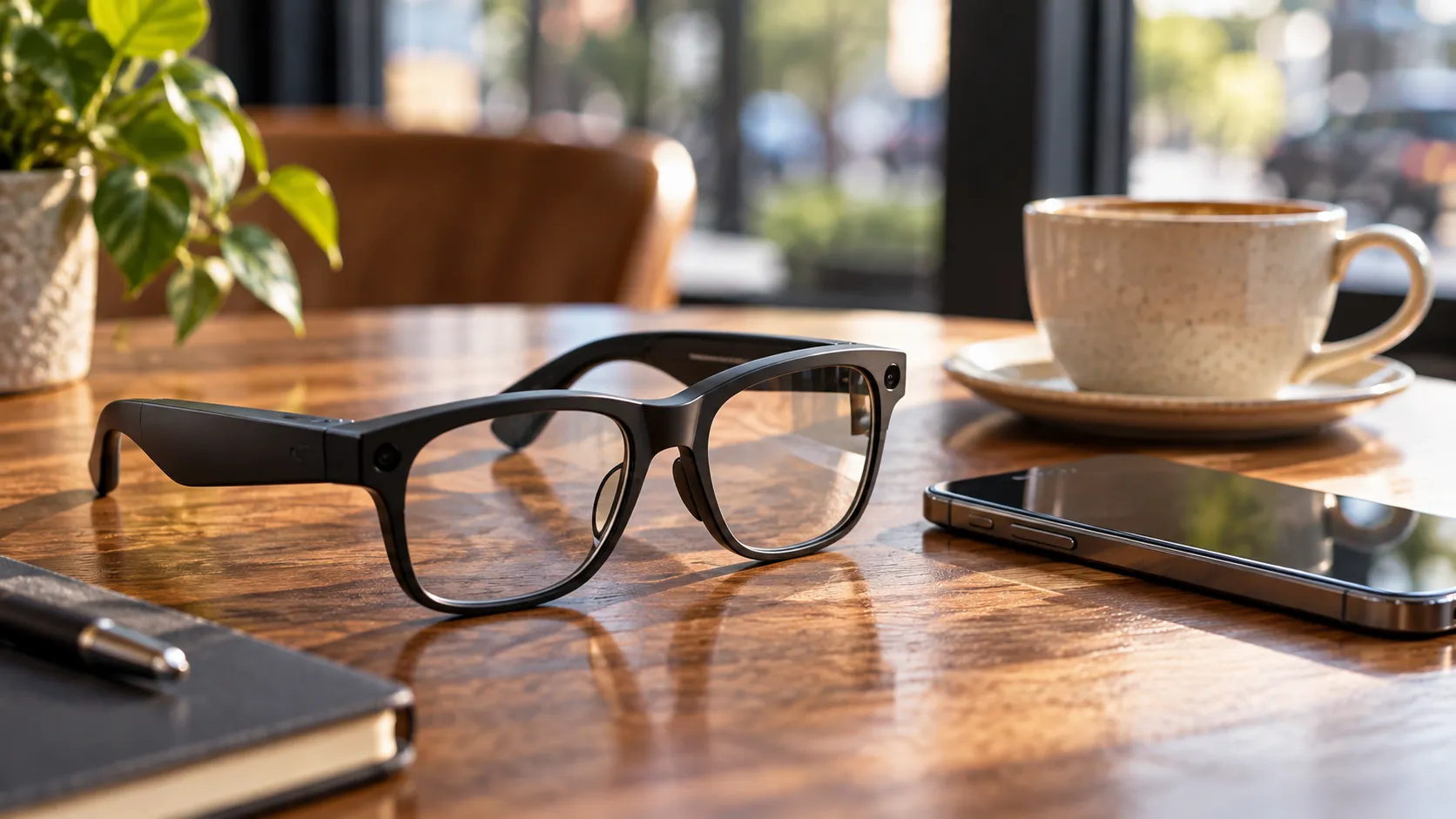
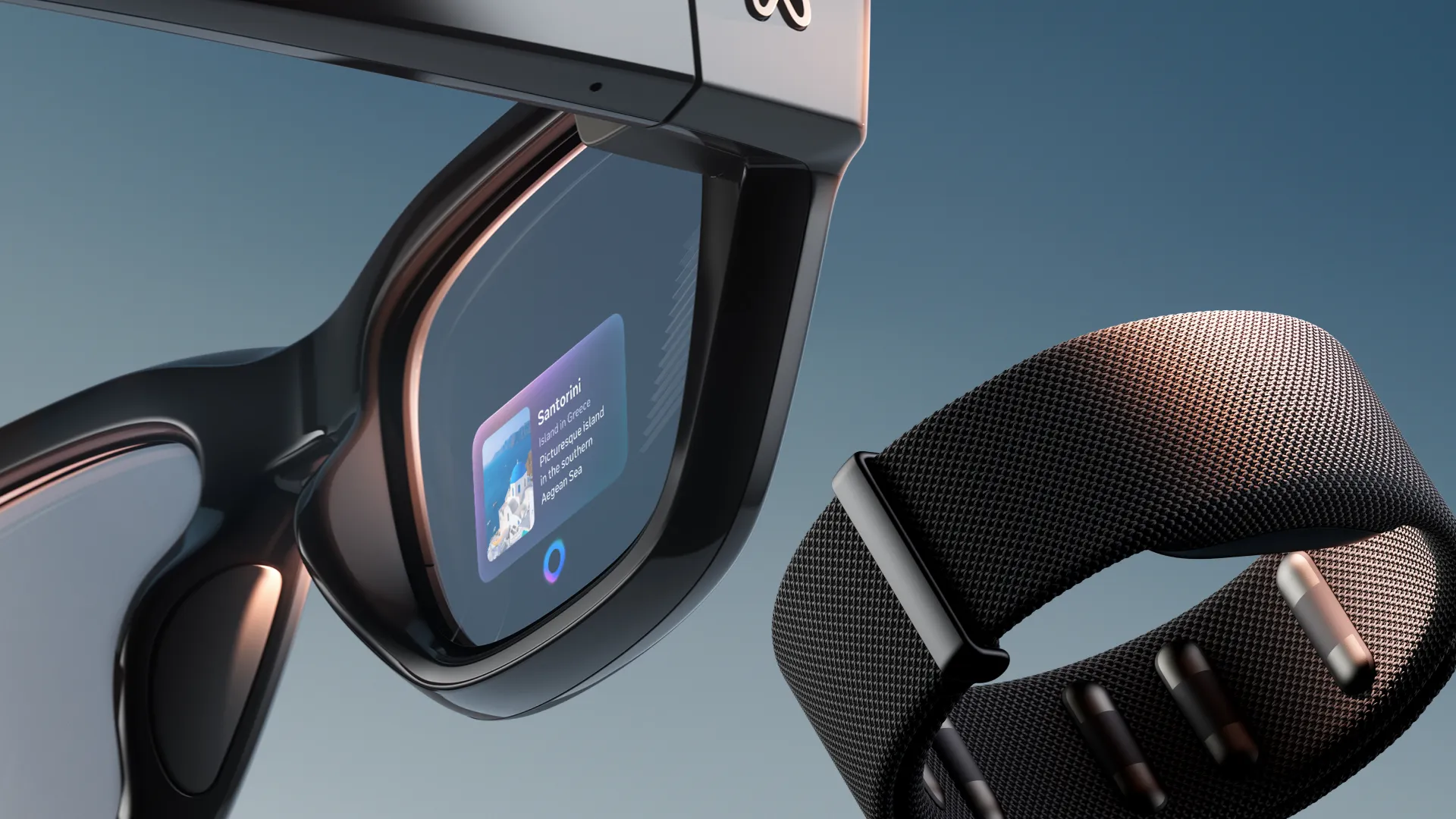
The broader market context makes this breakthrough particularly significant. With the AR headset market projected to reach $15 billion by 2036, there's enormous pressure to solve the fundamental technical challenges that have prevented the category from reaching its potential. Companies like Meta have already demonstrated consumer interest by incorporating advanced waveguide technology—their Ray-Ban Display glasses achieve 5,000 nits brightness to compete with daylight conditions. But even these successful products are limited by the current generation of display engines.
What's particularly compelling is how this technology could democratize AR development in ways that accelerate the entire ecosystem. Instead of requiring massive R&D investments to develop proprietary display systems, device manufacturers could integrate proven, scalable optical engines and focus their resources on user experience innovation, compelling software applications, and attractive industrial design. This levels the playing field between established tech giants and innovative startups, potentially leading to much more diverse and creative AR applications.
Smaller companies that couldn't afford to develop display technology in-house could suddenly access the same high-performance optical engines as major manufacturers. This ecosystem democratization typically creates virtuous cycles—more device makers enter the market, driving component volumes up and costs down, while increased competition accelerates innovation in user experience and applications rather than just underlying hardware.
The timing aligns perfectly with broader industry trends toward practical, everyday AR experiences. Major players are moving beyond simple notification displays toward full-color, immersive AR applications that demand exactly the kind of optical performance Appotronics is delivering. Their laser advantage isn't just about better displays; it's about removing the fundamental barriers that have kept AR glasses from reaching mainstream adoption and enabling the next generation of spatial computing experiences.




Comments
Be the first, drop a comment!