


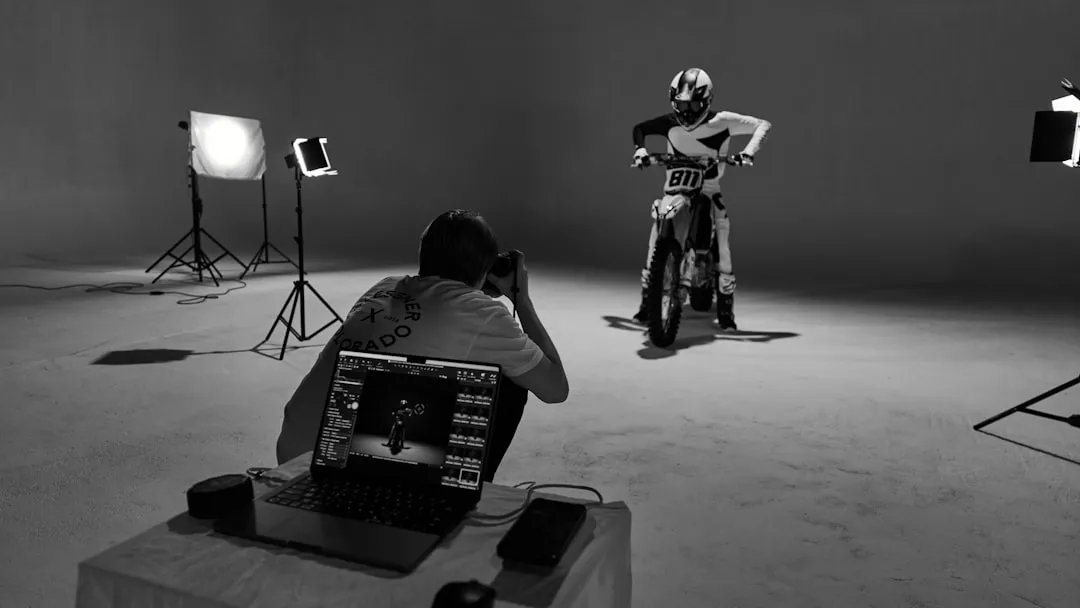
One performance, unlimited angles: how Avatar's virtual production pipeline multiplies camera coverage
Here is what changes on a virtual production stage: the actors perform a scene once, and the camera comes later. Not in the rough sense of "we'll fix it in post," but architecturally, by design. The performance is captured as data. The frame is a decision that hasn't been made yet.
That separation is what allows James Cameron's team on the Avatar films to generate multiple usable camera angles from a single take, without reshoots, without repositioning physical equipment, and without asking actors to return to the stage. This piece explains the mechanism behind that workflow, what it genuinely enables, and where it runs into limits no software resolves.
A necessary framing note before going further: no production documentation specific to Avatar: Fire and Ash has been publicly released as of this writing. What follows draws on how the virtual production methodology has been explained and documented across the earlier Avatar films, by Wired, Variety, American Cinematographer, and Weta FX. Where a claim reflects confirmed prior-film practice, that context is noted. Where something is a reasonable inference about a mature workflow likely continuing, it is labeled as such.
What performance capture actually records
Performance capture is not the same as motion capture, and the distinction matters for understanding how the camera can come later at all.
Motion capture records body position and movement: where a limb was at a given millisecond, the arc of a turn, the speed of a step. Performance capture adds facial data, typically through lightweight head-mounted rigs carrying small cameras aimed at the actor's face, tracking muscle movement across dozens of action points and mapping the result onto a digital character. The actor's physical appearance never reaches the final frame. Their performance does.
On a conventional set, the camera commits a final image the moment the shutter opens. Lens choice, frame height, the actor's position within the frame: all fixed, irreversible. In performance capture, no final image is recorded during the take. What the capture stage records is data: body position, facial muscle state, spatial relationships between performers. The image those data points will eventually produce hasn't been decided yet.
Think of it like recording a live music performance with microphones placed throughout the room. The musicians play once. Afterward, the engineer can foreground any instrument, pull up the room ambience, build an entirely different mix from the same session without the band setting foot in the studio again. Performance capture works the same way, actors and cameras instead of instruments and microphones.
That analogy also makes the limits plain. The musicians still played the notes they played. An actor's physical blocking is locked the moment the take ends: where they stood, which direction they turned, where their eyeline landed. If an actor looks left and the scene requires them looking right, no virtual camera adjustment fixes that. The flexibility is real and wide, but it operates within the fixed boundary of what the actor physically did.
From captured data to multiple camera angles
From the performance data, Weta FX's pipeline reconstructs a three-dimensional model of the take: a digital character moving, emoting, and occupying space in a virtual environment. Wired reported that the facial rigs used on the Avatar sequel productions track dozens of facial tracking points across each actor's face, feeding into Weta FX's proprietary systems to animate the digital Na'vi characters, with the fidelity of that system refined substantially between the first film and its sequels to hold up under extreme close-up scrutiny.
Before actors arrive on the Volume, Cameron's team uses virtual cameras to scout and block scenes inside a fully rendered version of Pandora, compressing what would traditionally be separate phases of location scouting, production design review, and shot planning into a single interactive session, as Variety reported in its coverage of the sequels' production.
What the director and crew see during the actual take is a preview rendered in real time. Variety reported that this live composite showed bodies mapped onto digital Na'vi characters moving through a rendered Pandora on monitors visible to Cameron and crew throughout performance. Not a rough sketch. A close approximation of the finished scene.
Here is the step where multiple angles emerge from a single take. Virtual cameras are software-controlled inputs, not physical objects competing for floor space. Several can draw from the same performance data simultaneously, occupying identical digital positions without interfering with each other. While actors perform, operators run a wide shot, a close-up, and an over-the-shoulder in parallel, all recording from the same take at the same time. American Cinematographer covered this multi-camera approach in production features on the franchise's methodology. After the take, additional camera passes can be generated from the captured data without the actors present. Camera position, lens choice, shot scale: adjustable. The performance: fixed.
The gap between that real-time preview and a final theatrical frame is still real. Full-quality frames require substantially more computational work, which happens in post-production. Weta FX has documented through technical publications that its proprietary rendering and simulation systems, particularly for fluid dynamics, creature motion, and Pandora's bioluminescent visual language, are distinct from off-the-shelf engines and require that full render pipeline for final output. The real-time preview is what enables confident creative decisions on the day. It does not replace the render.
American Cinematographer noted in franchise production coverage that this architecture extends into post-production: the Avatar team retained the ability to revisit and reframe captured scenes well after initial performance, a flexibility that conventional photography, where the negative is fixed the moment the shutter closes, simply does not permit.
What the system solves, and what it doesn't
More coverage from a single performance. The ability to adjust framing after the fact. Faster iteration during prep. Environments that could not be practically or affordably built. Those are real capabilities, documented across the franchise's production history.
The constraints deserve equal precision.
Physical blocking is locked. Eyelines, movement direction, and spatial relationships between performers are committed at the moment of performance. A virtual camera changes where the frame is, not where the actor was looking or how they moved through space. No amount of post-performance angle generation manufactures an eyeline the actor didn't provide.
The virtual environment must be complete before shooting begins. If a set element wasn't built into the digital world before principal capture, adding it to a virtual camera pass later requires significant rework. The flexibility is real; it isn't retroactive.
Generating many viable angles from one performance is efficient for actors, but it transfers creative decisions downstream rather than eliminating them. The question stops being "did we get it?" and becomes "which of these angles serves the scene?" A conventional set forces choices through scarcity: limited time, limited setups, decisions made under real pressure on the day. This workflow defers those choices through abundance. That deferral carries a cost. Editorial overload, where the sheer volume of technically viable shots slows cutting decisions rather than accelerating them, is a genuine operational challenge in virtual production, and one the franchise's own practitioners have acknowledged. The labor isn't eliminated. It's redistributed.
Where this leaves the craft
The deeper shift is in who holds decisions and when. On a conventional shoot, the director and cinematographer lock coverage under time pressure on set. Scarcity forces specificity: you commit to an angle because you have to, and that commitment shapes everything downstream.
When framing becomes a post-performance choice, that commitment migrates. Editors inherit a larger selection problem earlier in the schedule. Virtual camera operators move from support crew to key creative contributors. The roles of director, cinematographer, and editor start to blur at the edges in ways that conventional production keeps cleanly separated.
For Fire and Ash specifically, production documentation will eventually clarify what the team extended, refined, or departed from in the pipeline built across the earlier films. A team three films into this methodology isn't starting from scratch. But inference about a mature workflow continuing is still inference, not reporting.
What the architecture makes possible, across all three films, is documented. Lock the performance. Leave the frame open. That separation is a genuine departure from the foundational logic of conventional filmmaking, where the camera is a commitment made under pressure on a stage and the negative doesn't negotiate. Whether the craft questions that follow, about who decides coverage and when, and what gets lost when scarcity stops forcing choices, get resolved in editing rooms or rewrite the job description of a cinematographer is a question the workflow raises but doesn't answer.


Comments
Be the first, drop a comment!