


Future of Viture smart glasses: can a display-first strategy last?
Viture holds the top U.S. shipment position in XR glasses, has raised more than $200 million in six months, and launched its most ambitious product yet. Whether the future of Viture smart glasses looks as strong from here depends on a strategy that is about to face a very different competitive test.
The company ranked first in U.S. XR glasses shipments in Q3 2025 with a 28.1% share, ahead of Meta Display, RayNeo, Rokid, and Xreal, per IDC data cited by AR Insider earlier this year. That gain came while the broader AR/VR display market was contracting sharply revenues were expected to fall 24% year-on-year, from $517 million to $395 million in 2025, according to Information Display. One company gaining share while its category contracts is not an accident. "After years of industry attempts to market AR glasses to mainstream consumers, video display glasses have found a sweet spot," ARtillery Intelligence chief analyst Mike Boland told AR Insider in that same report.
That sweet spot is "display glasses": tethered wearable screens for gaming, media, and productivity, kept deliberately distinct from the AR headset vision the industry has tried and largely failed to sell for a decade. Now Viture's new flagship, The Beast, is pushing the formula further adding spatial tracking, a wider field of view, and a front camera that hints at something beyond a passive screen. Whether display glasses remain a durable product category or get absorbed into a broader AR platform wave is the central question for Viture's next chapter.
Why display glasses sell when AR doesn't
The Viture One is the product that built the company's market position. At 78 grams, 1080p per eye, 1,000 nits peak brightness, and roughly a 43° field of view, it connects via USB-C to phones, laptops, and consoles to project a large virtual screen. It does not overlay graphics on the physical world, Reality Atlas noted last month. At those specs, it delivers image quality competitive with headsets selling for roughly twice the price, the same review found.
The use cases are unglamorous and precise: a private movie screen on a flight, a gaming display without a TV, a secondary monitor on a commute. None of them require a content platform, a developer ecosystem, or a buyer willing to reconfigure how they interact with technology. They require a good screen in a comfortable frame.
The category Viture competes in is already the dominant form factor. Birdbath-based display devices, the optical architecture Viture uses, were projected to represent around 70% of global AR glasses shipments in 2025, per Information Display. Viture did not create this segment. What the shipment data and the funding rounds together suggest is that it executed within it more effectively than most rivals though that advantage is a moving target, not a structural lock-in.
Display glasses are the right purchase for portable private screens, gaming on the go, and hands-free reference tasks. They are not the right purchase for overlaying digital objects on the real world, standalone untethered computing, or replacing a full VR headset. That clarity of purpose is part of what has kept buyer expectations calibrated and return friction low.
The Beast: what changed, and what is still a promise
Viture launched The Beast in late April at $549. The hardware upgrade over the Viture One is real. Where the One ran 1080p per eye at 1,000 nits across a 43° field of view, The Beast ships with 1,200p per eye, 1,250 nits peak brightness, a 120Hz refresh rate, and a 58° field of view all driven by a 0.68-inch Sony micro-OLED panel that Viture describes as the largest and latest in its class, per the company's engineering blog. At panel sizes below 0.7 inches, micro-OLED is currently the only display technology capable of delivering excellent contrast and color reproduction at full HD resolution, according to Information Display. For context on the component economics: two Sony micro-OLED displays account for roughly 54% of the Xreal One's total bill of materials, per the same source which signals both how much the panel matters to the experience and how expensive it is to compete on this dimension.
A sourcing caveat matters here. The Beast's specifications and feature claims come primarily from Viture's own engineering and marketing materials. Independent, head-to-head comparisons against rival devices were limited at the time of writing, so Viture's characterizations of competitive superiority including the "largest and latest in its class" panel claim should be read as the company's stated position. Reviews from outlets including Tom's Guide, PCMag, CNET, and WIRED named The Beast a top pick in the category, as cited in Viture's product blog, but those attributions appear in Viture's own marketing materials rather than the original reviews.
The features tied to display engineering are where the competitive moat is clearest: the 58° field of view, per-unit factory color calibration, distortion correction applied at both optical and digital layers, and 9-level electrochromic dimming with auto-transparency adjustment, per Viture's engineering blog. These require sustained R&D investment and manufacturing process discipline to replicate. Rivals can spec-match on paper; matching them at acceptable yield and cost is harder.
The Beast also ships with built-in VisionPair 3DoF head tracking, enabling five display modes without additional hardware: Anchor Mode, Smooth Follow, 0DoF Follow, Ultra Wide, and Side Mode, per Viture's product blog. That integration shifts the product from a tethered monitor to something that responds to where you are in space.
Then there is the front-facing RGB camera. Viture describes it as hardware groundwork for future spatial computing capabilities, with software updates to follow, per the same blog. No specific capability or delivery timeline has been confirmed. Buyers evaluating the $549 price should understand the distinction between what the camera is now a hardware placeholder and what Viture says it may become.
The Nvidia and Stanford Medicine initiative announced last October, featured in Jensen Huang's keynote and demonstrated at Nvidia GTC, signals that Viture is positioning display glasses in professional workflows early enough that an enterprise lane is plausible, AR Insider reported earlier this year. Whether this represents a genuine growth path or remains a high-profile demonstration depends on deployment evidence not yet in the public record.
The competitive clock: rivals, platforms, and an unresolved patent fight
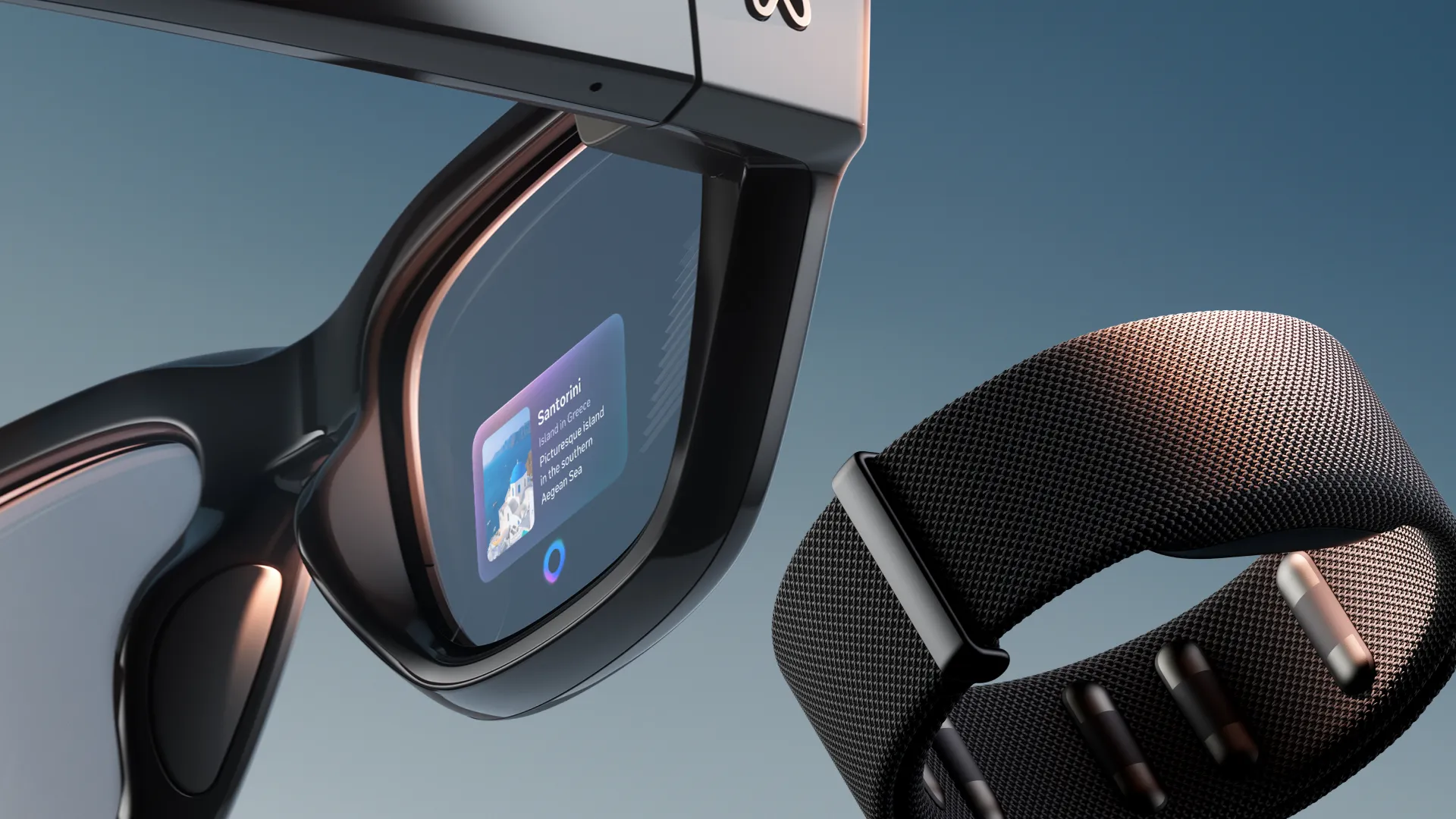
The competitive landscape has shifted well beyond Viture-versus-Xreal. Meta launched the Ray-Ban Display last September at $799, featuring a full-color monocular display and neural band input a platform-led approach backed by Meta's distribution and AI infrastructure, per Information Display. Snap is preparing its first consumer AR glasses for a 2026 launch. Amazon is rolling out AR glasses for delivery drivers across North America this year, per the same source. These moves confirm there is real commercial appetite for head-worn computing. They also mean Viture faces competitors that can absorb hardware losses to win platform adoption a very different kind of pressure than spec-for-spec competition.
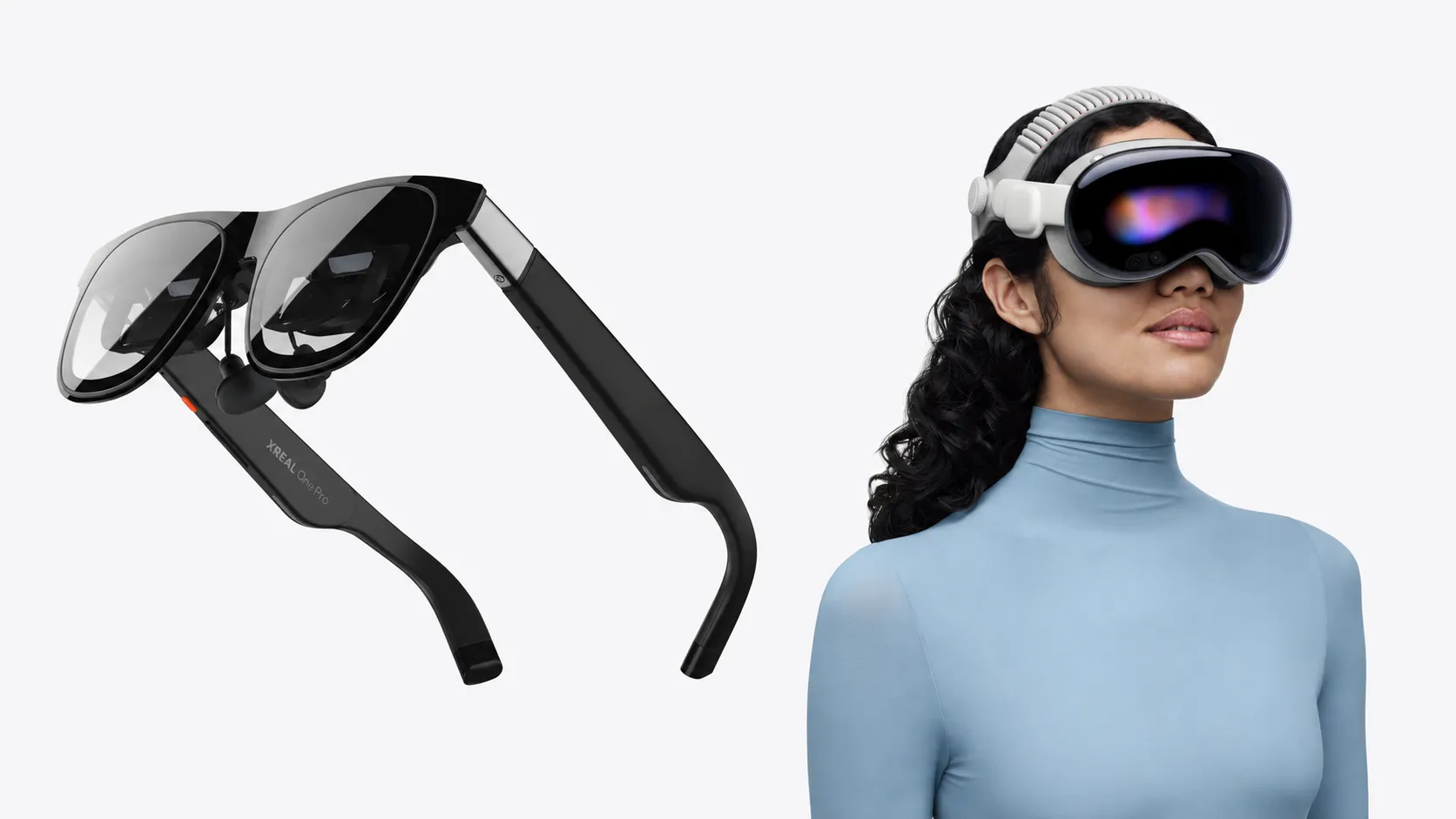
Xreal remains the most direct product threat. The Xreal One was the top-selling AR device in the first half of 2025 at $500, with a custom co-processor enabling world-locked spatial screens, according to Information Display. The Xreal Air 2 at $349 covers most display-glasses use cases for buyers with tighter budgets, Reality Atlas noted. More consequentially, Xreal is building Project Aura with Google a 2026 device running Android XR with a new X1S co-processor and a 70° field of view, per Information Display. A Google-backed platform with a field of view roughly 20% wider than The Beast's 58° raises competitive questions that go beyond display brightness.
The legal situation is a separate risk category. A German court granted Xreal a preliminary injunction earlier this year, restricting sales of Viture's Pro model in Germany over a birdbath optics dispute. Xreal also filed a patent infringement suit in Texas targeting Viture's U.S. business, AR Insider reported earlier this year. Viture retained Cooley LLP for the U.S. case, initiated its own proceedings against Xreal in China, and said the claims lack merit. The German restriction is already in effect. The Texas case is unresolved. A ruling against Viture could require hardware redesigns or introduce distribution constraints at precisely the moment the company needs to execute cleanly against a better-resourced competitive field.
What comes next, and how to know if it's working
Viture enters the second half of 2026 with genuine assets: market-share leadership, $200 million in fresh capital, and a flagship with measurably upgraded specifications. Micro-OLED revenues are forecast to reach $736 million by 2027 as adoption broadens, per Information Display and Viture is aligned with both the component trend and the use-case category driving that growth. The momentum is real. The durability is not yet proven.
Three developments will tell the story. First, neutral third-party reviews comparing The Beast against the Xreal One Pro on display sharpness, long-session comfort, and latency. Viture's own materials claim display leadership; independent testing will confirm or complicate that. If the advantage holds up, $549 is defensible. If it doesn't, Viture is exposed against a rival that now has a Google platform behind it.
Second, a concrete software update that activates the front camera's spatial features with a named capability and a delivery date. Specificity confirms the camera is a product plan; continued vagueness confirms it is a hedge. Third, resolution of the Texas patent suit. A ruling against Viture would not necessarily halt the company, but hardware redesigns and distribution constraints imposed mid-execution would land at the worst possible time.
Display glasses may be the first genuinely workable formula for selling head-worn computing to ordinary people at scale not the AR the industry promised for a decade, but the version people are actually purchasing and recommending. Viture built a strong version of that product at the right time. The next six months will do more to answer what comes after than any spec sheet or funding announcement.


Comments
Be the first, drop a comment!