


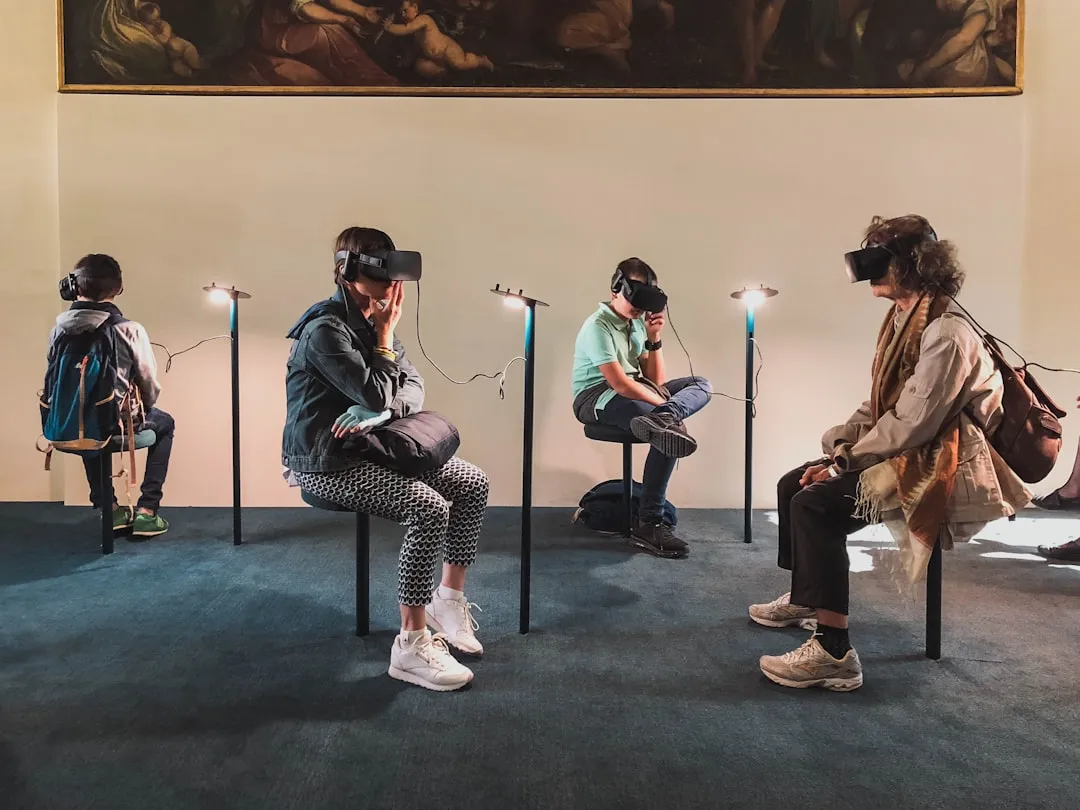
Virtual Reality Exposure Therapy: Better for Training Therapists Than Treating Patients?
Only 10 of 694 surveyed clinical psychologists and psychotherapists in Austria reported using virtual reality exposure therapy in their practice roughly 1.4% according to a 2025 survey. At the same time, a 2025 randomized trial in JAMA Psychiatry found that mixed reality exposure for OCD produced meaningful within-group improvement but no statistically significant advantage over self-guided therapy, with participants reporting only moderate presence in the virtual environment, per the study. Two findings, pointing in the same direction: the technology is real, but something else is holding adoption back.
A separate line of research suggests that something else is clinician hesitation. A 2024 study found that therapists who personally underwent exposure exercises reported more positive attitudes toward the technique afterward, according to the research. Read together, these studies support a specific hypothesis: VR's most practical near-term clinical value may not be as a patient-facing treatment, but as a scalable rehearsal environment for therapists confronting their own avoidance of exposure. That hypothesis is not proven. The logic is stronger than the evidence, and both things are worth saying clearly.
What follows covers three questions in order of evidentiary strength: why therapists underuse exposure, what the current VR trial data actually shows, and whether experiential training changes clinician behavior in ways VR could plausibly replicate.
Therapists' fears about exposure therapy predate VR by decades
The Austrian survey identified four barrier clusters among the 694 clinicians surveyed: professional (knowledge and training gaps), financial (equipment costs one solo-practice clinical psychologist described as simply "not paying off for me in practice alone"), therapeutic (doubts about clinical fit and the quality of the therapeutic relationship in a virtual context), and technological (hardware immaturity, cybersickness risk, inadequate software).
The therapeutic objection is different in kind from the others. One respondent put it directly: "Psychotherapy has the task of enabling people to overcome their real challenges and not to create additional 'fantasy worlds'. An essential effective factor in psychotherapy is a healthy therapeutic relationship." That is not a complaint about frame rates or headset comfort. It is a position about what therapy fundamentally is, and no hardware update touches it.
The same survey found that interest in therapeutic VR differed significantly by prior personal VR experience, employment status, professional training, and therapeutic orientation, per the data. Behaviorally trained clinicians who had already tried VR personally were the most receptive. That variation points to where early adoption is most plausible and it also points to what kind of training might move the needle.
importantly, the hesitation around exposure itself is not new to VR. Clinicians trained in cognitive behavioral approaches have long tended to dilute or abandon exposure protocols out of concern that patients won't tolerate induced distress, or that pushing through anxiety will rupture the therapeutic relationship. VR adoption sits on top of that pre-existing pattern, the survey data suggests. The two problems are related but not the same.
What virtual reality exposure therapy currently shows and where it stops
VR-based exposure is well established for anxiety disorders broadly, according to the JAMA Psychiatry trial. What the more recent evidence has not shown is that advanced immersive formats outperform standard approaches a distinction that matters when assessing clinical readiness.
A 2025 randomized clinical trial in JAMA Psychiatry compared mixed reality exposure and response prevention for OCD against self-guided ERP across 36 participants over six sessions. The mixed reality group showed meaningful within-group improvement on several symptom measures, with medium-to-large effect sizes (Cohen's d 0.584 to 0.931). But there was no statistically significant difference between groups on the primary outcome, OCD symptom severity. Participants' reported sense of presence inside the virtual environment was only moderate, with mean scores at or below 3.24.
The trial's own authors concluded the "full potential" of mixed reality exposure has not yet been realized and called for work to improve immersion, per the study. By the trial's own framing, then, a weak presence effect may be limiting what the technology can deliver for patients, and potentially for any clinician training built on the same hardware. That constraint is worth carrying forward.
How experiential training shifts clinician behavior and where VR could fit
The training approaches that have shown feasibility and preliminary effectiveness for shifting therapist attitudes toward exposure share one design feature: clinicians go through exposure exercises themselves rather than just studying them. A 2024 study of 12 therapists who underwent experiential training found that two factors drove improved attitudes: having misconceptions challenged directly, and experiencing firsthand the distress patients are asked to tolerate. The sample is small and the study assessed feasibility and preliminary effectiveness, not comparative superiority. The signal is plausible; the evidence base is thin.
The scaling problem is logistical. Arranging real-world exposures for training cohorts requires specialized settings and clinical resources most programs do not have. A structured VR environment could, in principle, give clinicians repeatable access to simulated anxiety triggers without requiring live patients or field conditions. That is the theoretical argument for VR as a training platform: not superior fidelity to the real world, but controlled, repeatable access to the experience of exposure itself.
The same 2024 study found that improved attitudes did not automatically translate into changed behavior. Organizational constraints, insufficient supervisory support, and client-specific factors continued to block exposure delivery even after training ended. A 2023 study on telehealth-based virtual reality exposure therapy sharpens the picture: 72% of the 18 therapists surveyed had personal VR experience, the majority held positive impressions and not one had used it clinically.
Those same therapists were specific about what a usable tool would require: interactive session activities (78%), customizable intervention components (56%), and safeguards around client risk and uncontrolled remote settings (78%), per the study. The gap between "interested" and "actually using it" is not vague reluctance. It is a concrete list of unmet design requirements. A therapist-facing VR training program built around scenario customization, structured debriefs, and supervisory scaffolding would respond to what the evidence shows clinicians actually need. Whether current hardware can generate enough presence to make that kind of training feel consequential given what the OCD trial found remains an open question.
What still needs to be tested
The available studies, read together, suggest that closing the exposure therapy adoption gap requires working on clinician beliefs and organizational conditions, not just improving clinical software. VR could deliver experiential training at scale if designed for that purpose, but two conditions would need to hold: hardware capable of generating sufficient presence to make the experience feel real enough to shift beliefs, and organizational structures that sustain behavior change after training ends. Neither is demonstrated yet.
The population most likely to engage with an early training pilot is visible in the data. Clinicians with prior personal VR experience, behavioral training, and institutional employment are the more tractable starting cohort, according to the 2025 Austrian survey. Starting there, with behavioral outcomes as the measure frequency of full exposure protocol delivery, not attitude scores would give any pilot a better chance of producing transferable results.
The trial the literature does not yet contain is VR tested specifically as a therapist training platform, with outcomes measured by whether clinicians deliver exposure more often and whether patients who need it actually receive it, the 2024 experiential training research implies. Until that study exists, the case rests on converging logic from separate literatures. That gap is worth naming and worth closing.



Comments
Be the first, drop a comment!