


Valve's new VR headset starts at $1,059 for the 256GB model and climbs to $1,299 for 1TB, more than the $999 Valve Index full kit, Valve's previous headset, cost in the US. Valve's official Steam Frame announcement confirms both prices. That's a real jump, and the Valve Steam Frame price starts making more sense once you stop comparing it only to standalone headsets and look at the PC-streaming hardware it's actually built around.
The Frame can run games entirely on its own, powered by a Qualcomm Snapdragon 8 Gen 3 chip, or it can stream wirelessly from a gaming PC over a dedicated Wi-Fi 6E link. Both modes work. But Valve designed streaming as the priority, and the gap between the two shows up in performance and battery life, according to Tom's Hardware's Steam Frame review.
Steam Frame VR Headset Price: What $1,059 Actually Includes
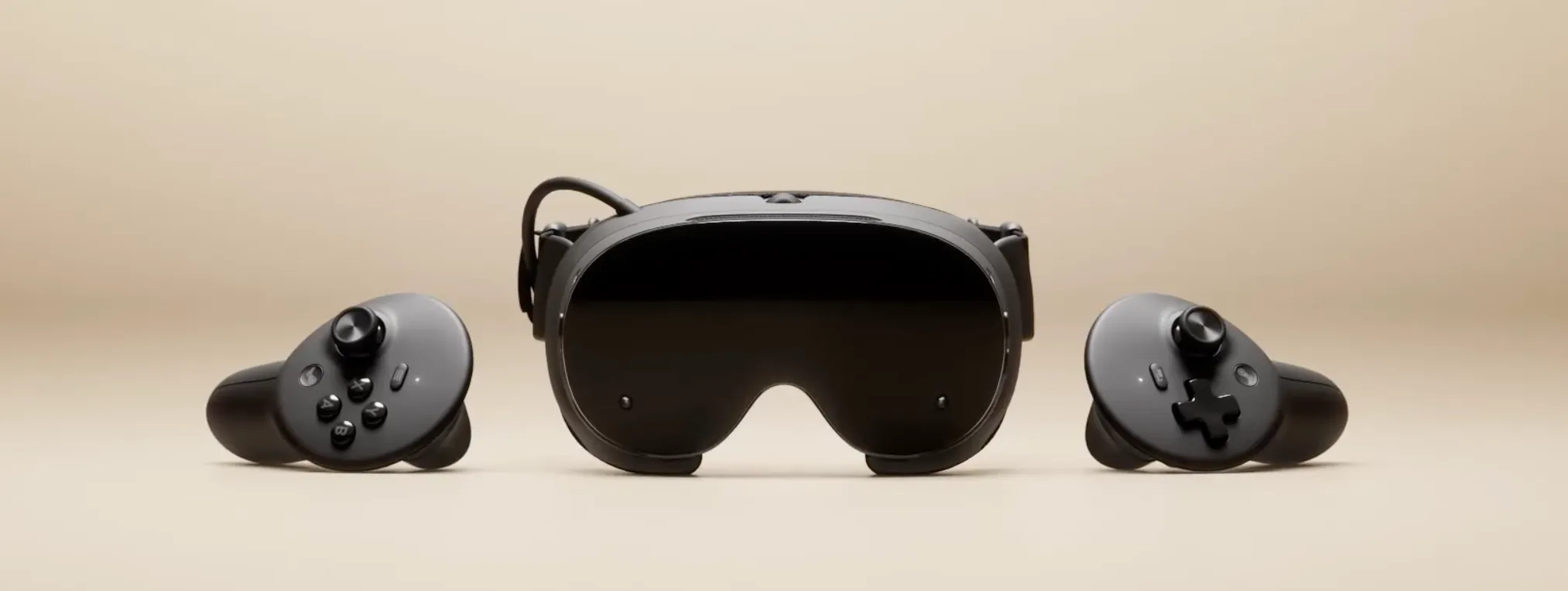
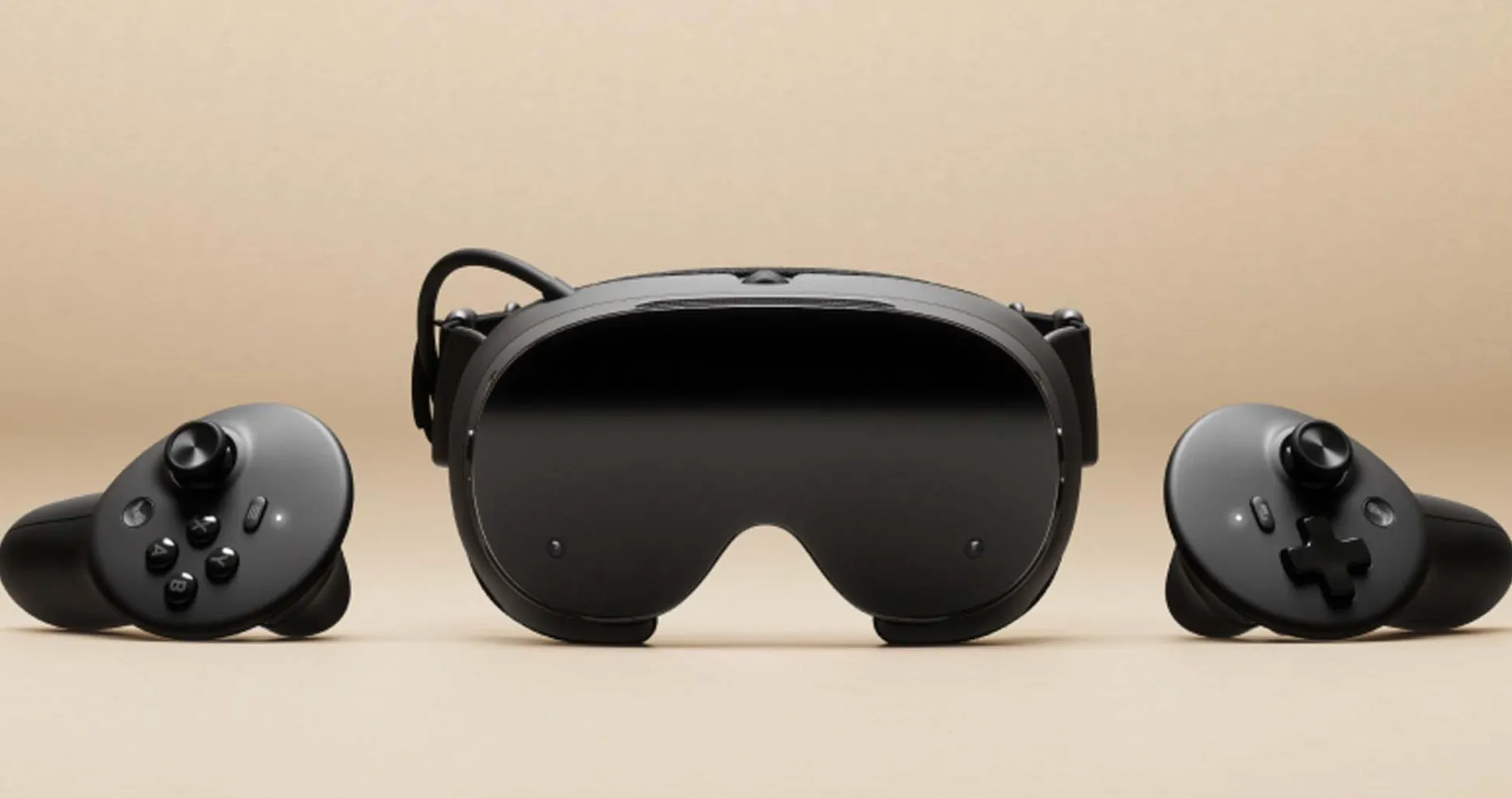
The base package covers the headset, two Steam Frame controllers, the Wi-Fi 6E streaming dongle, and a copy of Half-Life: Alyx. That's a reasonably complete kit for a $1,059 VR headset price, with one notable omission: no power supply.
Valve sells a 45W power supply separately for $29, though a Steam Deck charger or another compatible USB-C charger rated at 45W or higher will work. Game Informer outlined the retail package when reservations opened.
Tom's Hardware received a power adapter with its review kit, despite the retail package not including one by default. Anyone budgeting off the retail listing should therefore plan on supplying a compatible charger or adding Valve's $29 adapter.
Two accessories are optional rather than required for basic use. The $59 Ergonomic Accessories Kit includes two controller hand straps with replacement battery doors, a headset top strap, and an extended light blocker.
A third-party $149 Arcturus Vision Camera adds color passthrough to a headset that already ships with monochrome passthrough, according to The Verge's Steam Frame launch coverage.
For most buyers, the real starting number is therefore $1,059 or $1,299, plus a charger if they don't already own a compatible one, rather than a total padded with accessories that aren't required.
Valve Built the Frame Around PC Streaming, Not Solo Play
Valve's own engineers put the emphasis plainly: standalone gaming matters, but streaming was central to the Steam Frame's design. In an interview with Tom's Hardware, Valve described wireless streaming as a major part of making the headset easier to use.
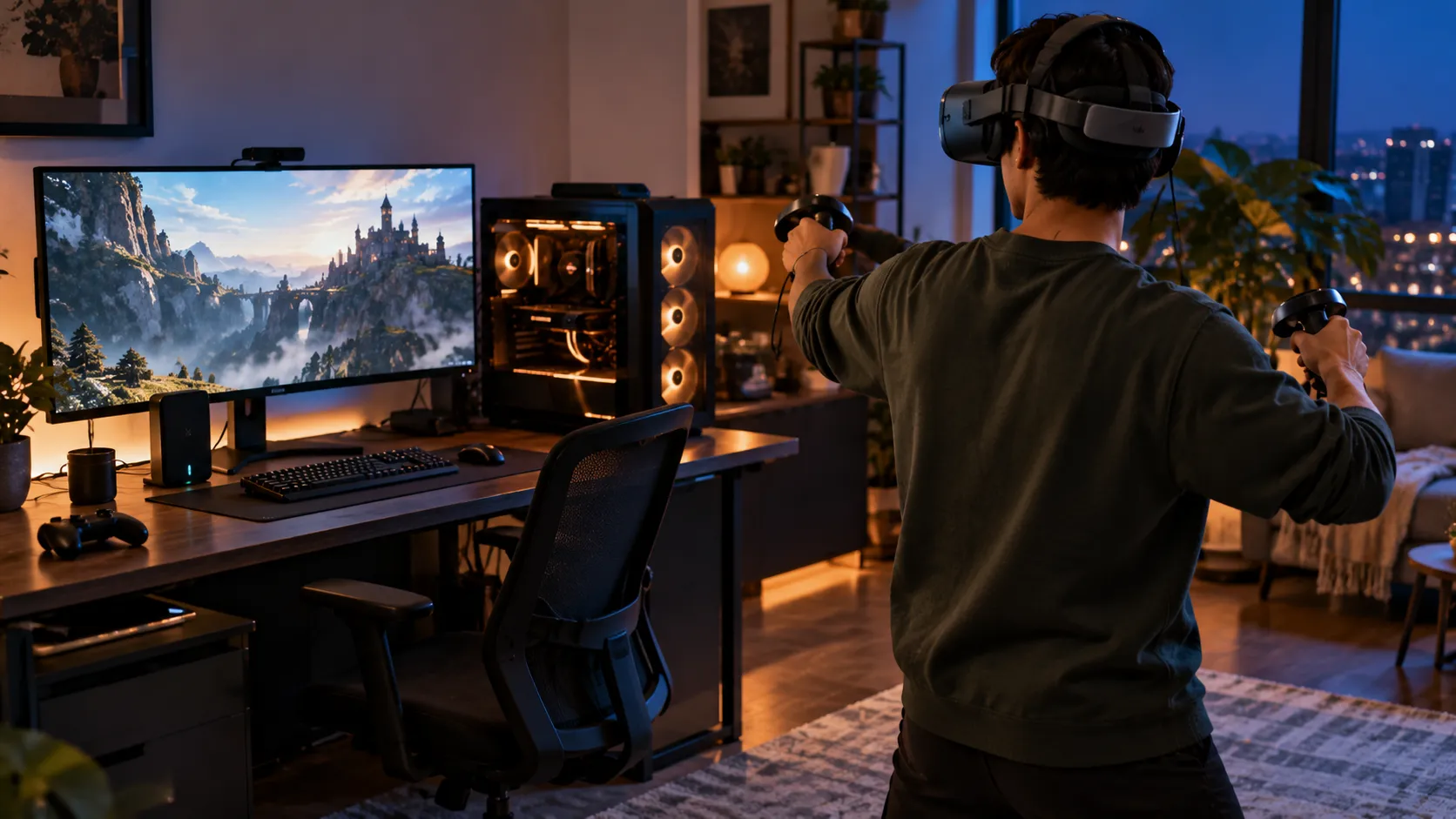
The dedicated Wi-Fi 6E dongle uses a direct 6GHz link between the PC and headset to reduce latency and avoid competing with normal home-network traffic. Onboard eye tracking also drives foveated streaming, sending the highest-quality image to wherever the user is looking while lowering detail in peripheral areas to reduce bandwidth demands.
The performance gap between modes backs that framing up. Tom's Hardware called PC streaming excellent in testing, while standalone gaming took a performance hit on games that rely on FEX and Proton to translate x86 Windows software for the Frame's ARM64 hardware.
Half-Life: Alyx is an important exception. Valve didn't simply run the existing x86 build through that translation layer. Its September 14 Steam Frame update says Valve ported Half-Life: Alyx to ARM64/aarch64, added standalone foveated rendering, and made substantial rendering and performance optimizations specifically for the headset.
Tom's Hardware still observed occasional stutters and performance lag when running Alyx on-device compared with PC streaming, but those results shouldn't be described as evidence that Alyx itself is running through FEX emulation. The game now has a native ARM64 build for Steam Frame.
Battery life tells a cleaner story. Native Half-Life: Alyx lasted about an hour on-device at 72Hz in Tom's Hardware's testing, versus more than double that when streaming at the same refresh rate.
Weight is another clear improvement over the Index. The Steam Frame weighs 440 grams with its strap and battery, compared with 809 grams for the Valve Index in Tom's Hardware's measurements.
Why the Price Climbed: Pressure, Not Proof
Valve hasn't published a bill of materials or margin breakdown for the Steam Frame.
Its engineers did give a broader explanation for the price, saying component and logistics costs changed significantly while the device was being developed. Memory and storage were specifically cited, alongside motherboards, copper, and global shipping.
"We wish that gaming hardware was cheaper," Valve engineer Pierre-Loup Griffais told Tom's Hardware, while explaining that the company had been trying to obtain components at the best prices it could.
The Steam Frame's schedule had already been affected by the memory and storage shortage earlier in 2026. Valve said in February that limited availability and rapidly rising prices for those components forced it to revisit both launch timing and pricing.
None of that proves $1,059 was the only price Valve could have chosen. Valve hasn't published enough cost or margin information to establish that.
What the available evidence does show is that the Steam Frame reached market during unusually expensive conditions for memory, storage, components, and shipping. That's context for the price, not proof that the price represents good value.
The Missing Requirement Behind the Price
One detail the $1,059 tag can obscure: getting the streaming experience Valve emphasized requires a capable gaming PC and a free USB port for the included Wi-Fi 6E dongle.
Without that PC, buyers still have a functional standalone headset. More than 100 games were already Steam Frame Standalone Verified when Valve launched the hardware.
But Tom's Hardware's testing found the stronger overall experience in streaming mode, with better performance in demanding games and substantially longer battery life in Half-Life: Alyx.
That splits the purchase decision into three cases.
An existing PC-VR owner with a capable rig gets the dedicated wireless connection, foveated streaming, much lower headset weight than the Index, and the stronger battery life measured while streaming. Those advantages make the premium easier to understand.
A standalone-first buyer gets a more complicated proposition. The Frame can play supported games locally, including a native ARM64 version of Half-Life: Alyx, but demanding x86 games that rely on translation face a performance penalty, and Tom's Hardware measured much shorter battery life during native VR play.
A buyer without a gaming PC should recognize that the $1,059 headset price doesn't buy the full streaming setup Valve spent much of its engineering effort optimizing. Adding a PC later changes the real cost considerably.
Valve Steam Frame Reservations and How Buying Works
The initial Steam Frame reservation signup ran from September 14 through September 17 at 10 a.m. Pacific. Valve then performed a one-time randomization that placed applicants either into the reservation queue or onto a waitlist.
The first purchase emails began going out September 18.
Getting into the reservation queue doesn't mean the headset ships immediately. Valve sends purchase invitations as units become available. Once that email arrives, the buyer has 72 hours to complete the purchase before Valve cancels the opportunity and moves on to the next person.
Valve says it reused the reservation approach from the Steam Machine because the system helped improve the purchase experience and limit resellers.
The original randomized signup window is now closed, so anyone checking availability after September 17 needs to look at the current Steam Frame product and reservation status rather than follow launch-day signup instructions.
That's purchasing mechanics, not evidence either way on whether $1,059 is the right price, but it matters for anyone actually trying to buy one.
Is the Steam Frame Worth the Price?
The clearest way to read the Valve Steam Frame price is as the cost of a wireless headset designed to bridge a Steam library and a gaming PC, while also being capable of running supported games on its own.
Valve's own engineering comments point heavily toward streaming, and the performance and battery evidence from Tom's Hardware's early testing backs that up.
Standalone isn't merely an afterthought. Valve has built SteamOS for ARM, created its Standalone Verified program, and ported Half-Life: Alyx natively to ARM64. But the Snapdragon 8 Gen 3 still has a much smaller performance envelope than a gaming PC, and ordinary x86 titles may have to pass through translation before they can run locally.
Whether that makes the Frame the best option in its price range is still an open question. The evidence here explains what the Frame is optimized to do rather than establishing that it beats every competing standalone or PC-VR headset.
The practical test is simpler than the marketing suggests: check whether a capable gaming PC is already sitting nearby.
If it is, the $1,059 price buys hardware designed around a streaming job it performed very well in early testing. If it isn't, the same money still buys a capable standalone headset, but one whose biggest technical advantages are tied to hardware the buyer doesn't yet own.






Comments
Be the first, drop a comment!