


VR Vision Training for Myopia in Children: What a Trial Found
A six-month randomized trial found that children who added 15 minutes of nightly VR-based digital defocus training to their glasses had less eye growth than children who wore glasses alone, according to a study record posted to Figshare (Figshare). It's among the first concrete clinical signals behind VR vision training for myopia in children, a field that has mostly run on pilot studies and theory until now.
The findings appear in a study report posted to Figshare in January 2026, about eight months ago. The record doesn't specify whether the study has completed peer review or appeared in a journal, a distinction worth flagging for anyone weighing how settled this evidence really is.
The trial enrolled 120 children between ages 6 and 12 starting in July 2024, using a single-center, single-blind, randomized design (Figshare). By the time follow-up wrapped up in September 2025, 116 of the 120 children, or 96.7 percent, had completed the full six months: 57 were assigned to VR-based digital defocus training plus single-vision spectacles, and 59 wore spectacles alone.
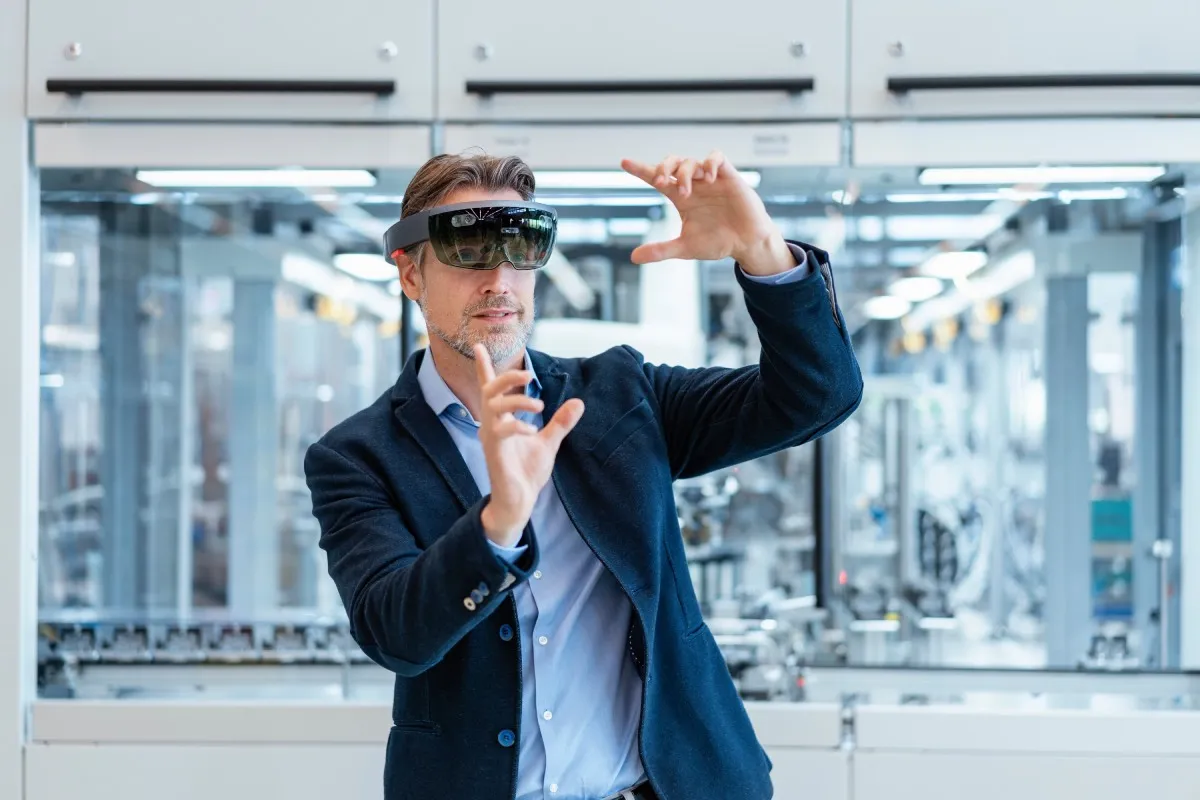
The training itself is simple to describe. After one supervised session in a hospital setting, children used a head-mounted VR device at home for 15 minutes each night, with a parent present (Figshare).
What VR vision training for myopia in children changed in the trial
Axial length, the eyeball's front-to-back measurement, is the trial's primary marker of myopia progression: as it stretches, the eye's optical system falls further out of focus and nearsightedness worsens. Spherical equivalent, the secondary outcome, is the number on a prescription, reflecting how strong a corrective lens needs to be.
By six months, axial length grew 0.147 mm in the VR-training group compared with 0.254 mm in the spectacles-only group, a gap of roughly 0.107 mm the study reports as statistically significant (Figshare). Spherical equivalent shifted by -0.230 diopters in the training group versus -0.460 diopters in the control group, also a statistically significant difference (Figshare).
Dividing the 0.107 mm gap by the 0.254 mm of growth in the control group comes out to roughly 40 percent less axial elongation in the trained group over six months. That's a relative difference calculated from the study's reported figures, not a number stated directly in the report itself (Figshare).
No training-related adverse events turned up over the six months, and the study's authors describe adherence among families as good (Figshare). They conclude that VR-based digital defocus training may represent a promising adjunctive approach for pediatric myopia control, not a stand-alone replacement for existing treatments (Figshare).
Single-blind, in a design like this one, typically means the staff measuring outcomes didn't know which group a child belonged to, while the children and their families did. There's no practical way to hide a nightly VR headset session from the parent running it.
How digital defocus vision training works
The trial also tracked a set of physiological measures alongside the axial-length result, treating them as secondary findings rather than proof of mechanism. Negative and positive relative accommodation, NRA and PRA, describe how well the eye adjusts focus at different distances, and both improved significantly in the training group, as did accommodative facility, or AF, the speed of that adjustment (Figshare). Intraocular pressure dropped, visual fatigue eased, and choroidal blood flow increased, all reaching statistical significance in the same group (Figshare).
Those changes happened alongside the slower axial growth, not necessarily because of it. The study shows a correlation between improved accommodative function and reduced elongation; it doesn't establish which, if either, drove the other.
VR headsets aren't the only technology chasing this idea. A separate trial protocol describes a distant-image screen system, called DIST, that converts a nearby image into a virtual one appearing much farther away, aiming to reduce the accommodative strain that comes from prolonged near work (Trials protocol, five months ago). Whether DIST works through the same mechanism as VR-based digital defocus training isn't established in the available research, but it points to a broader research push toward reshaping how children's eyes focus, rather than simply cutting screen time.
VR training versus myopia control lenses
VR-based digital defocus training enters a field where optical lenses already carry a much bigger evidence base. A multicenter real-world clinical-practice study, using propensity-score matching rather than random assignment, tracked 1,541 children and teenagers aged 6 to 16 across eight Aier Eye Hospital Group centers in China who wore diversified segmental defocus optimization (DSDO) lenses, defocus incorporated multiple segments (DIMS) lenses, or no optical correction (Ophthalmology, four months ago).
Among the 654 children with myopia who wore DSDO lenses and the 661 who wore DIMS lenses, axial length grew 0.07 mm versus 0.09 mm at six months and 0.17 mm versus 0.19 mm at 12 months, both statistically significant differences favoring DSDO (Ophthalmology, four months ago). The study reported greater efficacy for DSDO in children 10 or younger and in those with lower baseline myopia.
A separate comparison in the same study looked at nonmyopic children: those wearing DSDO lenses had less axial growth over 12 months than children with no optical correction, 0.18 mm versus 0.29 mm, with the most pronounced effect occurring in the first six months (Ophthalmology, four months ago).
Lens research keeps moving on its own track. A randomized, double-masked trial protocol is testing a second-generation DIMS lens against single-vision spectacles in fast-progressing myopic children aged 4 to 12, tracking axial length and refraction at 12 months; the design calls for control-arm children to cross over onto the experimental lenses in year two, though that remains a planned step rather than a reported result (PLOS One protocol, last year).
A review from the International Myopia Institute examined interventions across five categories: optical, pharmacological, environmental, colored light, and surgical. Based on randomized controlled trial evidence, it found multiple effective options in most categories, but noted that such rigorous data remain very limited for emerging treatments, a category that includes VR-based approaches like this one (IMI review, last year). VR-based digital defocus training hasn't been tested directly against DIMS or DSDO lenses, so how it stacks up against those more established options is still unknown.
Where the evidence for VR-based digital defocus training stands
The trial tracked children for six months only, so it says nothing about whether the slower axial growth holds, fades, or reverses over the longer stretch of childhood that matters most for myopia control (Figshare). A single-center sample of 120 children also needs replication at other sites before the result carries much weight.
The trial compared VR-based training only against plain spectacles, not against DIMS or DSDO lenses, so its relative effectiveness against those optical approaches remains unknown (Ophthalmology, four months ago; Figshare).
Prevention is an even earlier question. A registered trial protocol plans to enroll 192 pre-myopic children to test whether DIST-style digital defocus training can delay the onset of myopia altogether, split across a DIST-only group, a combined DIST-and-lens group, and a control group doing ordinary near work (Trials protocol, five months ago). That publication is a protocol, not a results paper, so no findings are available yet.
The International Myopia Institute's review calls for more research into the mechanisms behind myopia progression and the treatments that slow it (IMI review, last year). That gap applies directly here. The six-month result gives researchers a concrete number to build from, but longer VR trials, head-to-head comparisons against lens-based options, and results from prevention studies like DIST will determine what role this technology ends up playing in pediatric myopia care.






Comments
Be the first, drop a comment!