



RayNeo announced two new AR glasses lines on August 21, each built for a different job: the 33-gram RayNeo iO for glanceable, all-day productivity, and the heavier RayNeo GT Series, led by the RayNeo GT Max, for immersive video and gaming (PR Newswire).
CEO Howie Li framed the split as deliberate. Rather than compromising with a single device that tries to do everything, RayNeo built the iO as an "invisible, all-day assistant" and the GT Series as an "uncompromising personal cinema for travel and entertainment," Li said in the announcement.
RayNeo said, citing Counterpoint Research, that it held 23.7% of global consumer AR smart glasses shipments in the first quarter of 2026, positioning itself as the market leader heading into this launch. Both product lines go on sale September 4, 2026, through RayNeo's website and Amazon, with live demonstrations at IFA Berlin's Hall 21A running September 4 through 8.
The practical divide: glanceable HUD versus immersive viewer
The two lines are built to answer different questions. RayNeo stripped the iO down to a display, four microphones, and a bone-conduction sensor, leaving out a camera entirely and skipping speakers, according to the company's announcement. Android Authority reported that RayNeo wanted to offer AI features without a camera, a design choice that avoids putting a lens on the wearer's face at all.
The GT line accepts a heavier frame in exchange for a larger color display and built-in audio. It adds Micro-OLED panels, quad speakers co-tuned by Bang & Olufsen, and a dedicated Zone 360 3DoF chip for motion tracking (GSMArena).
That chip also drives three viewing modes: Steady Mode, Pinned Mode, and Follow Mode, which stabilize, anchor, or follow the virtual screen depending on how the wearer is moving. Those modes are particularly relevant to travel viewing, where turbulence or movement on a train could otherwise make a fixed virtual screen uncomfortable to watch.
One line pares hardware down to disappear. The other adds hardware because the screen and the sound are the product.
RayNeo iO smart glasses: HUD display and design
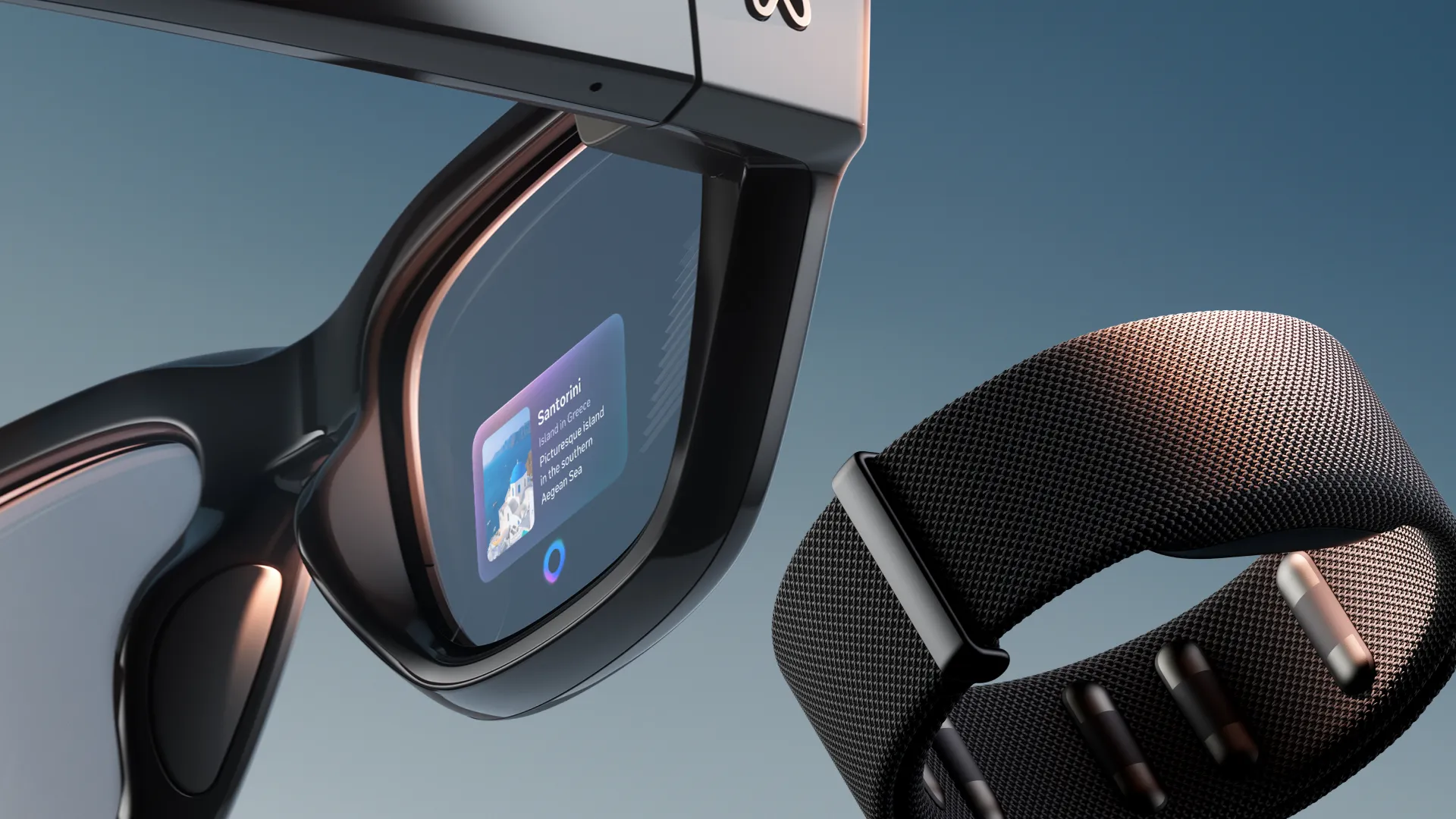
RayNeo's August launch materials list the iO at 33 grams with a 50:50 front-to-rear weight distribution, built from AZ91D magnesium-aluminum alloy up front and titanium temples in back. The company designed the frame in a classic Crown Panto style meant to resemble traditional glasses rather than an obvious piece of tech hardware.
The display is monochrome green, powered by RayNeo's Firefly Nano Engine and a diffractive Blue Lake waveguide the company rates at 97% optical transparency across a 23.5-degree field of view. RayNeo says text reaches up to 1,300 nits of eye-level brightness and remains invisible to anyone standing across from the wearer.
There are no speakers. RayNeo says the choice was deliberate, relying instead on the microphone array and bone-conduction sensor to capture the wearer's voice rather than play anything back.
Rounding out the frame are a physical Smart Crown dial on the right temple, Bluetooth 5.4 with official Apple MFi licensing, and an IP54 rating in RayNeo's launch announcement.
RayNeo's newer marketing materials aren't completely consistent with those launch specifications, however. Some now list the iO at 34 grams with IP65 protection rather than 33 grams and IP54, so buyers should confirm the final retail specifications once sales begin September 4.
The AI engine behind the iO: ambient assistance and its trade-offs
RayNeo calls its background AI feature the Ambient AI Life Log. It runs in a low-power mode, picking up conversation context and scheduling cues, then surfacing calendar prompts a wearer can approve with a head nod.
RayNeo's launch announcement says live translation runs through Timekettle BabelOS 3.0, covering 55 languages and 109 accents with roughly one second of latency. Timekettle separately repeats those figures. RayNeo's current support documentation, however, lists two-way translation across 40 languages, so the company has not yet reconciled the discrepancy between its launch materials and support page.
RayNeo AI and Gemini 3.1 Flash Lite are included with the glasses at no additional cost; a $9.99 monthly tier unlocks access to additional models from OpenAI, Google, Anthropic, and DeepSeek within the companion app, according to Android Authority.
A hardware indicator light activates when recording, translation, or other microphone-dependent features are running.
RayNeo has also published more privacy information since the initial announcement. Its support documentation says Life Log does not retain original audio recordings, keeping only text generated from conversations. Users can manually delete or correct long-term profile tags, and RayNeo provides controls for exporting or requesting deletion of account data.
That persistent context capture is what separates the iO from a glorified notification display, but privacy-minded buyers will still need to decide whether those controls are enough for a device designed to process conversations throughout the day.
RayNeo GT Max and the RayNeo GT Series AR glasses: cinema-grade specs
The GT Max claims a 59-degree field of view and a virtual screen that scales to 227, 267, or 307 inches. The standard GT tops out at a 46-degree field of view and a 231-inch image (Notebookcheck).
Both models use a Vision 4000 display processor paired with the Zone 360 3DoF chip, 120Hz Micro-OLED displays, and quad speakers co-tuned by Bang & Olufsen with head-tracked spatial audio. Their optical systems aren't identical, though: RayNeo lists a Birdbath optical engine for the GT and its Peacock Optical Engine 3.0 Max for the GT Max.
RayNeo describes the GT Series, when used with the RayNeo Pocket TV Pro, as the first AR glasses system to support native Dolby Vision playback alongside AI-driven SDR-to-HDR conversion. That's a manufacturer claim tied to the glasses-and-Pocket-TV-Pro combination, not an independently verified distinction.
The GT Max also ships in three physical interpupillary-distance sizes: small for under 64mm, medium for 64 to 67mm, and large for over 67mm, which RayNeo says are meant to preserve optical clarity across different face shapes.
The GT weighs 68 grams and the GT Max 78 grams, more than double the iO's launch weight. That gap points to a different use case: something worn for a movie or a flight, not something worn from breakfast to bedtime.
RayNeo iO smart glasses and GT Max: price, release date, and open questions
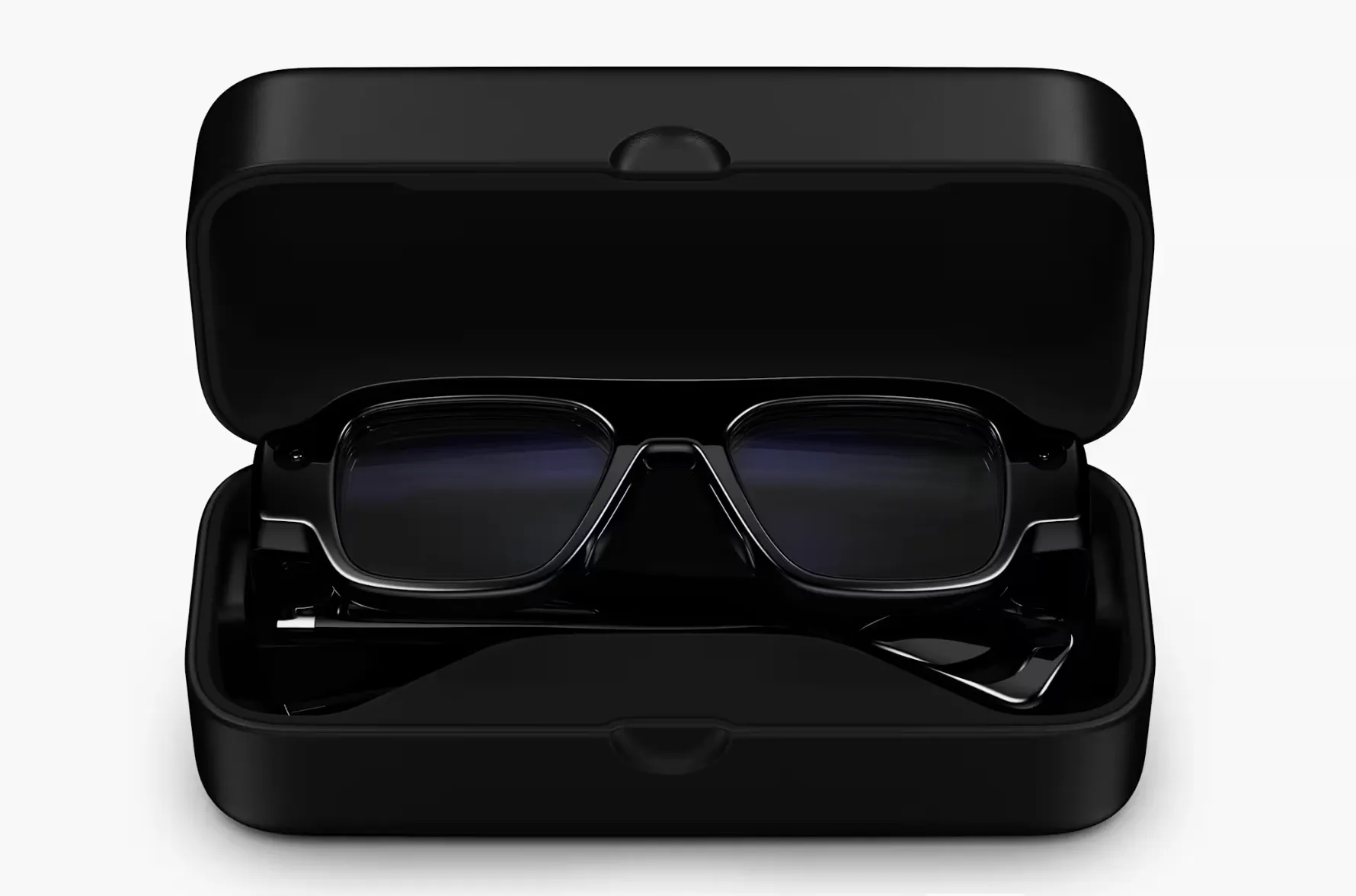
The iO is priced at $479, or $529 bundled with a charging case. For anyone tracking the RayNeo smart glasses release date, both product lines go on sale September 4, 2026, through RayNeo's website and Amazon, with live demonstrations at IFA Berlin.
RayNeo's own store had not posted final GT or GT Max prices as of September 1, but Android Authority reported launch prices of $299 for the GT and $399 for the GT Max. RayNeo's retail pages still list both models as coming September 4 without published prices, so those figures remain reported rather than confirmed on RayNeo's store.
The iO's 240mAh battery is rated for up to two days of typical use, 18 hours of continuous recording, or 6.2 hours of continuous translation, a considerable trade-off given that translation is one of the device's headline features.
The core specifications break down like this:
RayNeo iO: 33 grams in RayNeo's August launch materials; monochrome waveguide display; 23.5-degree field of view; 97% optical transparency; up to 1,300 nits; no speakers; positioned for all-day productivity and translation; $479, or $529 with the charging case.
RayNeo GT: 68 grams; 120Hz Micro-OLED display; 46-degree field of view; virtual screen up to 231 inches; quad B&O-tuned speakers; positioned for personal cinema and gaming; $299 launch price reported by Android Authority.
RayNeo GT Max: 78 grams; 120Hz Micro-OLED display; 59-degree field of view; virtual screen up to 307 inches; quad B&O-tuned speakers; positioned for personal cinema and gaming; $399 launch price reported by Android Authority.
Most performance claims still come from RayNeo's launch materials rather than independent testing. Display legibility, comfort over a full workday, translation performance, spatial stability, and how convincing a claimed 307-inch virtual screen actually feels remain unverified ahead of retail availability.
What comes next
IFA Berlin's demonstrations should offer an early opportunity for hands-on impressions of both lines, ahead of broader buyer testing once sales open September 4.
The split will make sense only if the iO proves comfortable and discreet enough for daily use, while the GT Max delivers a stable, convincing cinema experience despite its 78-gram frame.
Those are questions the launch specifications cannot answer. Independent reviews, not the spec sheet, will settle them.




Comments
Be the first, drop a comment!