


Apple Vision Pro Future: What Kuo and Gurman Reveal
The Apple Vision Pro future looked, for a moment, like two different products depending on who you asked. Ming-Chi Kuo, the analyst whose supply-chain sources have shaped years of Apple hardware reporting, says the headset's successor has been wiped off the roadmap entirely. Mark Gurman, Bloomberg's Apple reporter, says a Vision Pro follow-up is still in testing, just frozen, "on ice," while Apple works out what comes next (MacRumors, nearly four months ago).
That disagreement, dead versus paused, is worth sitting with, because what both analysts agree on says more than where they split. Apple's internal roadmap has reportedly gone from seven products a year ago to just two, and neither one is a headset (VR.org, nearly four months ago). Both survivors are glasses: a display-free AI pair reportedly targeted for 2027, and a display-equipped AR pair using waveguide optics that has reportedly slipped to 2029 or later (MacRumors, nearly four months ago).
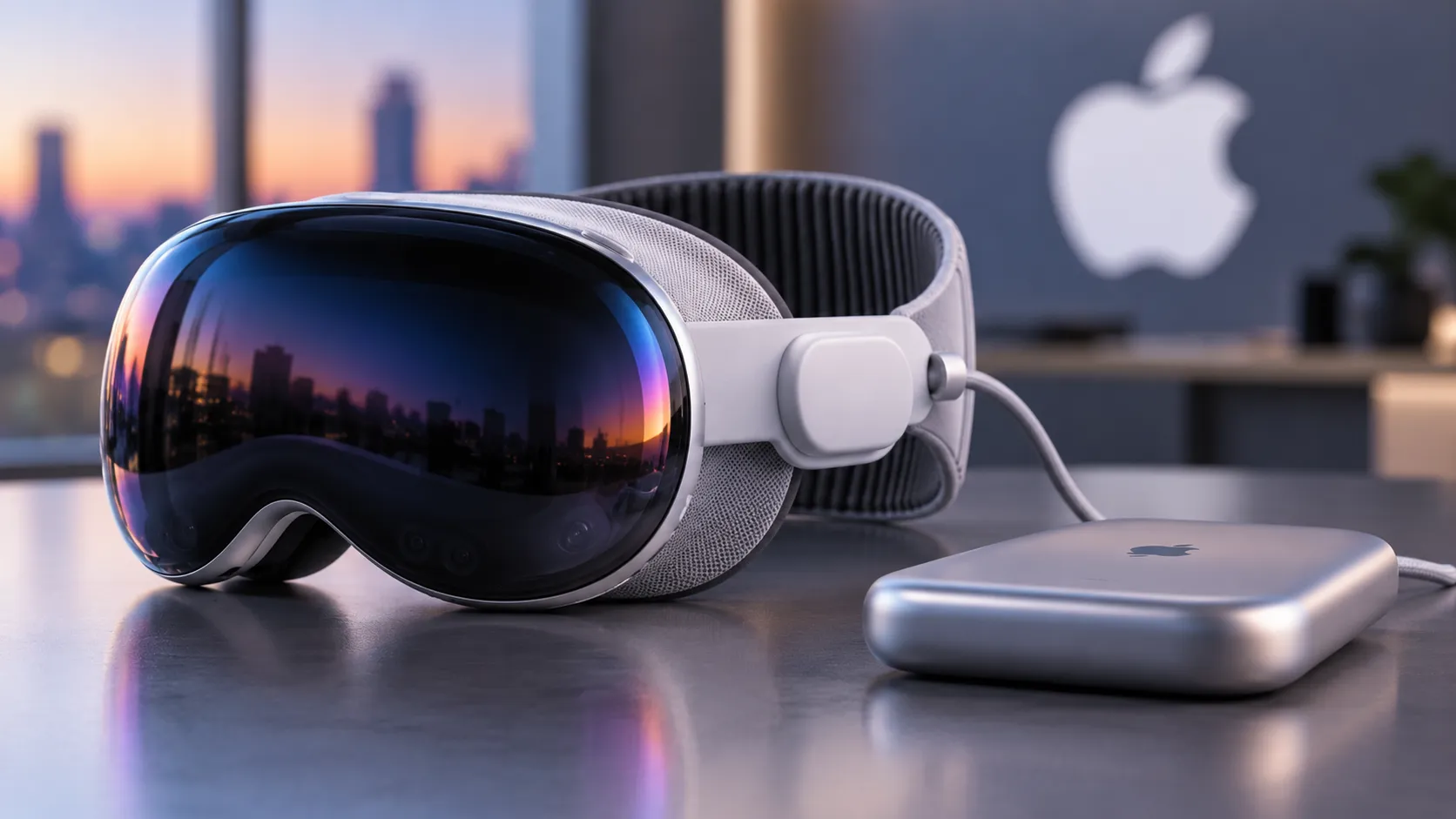
None of this is confirmed proof that Apple has abandoned augmented reality as a category. It reads more like evidence that Apple lost confidence in the $3,499 headset as a near-term route to a mass-market audience, and is regrouping around glasses while the current Vision Pro holds the fort. What follows separates the confirmed reporting from analyst inference, walks through the market pressure behind the pivot, weighs what the two glasses products can and can't do, and works out what it means for the people who already bought in.
Kuo, Gurman and what the Apple mixed reality headset reporting actually shows
Kuo's report reads less like a supply-chain update and more like an obituary. He says the roadmap he assembled roughly a year ago is no longer a useful reference point, because Apple has rewritten it that thoroughly (VR.org, nearly four months ago). Everything with a head strap is gone: the second-generation Vision Pro, and the lighter, cheaper Vision Air that was supposed to widen the Apple mixed reality headset's appeal beyond early adopters (MacRumors, nearly four months ago).
Kuo ties the overhaul to John Ternus, Apple's hardware chief, who according to this reporting was lined up to succeed Tim Cook as CEO around September 1, and who reportedly signed off personally on cutting the Vision lineup (VR.org, nearly four months ago). That leadership detail remains reported rather than something Apple has confirmed on the record, and it's worth holding loosely for that reason. What it does establish is who reporting says made the call, not just what the call was.
Gurman's account complicates the tidy version. He confirms Vision Air's cancellation as of October 2025 and a Mac-companion display-glasses concept that was shelved back in January 2025, but he describes something else still alive: a genuinely redesigned Vision Pro successor in testing, one that could move the main processor out of the headset and into an external puck to cut weight, similar to an approach Meta is reportedly exploring for its own next headset (MacRumors, nearly four months ago; AugmentedReality.com, just over three months ago).
The gap between "canceled" and "frozen" isn't cosmetic. A cancellation forecloses the category. A freeze means Apple is still hedging its bets while it waits for the engineering to catch up. What isn't in dispute, across either account, is that no headset is moving toward a near-term launch; the earliest Apple Vision Pro 2 release date either analyst floats is late 2028 (AugmentedReality.com, just over three months ago). That single fact, no headset on a near-term path, is the one worth treating as settled. Whether the project is dead or merely shelved is the open question the rest of this piece works around rather than resolves.
The Apple Vision Pro future depends on price and weight
The scale of the slippage tells its own story. Back in 2023, Gurman was reportedly predicting a cheaper "Apple Vision," without the Pro branding, would ship by late 2025. The current reported target is three to four years past that (AugmentedReality.com, just over three months ago). That kind of drift usually points to engineering trouble rather than a scheduling decision, and this reporting frames it that way explicitly: the headset category is effectively on ice until Apple solves two specific problems, making the device meaningfully lighter and meaningfully cheaper than $3,499, not some sprawling list of unsolved technical hurdles (AugmentedReality.com, just over three months ago).
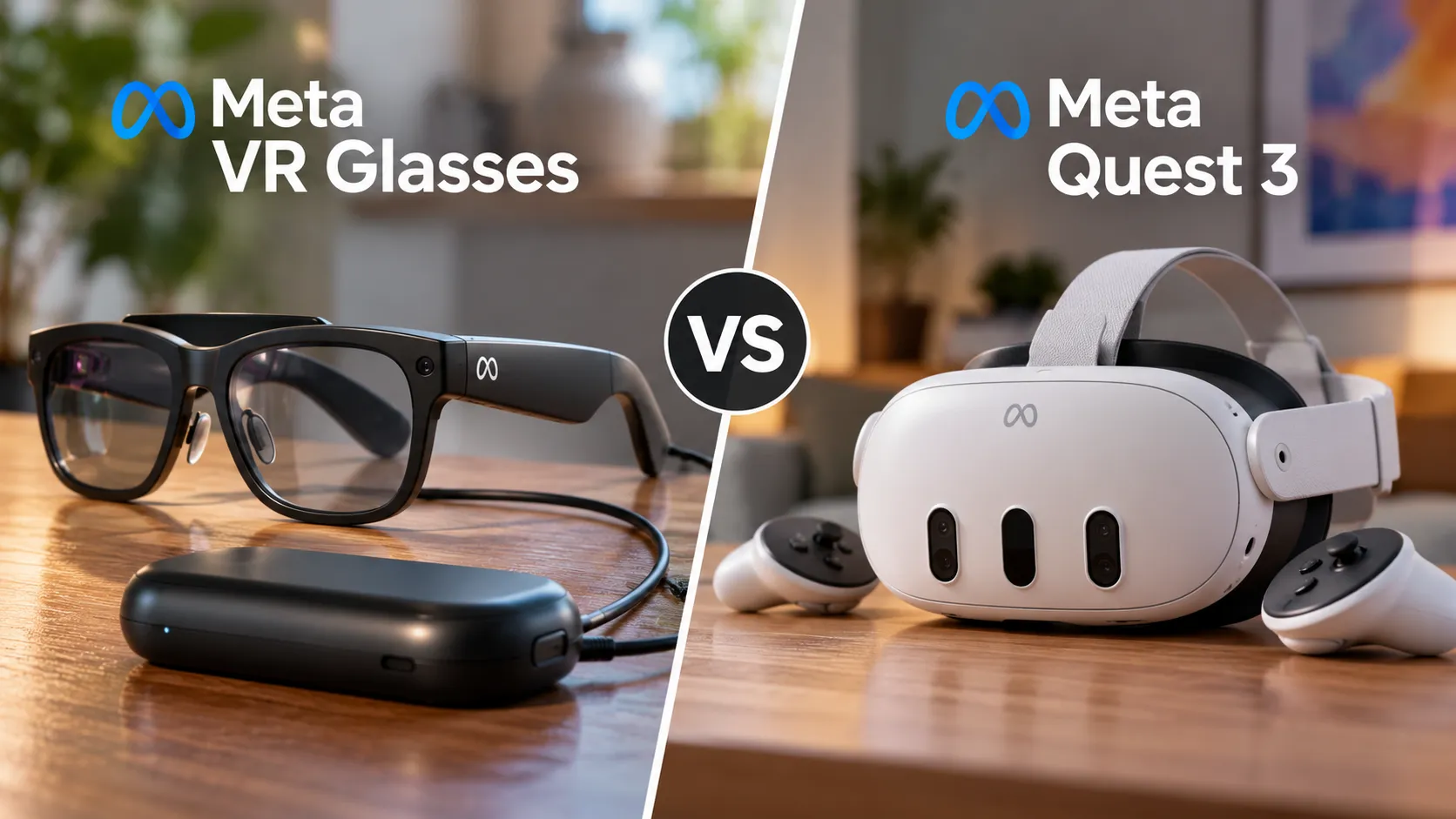
The wider market makes that constraint concrete rather than abstract. Smart glasses reportedly outsell VR and MR headsets three to one, and nearly all of the XR category's 44 percent shipment growth in 2025 came from glasses, not headsets (VR.org, nearly four months ago). Vision Pro, by this account, undershot expectations twice, once at launch and again at its October 2025 M5 refresh, while Meta reportedly sold Ray-Ban glasses by the millions at roughly a tenth of Vision Pro's price (VR.org, nearly four months ago). Those commercial figures are directional claims inside the reporting rather than independently audited sales data, but the direction is consistent across sources.
Put together, this is the strongest case for why Apple is pivoting, and it's a market argument, not a conceptual one. Augmented reality as an idea hasn't failed. The $3,499 headset, at its current weight and price, hasn't found the audience Apple built it for, while the rest of the industry's volume has already moved to something lighter, cheaper, and worn more like ordinary glasses.
Apple's smart glasses plans: two bets, two timelines
Apple's smart glasses plans split into two products that solve different problems on different clocks. The 2027 device is reportedly display-free: a camera-and-speakers wearable positioned squarely against Meta's Ray-Ban category, not a substitute for Vision Pro's spatial computing ambitions (VR.org, nearly four months ago). No pricing has been reported for it, and it's worth resisting the temptation to assume "smaller and lighter" also means "cheap."
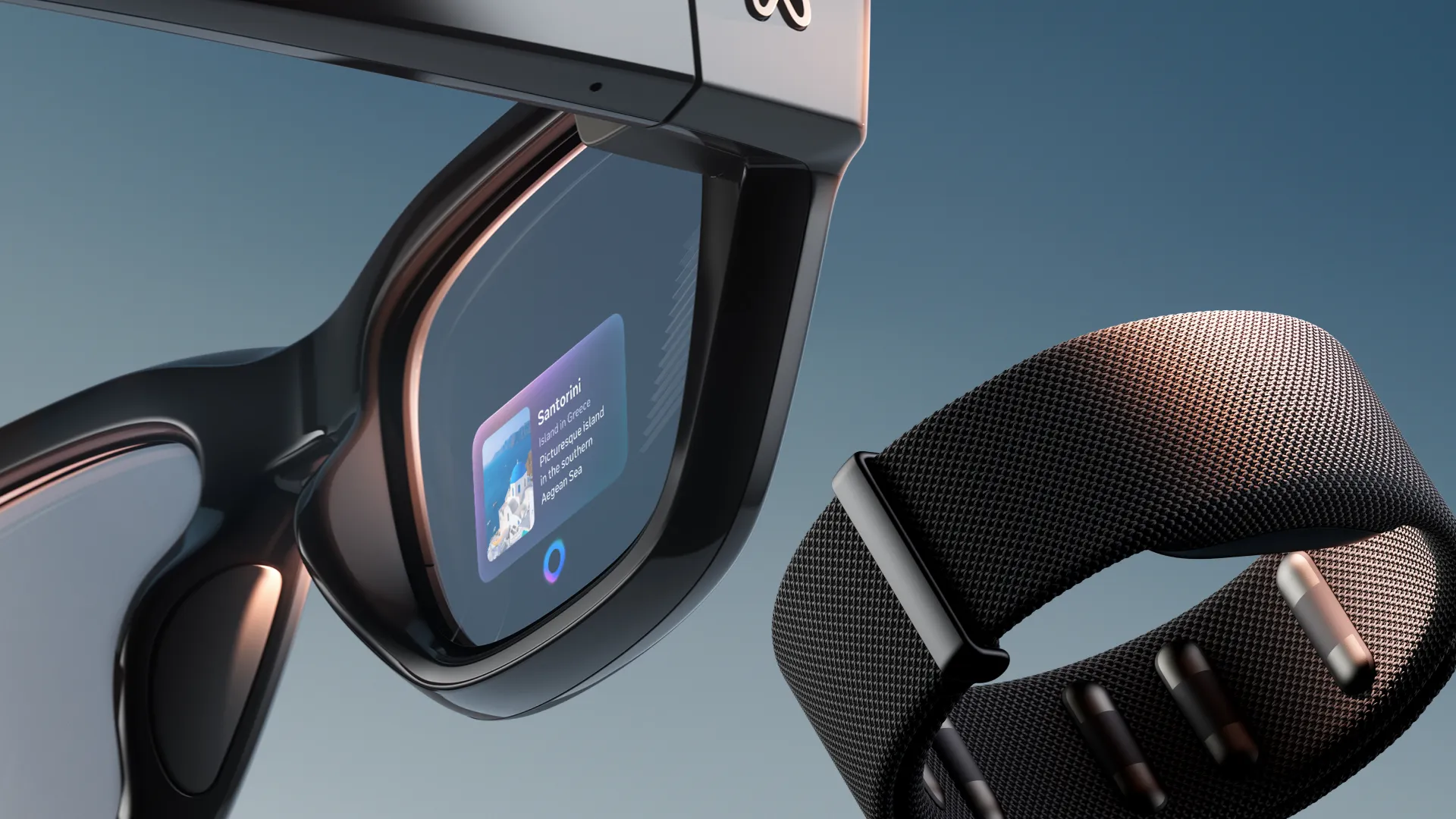
The 2029-or-later device is a different animal. It reportedly pairs a micro-display with optical waveguides, technology that keeps the lens transparent while guiding a projected image to the eye, so digital content appears overlaid on the real world rather than replacing it (MacRumors, nearly four months ago). That's a real step toward the kind of see-through augmented display Vision Pro was never built to offer in the first place; Vision Pro is a fully opaque headset that simulates the outside world through cameras, not a see-through lens. Whether waveguide glasses can eventually deliver anything close to the immersive range Vision Pro demonstrates today is still unproven and years from a test.
That gap between 2027 and 2029-plus is the trade-off any "Apple hasn't given up on AR" argument has to reckon with. The near-term product is wearable and camera-equipped, but it's an AI-audio accessory, not spatial computing. The device that might eventually earn that label is still years out, architecturally unconfirmed, and resting on display technology that hasn't shipped from Apple in any form yet.
There's a privacy dimension worth carrying into this, because it likely travels from Vision Pro into whatever comes next. Apple currently blocks third-party developers from accessing the headset's cameras and sensors while exempting its own apps from that restriction, a policy that stands in contrast to Meta's ability to use eye-gaze-adjacent data for ad targeting on its own hardware (NYU Stern Center for Business & Human Rights, more than two years ago). That analysis frames the restriction as a likely trade, near-term third-party app growth traded for a privacy-first pitch, rather than a settled verdict on what Vision Pro's app catalog actually became.
If Apple carries that same restricted-sensor model into camera-equipped AI glasses built to compete with Ray-Ban, it would face the same trade again: privacy as a differentiator, at the possible cost of the third-party ecosystem that tends to make a new device category indispensable. That's not a guaranteed outcome. It's the same tension that shaped Vision Pro's first two years, showing up again on a different piece of hardware.
What the shift means for buyers, developers and institutions
For consumers, the practical read is straightforward: expect the 2027 product to look and behave like a Ray-Ban competitor, audio, camera, an AI assistant, not a lighter Vision Pro. Anyone holding out for an affordable spatial-computing headset is reportedly looking at 2028 or 2029 at the earliest, and that's assuming the in-testing successor Gurman describes actually ships (MacRumors; AugmentedReality.com, just over three to nearly four months ago).
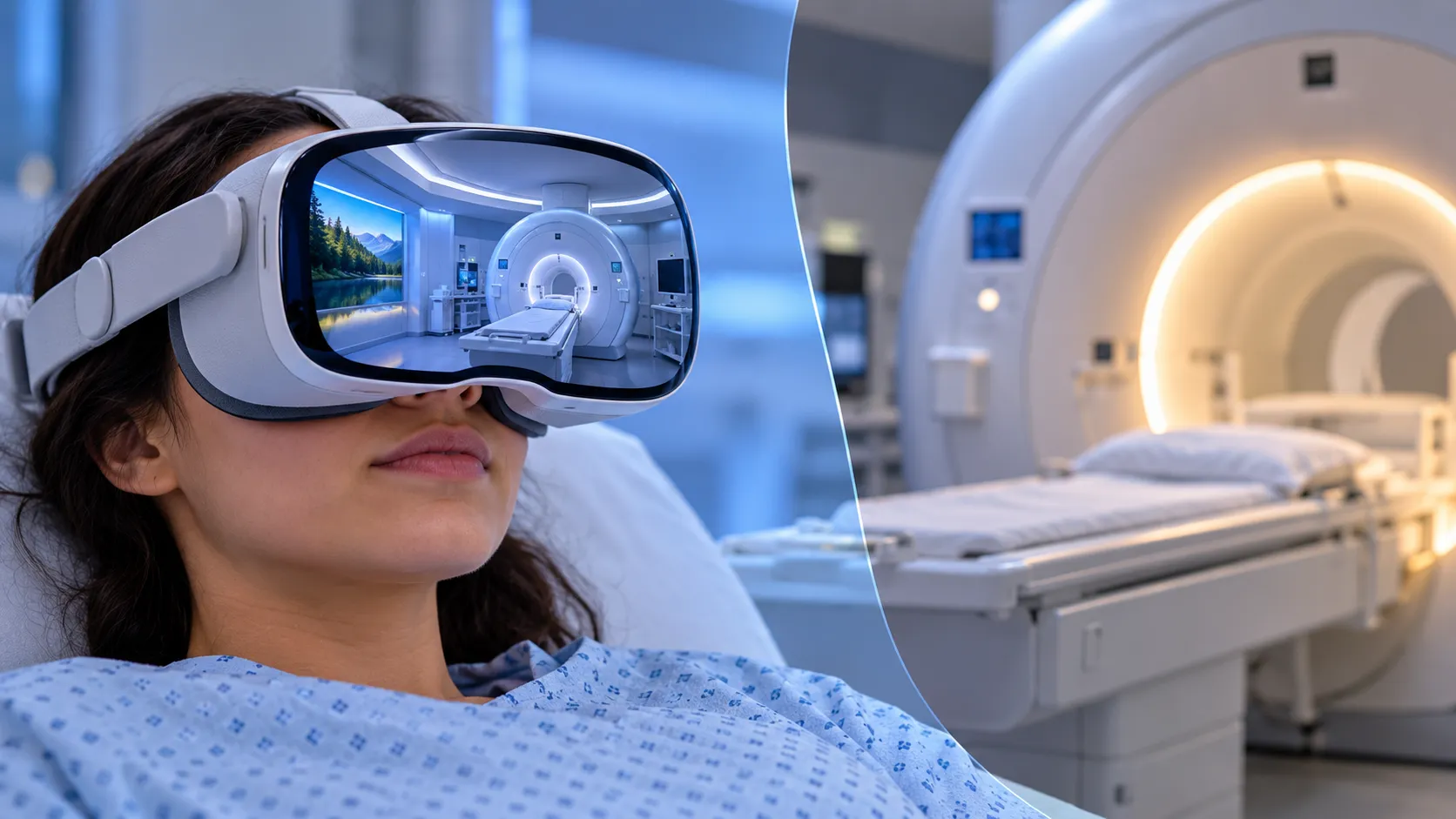
Institutional buyers face a different calculation. Reporting cites hospitals, training programs, and field-service operations, including surgeons reportedly using Vision Pro in operating rooms, as the segment with real money already committed to Apple's roadmap (VR.org, nearly four months ago). These buyers should treat the current headset as fixed, supportable hardware rather than a platform expecting near-term refreshes. That support picture is itself a projection rather than a formal Apple commitment: the software floor is expected to hold through roughly 2028 to 2029, with the October 2025 M5 refresh standing as the practical hardware ceiling until, or unless, a successor arrives (VR.org; AugmentedReality.com, just over three to nearly four months ago). Ahead of Apple's developer conference last June, reporting previewed the next software update as a parity-focused release built around Siri improvements, Photos AI tools, and general performance work rather than headline new capabilities (VR.org, nearly four months ago), which fits a device being maintained rather than expanded.
Developers face a narrower version of the same math. Building exclusively for Vision Pro means building for a hardware base with no reported near-term successor, while the existing headset keeps selling and keeps getting incremental updates. That's not evidence the install base is shrinking. It's evidence there's nothing new on the near horizon to grow it, at least until the 2029 waveguide device materializes, if it materializes at all.
None of this requires "Apple has abandoned AR" to be true. It only requires that the headset, at its current price and weight, isn't the vehicle Apple is currently betting on to get there.
What to watch next
Kuo and Gurman converge on the substance even as they diverge on the label: no Vision headset is moving toward a near-term launch, whether that's because the project is dead or because it's paused (MacRumors, nearly four months ago). The market rationale behind that stall is concrete rather than speculative: smart glasses reportedly outselling headsets three to one, capturing nearly all of 2025's XR shipment growth, while Vision Pro underperformed at a price Meta's Ray-Bans undercut roughly tenfold (VR.org, nearly four months ago).
Three things are worth tracking from here. Whether the 2027 glasses actually ship as a Ray-Ban-style AI wearable rather than sliding further down the calendar. Whether Apple extends its restrictive sensor-access model to camera-equipped glasses, which would shape how it competes with Meta on capability versus data control. And whether visionOS support and enterprise procurement hold steady through 2028 and 2029 without a hardware refresh to anchor them.
The more useful question isn't whether Apple still believes in augmented reality. It's whether glasses can deliver a workable version of that promise before waveguide displays are good enough to approach the high-end demonstration Vision Pro already put on stage, at a price almost nobody but institutions and enthusiasts was willing to pay.


Comments
Be the first, drop a comment!