


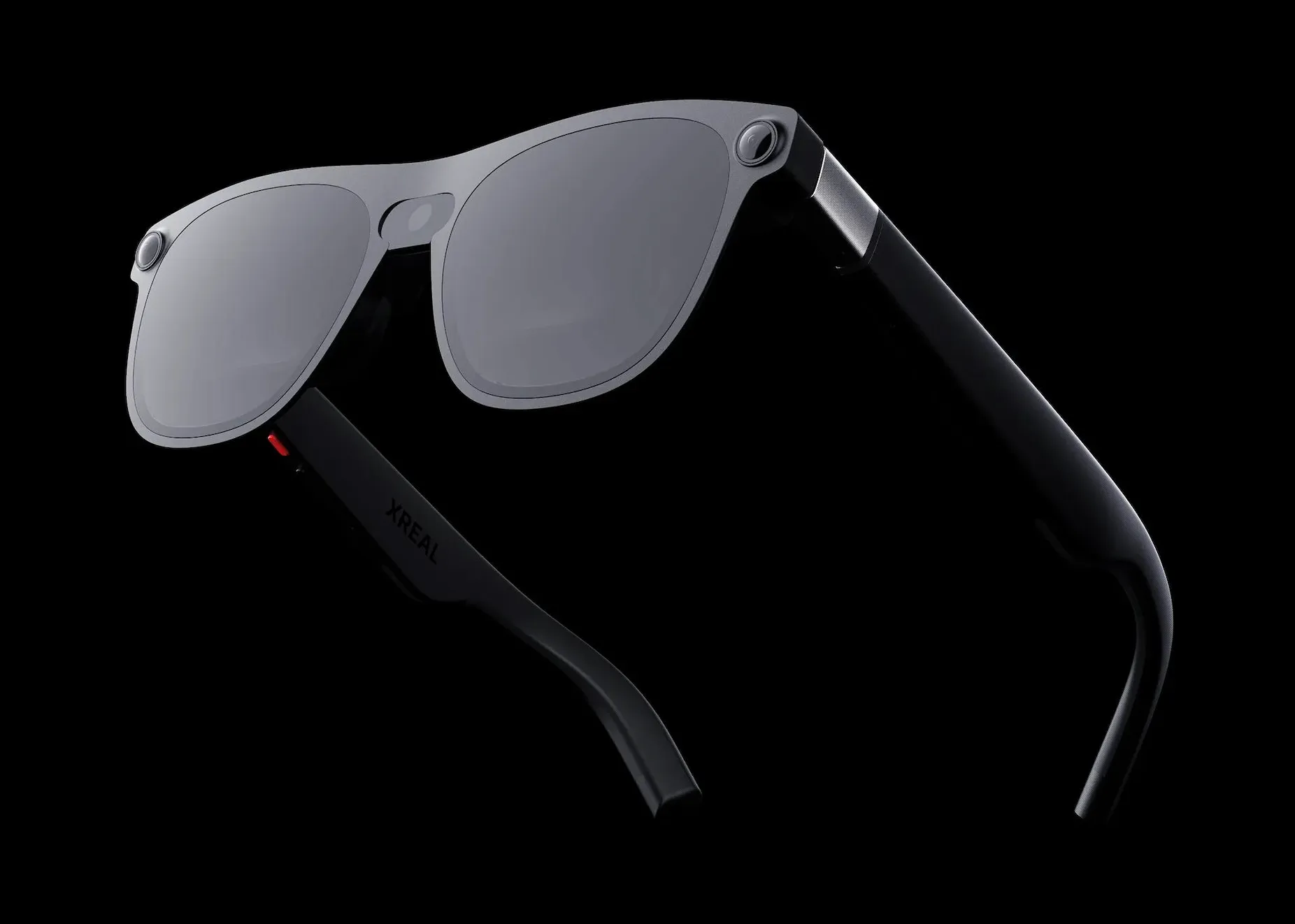
VR Expert and Treeview have partnered to give enterprises an early way to evaluate, prototype, and build applications for XREAL AURA before the Android XR glasses reach general availability. According to VR Expert's partnership announcement, the program combines hardware evaluation and procurement with custom software development, enterprise integrations, rollout planning, and support.
The timing is notable because AURA is still a prelaunch platform. XREAL plans to release the glasses in fall 2026, but the enterprise ecosystem around them is already beginning to form. VR Expert and Treeview are effectively offering companies a way to test whether AURA fits a real workflow before committing to a wider rollout.
That distinction matters. Neither company has announced participating customers, pilot dates, or program pricing, so the partnership is still a framework for evaluation and deployment rather than evidence that AURA has already gained traction at scale.
One path from prototype to rollout
VR Expert, an enterprise XR hardware and support provider, and Treeview, an XR development studio founded in 2016, split the work across the hardware and software sides of an AURA project. VR Expert handles demonstrations, procurement, configuration, logistics, and support, while Treeview develops custom applications and integrations.
Treeview works across healthcare, manufacturing, retail, energy, education, automotive, and government. Founder Horacio Torrendell was also part of the Network XR team that won Google's first Android XR hackathon for XREAL AURA in June 2026, giving the studio hands-on development experience with the platform before its commercial launch.
The joint program covers use-case discovery, AURA demonstrations and hardware evaluation, rapid prototyping, custom Android XR or Unity development, and rollout support. The final stage can include procurement, configuration, logistics, technical support, and lifecycle services.
That structure is meant to solve one of the most common problems in enterprise XR: getting from an interesting demonstration to something that can actually be repeated across a business. A company may be able to prove that an AR workflow works for a handful of employees, but scaling it requires hardware sourcing, application support, device configuration, system integration, and long-term maintenance.
The companies are exploring training and guided workflows, digital twins and design reviews, remote expert support, healthcare and life sciences, sales experiences, and cultural sites. None of those use cases is tied to a named customer or confirmed production deployment.
Why AURA fits the enterprise pitch
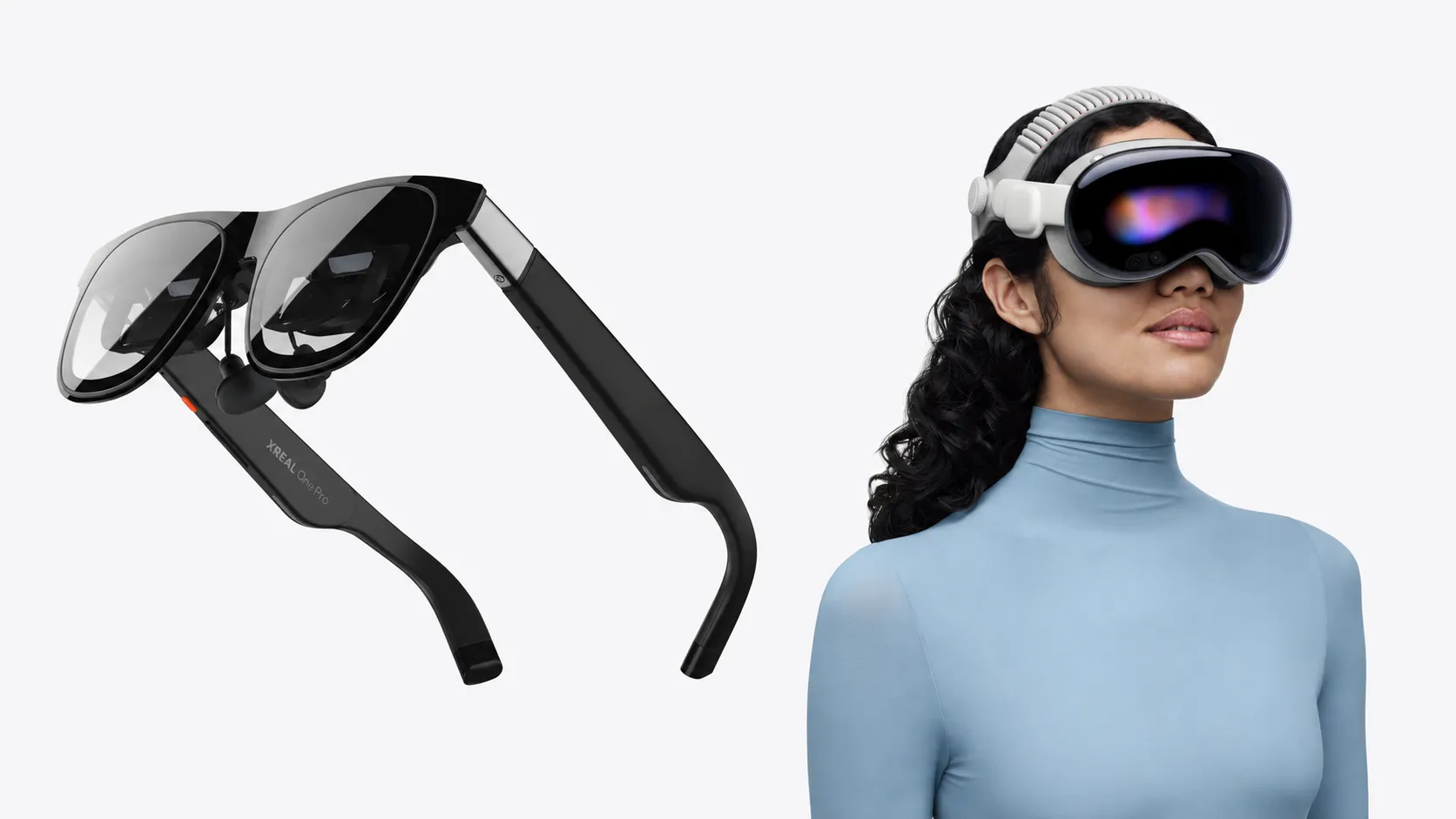
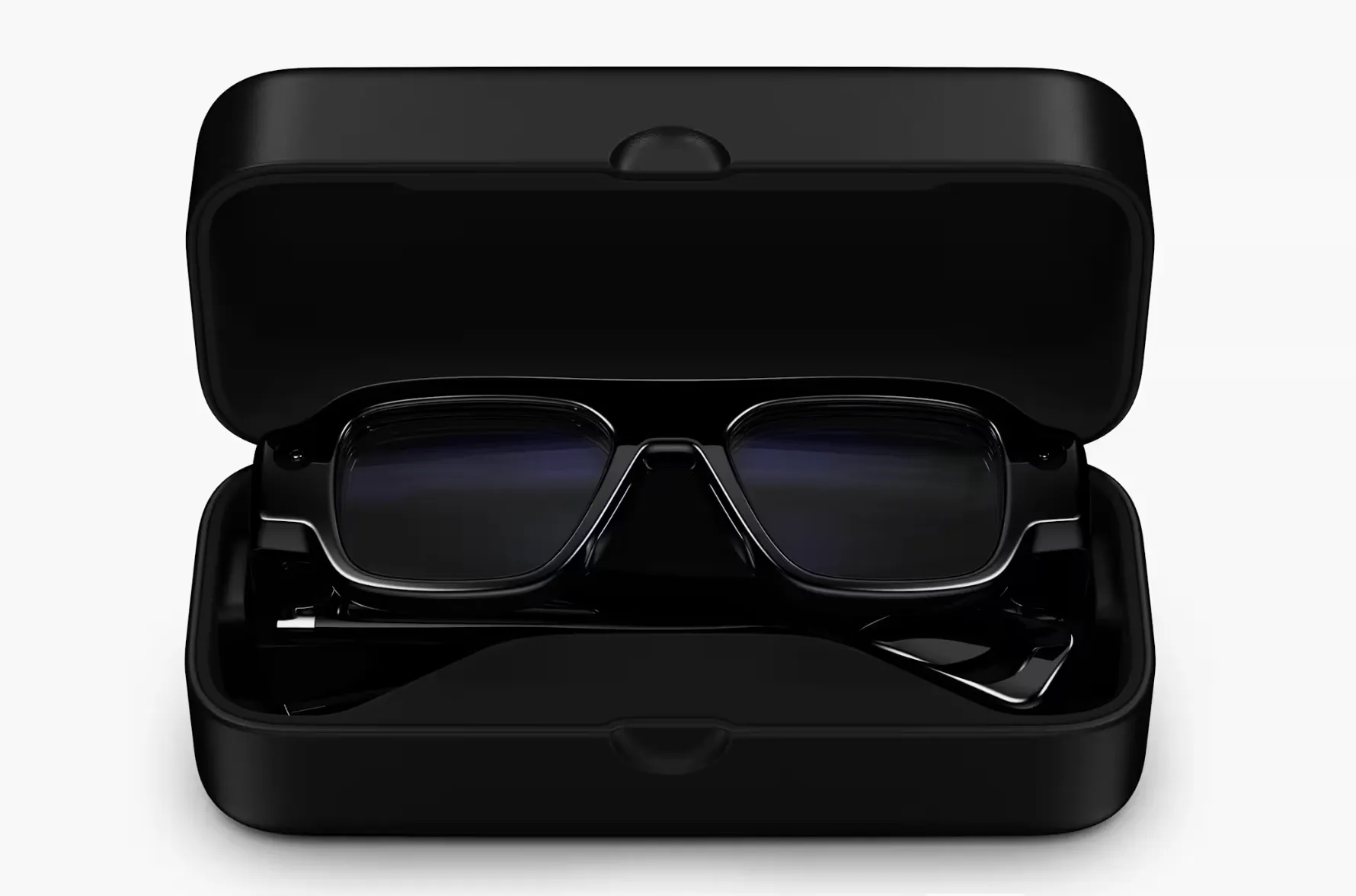
AURA's architecture helps explain its potential for workplace applications. The optical see-through glasses separate much of their computing hardware from the frames, pairing XREAL's X1S spatial coprocessor in the glasses with Qualcomm's Snapdragon Reality Elite platform in a wired compute puck. Qualcomm says Reality Elite powers XREAL's tethered optical see-through design, shifting heavier processing away from the glasses themselves.
That approach could improve comfort during longer sessions because less weight and heat need to remain on the user's face, although real-world endurance and long-duration wear still need to be demonstrated.
The glasses use a 70-degree optical see-through display and support spatial and hand tracking. They do not include face tracking, limiting face-driven avatar expressions and similar functions.
XREAL also positions AURA as a full Android XR device rather than conventional display glasses. On its current AURA product page, the company says millions of Google Play apps will be available alongside more than 100 apps designed specifically for XR. XREAL lists a fall 2026 launch and says the base model will cost no more than $1,500 before tax.
The company's reservation program has already moved beyond its original launch offers. The $299 Founder Priority Pass and $99 Launch Credit are sold out, while XREAL now offers a refundable $199 Priority Deposit that applies toward the eventual purchase price.
For enterprise buyers, however, raw specifications and launch pricing are only part of the equation. Comfort, battery life, camera behavior, application compatibility, device administration, and support policies can matter just as much once hardware leaves the lab and enters a workplace.
Developers can start before launch
Developers do not need physical AURA hardware to begin working with Android XR. Google's development stack supports established Android tools alongside Unity, OpenXR, Unreal Engine, and other development paths, while emulator support allows applications to be tested without a physical XR device.
The software stack is also moving closer to production use. On Aug. 18, Google's Android Developers team announced that Jetpack SceneCore, ARCore for Jetpack XR, and XR Runtime had reached beta, meaning their APIs are stabilizing and can begin moving into production development workflows.
That is important for developers who want to experiment with spatial interfaces before AURA hardware becomes widely available. It lowers the barrier to early software work and gives teams time to test interaction models, app architecture, and integrations ahead of launch.
Physical access to AURA remains more limited. Applications for XREAL's Android XR Developer Catalyst Program closed June 30, 2026. XREAL says selected developers are being contacted to complete Google and XREAL documentation before placing free device orders.
Announced software already points toward possible enterprise uses. 9to5Google reported several early AURA applications, including ShapesXR for collaborative spatial prototyping and Frontline.io for CAD-based digital twins, training, troubleshooting, and augmented work instructions.
Those examples are useful because they show how AURA might fit existing enterprise XR workflows. They are not, however, proof that either application is already running in a production enterprise fleet.
Why the rollout remains unproven
The hardware and developer ecosystem are taking shape, but several details important to enterprise buyers remain unsettled.
VR Expert and Treeview have not disclosed pricing for workshops, custom development, or support tiers. Their announcement also leaves questions about device-management compatibility, data residency, regional support terms, compliance requirements, and how organizations will govern camera and sensor data.
Those issues become more important as a project moves beyond a prototype. IT teams need to know how devices will be provisioned and secured, how applications will connect with existing systems, how data will be handled, and how hardware will be supported and managed across locations.
There is also a broader question around whether Android XR can develop into a dependable enterprise platform rather than simply another promising spatial-computing ecosystem. AURA benefits from Google's software base, Qualcomm's hardware platform, and XREAL's experience building lightweight display glasses, but none of those advantages automatically guarantees large-scale workplace adoption.
That is where the VR Expert and Treeview partnership becomes more interesting than a conventional channel announcement. It attempts to fill the operational gap between having a device and having a deployment plan.
AURA is approaching launch with an established Android app ecosystem and an XR development stack that continues to mature. VR Expert and Treeview are trying to add the services layer needed to turn that foundation into workplace projects.
Enterprises can now begin testing candidate AURA use cases before the glasses reach general availability. The real measure will come after launch: whether those early projects lead to named customers, repeatable rollouts, clear support terms, and enough operational evidence for companies to move AURA beyond the experimental stage.


Comments
Be the first, drop a comment!