


FTC facial recognition settlement signals trouble for smart glasses
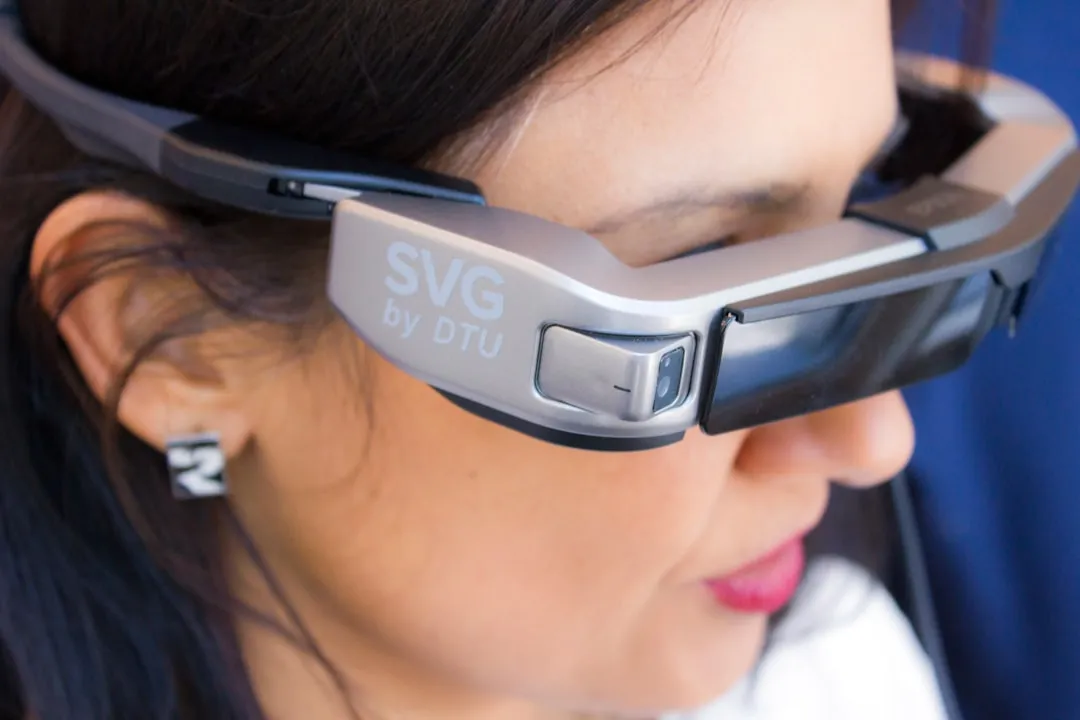
A participant in a study on camera glasses discovered, while scrolling through footage, that they had recorded a waiter at close range during a meal. The recording indicator had been invisible in bright sunlight. Neither person knew it was happening. That accidental capture isn't an edge case. The camera is designed to disappear into the frame, and the safeguards are calibrated for good conditions. Most bystanders aren't looking for a lens in the first place.
The FTC facial recognition settlement with IntelliVision, announced in late 2024, sits in a different corner of the technology landscape. But it points at the same underlying problem: when sensing hardware makes claims about what it can perceive, those claims need to be verifiable. Smart glasses currently fail on both fronts. The consent signals don't work, and capability claims face no evidentiary standard. That combination is what makes this a structural problem rather than a UX footnote.
Two bodies of research shape this argument. The near-term consent problem comes from a 2024 ACM CHI study of actual camera-glasses wearers. The longer arc, covering what happens when continuous sensing and contextual inference are layered on top, comes from a parallel empirical study of pervasive AR involving 54 participants. These are related but not identical, and the distinction matters.
The defaults being set now, including how visible a recording indicator needs to be and what biometric claims require independent proof, will define what's considered acceptable once smart glasses are genuinely common. That negotiation is underway, and the industry is shaping it largely unopposed.
Why smart glasses are different from a phone
Using a smartphone is an act. You raise it, frame a shot, make a gesture that anyone nearby can read. One participant in the ACM CHI study put the contrast plainly: "When you use a smartphone, you're acting, while with the glasses, you're passive. You simply have them on." That passivity is precisely what removes the social visibility that phones, however intrusive, still provide (ACM CHI 2024).
Bystanders aren't failing to notice because they're inattentive. They're not looking because they don't expect glasses to have cameras. As one wearer noted, "the camera just merges with the frame and it could just be like a design element rather than an actual" recording device. The wearers in the study understood this asymmetry in real time. Several noted that people around them had "no idea" what they were doing. One described the unease of the realization: "It was a little bit disturbing to be completely honest, because I told myself, I may be in his place and someone may be recording me without me knowing or noticing" (ACM CHI 2024).
The gap between camera glasses today and pervasive AR tomorrow is one of degree, not kind. In the IEEE study of a semi-public AR prototype, forward-looking evidence about a more capable device category rather than a review of current consumer products, participants experienced the continuous context-aware delivery of information as "all-seeing" and "unprompted" in a way that felt qualitatively more unsettling than discrete recording (IEEE Access 2024). As the hardware matures, the consent problem compounds.
Phones gave us a social grammar for observation in public. Smart glasses stripped that grammar away. Nothing has replaced it.
What the FTC facial recognition settlement reveals about smart-glasses accountability
The recording LED fails in practice. Multiple participants in the ACM CHI study noted that from any real distance the indicator goes undetected. One described the restaurant incident directly: bright sunlight made the light invisible to both wearer and subject. Another concluded simply: "If people are a little bit far away from you, then you can take pictures of anything that you want." Some users have gone further, covering the LED with tape entirely (ACM CHI 2024).
Even when the light is visible, it only communicates something to people who already know what it signals. As one wearer noted: "Personally, I know that it lights up when you record something, but they don't know that. Because not everyone knows such glasses" (ACM CHI 2024).
The deeper issue is unverifiability. A bystander can't confirm whether recording is happening, whether footage has been deleted, or what the device can infer beyond what's visible. One participant put it plainly: "You can tell him I'm going to delete it, but he has no proof that you will be deleting it unless he simply breaks [your glasses]." The problem isn't just weak notice. No independent check exists (ACM CHI 2024).
That unverifiability problem has a direct parallel in how the FTC approached IntelliVision. According to the FTC's December 2024 guidance, IntelliVision marketed its facial recognition software with claims of industry-leading accuracy, zero gender or racial bias, and anti-spoofing performance that couldn't be fooled by photos or video. The agency found the company lacked adequate evidence to support any of those claims. Under the settlement terms, IntelliVision agreed not to make accuracy or effectiveness representations without "competent and reliable testing" backing them up. The FTC's public guidance was blunt: don't make claims you can't back up.
That standard targets a facial recognition software company, not a consumer AR glasses maker. The direct line from that enforcement action to a pair of AI-assisted smart glasses isn't established by existing evidence alone. But the logic travels: regulators are signaling that perception and biometric claims require verifiable proof, and that standard is likely to follow these capabilities into wearable hardware as more devices incorporate face detection, contextual inference, or emotion-recognition features.
The IEEE researchers studying pervasive AR reached a compatible conclusion: lack of transparency in these systems actively undermines people's ability to make informed decisions about their environment, and trust "must be designed as a relationship between people measured by their ability to depend on one another to play by a shared set of rules," not treated as a UX feature or a marketing claim (IEEE Access 2024).
One counterargument is worth taking seriously. A participant in the CHI study dismissed concern with "I don't think anybody cared, really." That probably reflects context, specifically unfamiliar hardware in a city where camera glasses remain rare, rather than informed acceptance. Indifference from someone who hasn't recognized a recording device isn't consent from someone who has. It may simply confirm the core finding: people don't know to look.
The social friction is already shaping behavior regardless. Wearers in the study were self-policing without being told to, skipping transit, leaving glasses off at company events, running what one participant called a "privacy scale" before putting them on. "I wouldn't have worn it on the train because I didn't want people to think that I was filming them," another said. This is real-world evidence that the trust problem is affecting use now, well before mainstream adoption (ACM CHI 2024).
What trustworthy smart glasses would actually require
The wearers in the CHI study articulated the requirements more clearly than most product roadmaps do. They proposed a mandatory audible click when the camera activates, drawing on what they described as a Japan-style phone-camera rule, combined with a persistent color-coded LED that distinguishes standby from active recording. Some suggested automatic face-blurring built into capture, similar to how mapping platforms handle street-level imagery. These are user suggestions, not tested interventions. The intuition underneath them is consistent: the signal needs to be legible to strangers, not just to people who've read the product manual (ACM CHI 2024).
Three requirements follow from the evidence.
Device-level signals that work for strangers. Recording indicators need to function in real lighting conditions at conversational distance, for people who have never seen the product before. A mandatory audible capture signal and persistent state indicators with no user-accessible method for disabling them aren't demands from external critics. They're what the wearers themselves are asking for.
Product-level claims held to an evidentiary standard. Any smart glasses incorporating AI perception features should face the same bar the FTC is now enforcing for standalone software: no accuracy, bias, or capability claims without independently replicable testing behind them. The IntelliVision settlement sets a floor. Device makers who wait for an enforcement action to find out where that floor sits will have made a deliberate choice (FTC, December 2024).
Public rules that give bystanders something to depend on. Trust that rests on a wearer's personal credibility, offering to show that no photos were taken or explaining the app to each person who asks, doesn't scale and can't substitute for shared norms. The IEEE researchers concluded that the path forward requires "empirical ethics research, information transparency and control, and a new space for digital civics." This is a governance problem, not a product problem (IEEE Access 2024).
A practical test for any product in this category: Can a bystander tell when recording starts? Can they tell what the device is capable of inferring? Has the company provided independently verifiable evidence for its capability claims? Can any of this be checked by someone other than the manufacturer? Most products available today don't have good answers to any of those questions.
The stakes of getting this wrong
Smart glasses will not become less capable. The question is whether the standards governing how they operate in public keep pace with the hardware, or whether the social contract stays as dim and easily defeated as the current recording indicator.
The self-imposed restrictions that early adopters are already navigating, the social discomfort, the cognitive overhead of a mental "privacy scale," will intensify as these devices become more capable and more common. That friction isn't inevitable. It's a signal that the design and governance work hasn't been done.
The companies that build consent signals legible to strangers, back their capability claims with evidence, and treat shared public rules as a feature rather than a constraint are making a bet on longevity. The ones that don't will find regulators drawing the same lines the FTC has already started drawing, only applied to hardware with cameras on the wearer's face. That outcome is foreseeable. At that point, the question of who's responsible for the gap will have a clear answer.


Comments
Be the first, drop a comment!