


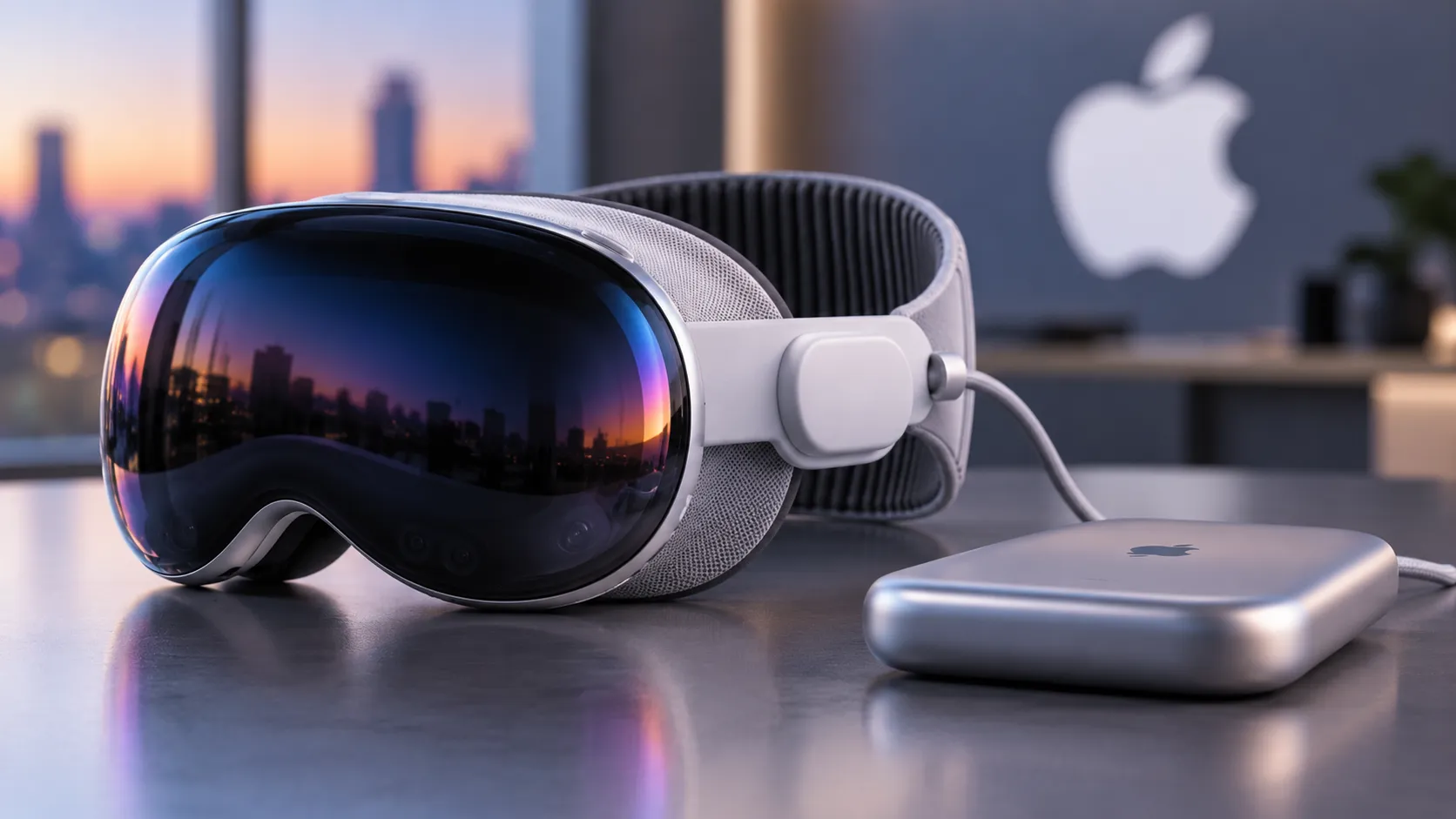
Nvidia and Apple have just unveiled what could be the future of enterprise XR workflows, and the implications stretch far beyond a simple product announcement. The collaboration brings Nvidia's CloudXR 6.0 technology to visionOS 26.4, creating a direct bridge between high-powered RTX graphics cards and Apple's spatial computing platform. What makes this particularly compelling is how it solves one of mixed reality's most persistent challenges: the computational power bottleneck that has limited professional-grade immersive applications on standalone headsets.
Early demonstrations are already turning heads, with applications like X-Plane 12 and iRacing becoming the first titles to support native integration between RTX graphics and visionOS. The technical foundation promises to transform how we think about enterprise XR adoption, particularly in industries where simulation fidelity can't be compromised. Where traditional mobile XR forced compromises between visual quality and performance, this hybrid approach delivers both by streaming at resolutions and frame rates impossible with onboard processing alone.
Breaking the computational ceiling with cloud rendering
The core innovation here addresses a fundamental limitation that's plagued mixed reality since its inception. Standalone headsets struggle with professional simulations due to their embedded processor constraints, forcing developers to make compromises between visual fidelity and performance. CloudXR 6.0 changes this equation entirely by separating rendering from display.
The architecture is elegantly straightforward: a powerful computer equipped with next-generation graphics cards like the GeForce RTX 5090 handles the heavy computational lifting, while the compressed video stream transmits wirelessly to the Vision Pro. What's remarkable is the performance ceiling this unlocks—Nvidia's development kit now enables streaming at 4K resolution and 120 frames per second, specifications that would be impossible to achieve with onboard processing alone.
Think about what this means in practice. Where traditional VR setups forced you to choose between visual quality and smooth performance, this hybrid approach gives you both. The Vision Pro becomes essentially a high-resolution wireless display with spatial awareness, while the real horsepower stays safely connected to power and cooling infrastructure.
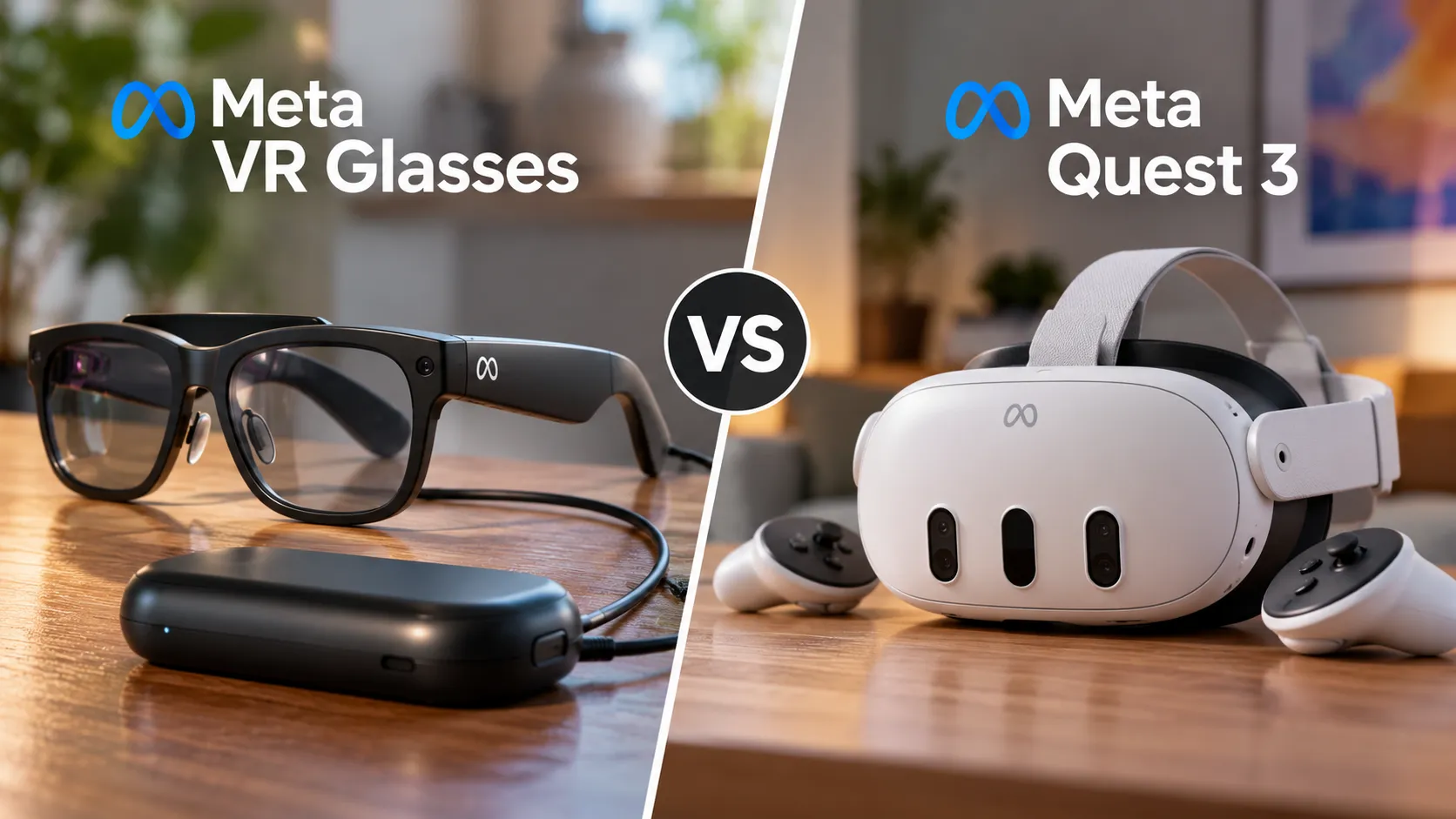
This isn't just about raw performance, though. The technology also supports other headsets including Meta Quest 3 and Pico 4 Ultra, suggesting Nvidia is building infrastructure that standardizes premium immersive experiences across competing headset ecosystems. This cross-platform approach positions CloudXR as a universal backbone for high-fidelity XR content, regardless of which headset you're wearing.
PRO TIP: The wireless streaming requires robust network infrastructure—you're essentially transmitting 4K video at 120fps. For enterprise environments with dedicated networks, this trade-off makes complete sense, but consider your bandwidth requirements before implementation.
What visionOS 26.4 enables through intelligent optimization
The upcoming visionOS update introduces several key technical capabilities that make this integration possible. visionOS 26.4 supports foveated streaming, which renders full-quality video only where users are actively looking while compressing peripheral vision areas. This intelligent optimization dramatically reduces bandwidth requirements without sacrificing perceived quality.
Here's the clever bit: your eyes can only focus on a small area at any given moment, so the mechanism works by sending full-quality video only to the area where the user is actively looking, compressing everything in peripheral vision where the eye cannot detect fine detail. It's like having a smart spotlight that follows your attention, concentrating processing power exactly where you need it most.
This optimization strategy works seamlessly with Apple's hybrid rendering model. The system allows native spatial content like cockpit dashboards to render locally via RealityKit, while processor-intensive environments stream from remote computers. This approach keeps latency-sensitive UI elements responsive while offloading heavy rendering tasks to more powerful hardware. You get the best of both worlds: immediate response for interactions you can touch, and unlimited visual complexity for environments you're viewing.
The real breakthrough comes with ARKit integration in visionOS 26.4. Now here's where things get genuinely exciting—the headset can now detect physical peripherals like steering wheels or flight controls in real-time, precisely overlaying them onto digital cockpits. This solves a major pain point in VR simulation: the disconnect between physical controls and virtual environments that has historically broken immersion. You can finally see your hands on the yoke while flying through a photorealistic landscape.
Enterprise applications that become possible, not just better
This collaboration signals something much larger than gaming or simulation improvements. For enterprise applications, the ability to stream complex 3D environments while maintaining spatial awareness of physical tools opens entirely new workflow possibilities. Think about architectural visualization where designers could manipulate physical scale models while viewing detailed building information systems streamed from powerful workstations, or medical training scenarios where tactile feedback devices integrate seamlessly with high-fidelity anatomical simulations.
What's equally significant is how this lowers barriers for developers. Nvidia's documentation emphasizes that the update helps developers deliver better visual quality and performance without rebuilding content for standalone hardware. For studios with existing VR content built for PC or cloud infrastructure, this creates a direct path to Vision Pro without starting from scratch. Instead of porting and optimizing for mobile processors, they can essentially stream their existing high-end content directly.
The implications for training and simulation are particularly compelling. Industries like aviation, automotive, and heavy machinery have been waiting for XR solutions that don't compromise on visual fidelity or physical integration. Now you can have a photorealistic flight simulator that recognizes your actual control setup, or automotive design reviews where you can touch physical clay models while seeing real-time computational fluid dynamics overlays.
The practical considerations are worth noting. The system does require robust network infrastructure for the 4K/120fps streaming, which isn't trivial. But for enterprise environments with dedicated networks, this trade-off makes complete sense. The alternative has been either accepting mobile-grade visuals or staying tethered to desktop setups that limit mobility.
Industry trajectory: from impressive demos to practical deployment
Looking ahead, the implications extend well beyond the current X-Plane 12 and iRacing implementations. The foundational technology opens doors for any application where computational demands exceed what's practical for mobile processors—think real-time ray tracing for architectural walkthroughs, complex fluid dynamics for engineering visualization, or massive dataset rendering for scientific research.
The broader ecosystem impact could be transformative. By supporting existing CloudXR infrastructure, Apple creates integration paths for VR content already running on other platforms, potentially accelerating Vision Pro's content library growth in ways that traditional porting approaches couldn't match. This isn't just about getting more apps; it's about getting the highest-quality versions of existing applications without the usual mobile compromises.
visionOS 26.4 beta 3 shipped on March 2, 2026, with the public release anticipated in the coming weeks. The timing positions this technology to arrive just as enterprise XR adoption reaches a critical inflection point, where the hardware capabilities finally match the ambitious use cases that have been conceptually possible for years.
Consider what happens when this technology matures beyond flight simulators. Engineering firms could stream CAD environments from workstation-class hardware while maintaining tactile interaction with physical prototypes. Medical schools could deliver anatomical simulations with research-grade visual fidelity while students manipulate actual surgical instruments. The constraint isn't imagination—it's the infrastructure to support these workflows at scale.
Perhaps most intriguingly, this represents Apple's clearest signal yet that spatial computing's future lies not in isolated devices, but in seamlessly connected systems where the boundaries between local and remote processing become invisible to users. The technology preview we're seeing today with flight simulators may well be the foundation for tomorrow's distributed computing paradigm, where XR devices become high-fidelity windows into computational resources that exist anywhere on the network.
The real test will be adoption velocity. Early demonstrations are already impressive, but transforming impressive demos into everyday business tools requires more than technical capability. It demands robust infrastructure, developer ecosystem growth, and enterprise willingness to invest in mixed reality workflows that genuinely improve on existing processes. From what I can tell, though, the technical foundations are solid enough that the bigger question isn't whether this will work, but how quickly organizations will adapt their workflows to take advantage of it.
For developers and enterprises watching this space, the message is clear: the constraints that have limited professional XR applications are rapidly dissolving, and workflows that required significant compromise just months ago are about to become not just possible, but practical at scale.


Comments
Be the first, drop a comment!