


NVIDIA's Strategic Shift: Why Industrial Metaverse Applications Are Winning Over Consumer Hype
NVIDIA's strategic pivot away from consumer metaverse hype toward industrial applications represents a significant shift in how the tech giant positions its Omniverse platform and related technologies. This transition reflects broader market realities where enterprise use cases are demonstrating clearer value propositions than consumer virtual worlds. The move signals NVIDIA's recognition that manufacturing, architecture, engineering, and construction sectors offer more immediate and measurable returns on metaverse investments.
This isn't just a marketing pivot—it's a fundamental recognition of where real value creation happens. The industrial metaverse concept centers on practical applications that solve real-world business challenges rather than creating entertainment experiences. Digital twins, collaborative 3D workspaces, and simulation-driven workflows are becoming essential tools for companies seeking to optimize operations and reduce costs. NVIDIA's repositioning suggests the company sees greater long-term potential in serving enterprise customers who need robust, scalable solutions for complex industrial processes.
While consumer applications chase elusive engagement metrics, industrial implementations deliver measurable outcomes: reduced prototyping costs, accelerated design cycles, and improved collaboration across global teams.
Why industrial use cases are gaining serious traction
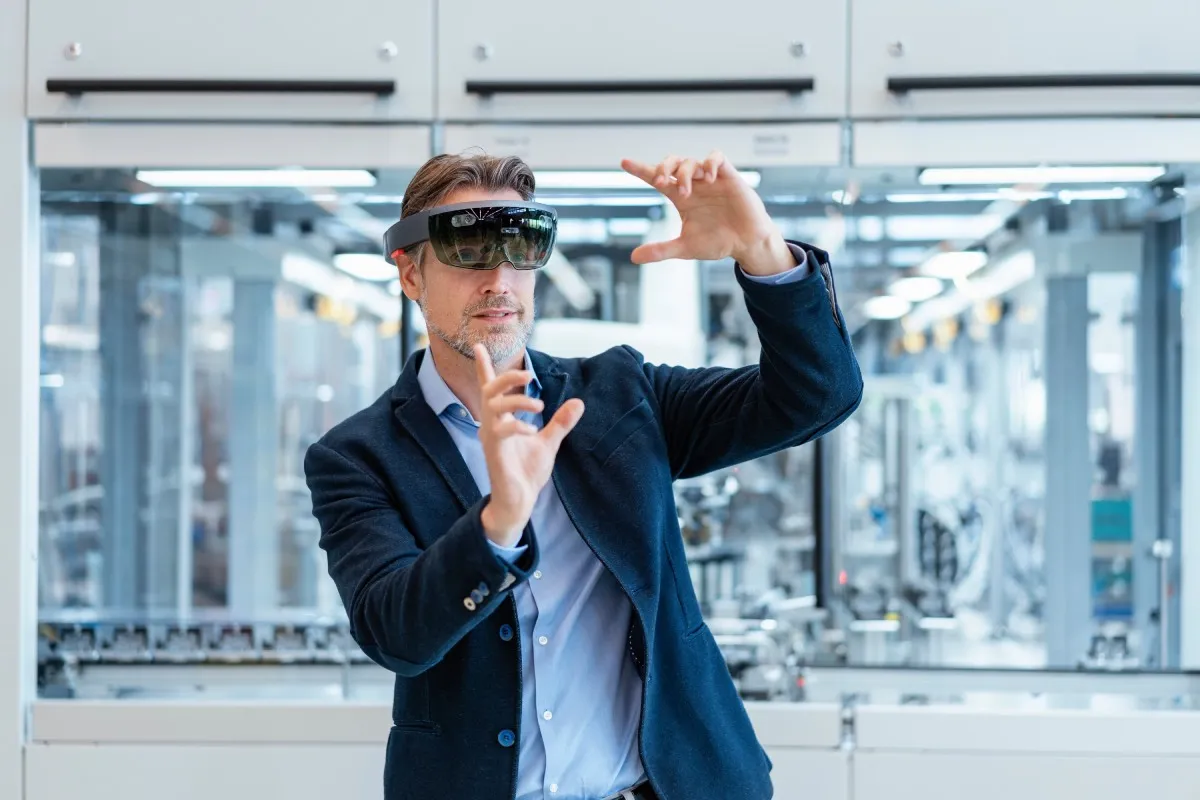
Manufacturing and logistics companies are discovering that metaverse technologies can deliver tangible operational improvements. Digital twin implementations allow engineers to test modifications virtually before implementing costly physical changes, while collaborative 3D environments enable global teams to work together on complex projects in real-time. These applications generate measurable ROI through reduced prototyping costs, faster iteration cycles, and improved design accuracy.
Architecture, engineering, and construction firms are particularly well-suited for industrial metaverse adoption because their workflows already involve 3D modeling and spatial visualization. The ability to walk through building designs, simulate structural loads, and collaborate on modifications in virtual space directly translates to reduced project timelines and fewer costly construction errors. Unlike consumer metaverse applications that struggle to demonstrate clear value, these professional use cases solve specific pain points that organizations face daily.
PRO TIP: Companies implementing digital twins typically see 10-25% reductions in design iteration time and 15-30% fewer costly late-stage modifications, making the ROI calculation straightforward for finance teams evaluating XR investments.
The automotive industry exemplifies this transformation across multiple touchpoints. Vehicle manufacturers simulate crash tests to optimize safety systems, redesign assembly line layouts to improve efficiency, and train workers in virtual environments that perfectly replicate real factory conditions. Beyond cost savings, this approach enables more thorough exploration of design alternatives than traditional methods allow, leading to innovation breakthroughs that wouldn't emerge through physical-only testing.
What enabling technologies make this transformation possible
NVIDIA's Omniverse platform provides the foundational infrastructure that makes industrial metaverse applications feasible at enterprise scale. The platform's real-time ray tracing capabilities, physics simulation engines, and collaborative tools create photorealistic virtual environments that professionals can trust for critical decision-making. Advanced GPU acceleration ensures that complex simulations run smoothly even when handling massive datasets typical in industrial applications.
Artificial intelligence integration distinguishes NVIDIA's approach from simpler 3D collaboration tools. Machine learning algorithms analyze simulation results, suggest design optimizations, and automate routine tasks within virtual environments. This AI-enhanced functionality transforms the industrial metaverse from a visualization tool into an intelligent design and optimization platform that augments human expertise.
Edge computing capabilities address the latency requirements that make or break industrial implementations. Manufacturing facilities, construction sites, and logistics centers require immediate responsiveness that cloud-only solutions cannot reliably provide. NVIDIA's edge AI platforms ensure that metaverse applications can operate effectively in these demanding industrial contexts where millisecond delays can impact safety and productivity.
The convergence of these technologies—advanced rendering, AI analysis, and edge processing—creates a platform architecture that can handle the complexity and performance demands of professional workflows while remaining intuitive enough for widespread adoption.
What this signals for enterprise XR adoption
NVIDIA's strategic shift indicates that enterprise extended reality adoption will likely follow practical, problem-solving applications rather than immersive entertainment experiences. Companies are more willing to invest in XR technologies when they can clearly demonstrate operational improvements and cost savings. This pragmatic approach to XR implementation suggests broader enterprise adoption as organizations recognize measurable benefits.
The industrial metaverse concept bridges the gap between current enterprise software and fully immersive XR experiences. Organizations can gradually adopt metaverse technologies by integrating them into existing workflows rather than requiring complete operational overhauls. This evolutionary approach reduces implementation risks while allowing companies to build expertise with advanced visualization and collaboration tools.
Professional training applications represent a particularly compelling growth area. Industrial metaverse environments can simulate dangerous scenarios, rare equipment failures, and complex procedures without exposing workers to actual risks. This training capability becomes increasingly valuable as industries face skilled labor shortages and need to onboard workers more efficiently.
The implications extend beyond individual companies to entire supply chains. When manufacturers, suppliers, and logistics partners can collaborate in shared virtual environments, the potential for optimization increases exponentially. This network effect could drive enterprise XR adoption at an industry level rather than company by company.
Where NVIDIA's platform strategy is headed
NVIDIA's focus on industrial applications positions the company as an essential infrastructure provider for the next generation of enterprise software. Rather than competing directly with consumer-focused metaverse platforms, NVIDIA is building the foundational technologies that enable professional applications across multiple industries. This platform strategy creates multiple revenue streams while establishing NVIDIA as the preferred partner for serious enterprise metaverse implementations.
The shift toward industrial use cases aligns strategically with NVIDIA's broader AI and data center business objectives. Industrial metaverse applications require significant computational resources, advanced graphics processing, and sophisticated AI capabilities—all areas where NVIDIA maintains technological leadership. This convergence creates natural synergies that strengthen NVIDIA's competitive position across multiple market segments.
Integration with existing enterprise software ecosystems will likely drive future development priorities. Companies need metaverse tools that work seamlessly with their current CAD software, project management systems, and business intelligence platforms. NVIDIA's success in the industrial metaverse market depends on how effectively the company can create these integrations while maintaining the performance advantages that differentiate its solutions.
PRO TIP: Look for NVIDIA to announce deeper partnerships with major enterprise software vendors like Autodesk, Siemens, and Dassault Systèmes as the platform strategy evolves. These integrations will be crucial for widespread adoption in professional workflows.
What this means for the future of work and technology
NVIDIA's strategic pivot reflects a maturing understanding of how metaverse technologies will actually transform business operations. Rather than replacing physical work environments entirely, industrial metaverse applications augment existing processes and enable new forms of collaboration that weren't previously possible. This practical approach to metaverse implementation suggests that the technology's real impact will come through gradual integration into professional workflows rather than dramatic disruption of established practices.
The emphasis on industrial applications indicates that metaverse adoption will follow enterprise technology adoption patterns, with early implementations focusing on specific use cases that deliver clear value before expanding to broader organizational transformation. This measured approach reduces implementation risks while building the expertise and infrastructure necessary for more ambitious future applications.
This evolution represents a fundamental shift in thinking about transformative technologies. Instead of the typical tech industry pattern of overpromising revolutionary change, NVIDIA's industrial focus acknowledges that the most successful technology adoptions solve immediate, practical problems first. The unglamorous work of optimizing supply chains and reducing manufacturing defects is where real business transformation happens—not in virtual fashion shows or digital concerts.
For businesses considering XR investments, NVIDIA's approach provides a practical roadmap that prioritizes measurable outcomes over futuristic visions. This strategic maturity suggests that metaverse technologies are finally ready to deliver on their transformative potential, just not in the ways most people initially imagined. The future of work will be enhanced by virtual collaboration and AI-powered simulation, but it will remain grounded in solving real problems for real businesses.





Comments
Be the first, drop a comment!