


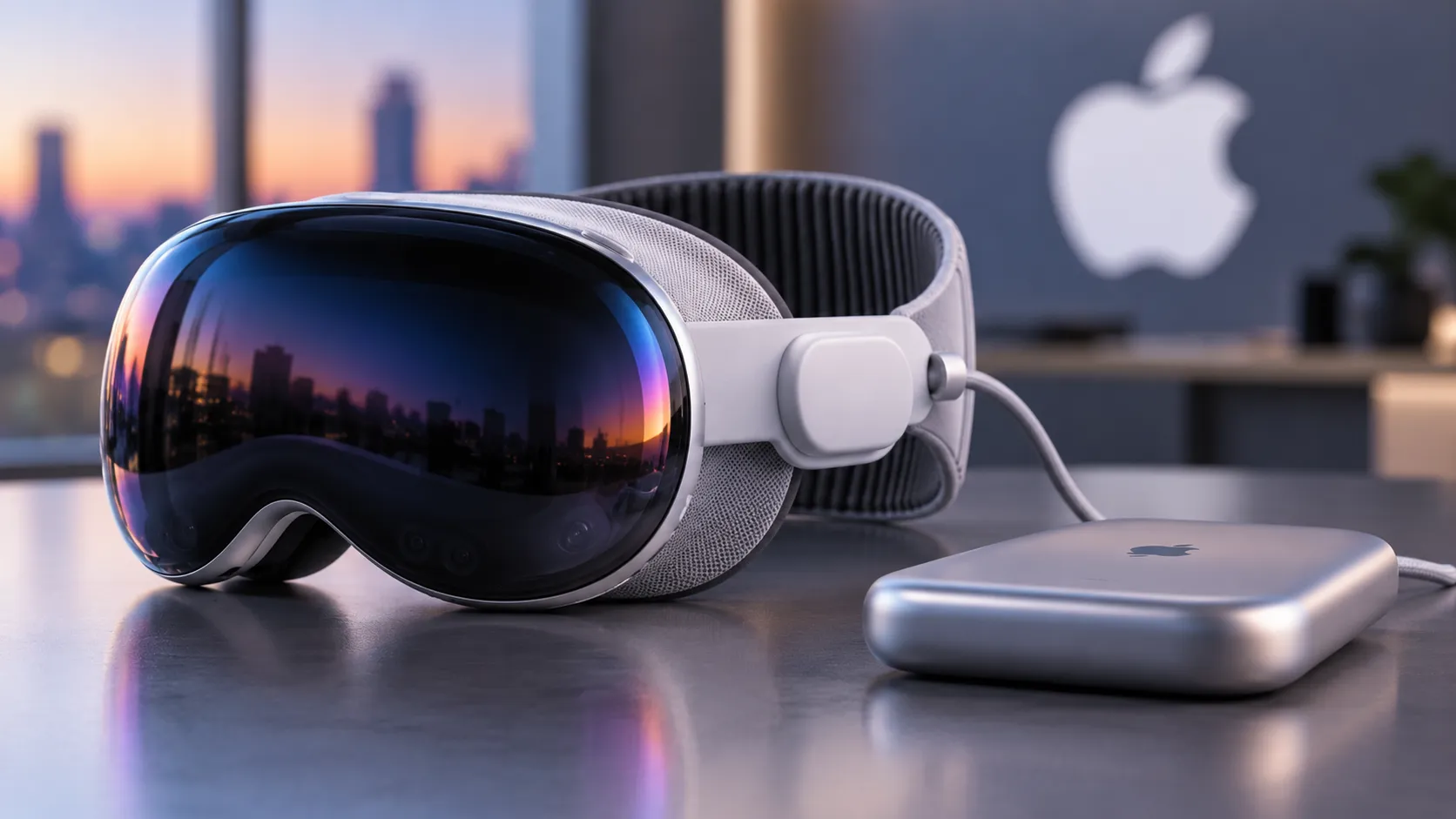
Nvidia's premium GeForce Now Ultimate tier now delivers enhanced frame rates at 90fps for Vision Pro users, according to 9to5Mac. This upgrade represents more than incremental progress—it's positioning Apple's headset alongside other XR devices receiving the same performance boost, while leveraging Vision Pro's advanced eye-tracking to deliver exclusive 4K streaming capabilities that genuinely differentiate it from the competition.
The timing couldn't be more strategic. As cloud gaming infrastructure matures from experimental technology to viable alternative to local hardware, this upgrade addresses one of mixed reality's biggest challenges: delivering the consistent performance needed for comfortable, immersive experiences. We're witnessing the transformation of a headset that many viewed primarily as a productivity and media device into something capable of handling serious gaming workloads through cloud processing power.
Why 90fps streaming actually matters for XR gaming
Here's the thing about frame rates in mixed reality—they're not just marketing numbers. The jump from 60fps to 90fps fundamentally changes how your brain processes immersive experiences, reducing the disconnect between visual input and inner ear feedback that causes motion sickness. Nvidia's Ultimate tier, priced at $20 monthly, now pushes 90 frames per second to Vision Pro headsets, as reported by UploadVR.
This improvement brings cloud VR performance much closer to dedicated PC-VR systems by nearly doubling previous streaming rates, according to EuphoriaXR. Research consistently shows that higher refresh rates in VR environments significantly reduce simulator sickness symptoms, according to Nvidia's official blog, which notes that "gameplay feels smoother, movement more natural and action more comfortable" at 90fps.
The technical foundation supporting this upgrade demonstrates serious cloud computing muscle. The Ultimate tier utilizes RTX 5080 equivalent GPUs for demanding titles and RTX 4080 hardware for less intensive games, delivering four times the vCPU cores and RAM compared to the free tier, 9to5Mac notes. For VR applications specifically, this processing power translates directly to the consistent frame delivery that separates tolerable experiences from genuinely immersive ones.
What makes this particularly significant is how it addresses one of VR's biggest adoption barriers. When frame rates drop or become inconsistent, users immediately notice the disconnect between visual and vestibular input. The 90fps streaming effectively eliminates these issues for cloud-based gaming, creating what many users describe as indistinguishable from local rendering quality.
The upgrade applies to all supported VR platforms, including Vision Pro, Meta Quest, and Pico headsets, Road to VR explains. However, Vision Pro users gain access to additional capabilities that showcase the platform's technical advantages beyond frame rate improvements.
Vision Pro's streaming advantage over other headsets
Apple's headset enjoys preferential treatment in Nvidia's cloud gaming ecosystem that extends beyond simple marketing favoritism—it's rooted in advanced hardware capabilities that other XR devices can't match. While Quest and Pico headsets max out at 1440p resolution in Custom mode, Vision Pro users can access full 4K streaming at 90fps, UploadVR reports.
This resolution advantage stems from Vision Pro's sophisticated eye-tracking technology, which enables foveated PC streaming that concentrates bandwidth where users are actually looking while maintaining overall visual fidelity. The result is more efficient data usage without sacrificing image quality—essentially getting premium streaming performance within manageable bandwidth constraints.
The hardware capabilities create genuine headroom for future streaming improvements. The M5 Apple Vision Pro supports refresh rates up to 120Hz, while the original M2 model handles up to 100Hz, according to 9to5Mac. This means the current 90fps limit represents just the beginning of what's technically possible as network infrastructure continues improving.
Nvidia's partnership with Apple has integrated the CloudXR platform directly into visionOS, Road to VR explains, creating an optimized pathway that other headset manufacturers haven't achieved. This isn't just about having better displays—it's about purpose-built software integration that maximizes hardware potential through cloud streaming optimization.
The visual quality difference becomes immediately apparent in simulation games. Vision Pro users can experience flight simulators like X-Plane and racing titles like iRacing with unprecedented clarity, PC Guide notes. These experiences traditionally required expensive multi-monitor setups, complex PC configurations, and significant desk space—now accessible through a single headset with cloud processing handling the computational demands.
From user reports, the combination of 4K resolution and 90fps creates an experience where the streaming nature becomes essentially transparent. Vision Pro users can access foveated PC streaming with up to 4K and 120 FPS gameplay for specialized titles, PC Guide confirms, representing a fundamental shift in how cloud gaming can leverage advanced headset capabilities.
Network requirements and setup considerations
Achieving optimal performance with GeForce Now's enhanced streaming demands robust network infrastructure, but the requirements are more achievable than you might expect. The service requires latency below 80ms from Nvidia data centers, though the company strongly recommends staying under 40ms for optimal experience, Nvidia's support documentation states.
Here's a crucial testing consideration: run Nvidia's in-app network test rather than generic speed services like Speedtest.net. These measure actual performance to GeForce Now servers rather than general internet speed, which can provide misleadingly optimistic results for gaming performance, Apple World Today details.
Bandwidth requirements scale significantly with resolution and frame rate targets. 4K streaming at 60fps demands 40 Mbps, while QHD resolution needs 35 Mbps and FHD requires 25 Mbps, according to Nvidia's specifications. A 5GHz Wi-Fi connection becomes absolutely essential—the 2.4GHz band simply lacks the bandwidth headroom for high-resolution streaming without compression artifacts.
Despite these technical demands, the setup process remains surprisingly straightforward. Users access GeForce Now through Safari on Vision Pro by navigating to play.geforcenow.com, with version 2.0.70 or later required for full functionality, Nvidia confirms.
Gaming requires a supported Bluetooth controller—Xbox One, Xbox Series, or Sony DualShock 4—since Vision Pro gestures function only for login and navigation, not game input during streaming sessions. This hybrid approach works better in practice than it sounds: Vision Pro gestures handle the GeForce Now interface, while controller input takes over once games launch, Apple World Today explains.
Network testing becomes particularly crucial when targeting the highest quality settings. Since you're streaming real-time 4K video with minimal compression, any network inconsistencies translate directly to visual artifacts or input lag that can completely break immersion. The investment in proper network infrastructure pays dividends in streaming quality that approaches local rendering fidelity.
What this signals for Vision Pro's gaming future
This GeForce Now enhancement represents a fundamental shift toward cloud-powered XR experiences that could reshape how we evaluate headset capabilities. Rather than being constrained by onboard processing limitations, Vision Pro users can now access RTX 50-series equivalent performance through the cloud, EuphoriaXR observes. This approach potentially democratizes high-quality immersive experiences by eliminating the need for expensive local hardware upgrades while future-proofing the headset against evolving graphics demands.
The integration of demanding simulation titles like X-Plane flight simulator and iRacing, starting with visionOS 26.4, 9to5Mac reports, signals a shift in how developers view Vision Pro as a gaming platform. These aren't casual mobile-style experiences but sophisticated simulation games that traditionally required dedicated PC setups with multiple monitors, specialized peripherals, and extensive technical knowledge.
Nvidia's focus on positioning CloudXR as a tool specifically for immersive simulation gaming, PC Guide notes, represents a targeted approach that prioritizes experiences where XR technology genuinely adds value rather than serving as mere novelty. This strategic focus suggests a maturing understanding of where mixed reality excels and where development resources should be concentrated.
The broader implications point toward a future where XR devices might prioritize display quality, tracking accuracy, and streaming optimization over local processing power. If cloud gaming can consistently deliver 90fps+ experiences with minimal latency, traditional arguments for powerful onboard chips begin losing relevance. This could fundamentally alter the economics of XR development, making high-end experiences more accessible while allowing hardware manufacturers to focus on optics, ergonomics, and sensor technology.
As network infrastructure continues improving and cloud gaming services mature, we might see future XR devices designed primarily as streaming clients rather than standalone computing platforms, fundamentally changing both the accessibility and upgrade cycle of high-end mixed reality experiences.
The cloud gaming revolution reaches mixed reality
The 90fps upgrade for Vision Pro represents more than a technical milestone—it validates that cloud gaming has matured enough to handle the demanding requirements of mixed reality applications. With over 2,000 titles accessible through GeForce Now, The Munich Eye notes, Vision Pro users gain access to a gaming library that would be impossible to run natively on mobile hardware architecture.
The service delivers titles from Steam, Epic Games Store, Ubisoft, Microsoft Store, EA, and GOG directly to the headset, Apple World Today confirms. This represents a massive expansion beyond Vision Pro's limited native gaming ecosystem, transforming it into a platform with access to decades of PC gaming history through cloud infrastructure.
What's particularly compelling is how this development signals a future where the distinction between local and cloud-based gaming becomes increasingly irrelevant for XR applications. When streaming can deliver 4K at 90fps with imperceptible latency, traditional arguments for local processing power start losing their foundation. The timing of this upgrade also coincides with significant improvements to GeForce Now's overall service, including expanded game library integration and platform optimizations, PC Guide reports.
For Vision Pro owners willing to invest in Nvidia's Ultimate tier, the gaming possibilities have expanded dramatically. We're witnessing the transformation of Apple's mixed reality headset from primarily a productivity and media device into a genuine gaming powerhouse capable of handling the most demanding titles available. The future of XR gaming increasingly appears to be streaming from the cloud, with Vision Pro positioned to lead that evolution.




Comments
Be the first, drop a comment!