



How VR is Revolutionizing Medical Patient Education: What the Southampton Study Reveals
Virtual reality is revolutionizing how healthcare providers communicate complex medical procedures to patients, and a groundbreaking study from Southampton General Hospital demonstrates just how transformative this technology can be. Recent research presented at the European Association of Urology Congress reveals that VR significantly enhances patient understanding and reduces anxiety when explaining shock wave lithotripsy procedures (EMJ Reviews). The study, led by Solomon Bracey and colleagues, involved 150 patients who experienced a three-minute immersive animation that visualized urinary anatomy and procedure details (Clinical Briefing Report). What makes this particularly compelling is that 88% of participants expressed strong preference for VR inclusion in future treatments, suggesting this isn't just a novelty—it's addressing a real gap in patient care (HealthDay).
Why Traditional Patient Education Falls Short
Here's the reality that most healthcare providers know but rarely discuss openly: current patient education methods simply aren't working for most people. Research indicates that approximately six out of ten adults in England struggle to comprehend complex medical information, which directly impacts their ability to make truly informed decisions about procedures (EMJ Reviews). The problem becomes even more pronounced when information includes numerical data alongside text, with health literacy challenges affecting over 60% of patients in these scenarios (EMJ Reviews).
Think about it this way—you hand someone a leaflet filled with medical terminology about what's going to happen inside their body, and expect them to make life-altering decisions based on that paper. Traditional information leaflets often contain medical jargon written at a complexity level that exceeds most people's reading capabilities, creating a fundamental mismatch between what healthcare providers offer and what patients can actually process (EMJ Reviews).
As Bracey noted, "There is currently a mismatch between the complexity of information provided to patients and the level which most people can comprehend. This risks people consenting to procedures they don't fully understand" (EMJ Reviews). We're essentially asking people to understand complex anatomical processes and potential risks using the same static, text-heavy approach that was developed decades ago, despite knowing that learning styles and information consumption have evolved dramatically.
How VR Transforms the Consent Process
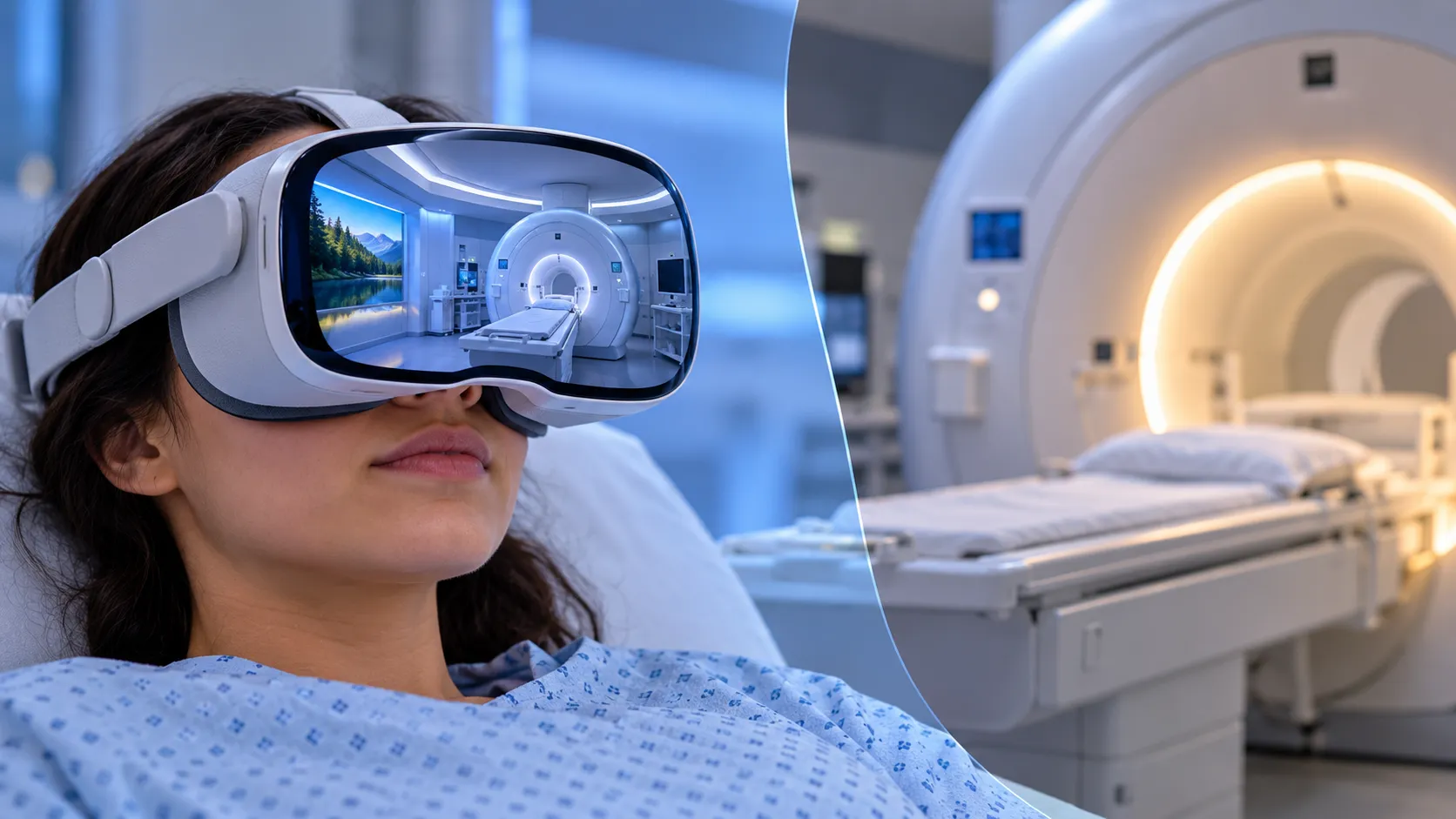
The Southampton study demonstrates VR's power to bridge this communication gap through immersive, visual storytelling that makes abstract medical concepts tangible. Instead of trying to imagine what shock wave lithotripsy involves based on written descriptions, patients could literally stand in a virtual operating room and watch a 3D demonstration of the procedure that zoomed into the kidneys to show the effect of the shockwaves on kidney stones (EMJ Reviews). They could move around the room to see the patient's anatomy and the surgical instruments from various angles (EMJ Reviews).
What's particularly clever about this approach is how it transforms abstract medical procedures into concrete, observable experiences. The animation incorporated key risks and benefits information, following established patient information guidelines from European and British medical associations (STORZ Medical). This three-minute VR animation outlined the procedure and enabled visualization of urinary anatomy in ways that traditional leaflets simply cannot achieve (Clinical Briefing Report).
Here's the interesting part—this wasn't some complicated, expensive production. It was a straightforward, focused educational experience that patients could complete in just three minutes, yet it delivered transformational results that challenge everything we know about patient education effectiveness.
What the Data Reveals About Patient Outcomes
The quantitative results paint a compelling picture of VR's impact that goes well beyond what you'd expect from a simple technology upgrade. Researchers found that VR use significantly enhanced patient understanding and confidence in explaining the procedure while substantially reducing nervousness levels (Clinical Briefing Report).
What's really fascinating about the emotional impact data is how comprehensive the improvements were. Emotional improvements were documented across all positive categories, with notable increases in calmness and satisfaction, while negative emotions like indecision and worry decreased markedly (HealthDay). When you think about it, this makes perfect sense—when people can actually see and understand what's going to happen to them, they naturally feel more in control and less anxious about the unknown.
Perhaps most striking was the comparative analysis between VR and traditional methods. Patients rated VR as significantly more accessible and helpful than printed materials, with the technology showing particularly pronounced benefits among patients aged 65 and above (EMJ Reviews). This finding challenges common assumptions about older adults and technology adoption—when the technology directly addresses a meaningful need, age becomes less of a barrier to acceptance.
PRO TIP: The overwhelming patient endorsement speaks volumes. A total of 150 participants completed all questionnaires, and their preference data tells a compelling story—this wasn't just statistical significance, it was genuine patient demand for better healthcare communication.
Clinical Implications Beyond the Numbers
The study's findings extend beyond immediate patient satisfaction into tangible clinical outcomes that healthcare providers should find particularly interesting. Post-procedure pain scores averaged 2.17, which researchers noted was lower compared to previous shock wave lithotripsy studies, suggesting that better pre-procedure understanding may contribute to improved pain management (Clinical Briefing Report).
This connection between understanding and pain perception isn't entirely surprising when you consider the psychological components of medical procedures. When patients feel more informed and less anxious going into a procedure, they're likely experiencing reduced stress responses that can amplify pain perception. As Bracey noted, "VR has been shown to improve learning and knowledge retention, and our study suggests it could be used to help people make more fully informed decisions about their health" (HealthDay).
What's particularly compelling about these results is how they suggest VR education creates a cascade of positive effects throughout the entire patient journey. The technology's ability to enhance patient engagement and participation in their healthcare journey represents a fundamental shift toward more collaborative medical decision-making (Life Technology). When patients truly understand their procedures, they become more active participants rather than passive recipients of care.
Where Medical VR Education Heads Next
This research opens fascinating questions about the scalability and broader applications of VR in medical education across different procedures and patient populations. The Southampton study represents just one example of how immersive technology can address the critical gap between complex medical information and patient comprehension levels (EMJ Reviews). When you consider the vast range of medical procedures that patients struggle to understand—from surgical interventions to complex diagnostic tests—the potential applications become quite expansive.
As consultant urological surgeon Matthew Bultitude notes, while technology should never replace direct clinician conversations, VR could help level the playing field in health literacy, ensuring all patients enter discussions with equivalent baseline information (EMJ Reviews). This perspective highlights a crucial distinction—VR isn't meant to replace human interaction but to enhance it by providing a common foundation of understanding that makes those conversations more productive.
The widespread patient approval demonstrated in this study suggests we're witnessing the early stages of a significant transformation in how healthcare providers communicate with and educate their patients (Clinical Briefing Report). This level of patient endorsement is particularly noteworthy because it comes from people who actually experienced both traditional and VR-enhanced education methods, making their preference data especially credible.
You might be wondering about implementation challenges—cost, training requirements, technology maintenance—but the Southampton study demonstrates that meaningful patient education improvements can be achieved with relatively simple VR applications. If a simple three-minute VR experience can produce such dramatic improvements in patient understanding and satisfaction for one procedure, imagine the potential when applied across entire healthcare systems. We're looking at a future where patients can walk into any medical facility and receive consistent, high-quality education about their conditions and treatments, regardless of their literacy level or previous medical knowledge. That's not just technological innovation—that's healthcare democratization at its finest.



Comments
Be the first, drop a comment!