


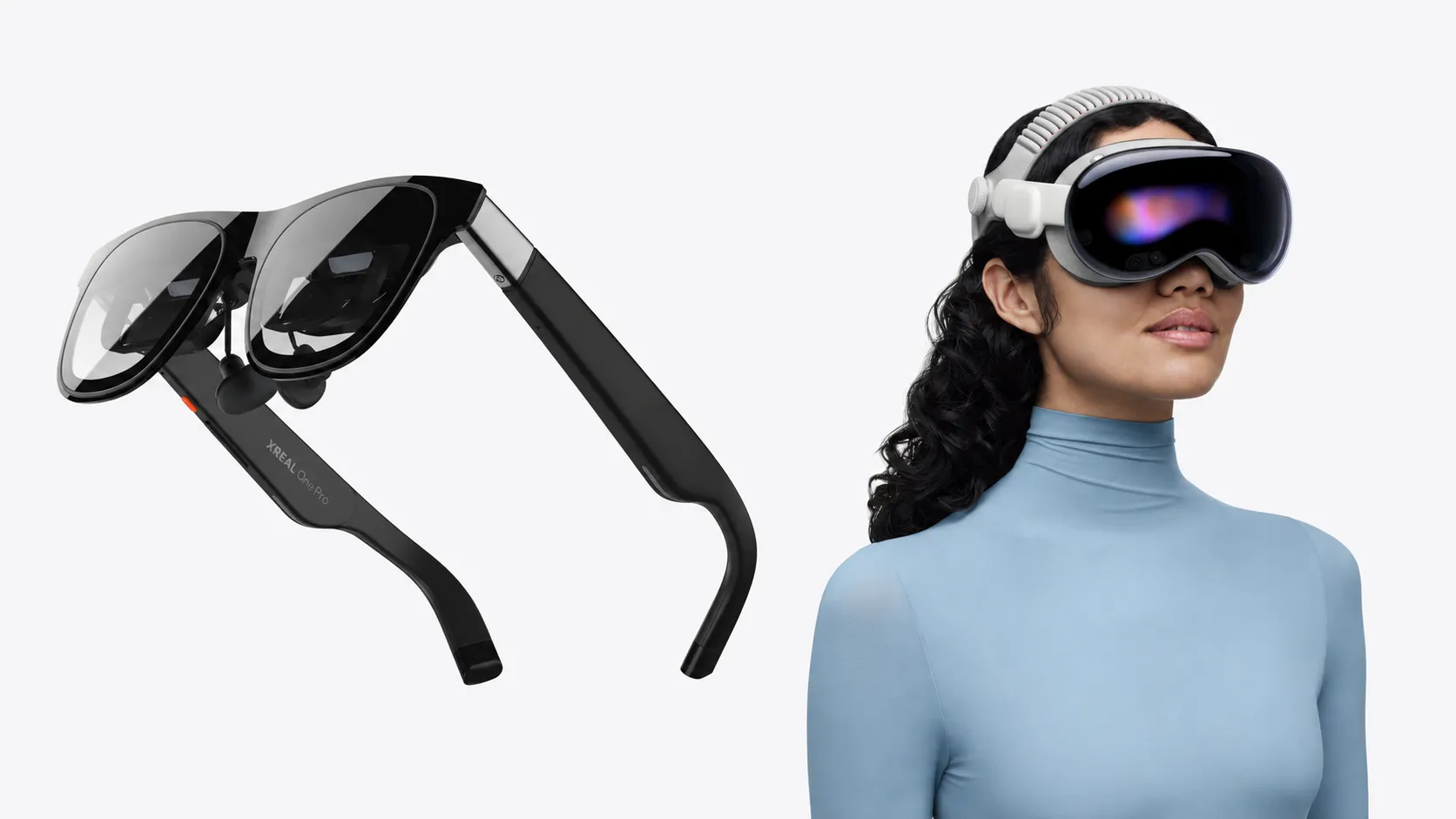
While the smart-glasses market has surged 110% year-over-year, according to Apple Scoop, Cupertino has stayed conspicuously quiet—until now. Rather than chase screen-heavy headsets, Apple is reportedly building AI-driven smart glasses designed around context, not displays, with production timelines pointing toward late 2026 and a 2027 consumer launch. Bloomberg reports the company is developing a specialized low-power chip optimized for multiple cameras and efficient AI processing, signaling a fundamental shift from immersive displays to ambient intelligence. This custom silicon approach addresses the battery and thermal constraints that plagued earlier attempts, arriving just as Meta's Ray-Ban collaboration has already sold over 2 million units and scaled manufacturing capacity to 10 million annually, as noted by Apple Scoop, proving everyday wearability beats novelty. Let's break down what Apple's context-first approach could mean for the category—and why 2027 might be the year glasses finally feel normal.
Why Apple shelved Vision Pro's successor for glasses
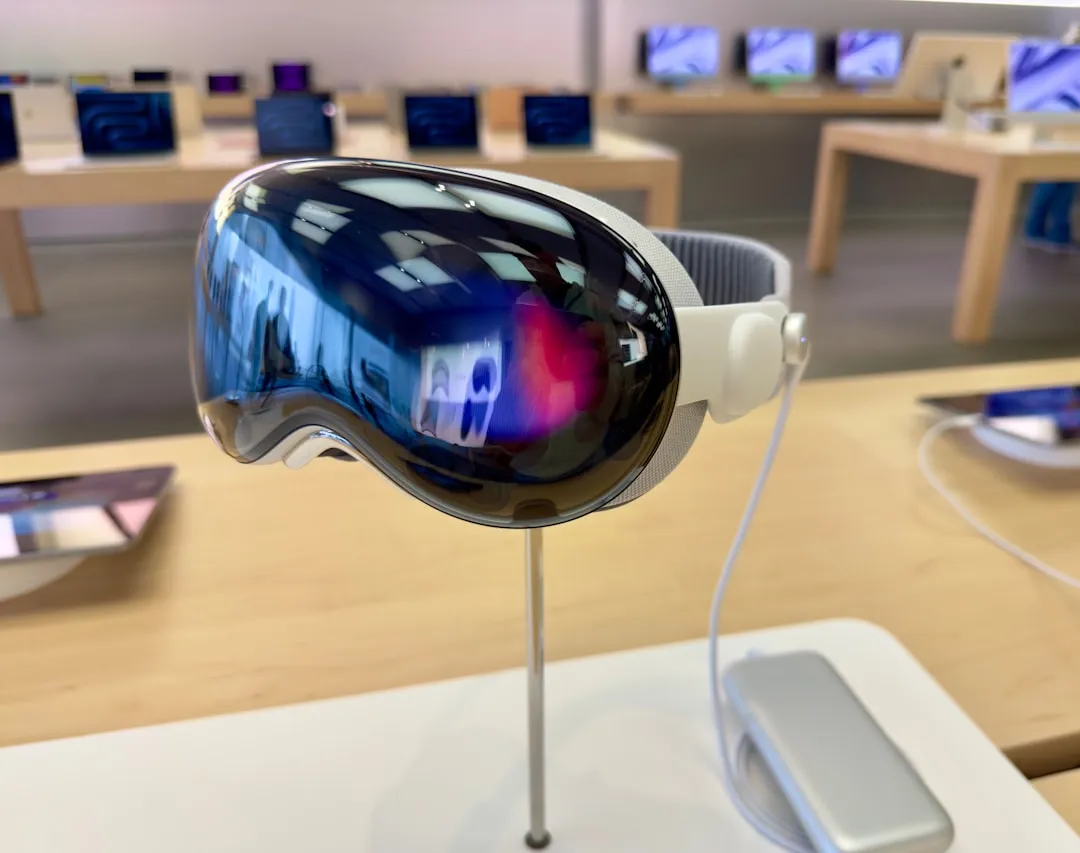
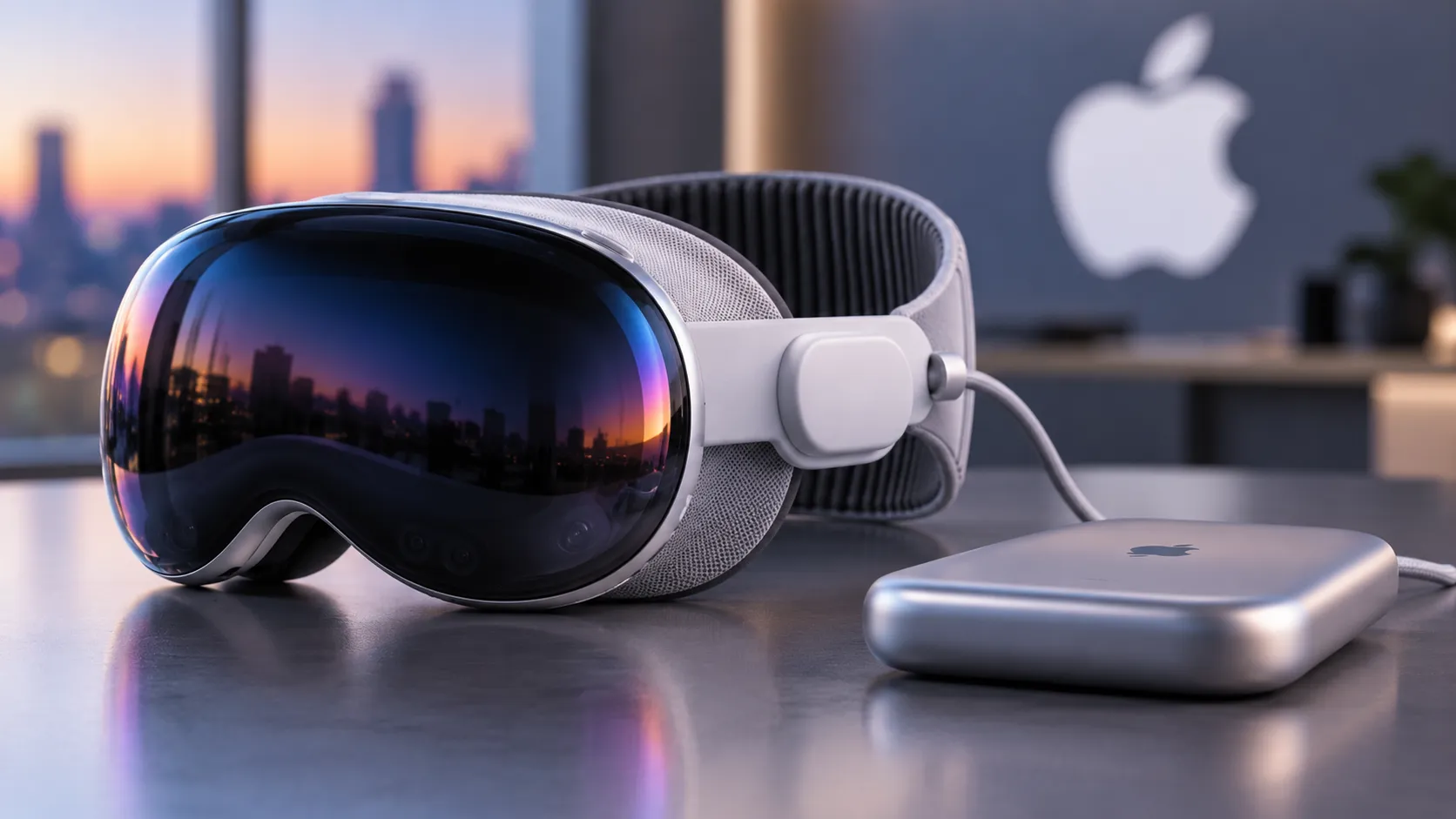
Apple has reportedly paused development on a more affordable Vision Pro to redirect resources toward lightweight smart glasses, according to Apple Scoop. The pivot isn't about abandoning spatial computing—it's about recognizing that people want wearables they can use in a café without turning heads. Vision Pro remains a pro-grade tool—think professional camera versus smartphone camera. Both capture images, but one requires a bag and the other fits in your pocket. The mass-market opportunity lies in frames you can wear all day without battery anxiety or social awkwardness.
Meta's 110% shipment growth in H1 2025 did Apple a favor: it validated the category and educated consumers. Rather than evangelizing a new form factor and answering the "why would I wear smart glasses?" question from scratch, Apple can focus on polish, ecosystem integration, and retail fit-and-finish while competitors handle early-adopter churn. There's something to be said for letting other companies do the messy work of convincing consumers that glasses with cameras aren't weird, then sweeping in with the polished version that actually works.
The timing also aligns with Apple's historical playbook: enter late, define the category. Apple didn't invent smartwatches or wireless earbuds, but the company perfected them, Humai notes. The pattern is consistent—Apple waits until manufacturing, software, and consumer readiness converge. Google Glass taught the "don't look creepy" lesson. Snap Spectacles proved novelty fades fast. Meta's Ray-Ban partnership cracked the code: fashion-forward design first, utility second, and never make people feel like cyborgs. By 2027, the infrastructure—both technical and cultural—should be mature enough for Apple to deliver something that feels inevitable rather than experimental.
The chip that makes context possible
At the heart of Apple's glasses sits a custom processor built on Apple Watch S-Series DNA but optimized for always-on AI and multi-camera workloads, Bloomberg reports via Thurrott. The chip is being designed to handle multiple cameras, streamline power consumption, and enable visual intelligence without relying on bulky batteries or active cooling. Mass production is expected by late 2026 or early 2027, with TSMC likely involved in fabrication. Translation: all-day battery life becomes feasible, and thermal constraints won't force the device to throttle during extended use.
The S-Series foundation is crucial because it's already optimized for the exact workload glasses require: intermittent high-power bursts—camera capture, AI inference—separated by long periods of low-power monitoring for wake word detection and motion sensing. That's fundamentally different from A-Series chips designed for sustained performance. What's interesting here is the specialization—not a general-purpose chip trying to do everything, but a component purpose-built for this specific form factor with these specific constraints.
Meta's Ray-Ban glasses achieve 4 hours of active use through careful power balancing across Bluetooth Low Energy, Wi-Fi, and cellular radios, plus 36 hours in the charging case, ZenML details. Apple's chip architecture must match that baseline while adding more cameras, deeper on-device AI processing, and tighter integration with Apple Intelligence APIs previewed at WWDC25. The result: a device that can process visual context, run Siri queries, and handle ambient notifications without draining in two hours. That focus should deliver the kind of power efficiency that makes the difference between a curiosity you charge twice daily and a wearable you actually forget you're wearing.
Context-first AI: what it actually means
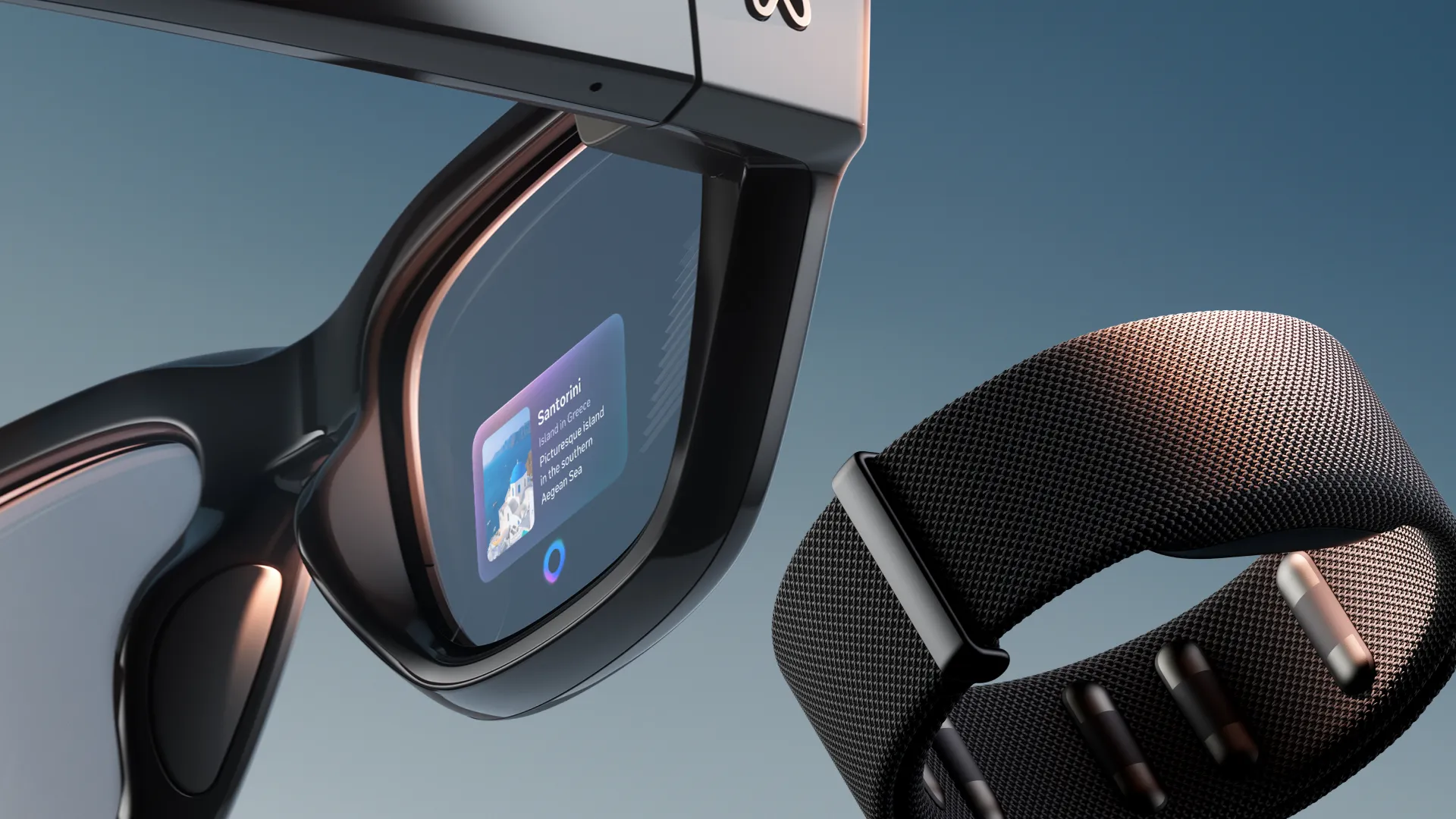
Apple's glasses are expected to prioritize environmental awareness over screen-based interactions, using cameras to scan surroundings and AI to assist users in real time, Bloomberg reports via Thurrott. Think of it as visual intelligence that remembers where you parked, reads QR codes and signs, or provides real estate details based on what you're looking at—all without pulling out your phone.
Apple's context-first approach starts with the same foundation Meta validated—cameras scanning your environment, AI interpreting what you see—but diverges in execution through on-device processing and ecosystem integration. Where Meta's Ray-Ban glasses send most processing to the cloud for complex queries, Apple Intelligence keeps sensitive data on-device by default, according to reporting from Apple Scoop. That architectural choice enables use cases Meta can't easily match: identifying people in your photos without uploading faces to servers, reading prescription bottles without privacy concerns, or getting real-time translation of conversations without cloud latency. The core philosophy driving the system is that for AI to be truly useful, it must be contextually aware—able to see what users see and hear what they hear, ZenML notes.
The architecture follows Meta's proven four-part blueprint—glasses hardware, smartphone connectivity, cloud AI services, and specialized optimizations for real-time performance, ZenML outlines. For developers already building for iPhone, ARKit and Apple Intelligence APIs provide a direct runway to create experiences that span glasses, AirPods, and Watch without reinventing the wheel. A food-tracking app can add visual meal logging through glasses with minimal additional code. A navigation app can overlay directions without rebuilding its entire stack. Meta's platform requires learning Facebook's Reality Labs SDK—Apple's approach means 2 million existing iOS developers can ship glasses experiences on day one.
Here's the thing: context-first doesn't mean screen-free forever. It means prioritizing ambient intelligence first, with displays as an option rather than the whole point. That's a significant philosophical shift from Vision Pro's immersive approach.
PRO TIP: If you're a developer, start experimenting with ARKit's visual intelligence APIs now. The glasses ecosystem will reward apps that solve real problems—parking location, visual search, hands-free capture—over gimmicks. The API surface area you learn today will transfer directly to glasses when they ship.
Two product tiers: non-AR first, displays later
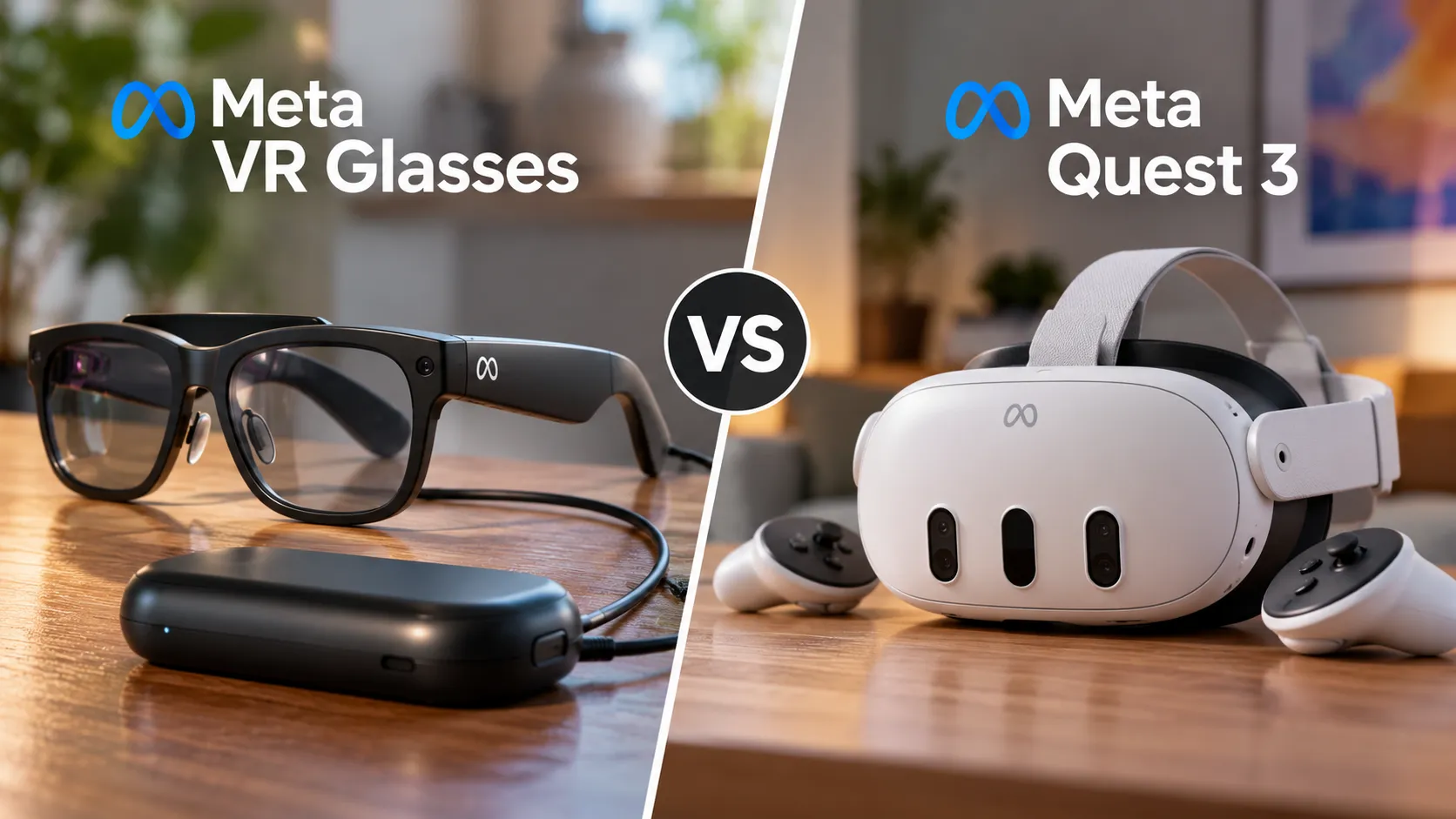
Apple is exploring two distinct smart-glasses variants—a non-augmented reality version similar to Meta's Ray-Ban model and a display-equipped AR version that overlays apps, notifications, and media, Bloomberg reports via Thurrott. The company may prioritize the non-AR model first to accelerate time-to-market and compete directly with Meta's established foothold. This strategy mirrors Apple's historical approach: ship a simpler, more reliable product first, then iterate with advanced features once the ecosystem is stable.
The two-tier approach solves a positioning problem Vision Pro created: how do you serve the mass market without cannibalizing a $3,500 pro device? A non-AR model likely priced between $299–$499 competes directly with Meta's $299 Ray-Bans while preserving Vision Pro's spatial computing premium. The display-equipped version, probably $699–$999, becomes the middle tier—more capable than Meta, less immersive than Vision Pro. Analyst Ming-Chi Kuo projects initial volumes of 3–5 million units in 2027, Apple Scoop reports, suggesting a measured rollout rather than an iPhone-scale launch. That's deliberate—Apple's testing the waters, building supply chains, training retail staff, and refining software before committing to massive volume.
The non-AR version would likely tether to iPhone for heavy lifting—think HDR processing, image stabilization, and cloud connectivity—while the glasses handle wake-word detection, local AI inference, and camera control, ZenML details. iPhone tethering is acceptable for glasses in ways it wasn't for Apple Watch because glasses are inherently situational. You wear a watch 24/7, but you put on glasses for specific contexts—navigation, shopping, events. That usage pattern aligns with keeping your phone nearby, making the tether invisible in practice. A display-equipped model would follow, offering translucent overlays for notifications, navigation, and media, similar to Vision Pro's passthrough mode but in a lighter form factor. The key differentiator: Apple's glasses won't require you to choose between immersion and awareness—they'll blend both, depending on the task.
PRO TIP: Waiting to buy? The non-AR model will likely launch first at a price point competitive with Ray-Ban Meta ($299–$499). If you need prescription lenses, budget an extra $200–$400 for Apple's optical partnerships. The display-equipped AR version will command a premium ($699–$999) but probably won't arrive until late 2027 or 2028.
The ecosystem advantage: AirPods, Apple Watch, and beyond
Apple's smart-glasses play isn't isolated—it's part of a broader wearables strategy that includes camera-equipped AirPods and Apple Watch models capable of environmental analysis, Bloomberg reports via Thurrott. These devices would share the same low-power chip architecture and Apple Intelligence integration, creating a distributed AI network that follows you throughout the day.
Imagine this distributed AI workflow: Your Apple Watch detects elevated heart rate during a conversation. Your glasses capture the person's face and name. Your AirPods transcribe what they're saying. Apple Intelligence synthesizes this into a reminder: "Follow up with Sarah about the project—you seemed stressed during that discussion." No single device has enough context, but together they create ambient awareness that's actually useful. That's the ecosystem advantage in action: lower friction for developers, more consistent experiences for users, and faster time-to-market for everyone involved.
The distribution advantage extends beyond devices to Apple's retail execution. The same stores that taught millions to try AirPods and get Watch bands fitted will handle glasses customization. Apple's retail network solves the try-before-you-buy problem that killed early smart glasses, according to Apple Scoop. Meta's Ray-Bans require online ordering or finding a Ray-Ban store. Apple has 270+ US retail locations where you can try multiple frames, get prescription lenses installed, and walk out with configured glasses—the same day, if you don't need complex prescriptions. That retail muscle eliminates the "will these look stupid on me?" barrier that keeps mainstream buyers away.
Meta's Ray-Ban partnership proved that fashion-forward design matters—EssilorLuxottica has scaled capacity to 10 million units annually. Apple's ecosystem of 2 billion active devices, combined with its manufacturing capability and user trust, positions the company to define the category the same way it did with smartwatches and wireless earbuds, Humai observes. You might be wondering: does Apple need yet another wearable category? From a business standpoint, the answer seems to be yes—wearables represent one of the company's fastest-growing segments, and glasses could be the next AirPods-scale hit if executed correctly.
What to watch: signals that 2027 is real
Timelines will shift—they always do—but several indicators will confirm whether Apple is on track for a late-2026 to 2027 launch. Watch for these signals in combination—chip delays alone don't kill 2027 if software and ecosystem mature on schedule.
Supply-chain reports of a low-power, multi-camera Apple SoC entering trial production at TSMC in 2026 would validate Bloomberg's timeline. Track supply chain reporters like Digitimes and Bloomberg's Mark Gurman for chip production signals. If you see reports of "Apple wearables SoC entering trial production at TSMC" in late 2026, the 2027 timeline is real. No reports by Q4 2026? Expect delays into 2028.
Vision Pro's product trajectory matters. If Apple keeps it positioned as a pro-grade tool rather than iterating toward a consumer model, that signals glasses are the mass-market play. Warning signs would include Apple promoting Vision Pro 2 at WWDC 2026, suggesting renewed headset focus, or rumors of chip production delays past Q1 2027.
Market-share data from Counterpoint Research will reveal whether Meta maintains its 70%+ dominance or if anticipation of Apple's entry slows Ray-Ban's momentum. What's interesting is that Meta's success might actually accelerate Apple's timeline—there's less risk in entering a proven category than in creating one from scratch.
If the chip hits its production window and Apple's AI capabilities mature as previewed at WWDC25, 2027 feels achievable. Kuo's projection of 3–5 million units in 2027 isn't iPhone-scale, but it's enough to seed a real ecosystem and push the entire smart-glasses market past 10 million units annually, according to Apple Scoop. The rising-tide effect works differently for glasses than it did for tablets or watches. Those categories benefited from Apple legitimizing the form factor. Glasses need Apple to legitimize wearing tech on your face in public—a higher social barrier. If Apple can make glasses normal, the entire market expands because consumer anxiety about looking like a "Glasshole" evaporates. That's worth more to the category than Apple's direct unit sales.
PRO TIP: If you're watching this space closely, track supply chain reporters like Digitimes and Bloomberg's Mark Gurman for chip production signals. Meta's Ray-Ban pricing in late 2026 is another tell—if Meta drops prices or adds features aggressively, they see Apple coming. If they hold steady, they're confident in their lead. And if you're an investor, the real signal isn't Apple's glasses—it's whether EssilorLuxottica maintains their Meta exclusivity or starts talking to Cupertino.
Where do we go from here?
Apple's pivot to context-first smart glasses isn't a whim—it's a calculated response to a market that's finally ready. The company spent three years watching Google Glass fail, Snap Spectacles fizzle, and Meta's Ray-Ban partnership succeed. Those lessons crystallized into a clear strategy: fashion-forward design first, utility second, and never make people feel like cyborgs.
Here's what gets exciting: if the silicon arrives on schedule and the software delivers genuinely useful context awareness—not party tricks—2027 could mark the year smart glasses stop being gadgets and start being accessories. The ingredients are in place: bespoke silicon engineered for all-day battery life, tight software integration that keeps sensitive data on-device for privacy, retail muscle that eliminates try-before-you-buy friction, and that "it just works" loop that keeps support calls short.
Whether Apple redefines the category or catches up to Meta's momentum depends on execution—but the setup is classic Apple. They've built the chip architecture for all-day battery life. They've integrated AI that keeps data on-device for privacy. They've got 270+ retail stores ready to fit frames and install prescriptions. And most importantly, they've waited until the market proved people will actually wear smart glasses that don't look ridiculous. That patience, combined with manufacturing muscle and ecosystem integration, makes betting against Cupertino a losing strategy—even if 2027 slips to early 2028.
The category isn't a science fair anymore, as Apple Scoop notes—it's a market with proven demand, manufacturing scale, and consumer acceptance. Apple just needs to deliver the version people didn't know they were waiting for. The company has the ecosystem, manufacturing capability, and user trust needed to make AI wearables mainstream, Humai notes. When Apple enters a category, they typically define it—see smartwatches and wireless earbuds. Smart glasses could be next.


Comments
Be the first, drop a comment!