


Apple Vision Pro Concert Films: Why 90 Minutes Breaks the Workflow
The edit stops being a rescue mechanism
Feature-length spatial video for Apple Vision Pro breaks something directors rely on without thinking about it: the cut. In conventional concert film, a weak angle, a wandering performer, a rig that caught something ugly the editor fixes it. Immersive video removes that option, and three minutes of work never forces you to reckon with what that actually means. Ninety minutes does.
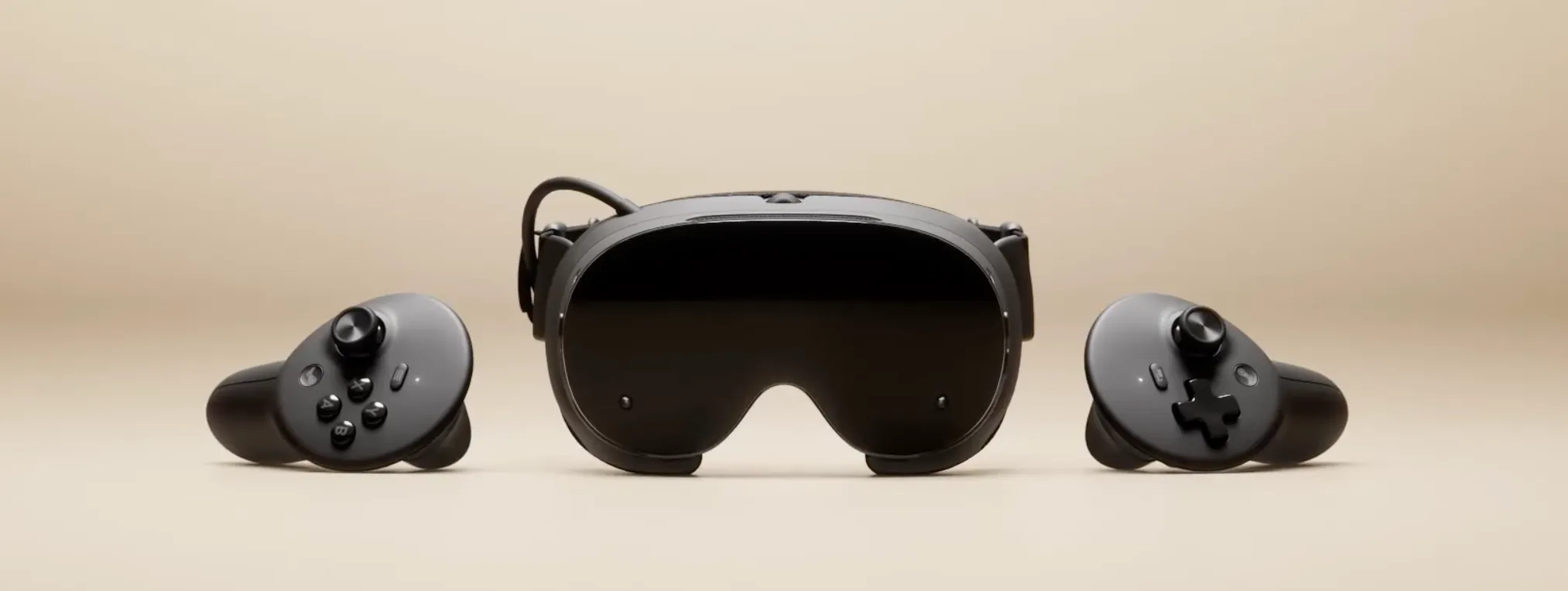
The structural reason is that Apple Vision Pro presents a separate offset image to each eye to simulate binocular depth perception. On a flat screen, a cut drops the viewer into a new shot and the frame edges immediately re-establish spatial orientation. In an immersive environment, no frame edges exist, so every cut reorganizes the viewer's entire sense of physical space around them. Apple's developer documentation for spatial video production addresses the implications for editing, rig placement, and lighting geometry, though it stops well short of a feature-length workflow guide. What follows uses that documentation as a foundation, clearly marked where the argument shifts from documented constraint to reasoned inference.
The core claim: feature length doesn't just scale the problem, it breaks different assumptions at each stage in sequence. Pre-production decisions that a short-form crew could finesse become load-bearing. Live capture loses its primary recovery mechanism. Post-production quality control stops being a workflow step and starts functioning as a production constraint.
Pre-production: building a physical environment that has to work for the entire show
Conventional concert film pre-production is about finding good angles. Spatial video pre-production is about eliminating bad ones permanently, before anything is captured, because there is no corridor back to a decision once the show begins.
The geometry of stereoscopic capture creates the first hard constraint. Spatial video rigs use two lenses at a fixed inter-ocular distance, and that calibration holds within a specific depth range. Apple's WWDC session on spatial video capture (Apple WWDC 2023, session 10071) covers the implications for viewer comfort when subjects move outside the intended depth window. On a three-minute piece, a performer drifting into that zone corrupts a short window of footage. On a 90-minute concert, a single misplaced rig can contaminate an extended sequence with no cut available to escape it. Each camera position therefore requires sightline analysis covering not just the primary focal point but every area a performer is likely to occupy during that camera's active window.
Lighting is the second variable that conventional concert production almost never rethinks from scratch. Standard live performance lighting is engineered for a single viewing geometry: a seated audience facing a lit stage, with high-contrast backlighting, theatrical haze, and strobes tuned for that sightline. Spatial video depends on the camera capturing genuine depth information, and extreme exposure differentials work against that. The inference from Apple's capture guidance (Apple WWDC 2023, session 10071) is that a lighting director on a feature-length spatial concert would need to treat the format's exposure tolerances as a design parameter from the start of pre-production. That claim isn't sourced to a production on the record. It follows from what the documented constraints require.
Both decisions, rig placement and lighting geometry, have to hold for the full runtime with performers moving unpredictably through the space. That's the core distinction from short-form work. Not more setups to manage, but a physical environment built entirely from calls that are final before the house lights go down.
Live capture: attention management without the director's main tool
Immersive video generally requires lower cut rates than conventional video, and Apple's spatial video documentation addresses why rapid editing creates orientation problems in a format without frame edges (Apple WWDC 2023, session 10071). The session doesn't publish specific thresholds, so the exact figure remains an open question. The practical implication is concrete regardless: each camera position needs to hold viewer attention for extended stretches rather than cycling quickly through multiple setups.
A poorly placed rig cannot be cut away from. So the full weight of directorial decision-making shifts back onto placement calls made in pre-production, weeks before the show. In conventional concert films, pacing and viewer gaze are managed largely in the edit. Here, both have to be solved before capture begins or during it in real time.
Which is where spatial audio enters, and this is explicitly a hypothesis rather than a reported finding. When cuts can't redirect viewer attention cleanly, placing sound sources in three-dimensional space to signal where significant action is happening becomes a plausible real-time attention-management tool. Apple's documentation treats spatial audio as a core element of the immersive format (Apple WWDC 2023, session 10071). The inference is that an audio engineer working during capture could route energy toward the area of the stage worth the viewer's attention, functioning more like a live director than a conventional mixer. No production has confirmed building its approach around real-time gaze-cueing during capture rather than treating spatialization as a post-production refinement. But the constraint that would make such an approach useful is documented, and short-form work can absorb a team that defers spatial decisions until editing in a way that a 90-minute concert probably cannot.
Post-production: where runtime turns quality control into a ceiling
Spatial video captures two separate streams rather than one. Blackmagic Design's stereoscopic production documentation notes that dual-stream capture can significantly increase storage and processing requirements relative to equivalent single-eye work (Blackmagic Design), without specifying exact multipliers for a given setup. No production has publicly confirmed the data volumes involved in a feature-length spatial concert. The scale, across multiple cameras running simultaneously for 90 minutes, is what pushes the on-site data operation toward broadcast infrastructure: redundant storage, real-time ingest verification, zero tolerance for a dropped drive.
Stitching is where runtime extracts its sharpest incremental cost. When footage from multiple spatial cameras is assembled into a coherent immersive environment, any inconsistency in camera position during capture propagates as a visible artifact through the output. Isolating and correcting a stitching error that recurs across a feature-length runtime is a fundamentally different scale of task than fixing it across three minutes. Color grading compounds this. Matching across cameras in spatial video isn't only about hue and exposure; the visual environment has to feel physically consistent from every angle, because the headset reveals depth errors that a flat monitor hides. An inconsistency that passes a standard screen check becomes obvious the moment someone puts on the headset.
That leads to the bottleneck with the most direct relationship to runtime: headset review. Early coverage of Vision Pro content production noted that headset review had become a notable schedule driver on spatial projects (The Verge). The structural reason is that geometry and depth errors don't surface on flat monitors, so quality control has to happen inside the headset at multiple stages of the edit, not only at final delivery. A headset pass catches a different category of error than a monitor check, takes longer, and cannot be sampled. How many passes a feature-length spatial edit actually demands hasn't been reported by any production, and no specific figure is available to anchor the cost estimate. The point stands without a number: at 90 minutes, that review cadence stops being a workflow detail and becomes a production schedule problem.
What solving feature length actually requires
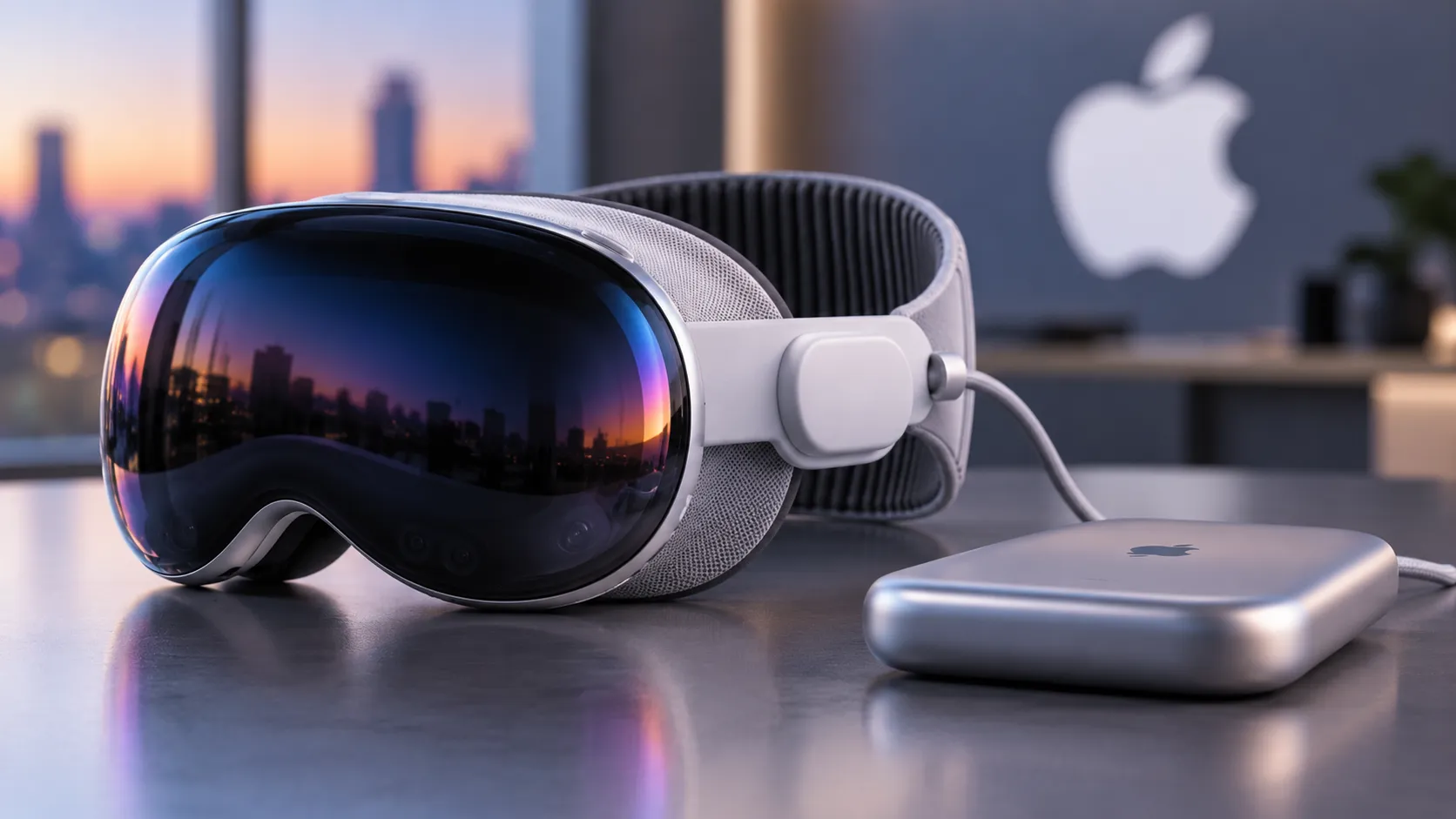
The bottleneck isn't the hardware. Apple Vision Pro's displays operate at a resolution no prior consumer format approached (Apple hardware specifications). The constraint is workflow, and that part remains largely uncodified in public.
Three gaps need to close before long-form immersive concert production becomes accessible beyond a small number of high-budget efforts.
The first is a usable lighting design framework: concrete enough that a lighting director can treat spatial video's exposure tolerances as actual design parameters without abandoning the visual language of a live show. This is probably the most tractable gap. It requires no new hardware, only the codification of tolerance parameters that practitioners are already navigating in short-form work and haven't published in transferable form.
The second is spatial audio tooling built for live event directing rather than post-production finishing. Software that lets an engineer spatialize a mix as a real-time attention instrument during capture, not as a refinement applied after the fact. This runs deeper than the lighting question, because it requires rethinking what the audio engineer's role is during the show itself, before anyone opens an edit.
The third is headset review integrated throughout post rather than batched toward delivery. The format demands it structurally, and at feature length the batched version stops being practical for reasons that follow directly from what headset review is: not a faster monitor check, but a different kind of quality control that surfaces a different category of error, across a runtime that keeps growing.
What's missing from all three is a single production that has put its experience on the record. The constraint documentation exists in Apple's developer resources and Blackmagic's workflow guides. What doesn't exist publicly is a post supervisor describing what a 90-minute stitch job actually cost, or a stereographer explaining which rig configurations held through a full show and which ones failed at the 45-minute mark. That knowledge is being generated somewhere. The specific, reproducible details of how a real production solved the stitching problem, rebuilt its lighting rig, or restructured its audio team's live role would close more ground for the next crew than any amount of format documentation. Right now, nobody is publishing them.

Comments
Be the first, drop a comment!