


Apple Vision Pro The Mandalorian & Grogu: Favreau's IMAX Framing Tool Explained
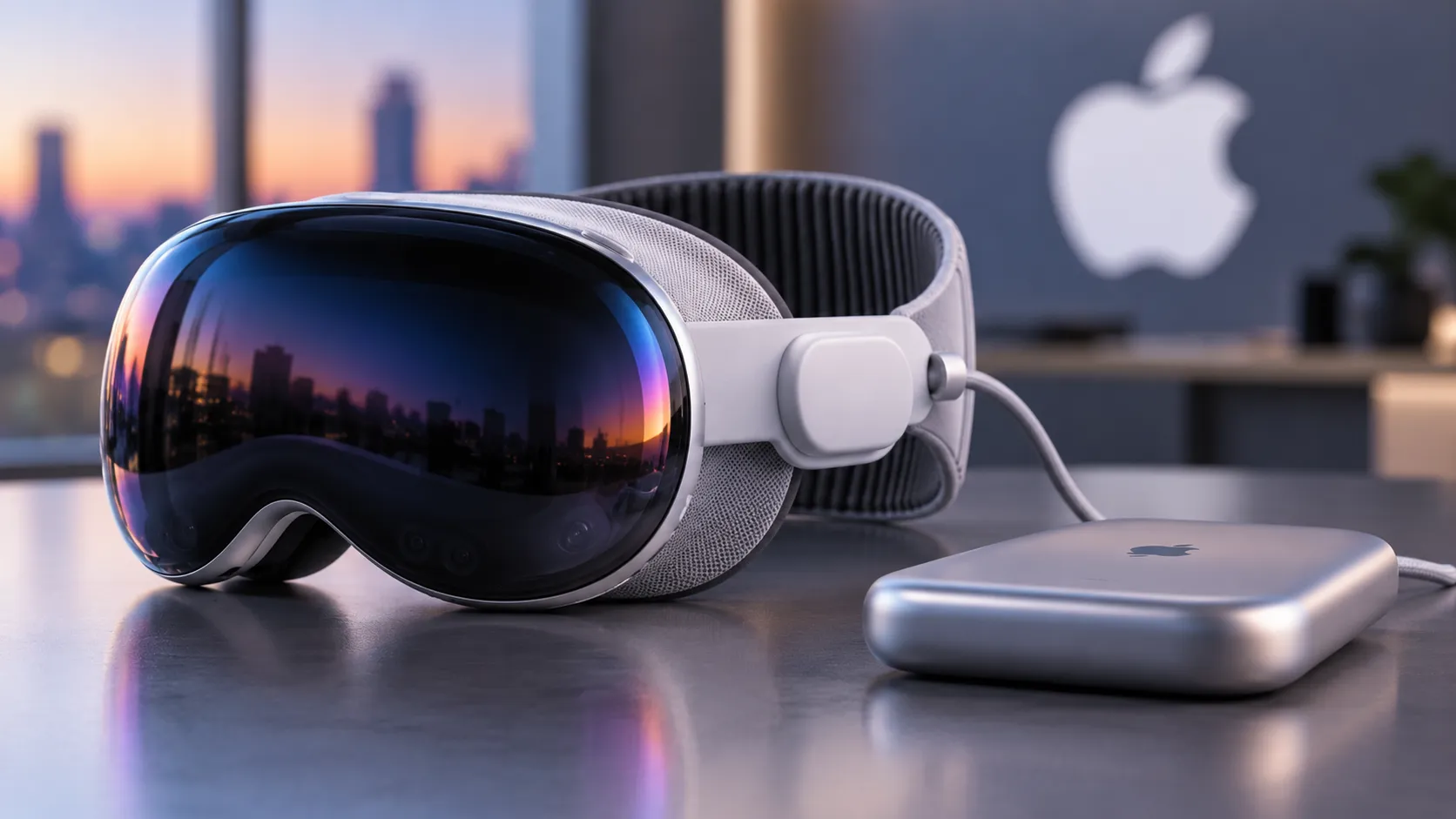
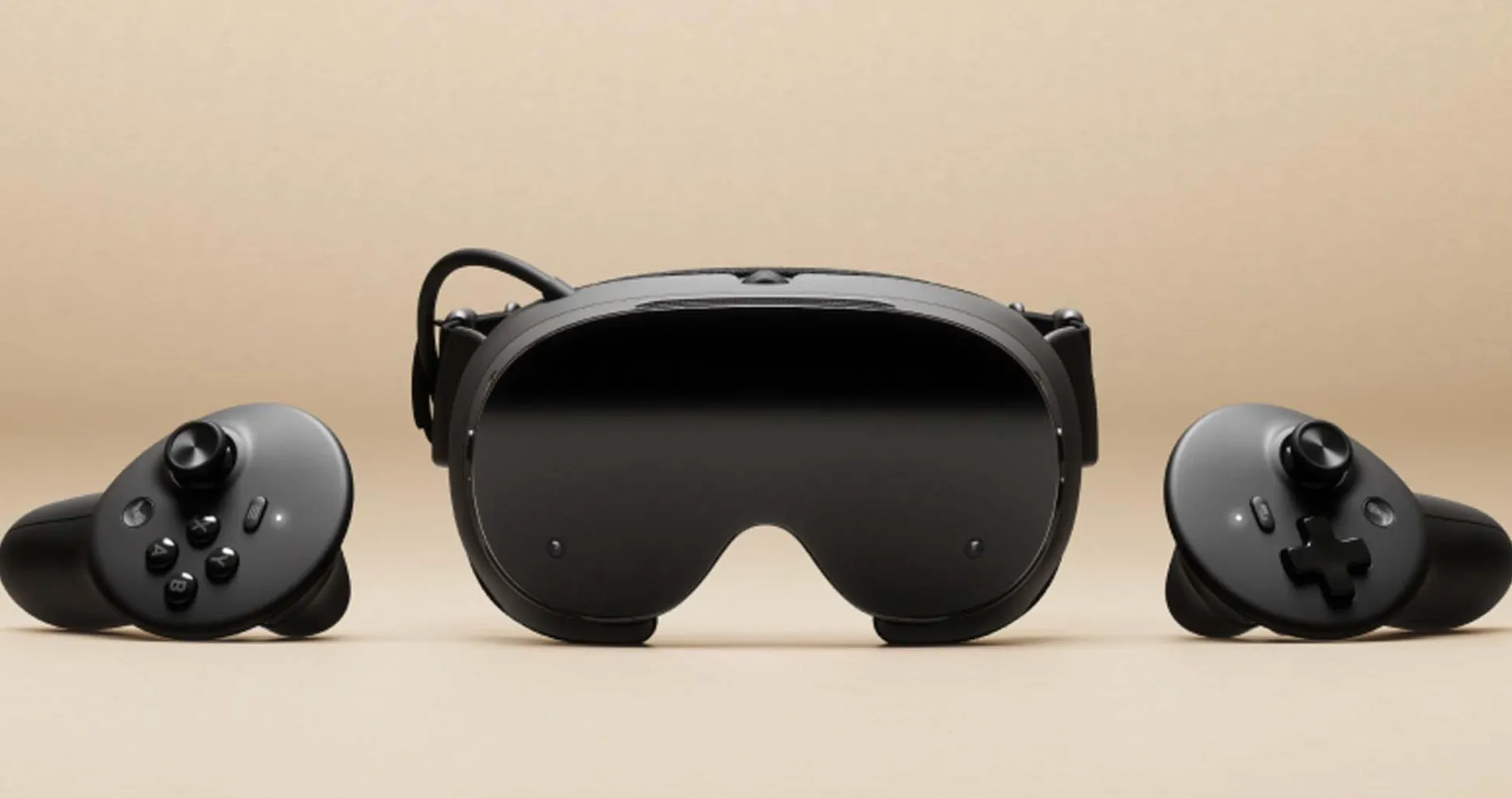
Jon Favreau described Apple Vision Pro as "basically the director's sole viewpoint into framing up shots for IMAX from the set" on The Mandalorian & Grogu, 9to5Mac reported today. The film premieres in May. That a $3,499 consumer headset was adapted into that role on a Star Wars theatrical release is a specific operational claim, and Favreau's account is detailed enough to stand on its own.
The workflow addressed a real production problem. What the reporting confirms, and where it stops, are worth keeping separate.
The monitoring problem Favreau was solving
The core issue, in Favreau's words: "I'm making an IMAX movie and I'm looking at a TV screen. No matter how big your TV screen is, it's not an IMAX screen," 9to5Mac reported. On a conventional film set, directors evaluate shots through a production monitor. For IMAX work, Favreau framed that as a fundamental mismatch: the monitor can't show what audiences will actually see at theatrical scale.
IMAX uses a substantially taller frame than standard theatrical aspect ratios, and the screens fill a room. What reads as a well-composed shot on a production monitor may land differently when projected at that size. Directors' working methods in the format have historically made framing decisions based on a scaled-down proxy, relying on experience and mental translation rather than any direct preview of how the image will look from a seat in the theater.
The gap isn't new. Favreau's team built a workaround for it. "We built software so that I could pop on my Apple Vision Pro and be sitting in an IMAX movie theater and see the full aspect ratio when you're lining a shot up," 9to5Mac reported him saying. The stated goal was direct: "I could watch that take and see what people will see."
That is the use case as Favreau described it. Whether Vision Pro performs better than other on-set visualization tools is a question the available reporting doesn't address.
How Apple Vision Pro was used in The Mandalorian & Grogu
The hardware adaptation was minimal. "We did a little bit of a software build on top of it, but we're leveraging in an industrial capacity consumer-facing tech," Favreau said, per 9to5Mac. The headset itself wasn't modified. A custom software layer was built on top. Who wrote it, how it interfaced with cameras, and whether it pulled live feeds or recorded footage have not been reported.
The "sole viewpoint" phrasing carries the most weight in Favreau's account. If accurate, Vision Pro wasn't something he reached for occasionally to check a shot. It was his window into how IMAX framing was being composed during production, per 9to5Mac. That's a stronger claim than "director experimented with headset on set," and softening it would misrepresent what was actually reported.
On price: Vision Pro launched at $3,499, a figure Slashfilm noted as firmly early-adopter territory when the device was announced in June 2023. On a major tentpole production, that number is rounding error. The crossover from consumer to professional use is plausible partly for that reason.
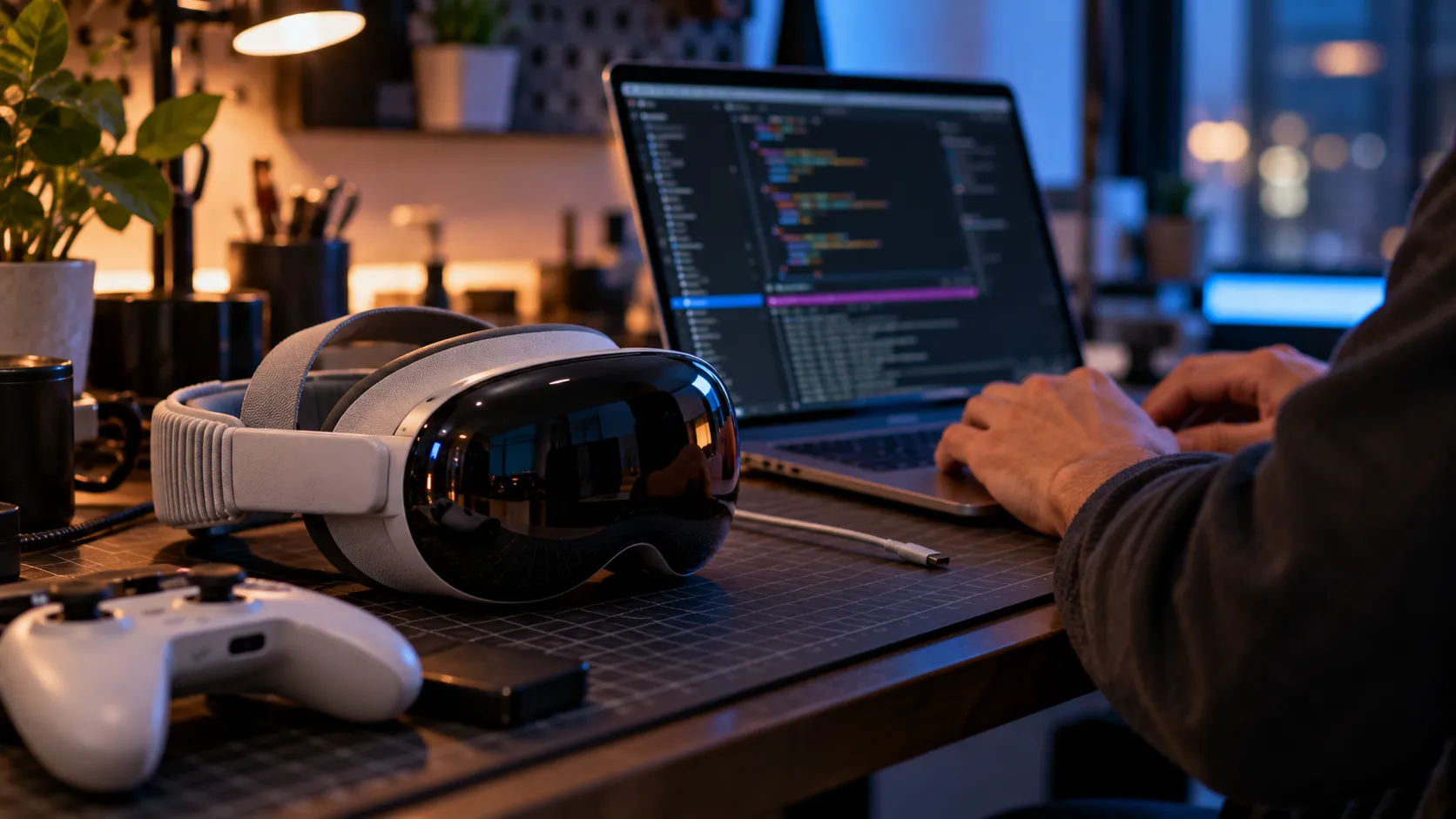
Apple markets Vision Pro as a "spatial computer," not a headset or VR device, per Slashfilm. For Favreau's purposes, the relevant capability is narrower: the device creates a spatial display environment that, with the right software, can be configured to approximate specific viewing conditions. That's what's being used here.
What the reporting doesn't confirm
One account is on record. The sourcing for Vision Pro's role in the production runs entirely through 9to5Mac's report, summarizing Favreau's remarks. No corroboration has been published from Lucasfilm, Disney, Apple, or trade press. The original interview source has not been independently reviewed.
The reporting also doesn't establish scope. Whether Vision Pro was used across all IMAX sequences or only for select shots hasn't been disclosed. 9to5Mac notes the headset was used to "help line up some of those views," language that suggests partial rather than thorough use, though the extent remains unspecified.
No documented creative outcome exists. There's no account of whether the workflow changed specific framing decisions, affected the film's visual language, or produced results Favreau couldn't have achieved through other means. The reporting confirms the tool was used; it doesn't establish what difference it made.
The broader Apple-Disney relationship provides context, not corroboration. Disney CEO Bob Iger appeared at Apple's WWDC in June 2023, with the presentation including immersive viewing experiences built around The Mandalorian, per Slashfilm. Apple has continued building out its immersive media output since then: Submerged, the first scripted film shot in Apple Immersive Video, directed by Edward Berger and filmed using dual-lens 8K 3D cameras, debuted in late 2024, per Apple Newsroom.
That context shows a sustained Apple investment in film technology and a real Disney partnership. It doesn't extend to Favreau's specific on-set claim. Content made for Vision Pro viewers and Vision Pro used by a director on set are adjacent use cases, not the same one.
What Favreau's account actually tells us
When The Mandalorian & Grogu opens in May, audiences won't see any trace of Vision Pro on screen. What Favreau described is strictly behind the camera: a consumer headset, with a custom software layer, used to preview IMAX framing at a scale closer to what audiences would experience in a theater. Standard production monitors, by his account, couldn't provide that.
The Apple-Disney connection goes back at least to that June 2023 WWDC appearance, per Slashfilm. Favreau's production use fits inside a longer collaboration. The workflow described wasn't improvised.
None of that expands the claim beyond what was reported. One director, one production, one described workflow. Whether other IMAX directors adapt a similar approach is an open question the current reporting can't answer.
What Favreau's account does establish is narrower and more interesting for it: a production problem that has existed as long as IMAX has, a specific software-based approach to addressing it, and a consumer device that turned out to be the right form factor for the job. Worth reporting precisely without dressing it up into something larger than one director's account of how he framed a Star Wars movie.

Comments
Be the first, drop a comment!