


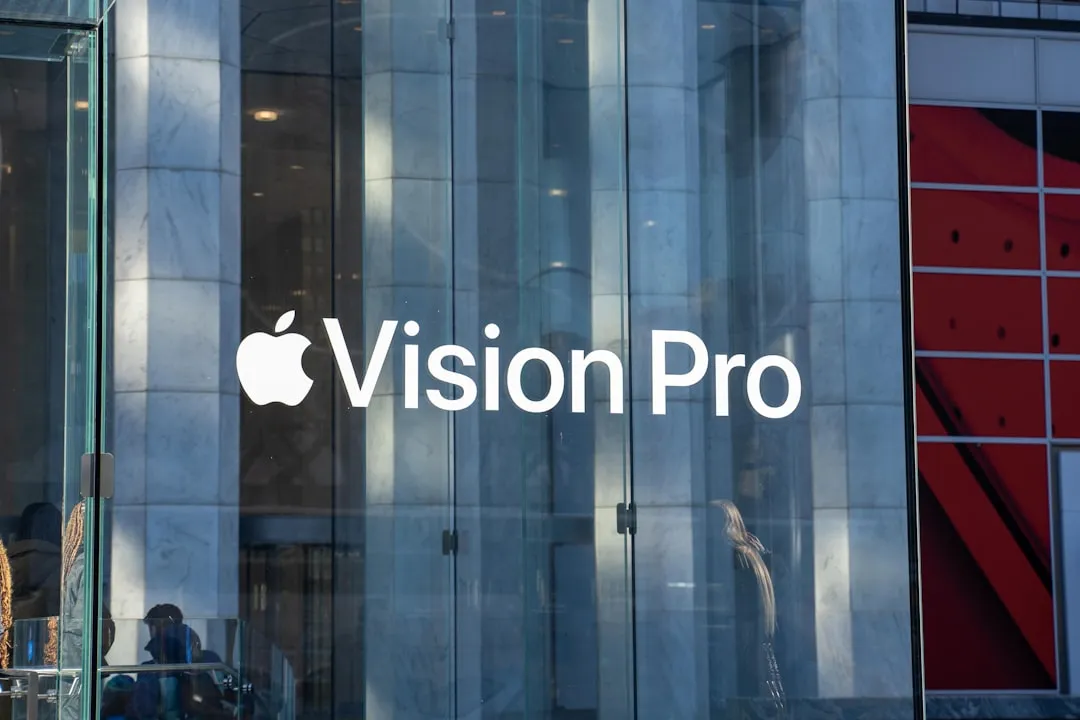
The racing simulation landscape is about to experience its biggest leap forward in years, and it's happening through an unlikely collaboration between three tech powerhouses. Let me tell you why this matters more than just another VR announcement.
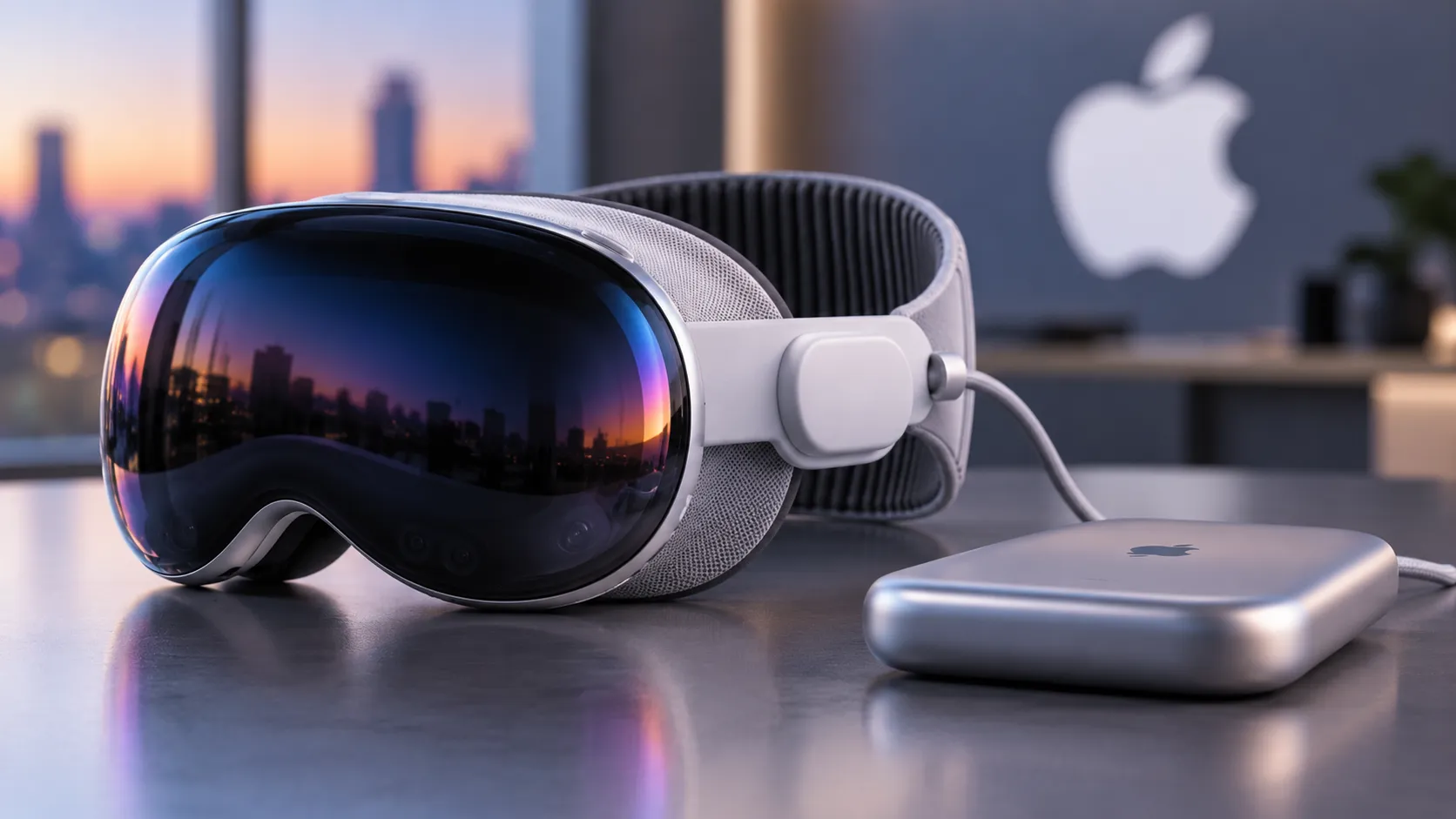
iRacing president Tony Gardner claims this partnership will deliver unprecedented immersion levels for sim racing enthusiasts, and frankly, the technical approach backing up that claim looks genuinely revolutionary. The racing platform arrives on Apple Vision Pro through the visionOS 26.4 update this week, bringing with it what might be the most sophisticated spatial computing implementation we've seen in motorsport simulation.
This isn't just another VR port—it's a fundamental reimagining of how spatial computing can transform motorsport simulation through cutting-edge foveated streaming technology. Here's what makes this collaboration fascinating: each company brings a critical piece that the others couldn't deliver alone. Apple contributes spatial computing expertise and ARKit integration, NVIDIA provides the raw computational power through RTX-powered cloud rendering, and iRacing delivers the physics engine that professional motorsport organizations trust. Together, they're solving problems that have plagued sim racing for years—visual fidelity limitations, physical-virtual disconnection, and performance bottlenecks.
Why foveated streaming changes everything for sim racing
Here's where things get technically fascinating. The secret sauce behind this experience lies in Apple's implementation of foveated streaming technology, which prioritizes visual clarity exactly where drivers need it most. Think about it from a racing perspective—your eyes naturally focus on apex markers, braking zones, and the car ahead, not the grandstands in your peripheral vision.
The system delivers maximum sharpness in the driver's direct line of sight while optimizing performance in peripheral areas, which sounds simple but represents a massive computational achievement. In practice, this means crisp detail for crucial racing elements like apex markers and rival cars ahead, exactly where visual precision matters most at speed.
What makes this revolutionary for sim racing specifically is how it adapts to driving behavior. During late-braking scenarios into chicanes, maximum visual clarity follows your focus to the braking markers and turn-in points. When defending position, the system prioritizes the pursuing car in your mirrors. When setting up an overtaking maneuver, it sharpens the gap you're targeting. This isn't just technical optimization—it's racing-specific intelligence that understands where drivers look during critical moments.
The performance implications are equally impressive. Visual precision at speed can make the difference between winning and losing, and foveated streaming maintains that precision without overwhelming the hardware. Traditional VR approaches treat every pixel equally, wasting computational resources on areas that don't affect lap times or racecraft decisions.
How mixed reality transforms the racing rig experience
Now here's where this gets genuinely game-changing from a user experience perspective. What sets this implementation apart from traditional VR is Apple's ARKit integration, which seamlessly blends physical racing hardware with virtual cockpit elements. Your actual steering wheel aligns perfectly with the in-game wheel, while your real hands remain visible throughout the experience.
This creates something that conventional VR setups have struggled to achieve—an unprecedented connection between the physical rig and digital environment. Here's why this matters beyond just comfort: racing is built on muscle memory and spatial reference points. Professional drivers reach for paddle shifters, rotary switches, and wheel buttons instinctively. When those movements line up naturally with what your eyes are seeing, immersion becomes more believable and control becomes more confident.
The spatial computing approach eliminates the disconnection that has plagued VR racing for years, where drivers often struggled to reconcile what they felt with what they saw. Instead of feeling like you're looking at a racing simulation through a window, you genuinely feel like you're sitting inside the car—with your actual hands on your actual wheel, surrounded by a convincing virtual cockpit that responds to your physical movements in real-time.
What's particularly clever is how ARKit's spatial mapping accounts for different racing rig configurations. Whether you're using a direct-drive wheel base, a button box array, or a full motion platform, the system calibrates to your specific setup and maintains alignment throughout the session.
The technical architecture powering premium simulation
Let's break down what's actually happening behind the scenes, because the technical implementation here is genuinely impressive. This experience relies on sophisticated cloud streaming technology that leverages NVIDIA's RTX GPUs for heavy computational lifting. Physics calculations and high-fidelity graphics rendering occur on a dedicated PC equipped with RTX hardware, while encoded frames stream wirelessly to the Vision Pro.
This architecture enables CloudXR integration that maintains the premium visual quality iRacing is known for, without compromising the untethered nature of the headset. The system supports streaming at up to 4K resolution and 120Hz refresh rates, ensuring the responsive performance that competitive sim racing demands.
Here's where the distributed computing model gets particularly clever: the foveated streaming technology we discussed earlier works in tandem with CloudXR to create a feedback loop. The Vision Pro's eye tracking data gets sent back to the RTX-powered PC, which then prioritizes rendering resources for the specific areas where the driver is looking. This creates a dynamic system where computational power follows attention in real-time.
The RTX hardware brings additional advantages through ray-traced reflections and lighting, which matter tremendously for racing. Realistic car-to-car reflections help with spatial awareness during close racing, while accurate shadow rendering provides crucial depth perception for judging distances at speed.
This distributed computing model also opens up interesting possibilities for the future. As network infrastructure improves and cloud computing becomes more sophisticated, this type of hybrid local-cloud rendering could become the standard for demanding simulation applications across industries.
What this means for the future of motorsport simulation
Here's what I find most compelling about this development—it signals a broader shift toward spatial computing in professional simulation applications. This collaboration extends beyond entertainment into automotive design, healthcare, and manufacturing workflows. The same platform supporting immersive racing can also handle industrial visualization and design review processes, suggesting we're looking at genuinely versatile technology rather than a niche gaming solution.
The fact that X-Plane compatibility arrives alongside iRacing support demonstrates the technology's versatility across simulation disciplines. Whether you're racing at Spa-Francorchamps or practicing instrument approaches at LAX, the underlying spatial computing principles remain consistent—high-fidelity physics, precise visual rendering, and seamless integration with physical controls.
What's particularly noteworthy is the platform's integration with established racing organizations like NASCAR, INDYCAR, and Formula 1 teams. This isn't experimental technology—it's a serious tool that professional drivers and engineers use for actual race preparation. When Lewis Hamilton's Mercedes-AMG Petronas F1 Team validates a simulation platform, that indicates technical maturity and real-world applicability that goes far beyond hobbyist racing.
The authenticity factor here creates a compelling value proposition. iRacing's partnerships with licensed vehicle partners like FIA, BMW, Porsche, Ferrari, and Mercedes-AMG Petronas F1 Team ensure this isn't just generic racing wrapped in fancy hardware—it's access to the same simulation tools that professional teams use for actual competitive advantage.
Ready to experience the next generation of racing?
The arrival of iRacing on Vision Pro represents more than just another platform option—it's a glimpse into how spatial computing will reshape simulation experiences across industries. The technology launches with visionOS 26.4, which Apple released as a Release Candidate last Wednesday with full availability expected this week.
Let's be realistic about the current barriers, though. The premium hardware requirements create significant entry costs—you need an Apple Vision Pro (which remains a substantial investment), a PC equipped with NVIDIA RTX graphics capable of 4K/120Hz streaming, and a robust Wi-Fi 6 or Wi-Fi 6E setup to make this work optimally. That's not a small barrier for most sim racers, particularly when quality racing rigs already represent significant investments.
But here's the thing about cutting-edge technology—it often starts with early adopters who are willing to invest in the future. For serious sim racers ready to invest in cutting-edge technology, this collaboration between Apple, NVIDIA, and iRacing offers an unprecedented opportunity to experience motorsport simulation as it was meant to be—completely immersive, spatially accurate, and more realistic than ever before.
What excites me most is the potential trajectory here. As hardware costs decrease, network infrastructure improves, and spatial computing becomes more mainstream, this type of approach could become the new standard for high-fidelity simulation. We're witnessing the early stages of what might be a fundamental shift in how we interact with simulated environments, and sim racing is leading the charge toward a future where the physical and digital worlds blend seamlessly.


Comments
Be the first, drop a comment!