



The smart glasses market just hit an inflection point most analysts didn't see coming. While tech giants spent years pouring resources into bulky VR headsets and futuristic AR prototypes, Meta quietly cracked the code with something decidedly less flashy: a pair of sunglasses that look normal. The Ray-Ban Meta smart glasses have now sold over 2 million units, a figure that represents genuine mainstream traction in a category littered with expensive failures. Even more telling, Meta's Reality Labs division—home to these glasses—generated $1.1 billion in Q4 2024 revenue, marking a about a 1% year-over-year increase (Q4 2024 vs Q4 2023) that suggests this isn't a novelty bump. For an industry that's watched Google Glass flame out and Snap Spectacles languish in obscurity, Meta's momentum represents something more significant than a product win—it's validation that consumer AR wearables can actually work when executed correctly.
Why Meta succeeded where others stumbled
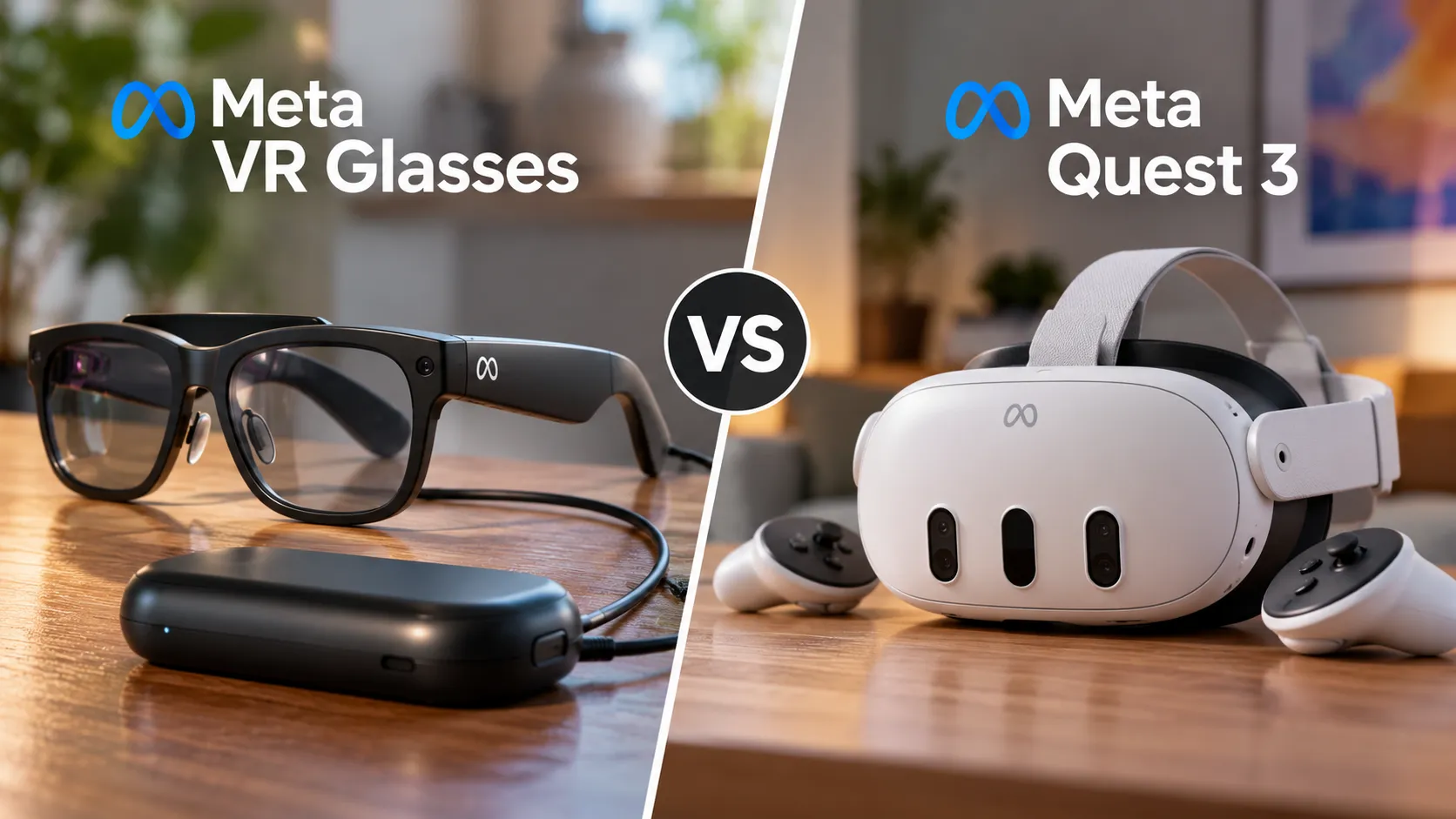
The secret to Meta's traction isn't revolutionary technology—it's restraint. Unlike previous attempts that screamed "prototype," the Ray-Ban Meta glasses prioritize looking like conventional eyewear over packing in every possible feature. This design philosophy matters more than most hardware specs because it solves the social stigma problem that killed Google Glass: people will actually wear these in public without feeling like walking beta testers.
The Wayfarer and Aviator frames Meta chose aren't accidents—they're Ray-Ban's most recognizable styles, ensuring even tech-skeptics see sunglasses first, gadget second. The partnership with Ray-Ban, a brand with 80+ years of eyewear credibility, provided instant legitimacy that no amount of Meta branding could manufacture alone. Face-worn technology carries unique social risk; Ray-Ban's heritage solves what Google's tech credibility couldn't—permission to wear something on your face in public.
The feature set reflects similar pragmatism. Rather than attempting full AR overlays or intrusive always-on displays, Meta focused on use cases people already understand: hands-free photos and videos, music playback, and voice assistant access. Meta deliberately omitted heads-up displays, gesture controls, and even prescription lens compatibility at launch—features that added cost and complexity to predecessors. The integration of Meta AI voice assistant functionality has proven particularly compelling, giving users a practical reason to choose these over standard sunglasses beyond the novelty factor. This isn't about reinventing how humans interact with information—it's about making existing interactions slightly more convenient, which turns out to be exactly what mainstream consumers wanted.
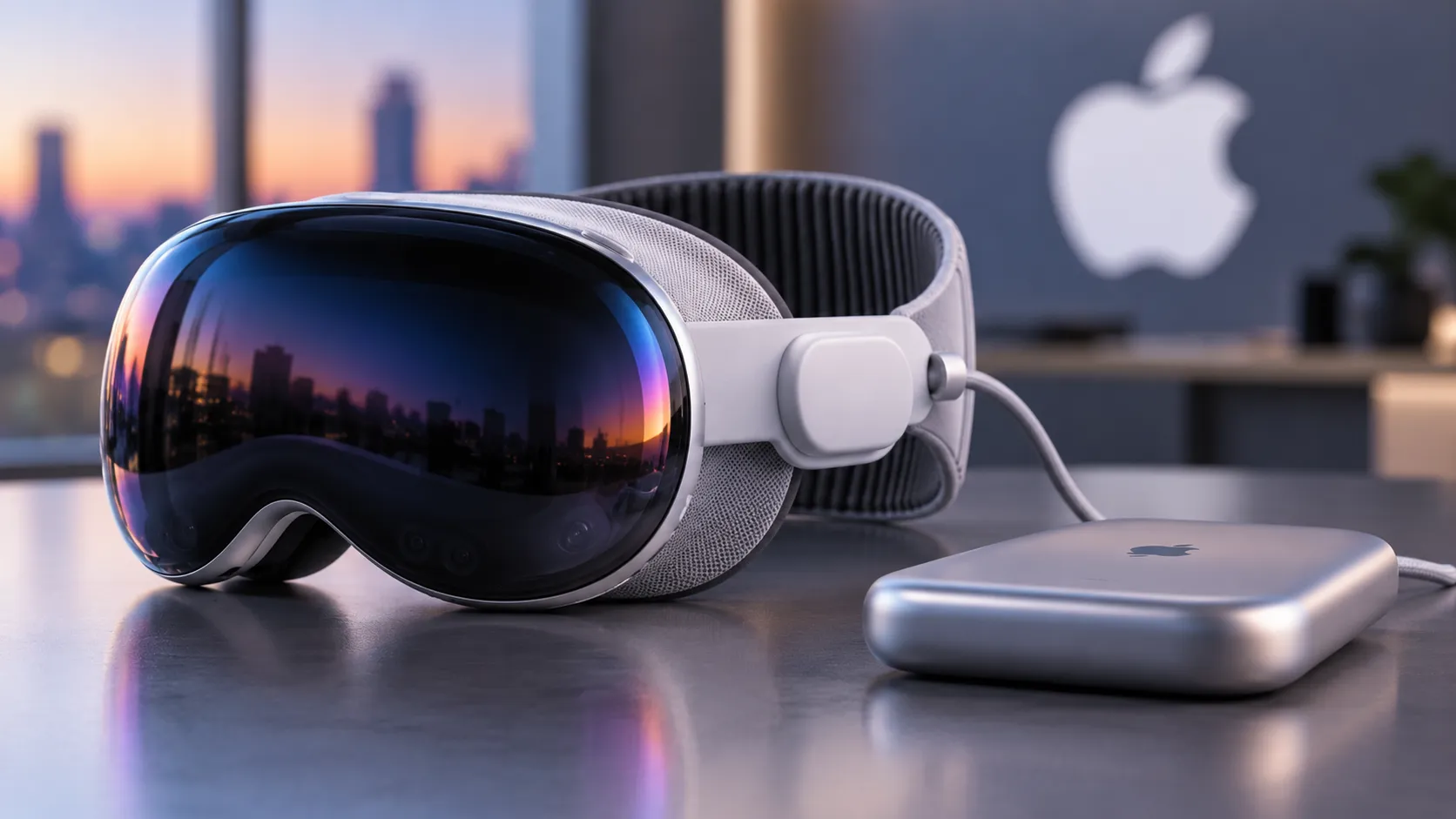
This pragmatic feature restraint also enabled aggressive pricing strategy. Gen-1 models were available starting around ~$299–$379; Gen-2 pricing starts at about $379 (base models) and rises with lenses/options, Meta positioned these glasses below the psychological $400 barrier where consumer electronics move from "interesting splurge" to "significant investment requiring justification." That's impulse-buy territory for the target demographic, and it's a price point that allows for experimentation without buyer's remorse. Compare that to the $3,500 Apple Vision Pro or even the $500+ price tags of previous smart glasses attempts, and the accessibility advantage becomes clear.
The competitive landscape just shifted
Meta's success creates immediate pressure on rivals who've taken different strategic paths. Apple, despite its Vision Pro technical achievements, now faces questions about whether its premium-first approach missed the market's actual entry point. The stark contrast between Meta's 2 million+ units sold and Vision Pro's more modest adoption suggests that consumers value wearability and affordability over cutting-edge spatial computing—at least in 2025. The divergence isn't just about price—it reflects fundamentally different bets about what consumers want first: powerful immersive computing or convenient ambient assistance. Apple's rumored smart glasses project, still years away according to most reports, will now launch into a market where Meta has already established consumer expectations and captured early adopters.
Google's absence from this space feels particularly conspicuous. After pioneering consumer smart glasses with Glass in 2013, the company retreated to enterprise applications and has yet to return with a consumer offering. Meta's demonstrated ability to generate over $1 billion quarterly revenue from Reality Labs hardware proves there's actual business viability here, not just hype. Google's AI assistant capabilities and Android ecosystem would position it well for smart glasses, but the window for easy market entry is closing as Meta builds brand association between "smart glasses" and "Ray-Ban Meta." The company that invented the category is now watching a competitor define its commercial iteration.
Beyond platform owners like Apple and Google, the component and Android ecosystem players face different calculus. Samsung and Qualcomm, both working on XR platforms and reference designs, now have clearer target specifications. The market has spoken: consumers want lightweight, stylish glasses with practical AI assistance, not sci-fi headsets. Meta's sales momentum demonstrates that the form factor and feature balance they've struck resonates with buyers, giving competitors a validated template to either match or differentiate against. The risk for followers is that matching Meta's approach yields "me too" products without the Ray-Ban brand equity, while differentiating might mean ignoring what the market has clearly validated.
What this means for the AR roadmap ahead
Meta's smart glasses success doesn't just validate one product—it reframes the entire augmented reality development timeline. The industry consensus has long held that true AR glasses with lightweight displays and all-day battery life were the goal, with intermediate products serving as stepping stones. Meta's ability to sell 2 million+ units of glasses without AR displays suggests the stepping stone might actually be the destination for many consumers. The "camera + AI assistant + audio" combination delivers enough utility that display technology becomes a nice-to-have rather than a must-have feature.
This mirrors the AirPods trajectory—audio-only wearables that delivered enough utility to outsell more ambitious but cumbersome alternatives. The display-less approach also changes economics dramatically: reducing bill-of-materials costs enables the sub-$400 pricing that research consistently identifies as critical for mainstream adoption. For billions invested in micro-LED and waveguide R&D, Meta's success poses an uncomfortable question: what if consumers don't need what the industry spent a decade developing?
This creates a strategic fork in the road for the industry. Companies can continue pursuing full AR glasses with visual overlays, accepting longer development timelines and higher costs, or they can compete in Meta's proven category of AI-powered glasses without displays. The $1.1 billion quarterly revenue Meta generated from Reality Labs hardware demonstrates there's substantial business to be built in the latter category right now, rather than waiting for display technology to mature. For publicly-traded companies under pressure to show XR revenue, that's an increasingly attractive proposition. The revenue represents not just validation but immediate monetization opportunity while display technology continues its march toward viability.
The AI assistant angle also signals where differentiation will happen next. As large language models become more capable and multimodal AI improves, smart glasses become the ideal interface for contextual assistance—seeing what you see, hearing what you hear, and providing relevant information without requiring you to pull out a phone. The multimodal advantage is architectural: glasses capture visual context continuously while LLMs process queries, enabling "what am I looking at?" questions impossible with phone-based assistants that require deliberate photo-taking. Meta's integration of its AI assistant into the glasses experience positions the company to benefit from AI improvements even without hardware updates.
Competitors will need equally sophisticated AI capabilities to match the experience, turning smart glasses competition into an AI assistant arms race as much as a hardware battle. Google's Gemini and OpenAI's partnerships demonstrate visual understanding capabilities, but neither company has Meta's direct sensor access to user context throughout the day—the continuous stream of visual and audio input that makes contextual assistance genuinely useful rather than novelty-driven.
The privacy and regulatory questions nobody's answering yet
Success at scale brings scrutiny that niche products avoid. As Meta's smart glasses move from early adopter curiosity to mainstream accessory, the privacy implications of always-available cameras become harder to dismiss. With over 2 million units in circulation, these aren't isolated devices—they're becoming common enough that people will regularly encounter them in public spaces, often without realizing they're being recorded. These 2 million glasses represent thousands of cumulative recording hours daily in public spaces—a scale that transforms ambient surveillance from theoretical concern to practical reality. The small LED indicator that signals recording offers minimal protection compared to the obvious presence of a smartphone camera.
Meta's track record on privacy doesn't inspire confidence here. The company has faced numerous data handling controversies, regulatory actions, and user trust issues over the past decade. The substantial revenue growth in Reality Labs, reaching $1.1 billion in Q4 2024, means smart glasses are becoming a meaningful business line for Meta, which increases the company's incentive to collect and monetize usage data. Key questions remain unaddressed: Does Meta's AI process images locally or in the cloud? How long is visual data retained? Can law enforcement access recordings? What happens to training data? Questions about what audio, images, and contextual information Meta's AI assistant processes—and what happens to that data—remain largely unanswered in ways that satisfy privacy advocates.
Regulatory frameworks haven't caught up to this product category. Unlike smartphones, which require deliberate action to record, smart glasses enable passive, continuous capture that's harder for bystanders to detect or consent to. As sales volumes grow beyond 2 million units, legislators in privacy-conscious jurisdictions like the EU will likely take harder looks at whether existing regulations adequately address always-available recording devices. Ring doorbell cameras faced similar scrutiny at scale, resulting in specific disclosure requirements and law enforcement access limitations—a preview of what smart glasses may face. Meta's competitors should watch this space carefully—regulatory requirements that emerge in response to Meta's market leadership will shape what features and capabilities are permissible in future smart glasses products.
Where the market goes from here
Meta has fundamentally changed the conversation around consumer AR wearables. The 2 million+ units sold prove that mainstream buyers will adopt smart glasses when the product prioritizes style and simplicity over technical ambition. For competitors, that creates both opportunity and urgency—opportunity because Meta has validated the market and shown there's real revenue potential, urgency because Meta is building brand association and user habits that will be harder to disrupt with each passing quarter.
The next 12-18 months will reveal whether Meta's success is defensible or just a first-mover advantage. Apple's eventual entry will test whether premium positioning and ecosystem integration can overcome Meta's head start. The company's reported development of more accessible smart glasses suggests the Vision Pro's reception may have prompted strategic revision—a tacit acknowledgment that Meta identified the right entry point. Google's continued absence looks increasingly like a strategic error unless the company has a dramatically different approach in development. And the wave of smaller players and Android ecosystem partners will determine whether this becomes a platform war or a Meta monopoly.
Reality Labs' $1.1 billion quarterly revenue and 54% year-over-year growth suggest Meta has found something sustainable, not just a temporary hit. The revenue trajectory—accelerating rather than plateauing after initial novelty—indicates genuine product-market fit. For an industry that's endured years of "AR is always two years away" skepticism, that's the most significant signal yet that the future of computing might not require a screen after all—just a decent pair of sunglasses and an AI assistant that actually understands context.
Rivals who dismissed smart glasses as a niche curiosity now face an uncomfortable reality: Meta didn't just launch a successful product, it potentially defined the category's winning formula before most competitors even entered the race. Three paths forward emerge: Meta monopoly if competitors can't match the brand-price combination, platform war if Apple and Google enter aggressively with differentiated ecosystems, or fragmented market if use-case specialization creates room for multiple players. The answer will determine whether smart glasses become the next smartphone—a category with clear winners but multiple viable players—or the next social network, where first-mover advantages and network effects prove nearly insurmountable.




Comments
Be the first, drop a comment!