


Samsung Display XR Microdisplay Hits 40,000 Nits for AR Glasses
Samsung Display this week unveiled its brightest Samsung Display XR microdisplay yet at AWE USA 2026 in Long Beach a 1.3-inch RGB OLEDoS panel rated at 40,000 nits, paired with a 0.62-inch prototype smart-glasses panel demonstrating real-time translation, navigation, and weather overlays. The company is attending the show for the second consecutive year, a sign of sustained commitment rather than a one-off appearance.
The brightness figure sounds like a spec-sheet boast. It isn't. Transparent AR optics lose light so aggressively between panel and pupil that a display running at ordinary screen brightness simply produces nothing visible to the wearer. To understand why Samsung is pushing 40,000 nits, you have to understand what happens to light inside an AR lens.
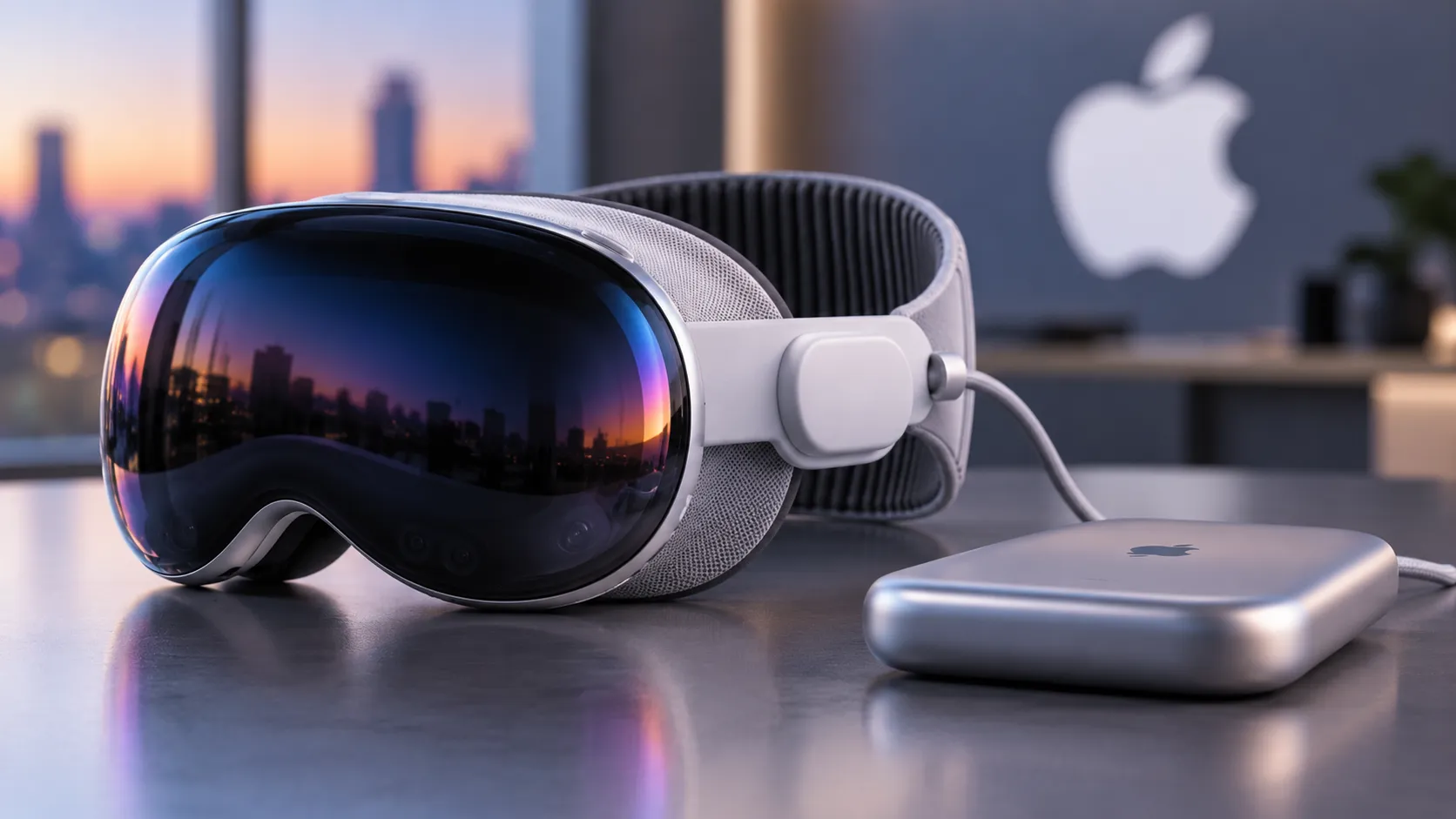
Sony currently dominates the segment Samsung Display is trying to enter. Sony held 87% of global Micro OLED shipments for XR devices in 2023 and, according to Digitimes, supplies the 4K OLEDoS panels inside Apple Vision Pro.
Why transparent AR has a brightness problem that brighter phones won't solve
A transparent AR lens lets real-world light pass through it continuously. The projected digital image has to compete against that ambient light directly outdoors, that means competing against daylight. A dim image doesn't look faded; it washes out entirely.
The scale of the loss is what makes the numbers feel extreme. For configurations that prioritize high see-through transmissivity, total optical efficiency from panel to pupil can drop to fractions of a percent, Display Daily reported earlier this year. Delivering a comfortable 200-300 nits at the eye therefore requires the microdisplay itself to run at tens of thousands of nits. Samsung's 40,000-nit figure isn't excess; it's the arithmetic.
The optics type matters too. Reflective waveguides among the more efficient AR optics approaches deliver optical efficiency close to ten times higher than diffractive alternatives, according to IDTechEx as cited by Next Reality last month. Even with that advantage, the required panel brightness remains extreme by any conventional display standard.
The same lossy-optics dynamic plays out across XR categories. Pancake lenses, now standard in compact VR headsets, come with their own penalties: reduced optical efficiency, ghost image artifacts, and higher cost, per IDTechEx. Every optical stack between a display and a human eye loses something. The display has to compensate.
How Samsung Display RGB OLEDoS fits the XR microdisplay technology race
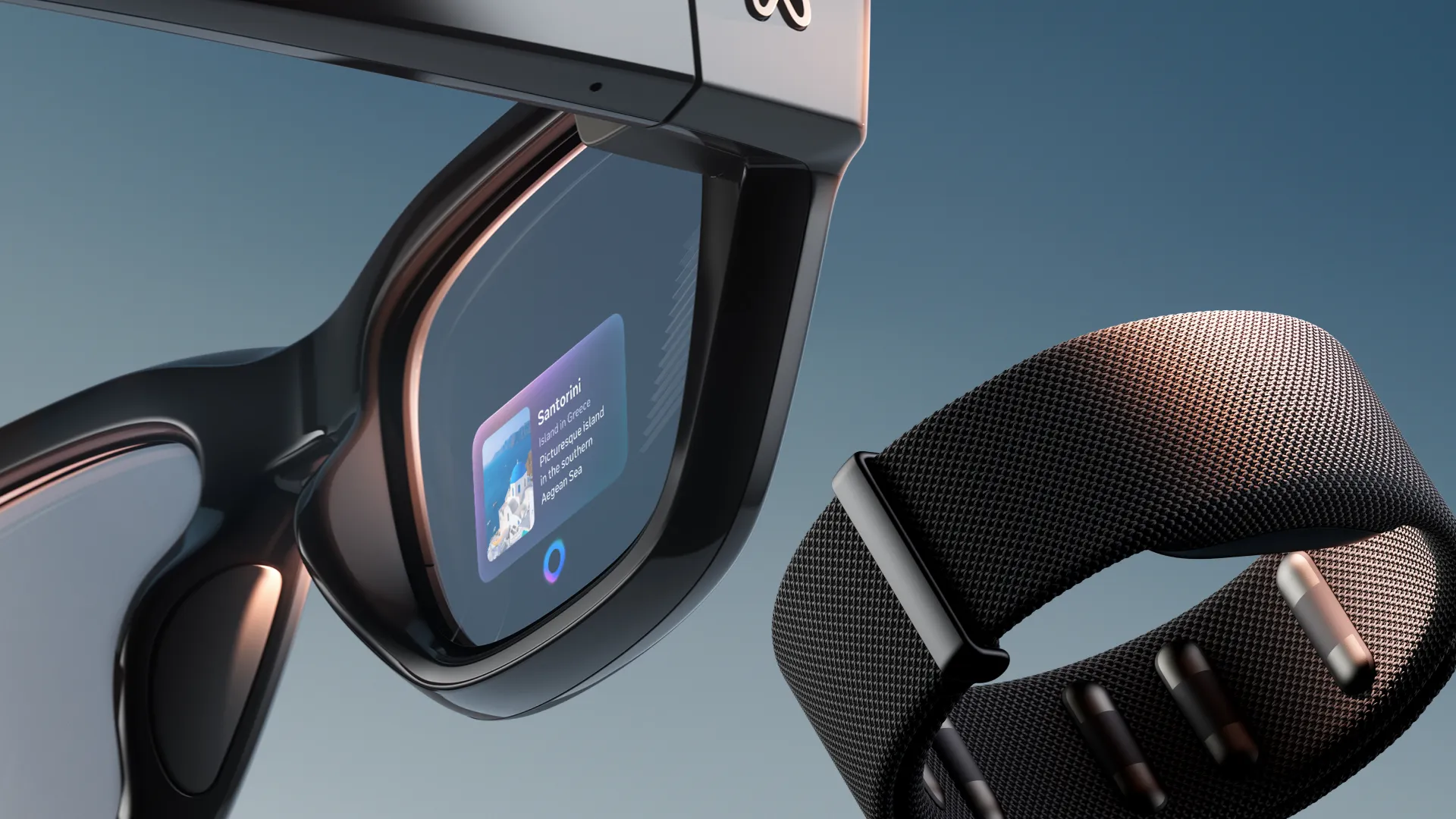
Samsung's AWE showing featured two panels. The 1.3-inch RGB OLEDoS at 40,000 nits targets MR headsets; a prototype smart-glasses frame running the 0.62-inch panel demonstrated AR content overlaid on a backdrop of the Long Beach coastline. That smaller panel runs at 1,280 × 1,024 resolution, exceeds 20,000 nits peak brightness, and refreshes at up to 85Hz, according to Next Reality. The specs read less like a research prototype and more like a components pitch to prospective device makers.
The architectural difference from competing approaches is specific. Unlike white OLEDoS designs that rely on a color filter, RGB OLEDoS implements OLED directly on a wafer with RGB pixels deposited onto the silicon substrate, so there is no filter layer absorbing light from a white emitter. Samsung says the result is higher light efficiency and longer lifespan, though these remain company claims without independent verification at this stage. "Unlike white OLEDoS, RGB OLEDoS does not require a color filter, enabling higher light efficiency and longer lifespan," a Samsung Display representative said.
The manufacturing argument is also part of Samsung's pitch. A single-panel RGB structure is said to simplify optical assembly for smart glasses and reduce manufacturing complexity versus competing approaches. "RGB OLEDoS is composed of a single panel, making the manufacturing process less complex than other technologies and offering significant advantages in mass production and cost competitiveness," the representative said, adding that the company will focus on improving production efficiency as it scales.
That ambition runs ahead of where the technology currently sits commercially. As of late 2025, Digitimes described direct-deposited RGB OLEDoS as a method not yet commercialized. The AWE showcase is Samsung talking openly about manufacturing scale while still showing a prototype a transition in positioning, not a product launch.
What the demos tell us about where Samsung Display actually stands
Samsung Display's broader competitive position has shifted meaningfully in the past year. Samsung reportedly began its first official OLEDoS mass production in late 2025, with panels reportedly supplied for the Samsung Galaxy XR headset. That device launched in October 2025 at $1,799 with dual Micro OLED displays at 4,032 pixels per inch, nearly 650 ppi above Apple Vision Pro's 3,386 ppi, according to Display Daily. That's a concrete production milestone, not a roadmap claim though Samsung Display has stated it cannot confirm client relationships, so the supply connection remains reported rather than confirmed.
The RGB OLEDoS demonstrations at AWE, and at Display Week last month, represent the first clear public evidence of what Samsung's 2023 eMagin acquisition was built to enable, per Next Reality. Samsung Display is also reportedly pursuing a supply relationship with Apple, though nothing has been publicly confirmed, per Digitimes.
The gap between promising panel performance and a shippable consumer product remains large, and the Display Week demo in May illustrated it plainly. The smart-glasses frame housing Samsung's eMagin microdisplays was bolted to a table; no attendee could wear it. The setup sidestepped every constraint that defines a wearable: weight, heat dissipation, battery draw, and onboard compute. The AWE prototype is more polished, but those questions remain publicly unanswered.
There's also the optics side of the equation. Even if high-brightness RGB OLEDoS panels reach production scale, the waveguides needed to pair with them carry their own manufacturing challenges. Glass-substrate reflective waveguides require dozens of precision components, each needing individual gluing and polishing a process that creates serious yield challenges at scale, per IDTechEx as cited by Next Reality. Samsung's display progress and the optics ecosystem's readiness are on separate timelines.
The market those timelines are racing toward is substantial. Combined AR and VR device revenues are forecast to surpass $22 billion annually by 2036, according to IDTechEx. Whether Samsung Display captures a meaningful share depends on closing the distance between a fixed-frame booth demo and a product someone can put on and walk outside.
The milestones that would mark genuine progress are specific: an untethered prototype a person can actually wear; evidence of workable thermal and power management under real-world conditions; a confirmed design win in a shipping smart-glasses product from a major OEM. None of those have arrived yet. Whether Samsung Electronics even selects its own display affiliate's panels for its rumored smart glasses product remains publicly unresolved, per PCMag reporting cited by Next Reality. The AWE demos establish a credible direction. They don't close the distance on their own.



Comments
Be the first, drop a comment!