


VR Headset Smell Technology Explained: Real Benefits and Limits
Olfactory VR accessories are no longer trade-show prototypes. UK company Scentient opened pre-orders late last year for "Escents," a Bluetooth neckband that delivers scents synchronized to Meta Quest 3 and Pico 4 Ultra sessions, with delivery scheduled to begin in early 2026, per heise online's December 2025 product report. The hardware exists. What peer-reviewed research says smell actually does inside a virtual environment is a more complicated story and considerably more limited than the marketing suggests.
The short version: smell in VR headset systems demonstrably raises how real a scene feels while you're inside it. What it does not do, at least according to current evidence, is transform emotional states, lock in memories, or deliver the kind of full-sensory revolution that launch copy tends to promise.
Can VR make you smell things? Yes, but only in narrow ways
Three terms matter before evaluating any claim about olfactory VR technology. Presence is the subjective sense of actually being inside a virtual environment. Immersion is an objective measure of how many senses the hardware engages and how well. Realism is how closely the experience matches a real-world counterpart. Smell affects presence and realism consistently, and raises immersion by definition the moment a new sensory channel is added, per Archer et al., PLOS ONE, 2022.
The clearest data comes from a 2022 controlled study exposing 22 participants to scene-matched odors during a playthrough of Resident Evil 7 in VR. Spatial presence scores averaged 3.7 with congruent scents versus 3.35 without a statistically significant difference and participants rated the scented experience as more realistic. Emotional measures, including arousal, pleasure, and dominance, showed no significant movement, per Archer et al..
Physiological responses elevated heart rate and skin conductance appeared during the first playthrough, then vanished when participants repeated the experience. That novelty-fade finding matters. Some portion of the physiological effect appears to be curiosity, not deep sensory integration.
A 90-person TU Dresden study using VR scenes of a rose garden and orange basket found that scene-matched odors made environments feel more pleasant, and participants produced richer verbal descriptions of what they saw. Memory tested two weeks later was no better in the scented condition than in the odor-free control, per Barkat-Defradas et al., accepted 2021, posted 2026.
Two findings from that study deserve particular attention:
- 51 percent of participants in the no-odor control group reported smelling something anyway, despite no scent being delivered
- A separate pre-registered Scientific Reports study found that simply telling participants a VR experience included simulated scents caused them to report diverse olfactory sensations, with nothing actually released, per Scientific Reports, November 2025
The brain is already running its own olfactory simulation. Visual context alone is often enough to generate the impression of smell. That cuts both ways: it means a well-designed virtual reality scent system doesn't have to work very hard to feel convincing, but it also means some of the "effect" being measured in studies may be the brain filling in gaps rather than hardware doing meaningful work.
The evidence base, then, looks like this: presence and pleasantness gains from congruent scents are well-supported. Claims that VR smell improves memory formation or transforms emotional states are not. The benefit is narrower scenes feel more believable while you're inside them, particularly when the scent matches what you see.
Why the hardware only recently got good enough to matter
The core engineering problem was speed. Conventional odor-delivery systems respond in seconds workable for a fragrance diffuser, completely incompatible with a medium where visuals and audio update in under 20 milliseconds. A visible lag between seeing a virtual campfire and smelling smoke doesn't add presence; it breaks it. Researchers developing a wearable AI-driven olfactory interface identified slow response time, high power draw, and physical bulk as the three barriers preventing real mixed-reality use, per Liu et al., Nature Communications, May 2024.
That same team built a wireless, wrist-worn device achieving a 70-millisecond scent response time described as a world record at the time of publication with a 32-odor capacity and power consumption measured in milliwatts. The practical constraint: a 500 mAh battery with full-load operating time ranging from 0.26 to 2.7 hours depending on which odor was in use, per Liu et al.. A meaningful lab result, not a finished consumer product.
Scentient's Escents neckband takes a more pragmatic approach. Six fragrances per magnetic "Smart Pod" jasmine, pine, chocolate, burnt wood, gasoline, and green fig each rated for roughly 50 hours of use. Developers can link individual scents to specific virtual objects through a Unity interface; the demo case involves picking up a digital item and smelling it, or triggering smoke odor during an emergency response training scenario, per heise online, December 2025. At £850, the near-term market is clearly enterprise, not living rooms.
Having six or thirty-two scents available solves only part of the problem. The deeper challenge is content authoring: mapping scents reliably to scenes, clearing lingering odors between segments, and ensuring a given smell reads as "congruent" across users with different olfactory sensitivities and cultural associations. A Scientific Reports study from last year built a VR game with a 12-odor olfactory display synchronized to Meta Quest 3 gameplay and demonstrated that technical integration is achievable but managing scent congruence at scale is a problem no hardware specification resolves, per Scientific Reports, March 2025.
What keeps smell in VR headset systems from becoming routine
Even if the hardware clears the response-time bar, deployment introduces a separate set of problems that the research community hasn't fully addressed and product announcements consistently skip over.
Scent clearing. Once an odor is released into the air around a user's face, it lingers. Switching quickly from the smell of pine forest to burning fuel requires either a physical clearance mechanism, adequate ventilation, or enough time between triggers that the previous scent dissipates naturally. In a controlled lab session this is manageable. In a fast-paced game or a shared training facility running back-to-back sessions, it becomes a real authoring constraint.
User variability. Olfactory sensitivity varies substantially across individuals, and the same scent can carry very different associations depending on a person's background and prior experiences. A smell that reads as "forest campfire" to one user may read as something else entirely to another. The TU Dresden study screened participants for normal olfactory function specifically to control for this a luxury that commercial deployments don't have, per Barkat-Defradas et al., accepted 2021, posted 2026. Designing for average olfactory response may produce below-average results for a meaningful proportion of users.
Allergies and sensitivities. The Resident Evil 7 study's inclusion criteria explicitly excluded participants with known fragrance allergies or sensitivity reactions, per Archer et al., PLOS ONE, 2022. In a professional training context with repeat users, pre-screening is feasible. In a public-facing or high-turnover environment, it's an operational headache with real liability implications.
Shared-device hygiene. A neckband worn by multiple users across training sessions raises the same sanitation questions as shared headsets, amplified by the fact that the device sits near the nose and mouth. No published guidance exists yet on cleaning protocols for scent pods or device surfaces without degrading hardware performance.
Content authoring infrastructure. There's no standardized scent library, no congruence guidelines, and no established developer tooling analogous to what exists for audio or haptics. Each studio currently solves this from scratch. Until that layer matures, the ecosystem will struggle to scale beyond bespoke enterprise deployments.
Where narrow presence gains can do real work: training and rehabilitation
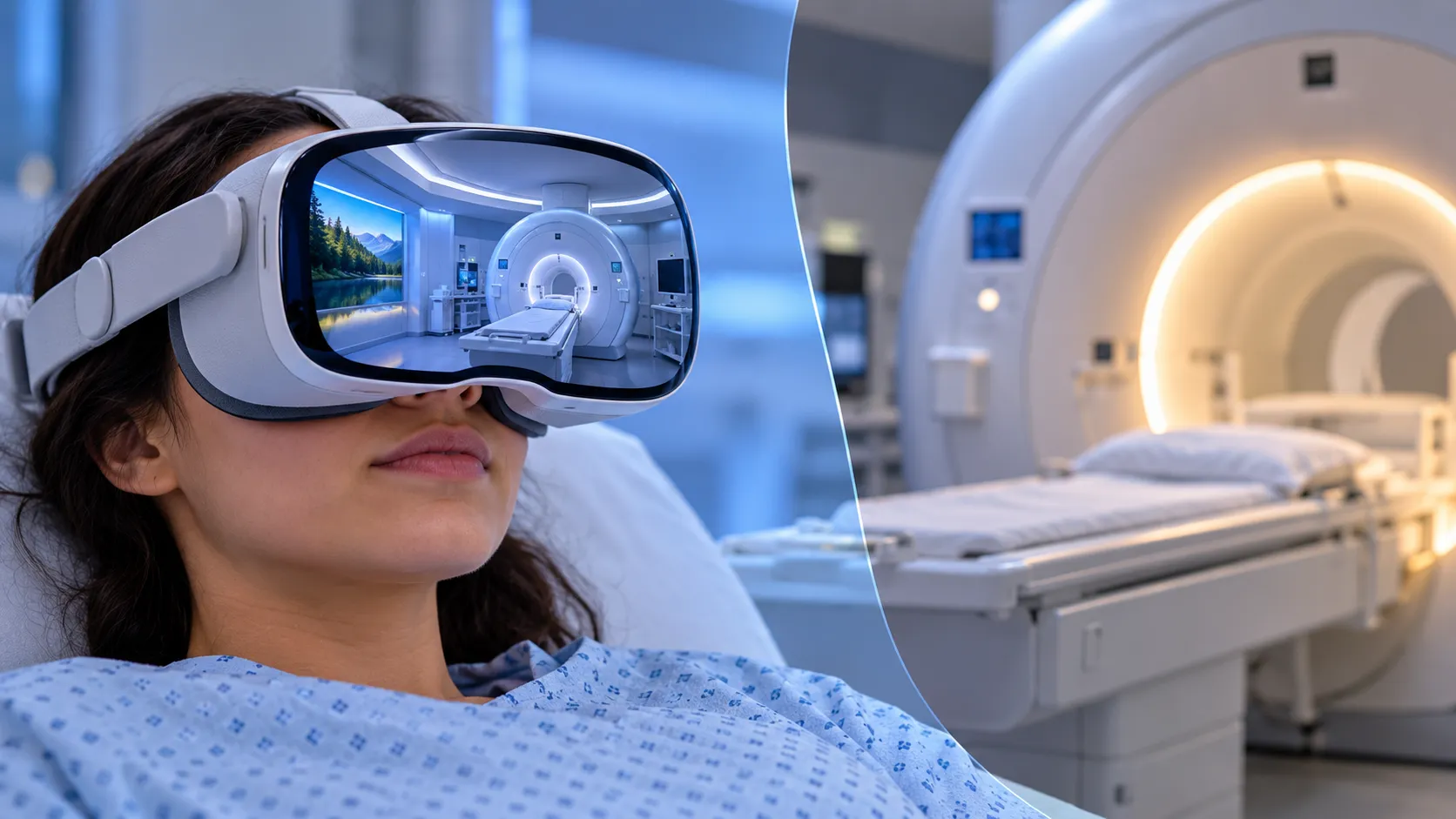
The use cases best matched to what smell actually delivers are not the ones generating the loudest announcements. Training and rehabilitation need exactly what olfactory VR demonstrably provides: modest but repeatable gains in how real a controlled environment feels, in settings where scent selection can be managed precisely.
Scentient explicitly targets professional training, citing the ability to add smoke, fuel, or chemical odors to emergency response simulations, per heise online. This is the strongest fit with the available evidence. Training scenarios benefit from even incremental presence gains, run in controlled environments where scent selection is manageable, and justify enterprise pricing that consumer gaming cannot.
The Liu et al. Nature Communications wearable study added a useful data point: participants using the device for olfactory training reached a 70 percent odor recognition rate after one hour of practice, versus 41 percent in a control group. The same study recorded small but measurable improvements in anxiety self-reports across three training sessions, per Liu et al., Nature Communications, May 2024. Early-stage results from a single lab, but they cohere with the rehabilitation use case.
An exploratory Scientific Reports study from March 2025 ran 30 adults aged 63–90 through two sessions of an olfactory VR game using a Meta Quest 3. Visuospatial rotation scores and word-location memory recall improved; broader cognitive measures and olfactory identification scores did not change, per Scientific Reports, March 2025. With 30 participants and an explicitly exploratory design, this is a signal worth tracking. The researchers describe it as the first systematic examination of this type of intervention in older adults.
Consumer gaming wants drama. Professional applications can use subtlety, and that distinction matters when evaluating where the current technology actually belongs.
Ready hardware, unready ecosystem
The hardware bottleneck is largely cleared. A 70-millisecond response time is fast enough to feel synchronized with visuals; commercial accessories are shipping on schedule. But the novelty-fade effect from the Resident Evil 7 study where physiological responses disappeared on repeated playthroughs remains an open warning that presence gains may depend partly on encountering smell in VR for the first time, per Archer et al., PLOS ONE, 2022. Sustained benefit at scale has not been established.
The strongest, most consistent finding across the research is that scene-matched odors raise perceived presence and pleasantness. The weakest, least supported claims are around memory enhancement and emotional transformation, per Barkat-Defradas et al. and Archer et al.. Developers and enterprise buyers should calibrate accordingly.
At £850, the market for this technology is professional for now. The device exists. The platform around it the scent libraries, authoring standards, hygiene protocols, and developer tooling that would make a virtual reality scent system routine rather than remarkable does not yet.

Comments
Be the first, drop a comment!