


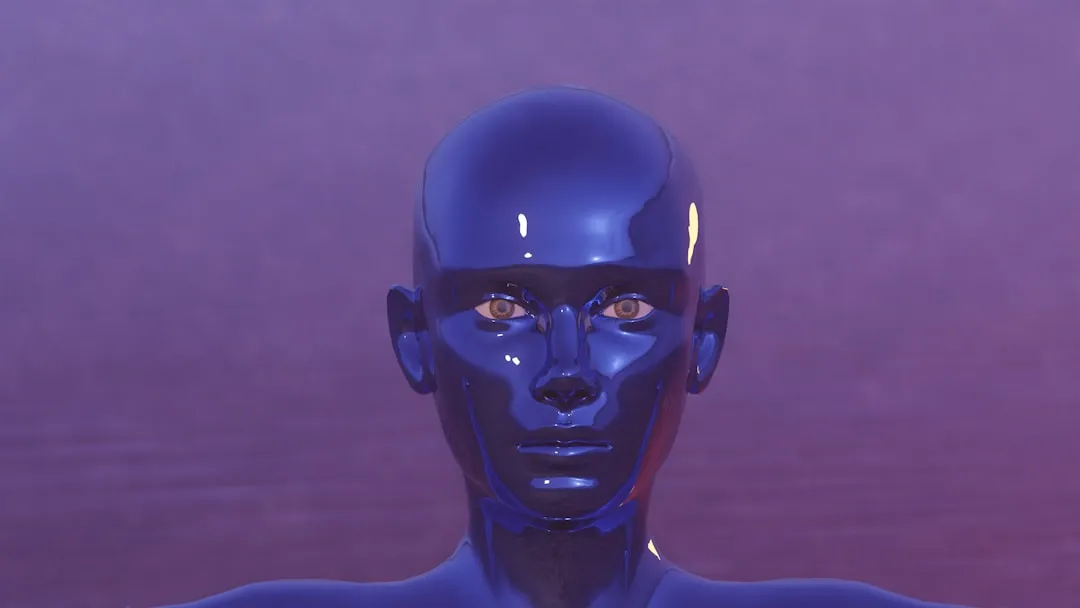
The promise of conversing with history's greatest minds has leapt from science fiction into tangible reality. At CES 2025, Ailias unveiled AI-powered holographic avatars that let users engage in real-time dialogue with figures like Isaac Newton—rendered as life-sized, three-dimensional projections you can walk around and interact with naturally. Wired reports that the technology combines large language models with volumetric display systems to create what the company calls "the most realistic hologram avatars ever created."
This isn't just another chatbot with a fancy interface—it's a convergence that solves three previously separate challenges: making AI responses feel embodied, creating shared experiences without headsets, and enabling spatial interaction with digital information. The system represents a significant step toward making extended reality interfaces feel less like strapping screens to your face and more like augmenting the physical world around you.
As holographic displays mature and AI models grow more sophisticated, understanding the technical realities, practical limitations, and ethical considerations of these avatar systems becomes essential for anyone tracking the future of human-computer interaction.
How "hologram" technology actually works in practice
Here's the thing about the word "hologram"—it gets thrown around liberally in consumer tech, often describing things that aren't technically holograms at all. Ailias's system employs what's more accurately described as a volumetric display stack. According to Wired, the avatars are projected using a combination of high-refresh-rate displays and specialized optics that create the illusion of a three-dimensional figure occupying physical space.
Unlike true holograms that manipulate light interference patterns (the kind you might remember from physics class), these systems typically layer multiple display planes or use light-field technology to generate depth cues your brain interprets as volume. Think of it as a sophisticated trick that leverages how your visual system processes spatial information. The result? A figure you can view from different angles without wearing headsets—Wired notes users can walk around the projection and see perspective shifts just as they would with a real person.
The display hardware must refresh quickly enough to maintain the illusion as users move—your brain needs to see perspective shifts happen in real-time, or the illusion collapses entirely. This demands significant processing power for real-time rendering as the system constantly recalculates what you should see from your changing viewpoint. Ailias positions the technology as suitable for educational institutions, museums, and eventually home environments, though the current implementation likely requires controlled lighting and positioning to maintain visual fidelity. These environmental constraints explain why Ailias targets institutional settings first—unlike headsets that create their own controlled visual environment, volumetric displays must compete with ambient conditions, from fluorescent classroom lighting to afternoon sun streaming through museum windows.
On-device inference versus cloud processing trade-offs
Every conversational turn with a holographic Newton involves a complex dance between local and remote computation. The Wired coverage indicates that Ailias's avatars are powered by large language models, but the article doesn't specify whether inference runs locally or in the cloud—a distinction that dramatically impacts latency, privacy, and scalability.
Cloud-based processing enables access to frontier models with hundreds of billions of parameters, delivering more nuanced responses and deeper subject-matter expertise. But there's a catch: network latency that can disrupt the natural flow of conversation. Even a half-second delay between your question and the avatar's response creates an awkward pause that undermines the illusion of natural dialogue.
On-device inference using smaller, quantized models keeps data local and reduces lag to imperceptible levels, yet may produce less sophisticated responses or struggle with complex historical context. Wired reports that the system aims for natural, real-time dialogue, suggesting Ailias has likely engineered latency below the threshold where users perceive awkward pauses—possibly through a hybrid approach where small models handle conversational flow and turn-taking locally while cloud models fill in knowledge-intensive responses during natural pauses.
The rendering pipeline compounds the inference challenge—generating text is only half the battle. That text must drive facial animations, gestures, and lip-sync in real-time, effectively doubling the computational budget. The system needs either pre-animated sequences triggered by semantic tags or real-time animation systems that interpret the model's output and drive a digital puppet rig with convincing expressions and body language that match the AI's tone and content.
Interaction design challenges in holographic interfaces
Designing intuitive interactions for a holographic avatar demands rethinking conventions established by decades of screen-based computing. As Wired describes, users can walk around Ailias's avatars and view them from multiple angles, creating spatial relationships impossible with traditional displays. This freedom introduces questions about eye contact, personal space, and conversational cues that we've never really had to solve for digital interfaces before.
The tracking choice fundamentally shapes the experience: a statue-like avatar positions you as observer, while active tracking creates the intimacy—and potential discomfort—of genuine social presence. Does Newton turn to face you as you circle him, maintaining eye contact like a real conversation partner? Or does he remain fixed in orientation, speaking to whoever stands in front while others observe from the side?
If the avatar does track position, it must also master the subtle non-verbal signals that make conversation feel natural: slight head tilts indicating listening, hand gestures emphasizing points, shifts in posture showing engagement. The system aims for realism, which means animating these micro-behaviors convincingly enough that users suspend disbelief and engage as they would with another person.
Beyond visual cues, audio spatialization becomes the invisible foundation of presence. Newton's voice must appear to originate from the hologram's location and shift as you move around it, requiring multi-speaker arrays or beamforming technology. You know how eerie it feels when someone's voice doesn't match their location in a video call? That disconnect becomes jarring when the mismatch involves a supposedly physical presence in your space—your brain will reject the entire visual illusion if the audio positioning fails.
Ailias envisions educational applications where students might gather around a holographic lecturer. This raises questions about multi-user scenarios that screen interfaces never face: can multiple people interact simultaneously, or does the avatar focus on one primary user while others observe? Does everyone hear the same responses, or does the system somehow personalize audio for different listeners? The difference between a lecture and a conversation becomes critical when spatial presence transforms how we relate to the interface.
Intellectual property and likeness rights in avatar creation
Resurrecting Isaac Newton as a conversational hologram navigates murky legal and ethical territory around digital likeness and personality rights. Wired's coverage mentions Newton specifically but doesn't detail how Ailias sources biographical data, physical appearance, or speaking style.
Historical figures long deceased exist in the public domain for factual representation, which makes Newton a relatively safe choice. But creating an interactive avatar involves creative interpretation—choosing what Newton "would" say about modern physics or how he'd react to contemporary questions. This interpretive layer potentially creates new copyrightable or trademarkable elements: the specific personality, speech patterns, and knowledge base become Ailias's creative work, even if Newton himself is public domain.
The training data for these AI personalities likely draws from historical texts, biographies, and scholarly analysis, raising questions about whose interpretation of Newton users actually experience. Different historians emphasize different aspects of Newton's personality and work—and for figures from marginalized communities, these interpretive choices carry additional weight, potentially perpetuating stereotypes or erasure if not carefully researched. Is this Newton the brilliant mathematician, the obsessive alchemist, the notoriously difficult colleague, or some sanitized synthesis that smooths away historical complexity?
For more recent historical figures or living people, personality rights and publicity rights create legal barriers. You can't simply create a holographic Einstein or Stephen Hawking without navigating estate permissions and licensing. The technology's educational positioning suggests Ailias may focus on figures whose likeness and legacy have fewer legal encumbrances, but as the platform expands, intellectual property negotiations will become increasingly complex, particularly when estates control both likeness rights and derivative work permissions.
Hallucination risks when simulating historical expertise
Now here's where things get potentially problematic. Large language models excel at generating plausible-sounding text but struggle with factual accuracy—a particularly dangerous trait when users seek educational value from historical avatars. The system uses AI to power conversations, meaning Newton might confidently explain concepts he never actually developed or misstate his own discoveries.
LLMs trained on vast internet corpora absorb both accurate scholarship and popular myths, making them prone to blending fact with fiction in ways that sound authoritative. It's like that friend who's confidently wrong about everything but delivers misinformation with such conviction you almost believe them. A student asking holographic Newton about his work on optics might receive a response mixing genuine historical insights with anachronistic phrasing or concepts Newton wouldn't have known, creating subtle educational hazards.
The hallucination problem intersects with the interpretation question from earlier—when holographic Newton misspeaks, is it an AI error or Ailias's scholarly interpretation? Users can't tell the difference, which means they can't calibrate their trust appropriately. Retrieval-augmented generation can reduce hallucinations by grounding responses in verified historical documents, but this creates a new tension: should Newton only discuss concepts documented in his actual writings, or should he extrapolate to modern questions, risking anachronism for relevance?
Ailias positions the avatars for educational use, which demands higher accuracy standards than entertainment applications. Schools and museums need to trust that the information these avatars provide is reliable. The immersive, realistic presentation may actually worsen the problem—users might trust a life-sized, spatially present Newton more than text on a screen, even though both originate from the same fallible language model. Institutions deploying these systems need clear disclaimers about the AI nature of responses, verification mechanisms for critical information, and perhaps even real-time fact-checking overlays that flag uncertain claims.
Privacy and safety considerations in conversational avatars
Every question you ask holographic Newton potentially feeds data back into systems that profile your interests, knowledge gaps, and learning patterns. Wired's reporting doesn't detail Ailias's data collection or retention policies, but conversational AI systems typically log interactions for model improvement and user analytics.
The cloud-versus-local inference trade-off from earlier isn't just about latency—it's fundamentally a privacy architecture decision. Cloud processing means every question flows through external servers, creating logs of who asked what, when, and in what context. In educational settings, this creates student privacy concerns that schools take seriously (or should, anyway). Are conversations anonymized? How long is data retained? Who has access? If a student asks Newton about physics concepts they're struggling with, does that information get shared with teachers, parents, or third-party analytics companies?
The technology's home ambitions raise the stakes further. A holographic avatar in your living room becomes an always-available listening device if not carefully designed with privacy safeguards. It's the smart speaker privacy debate, amplified by the psychological presence of a three-dimensional figure in your space making the surveillance feel even more personal.
Content moderation presents another challenge. Users might attempt to manipulate historical avatars into generating harmful content, test their boundaries with inappropriate questions, or use them to spread misinformation by selectively sharing AI-generated "quotes" from respected figures. The realistic presentation makes these avatars potent tools for both education and manipulation. Imagine a deepfake quote, but instead of a video, it's someone claiming they asked holographic Newton a question and received a specific answer—complete with the authority of interacting with a "physical" presence.
Child safety protocols become essential if the technology reaches homes. The system must account for the avatar's physical presence in ways traditional interfaces don't—unlike a phone screen that signals "device interaction," a holographic figure in your home might feel like a person to young children, creating attachment or trust that could be exploited. How does the system prevent inappropriate interactions? What mechanisms restrict access to age-inappropriate content? Can parents monitor or limit conversations without violating student privacy principles? These questions demand answers before holographic avatars enter family spaces.
Where holographic avatars fit in the emerging XR ecosystem
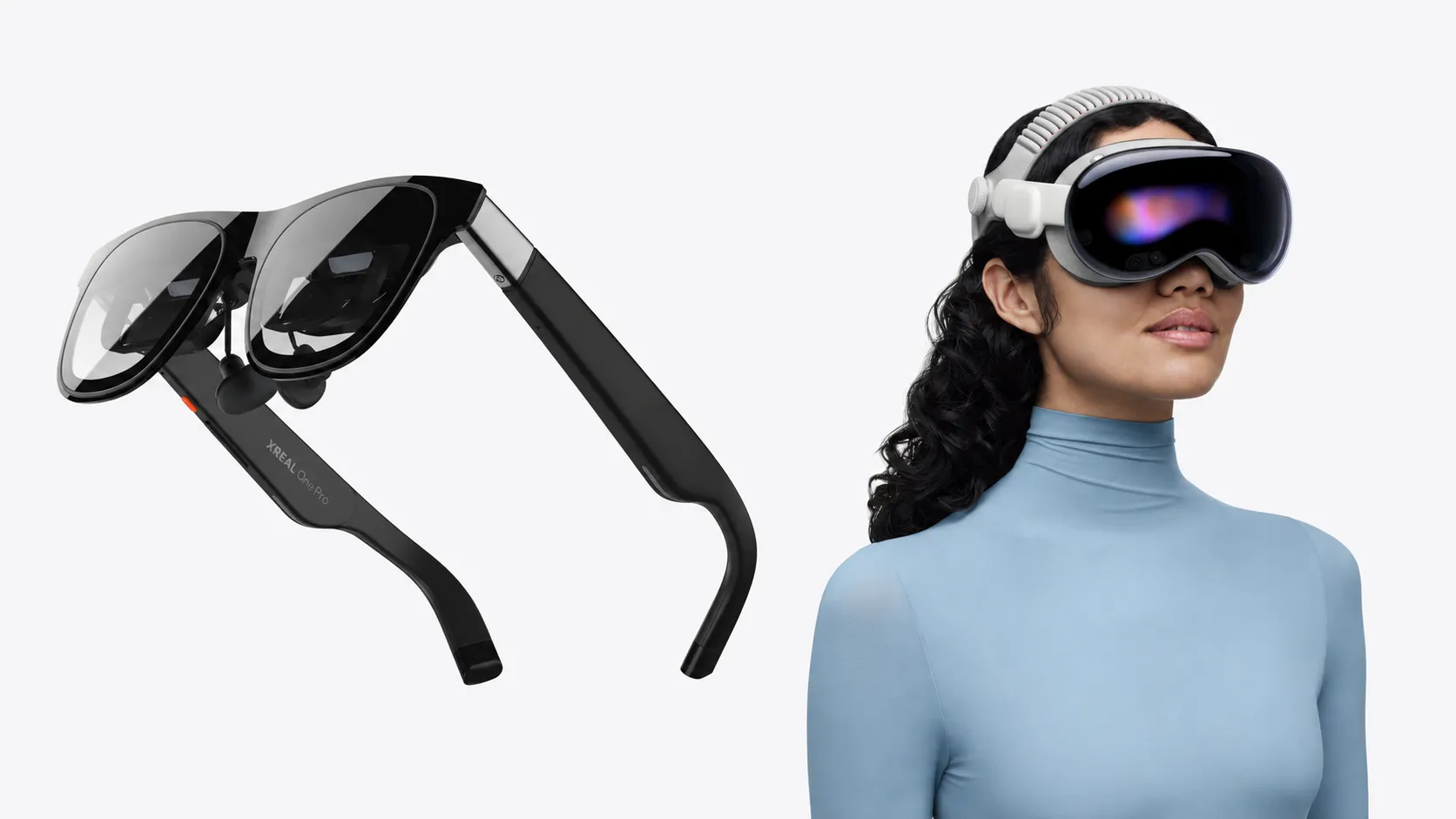
Ailias's technology occupies a fascinating position between traditional extended reality and ambient computing paradigms. Unlike VR headsets that immerse users in fully digital environments, or AR glasses that overlay information on your vision, these volumetric displays augment shared physical spaces without requiring personal wearables.
This approach sidesteps current XR limitations—no headset discomfort, no social awkwardness of wearing face computers, no isolation from others in the room. You can have multiple people experiencing the same holographic avatar simultaneously without distributing and managing a dozen headsets. The system's educational focus positions it as complementary to rather than competitive with headset-based learning experiences. Imagine a museum exhibit where groups gather around a holographic Marie Curie for shared context, then individual visitors don AR glasses for deeper, personalized exploration that builds on the group experience.
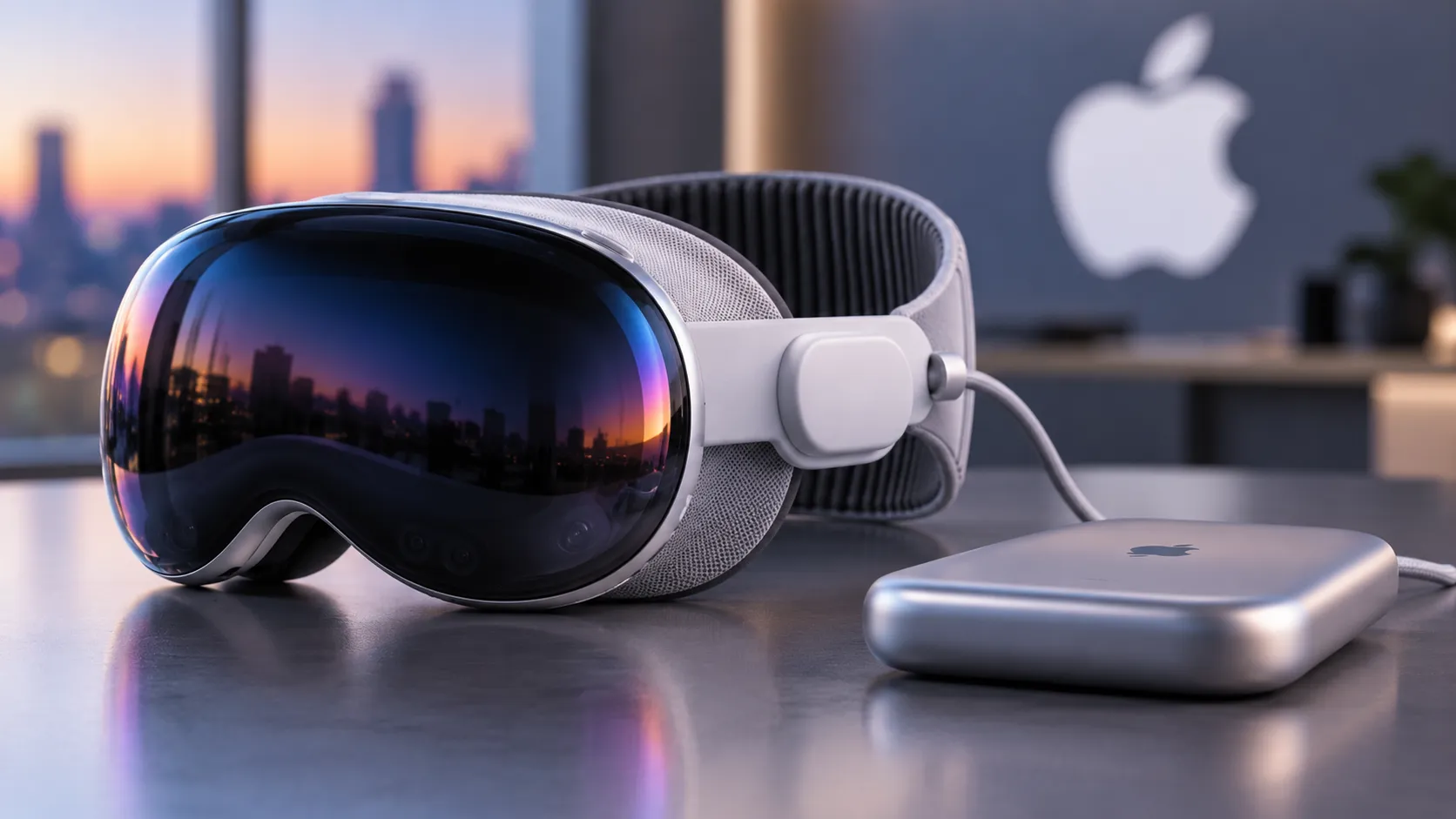
This complementary rather than competitive positioning may be Ailias's smartest strategic move—instead of fighting Meta and Apple in the headset wars, they're creating a new category that solves problems headsets can't: shared, glasses-free experiences that feel like augmenting physical space rather than escaping into digital realms.
The refresh rate, rendering pipeline, and display optics discussed earlier translate into significant hardware requirements—equipment cabinets, calibrated optics, and environmental controls that make the total package closer to a projection system than a consumer appliance. Ailias's vision includes eventual home use, which would require dramatic miniaturization and cost reduction—the kind of engineering progression that typically takes years or decades, not months. The conversational AI component faces competition from increasingly capable voice assistants and chatbots, but the physical presence and spatial interaction may create enough differentiation to carve out a distinct market niche for applications where embodiment and co-presence matter: education, companionship, professional consultation, and entertainment.
What this means for the future of learning and interaction
Ailias's holographic avatars represent more than a clever technical demo—they signal a broader shift toward interfaces that meet us in physical space rather than demanding we enter digital realms. The technology combines AI language models with volumetric displays to create experiences that feel fundamentally different from screen-based interaction, potentially transforming how we access expertise and engage with information.
Educational institutions could deploy these systems to bring historical figures, scientific concepts, and cultural experiences into classrooms without the friction of headset distribution and management. Imagine a history teacher who can invite Lincoln into the classroom to discuss not just the Civil War's events, but his personal struggles with the decisions he faced—the avatar fielding student questions about leadership, moral compromise, and the weight of consequence in ways that static textbook quotes never could. Museums might create interactive exhibits where visitors converse with artists about their creative process or historical figures about their eras, transforming passive observation into active dialogue that adapts to each visitor's curiosity.
Yet realizing this potential requires solving a three-way tension that runs through every section we've explored: the more realistic and convincing these avatars become, the more critical accuracy and transparency become—yet the technical solutions that ensure accuracy (like retrieval-augmented generation) may slow responses enough to break the conversational illusion that makes the experience compelling in the first place. Add privacy protections that prevent surveillance, and you're constraining the very data collection that could improve response quality. Build in content moderation that prevents misuse, and you risk making interactions feel scripted rather than natural.
The challenges aren't isolated technical problems—they compound and interact. The cloud infrastructure that enables sophisticated responses creates privacy risks. The realistic presentation that makes avatars engaging amplifies the danger of hallucinated misinformation. The spatial presence that creates emotional connection raises the stakes for child safety. Making the technology accessible enough to democratize expertise means potentially losing the institutional controls that could ensure responsible use.
The system's realistic presentation creates both opportunities and responsibilities that demand new frameworks for thinking about authenticity, authority, and the nature of conversation itself. What does it mean to "talk to" Isaac Newton when you're really talking to an AI model trained on texts about Newton? At what point does the distinction matter less than the educational or emotional value of the experience?
These aren't just philosophical questions—they're practical considerations that will shape how we deploy, regulate, and ultimately relate to technologies that bring the digital into our physical spaces in increasingly embodied ways. The line between interacting with information and interacting with beings blurs in ways that expose tensions in everything we've discussed: we want avatars realistic enough to feel present, but not so convincing they mislead; personalized enough to engage, but not so data-hungry they surveil; accessible enough to democratize, but not so uncontrolled they enable misuse.
As this technology matures, the most important developments won't be incremental improvements to display resolution or response speed—they'll be the governance frameworks, transparency standards, and ethical guidelines that determine whether holographic avatars become powerful educational tools or sophisticated deception engines. The technical capability to resurrect historical figures as conversational partners is here. Whether we deploy that capability responsibly will depend on choices we make now, while the technology is still young enough to shape rather than simply react to.



Comments
Be the first, drop a comment!