


Apple smart glasses leak: why no AR display is the right call
The headline finding from Bloomberg's Mark Gurman that Apple's first smart glasses will have no in-lens display keeps getting reported as a limitation. It isn't. Judged against the actual competitive landscape, the latest Apple smart glasses leak describes something more interesting than another AR headset: a mass-market eyewear play designed to compete with Ray-Ban and Warby Parker as much as with Meta.
What Gurman's reporting describes, across a February dispatch and follow-up coverage in April, is a product built around cameras, microphones, speakers, and a direct iPhone connection no display, no floating overlays, none of the optical engineering tradeoffs that come with projecting light into someone's field of vision (MacRumors reported this in April; the original Bloomberg reporting is archived at bloomberg.com). Apple is reportedly targeting the broader global eyewear market a $180–200 billion industry not just the XR niche, per Gurman's reporting relayed by The Verge this past weekend. That reframe changes the product entirely. Apple isn't building a gadget for early adopters. It's building a pair of glasses people might actually want to wear every day.
The argument here is specific: the leak is exciting because the reported strategy prioritizes three things AR showpieces historically ignore mass-market wearability, daily usefulness, and product realism. Everything below is analysis of what these leaks reveal about Apple's likely strategic direction, not a declaration of confirmed specs. But if the reporting holds, the logic is sound.
Apple also appears to be treating the screen-free glasses as generation one of a longer arc. A true AR-display version remains many years from consumer readiness, Bloomberg reported earlier this year. The first product isn't a compromise forced by technical limitations. It's a foundation and whether it's a strong one comes down to four tests addressed at the end.
What the Apple smart glasses leak actually says
Strip away the speculation and Gurman's reporting is unusually concrete for a product still in prototype. The glasses, internally coded N50, use a dual-camera system: one lens for high-resolution photos and video, and a second dedicated to computer vision for environmental context, using spatial-sensing technology similar to what Apple built into Vision Pro (Bloomberg, reported in February). That second sensor is designed to give the device environmental context and measure distance between objects a hardware distinction from Meta's current Ray-Ban lineup. Whether that translates into meaningfully better real-world performance is a separate question the reporting doesn't answer.
The interface is entirely audio-based. Siri handles output through built-in speakers; cameras feed visual context to Apple Intelligence for real-time assistance. The reported use cases are deliberately ordinary: walking directions anchored to real-world landmarks rather than generic turn instructions, reminders triggered by what the wearer is looking at, printed text captured from a poster and added directly to a calendar (Bloomberg). Whether Siri can do any of this reliably is another matter, but the use cases at least fit the form factor. These are things that slot into how people actually move through a day.
That's the point most AR coverage misses. The advantage of putting a camera and microphone on someone's face isn't display real estate it's persistent, effortless, ambient awareness. Glasses are already pointed at the world. An in-lens overlay competes with what you're already looking at. Audio-plus-vision assistance, done well, doesn't compete with anything.
On design, Apple moved away from an earlier plan to partner with an established frame maker and chose to develop its own frames in-house, in multiple sizes and colors including black, ocean blue, and light brown (Bloomberg; MacRumors). That decision signals something beyond stylistic variety: Apple has decided that frame design belongs in the same category as industrial design on any other product it makes. For a device someone wears on their face all day, that instinct is correct.
The eyewear play: Apple's real ambition is bigger than XR
Apple's internal target, according to Gurman's reporting, isn't Meta's Ray-Ban share. It's the person shopping for a new pair of glasses the company reportedly believes that brand strength, industrial design, and tight iPhone integration can persuade ordinary eyewear buyers to choose Apple over a conventional frame (The Verge).
The market math makes that ambition legible. The global watch market is worth roughly $132 billion annually per Mordor Intelligence, and Apple Watch generates an estimated $17 billion of that (The Verge). The global eyewear market sits between $180 and $200 billion annually (The Verge). A mass-market glasses play doesn't need to capture a large slice of that number to dwarf what Apple could ever extract from XR enthusiasts. Even modest penetration of conventional eyewear buyers people choosing a frame, not a spatial computer opens a market far larger than anything in consumer XR.
Apple also holds structural advantages that tend to get underweighted. The company has over 2 billion active devices in the field and a global retail footprint that gives it in-store presence at scale (The Verge). For a product category where try-on is essential and brand trust is everything, that retail infrastructure is a genuine edge one no hardware startup, and not even Meta, can easily replicate.
Apple also appears to have absorbed the right lesson from its own failure. The $10,000 gold Apple Watch found neither the luxury market it targeted nor a mass one, and Apple reportedly has no plans to compete in the ultra-premium eyewear segment, leaving that to Cartier and Matsuda (The Verge). Multiple frame sizes, accessible colorways, in-house design this is the Watch playbook applied to a bigger market.
IDC analyst Jitesh Ubrani put the challenge plainly last December: convincing someone without a prescription to wear glasses all day is harder than getting them to wear a watch or carry a phone, and brands that fail on design, battery life, or app ecosystem will struggle regardless of AI capabilities (IDC via Next Reality). Apple's reported design choices suggest the company has heard that warning.
Apple glasses vs Meta Ray-Ban: where the advantage shifts
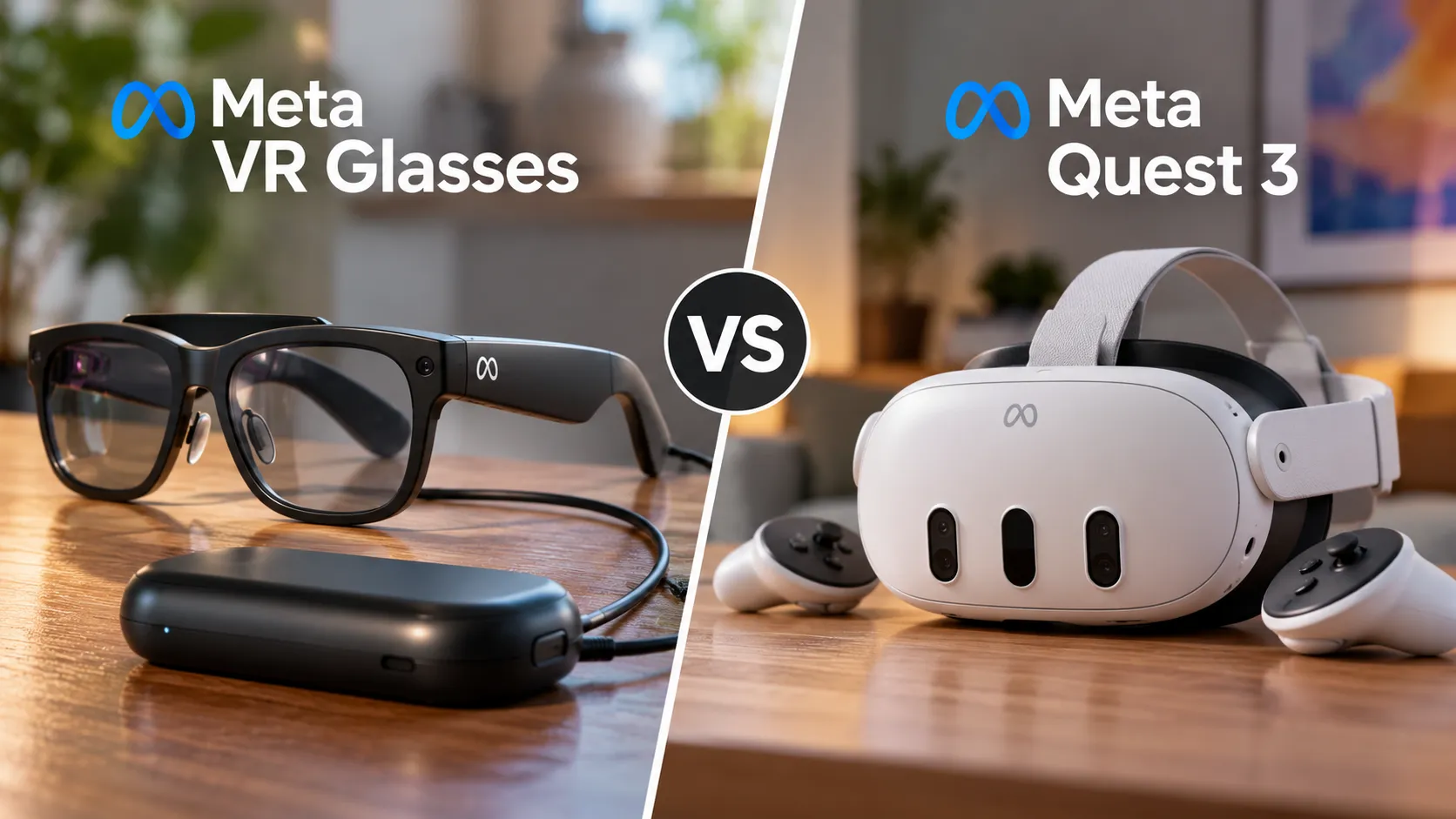
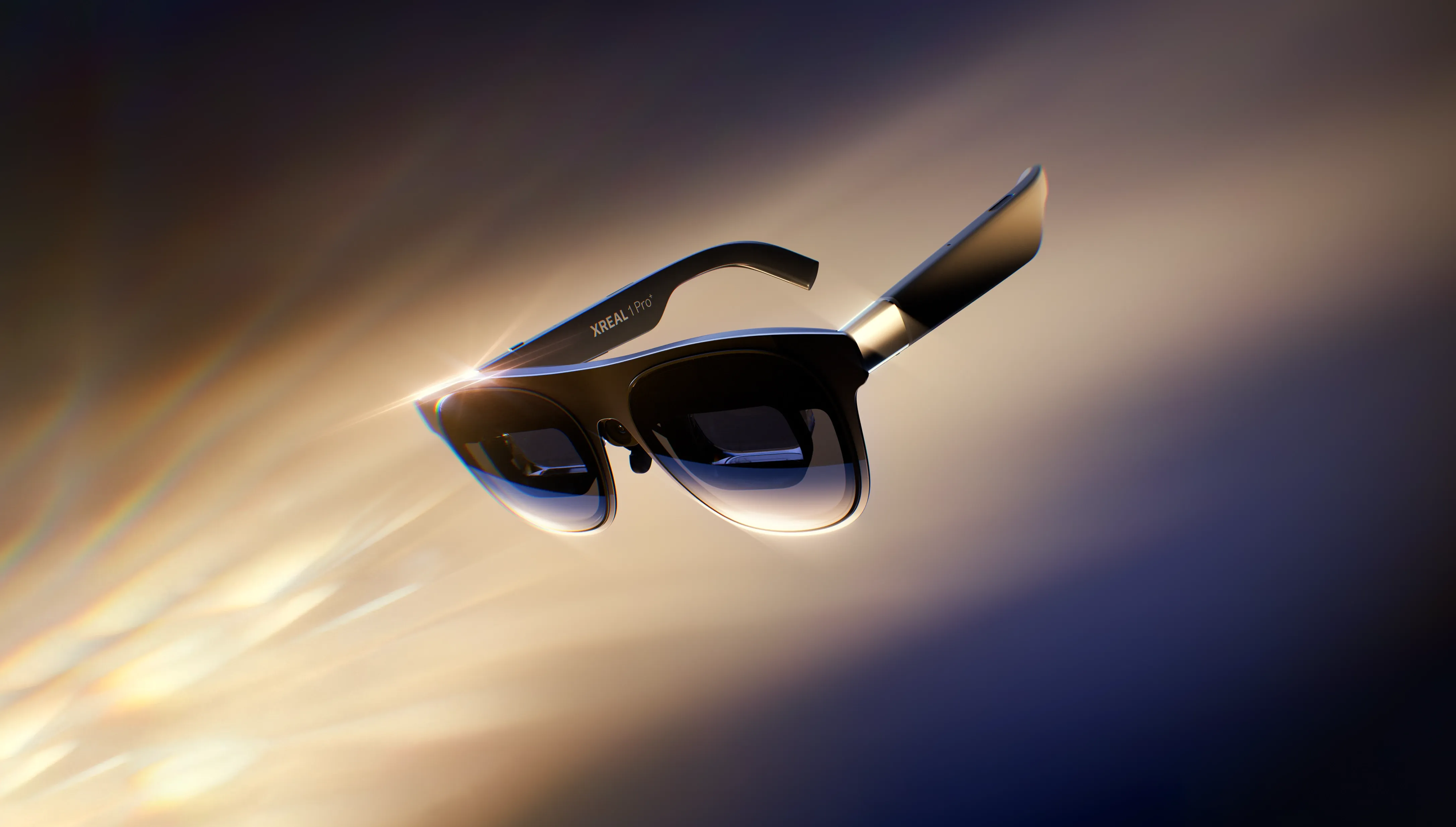
The counterargument to Apple's prospects deserves honest treatment. Meta holds 72% of the current smart glasses market, supported by its EssilorLuxottica partnership, an expanding frame portfolio that now includes Oakley-branded models, and years of consumer conditioning (IDC via Next Reality). Counterpoint Research put Meta's share even higher at 82% in the second half of 2025 (Counterpoint Research). Xiaomi sits at 4.2% of the market, XREAL at 2.3%, Viture at 1.5% (IDC via Next Reality). Meta isn't barely ahead. It built the category.
Category leadership in year three doesn't guarantee platform control in year ten, though, and Meta's current position carries liabilities that compound. A Swedish media investigation found that Meta subcontractors in Kenya were data-labeling footage captured through Ray-Ban glasses, including recordings of bathroom visits, sex, and personal financial details. A separate report confirmed that the recording indicator LED can be easily disabled with no visible consequence for the wearer (Next Reality). Meta's proposed "Name Tag" feature which would use the glasses' camera to identify people in view and surface personal data about them has drawn a formal FTC investigation request from the Electronic Privacy Information Center, letters from more than 60 civil society organizations led by the Consumer Federation of America and UltraViolet Action, and a separate letter from U.S. senators asking Meta to explain its consent and biometric data practices (Next Reality). As Biometric Update noted, faceprinting everyone who steps into camera range including bystanders with no relationship to Meta isn't a consent design problem. It's an architectural one with no clean fix.
Apple's privacy practices around smart glasses remain largely unspecified in the available reporting. Recording indicators, bystander handling, on-device versus cloud processing are all open questions, and those answers matter. But Apple enters this space with a business model that doesn't depend on advertising and a brand its own users associate with privacy. IDC drew the analogy explicitly: this situation resembles the smartphone platform battles of the late 2000s and early 2010s, with Apple and Google bringing "expertise, applications, and an installed base of users" that Meta lacks (IDC via Next Reality). Market share at launch is a starting point, not a prediction.
The market is moving toward lighter glasses, not heavier headsets
Apple's reported timeline production starting as early as December, ahead of a public release in 2027 lands at a specific moment in the category's trajectory (Bloomberg). Global XR shipments grew 44.4% year-over-year in 2025, but VR headsets actually fell 42.8% in shipments. The rest of the XR market, led by screen-free AI glasses, grew 211.2% in the same period (IDC via Next Reality). Counterpoint Research separately measured global smart glasses shipments growing 139% year-over-year in the second half of 2025 alone (Counterpoint Research).
Consumers are choosing lighter, AI-enabled glasses over bulky immersive hardware. Apple's reported product is exactly that kind of device. By 2027, IDC projects that display-enabled glasses will surpass VR and MR headsets in total unit volume as the category moves from audio-first AI companions toward something closer to a visual computing platform (IDC via Next Reality). Apple's screen-free first generation fits the market as it exists today. A true AR product, by the company's own admission, remains many years from readiness and would arrive behind the technology curve and ahead of consumer demand simultaneously.
The Vision Pro launched into a headset market that was about to crater. The smart glasses launch, if the timeline holds, enters a category already in expansion.
What would make or break these glasses
Reframing the product from "disappointing AR glasses" to "serious mass-market eyewear play" is warranted by the evidence. But that thesis has real preconditions.
Four tests will determine whether the strategy holds. First, prescription support: most people who wear glasses every day need corrective lenses. Apple has not disclosed any plan to address this, and without it, the mainstream-eyewear ambition is largely inaccessible to the buyers most naturally suited to the product. Second, weight and battery life: IDC flagged this directly, and the challenge is real asking someone to wear a tech-embedded frame all day is a harder proposition than a watch, and it gets harder still if the device needs charging every few hours. Third, privacy implementation: Apple needs to specify publicly, before launch, how it handles recording indicators, bystander data, and on-device processing. The category already has a trust problem that Meta created; silence isn't a credible response. Fourth, price: the eyewear-market ambition depends on accessibility. A Vision Pro price point competes in a different universe than a mid-tier Apple Watch.
Secondary unknowns retail channel strategy, specific frame weights, the exact split between on-device and iPhone-side Siri processing matter less to the overall strategy than those four issues, but they will shape whether the product feels finished at launch rather than merely promising.
Pass those four tests and the strategic logic holds. Apple is building a pair of glasses people might actually wear, targeting a market far larger than XR, arriving at the moment the category finally outgrows headsets. The absence of an AR display isn't the reason to temper enthusiasm. It's the reason to take the product seriously.




Comments
Be the first, drop a comment!