


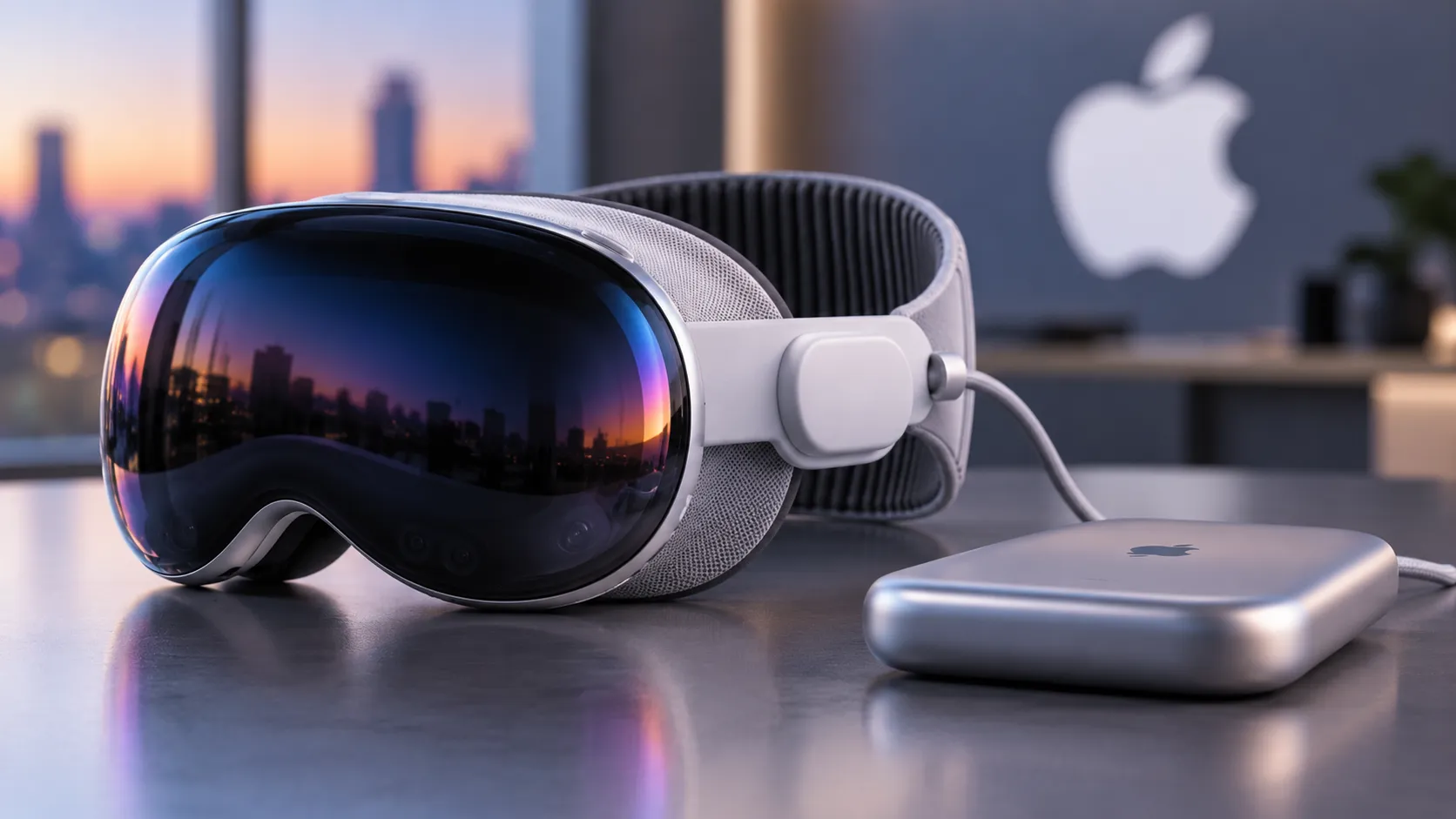
Apple's immersive content strategy just got a major upgrade, and it's exactly what the Vision Pro has been waiting for. The tech giant is doubling down on premium experiences with a comprehensive rollout of new series and films designed exclusively for their mixed reality headset.
Now here's what makes this particularly interesting—Apple's immersive video format isn't just another streaming experiment. We're talking about cutting-edge 3D recording technology that captures content in 8K resolution with a 180-degree field of view, all enhanced by Spatial Audio to create genuinely transportive experiences. Unlike traditional VR content that often sacrifices visual fidelity for immersion, Apple's technical specifications promise cinema-quality visuals that could finally bridge the gap between premium entertainment and accessible immersive media.
This content expansion couldn't come at a more critical time. The $3,499 headset has faced its share of challenges, with mixed reviews regarding its weight, visual quality, and limited content library. What's strategically brilliant about Apple's timing is their recognition that superior technical specs alone wouldn't drive mass adoption—they needed to solve the fundamental "why should I wear this?" question. That's why they've been actively courting Hollywood talent since last year, recruiting directors and creatives to develop exclusive content that transforms the headset from an expensive gadget into an essential entertainment device.
What's launching in Apple's content offensive?
The content rollout represents Apple's most ambitious push into immersive entertainment yet, but what's particularly strategic is how each series targets a different motivation for putting on the headset. Leading the charge is Boundless, a new series that promises to deliver virtual once-in-a-lifetime travel experiences. The series kicks off with "Hot Air Balloons," and from what Apple describes, it's designed to make you feel like you're actually floating above stunning landscapes rather than sitting in your living room.
This addresses a key user psychology challenge: many potential buyers struggle to justify the premium price for gaming or productivity features they can get elsewhere. But offering experiences that are literally impossible to replicate through traditional media? That's a value proposition worth the investment.
Nature enthusiasts have something special to look forward to as well. The next installment of Wild Life premieres this August, promising to bring viewers face-to-face with charismatic wildlife in their natural habitats. If you've ever wanted to feel like you're standing inches away from a lion without the whole "becoming lunch" concern, this might be your chance.
For those who prefer their adventures at altitude, Elevated launches in September with an aerial travel series that transports users to breathtaking vistas from incredible heights. Think of it as the ultimate drone footage experience, but one where you're actually present in the moment rather than watching it on a flat screen.
What's smart about Apple's approach here is how this variety creates multiple entry points for different user interests while building toward a comprehensive library that justifies regular headset use—solving the adoption challenge one niche at a time.
Breaking new ground in entertainment formats
Here's where Apple's strategy gets genuinely innovative—they're not just playing it safe with traditional documentary content, but systematically testing how different entertainment formats translate to immersive experiences.
Music fans are in for a treat with exclusive performances from major artists. The lineup begins with an immersive concert experience featuring The Weeknd later this year. Now, we've all seen concert films before, but imagine being able to position yourself anywhere in the venue—front row, backstage, or even on stage with the performer. This format could fundamentally change how artists connect with fans, creating intimate experiences that command premium pricing while reaching global audiences.
Perhaps even more significant is Apple's venture into scripted content with Submerged, the platform's first scripted immersive short film. Crafted by Academy Award-winning director Edward Berger, this represents a major milestone in narrative immersive storytelling. The challenge here isn't just technical—it's reimagining how stories work when viewers can look anywhere. Success here could establish entirely new storytelling conventions for immersive media.
Sports content gets the immersive treatment too, and this format might offer the most natural fit. Behind-the-scenes access to the 2024 NBA All-Star Weekend promises perspectives that traditional broadcasting simply can't deliver. Add to that Big-Wave Surfing, the inaugural installment of a new sports series developed in partnership with Red Bull, and you've got content that could make viewers feel like they're riding alongside professional surfers on massive waves.
The Red Bull partnership is particularly strategic—they've built their brand on extreme experiences and death-defying stunts that most people will never attempt. Immersive video lets viewers experience that adrenaline rush without the actual risk, while potentially creating new revenue streams for extreme sports content that has traditionally struggled with monetization.
Empowering creators with professional-grade tools
Apple's recognition that they can't create all this content themselves has led to a sophisticated ecosystem strategy that could determine the platform's long-term viability. This is where their partnership with Blackmagic Design becomes crucial.
The introduction of the URSA Cine Immersive camera specifically designed for Apple Immersive Video production represents a significant investment in technical infrastructure, but more importantly, it signals Apple's commitment to making professional immersive video production accessible. Pair that with updated versions of DaVinci Resolve Studio and Apple Compressor, and you've got a complete professional workflow that integrates seamlessly with existing film production pipelines.
This infrastructure investment directly supports the content pipeline being developed by Chris Parnell, Apple TV+'s director of domestic programming, who's actively engaging with talent agencies, filmmakers, and producers. But here's what makes the timing particularly strategic: Apple is offering financial incentives to creators at a moment when traditional media companies have reduced spending and are focusing on safer, proven content formats.
This creates a unique opportunity window where Apple can attract top-tier talent who might otherwise be constrained by risk-averse traditional studios. For creators looking to experiment with cutting-edge formats, Apple's willingness to invest in unproven territory—backed by professional-grade tools—could establish the platform as the premium destination for immersive content innovation.
PRO TIP: If you're a content creator intrigued by immersive video, focus on concepts that leverage the format's unique strengths rather than adapting traditional content. Apple's investments suggest they're specifically looking for experiences that justify the premium hardware investment.
Global rollout meets accessibility challenges
Apple's distribution strategy reveals both ambitious global thinking and the practical realities of scaling immersive content. The immersive content will be accessible across Apple's expanding Vision Pro markets without additional cost through the Apple TV app in multiple regions including Australia, Canada, France, Germany, Japan, Singapore, the U.K., and the U.S.
The approach in China is particularly telling—users will access the content through localized platforms including Migu Video and Tencent Video apps rather than Apple's own TV app. This adaptation suggests Apple is willing to compromise on ecosystem control to ensure content accessibility, which could set important precedents for how immersive content gets distributed globally.
But here's where the strategy faces its biggest test: despite all this content investment, platform adoption barriers remain formidable. Major streaming platforms like Netflix and YouTube are notably absent from creating native Vision Pro applications. When industry leaders aren't fully committed to the platform, it creates a credibility gap that affects both content creators and consumers.
The hardware limitations compound these challenges in ways that could specifically impact content consumption patterns. Industry insiders have expressed concerns about the device's weight making it uncomfortable for extended viewing sessions, which means Apple's content strategy must account for shorter consumption periods. This could actually favor certain content formats—immersive concerts or travel experiences might work better than long-form scripted content, influencing how creators approach the platform.
The content gambit: Apple's long-term Vision Pro strategy
Apple's aggressive content push represents more than just filling up a content library—it's a calculated bet that premium immersive experiences can create sufficient value to overcome current hardware limitations and justify the ecosystem investment. And they've assembled impressive creative credibility to support this bet.
The company has secured endorsements from high-profile creators like James Cameron and Jon Favreau, who developed a dinosaur experience based on his "Prehistoric Planet" series for the platform. When filmmakers known for pushing technical boundaries are publicly supporting your platform, that carries significant weight in Hollywood circles and helps establish legitimacy for the format.
However, early market realities provide important context for these ambitions. Despite initial enthusiasm from partners like Disney, some interest has waned due to the device's limited user base. This highlights a fundamental strategic challenge: creating content compelling enough to drive hardware adoption while building a user base large enough to sustain content investment.
What's particularly interesting about Apple's content philosophy is how it reflects their broader ecosystem strategy. The company remains focused on family-friendly, non-controversial material that aligns with its broader consumer electronics brand. While this ensures brand consistency and protects their consumer electronics business, it also means Vision Pro content must succeed within more constrained creative parameters than platforms willing to push boundaries.
This strategic choice ultimately positions Vision Pro as the premium, family-focused option in immersive entertainment—not trying to compete on edginess or niche appeal, but rather establishing itself as the sophisticated choice for high-quality, accessible immersive experiences.
Looking at the broader competitive landscape, Apple's content strategy seems designed to establish market leadership through quality and production values rather than volume or variety. They're betting that superior technical execution combined with premium content partnerships will create enough differentiation to justify the hardware investment, even with a smaller initial user base.
The success of this strategy hinges on whether the content can consistently deliver experiences that feel genuinely transformative rather than merely impressive. The next few months will be crucial as this new content launches and more creators experiment with the format. If Apple can demonstrate that immersive content offers irreplaceable value—not just novelty—their content-first approach could establish the foundation for sustained growth in premium immersive entertainment.





Comments
Be the first, drop a comment!