


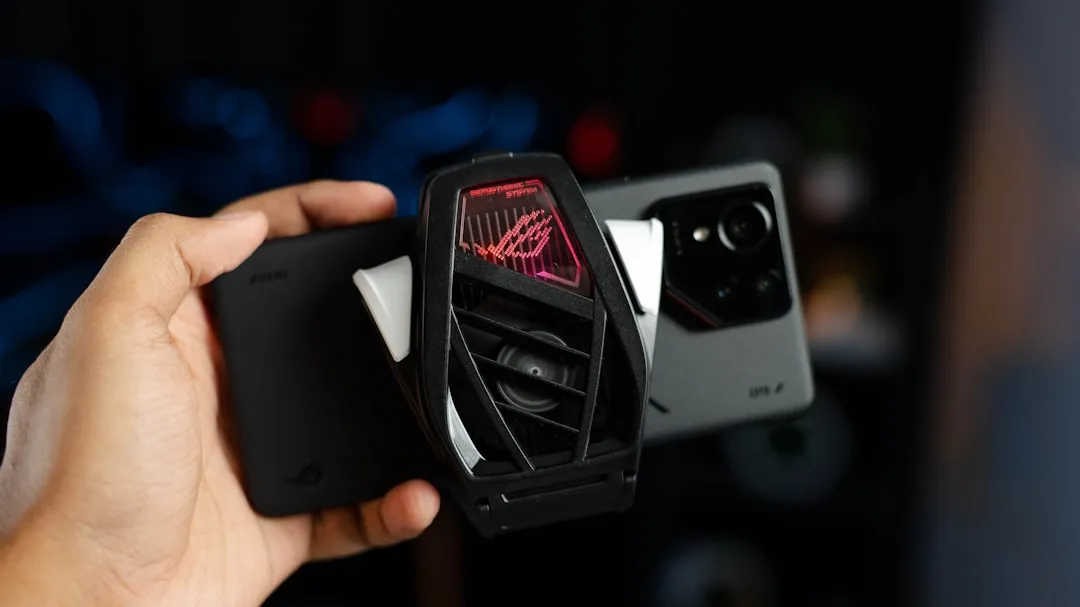
Asus ROG Xreal R1 AR Glasses Pre Order: Price, Specs & Dates
Preorders for the Asus ROG Xreal R1 AR glasses went live today at Best Buy, priced at $849, with worldwide shipping set for June 1. XREAL's own storefront opens for preorders on May 17. ASUS and XREAL describe the R1 as the world's first 240Hz micro-OLED gaming AR glasses, per the ASUS Pressroom and as of today, not a single independent reviewer has tested them.
Every performance number attached to the R1 the 240Hz refresh rate, 3ms motion-to-photon latency, 171-inch virtual screen comes directly from ASUS and XREAL's launch materials. Tom's Hardware reported today that the $849 asking price "may be a tough sell due to the current economic climate." That gap between claimed and confirmed is the core tension for anyone considering a preorder.
Asus ROG Xreal R1 AR glasses pre order: price, dates, and what's unclear
Preorders opened today at Best Buy for $849, with XREAL's storefront following on May 17 and units shipping globally on June 1, per the ASUS Pressroom.
What that $849 actually buys is less clear. The ROG Control Dock the hub that adds DisplayPort 1.4, two HDMI 2.0 ports, and USB-A connections for keyboard and mouse is central to the console and PC use case, per ASUS NZ. But ASUS's launch materials don't clearly state whether the dock is included in the $849 price or sold separately. Buyers should confirm that before placing an order.
It's a meaningful ambiguity. Without the dock, the R1's compatibility story changes significantly dropping from a full PC and console setup to a USB-C-only connection for phones, tablets, and the ROG Ally. Not a deal-breaker, but not the same product.
ROG Xreal R1 specs: what the display hardware actually offers
The display is where ASUS and XREAL make their strongest case. Each lens uses a Sony 0.55-inch micro-OLED panel at 1920x1080, with peak brightness of 700 nits and 106% sRGB color coverage, per the ASUS Pressroom. One detail buried in the spec sheet: 240Hz requires a "boosted frame rate" mode to be enabled. The glasses don't run at 240Hz out of the box.
For gaming, the two figures that most directly shape experience are motion-to-photon latency, rated at 3ms, and the virtual screen projection. ASUS claims a 171-inch equivalent image at roughly four meters, with a 57-degree field of view covering up to 95% of the wearer's focused vision, per ASUS NZ. That 57-degree FOV sits at the top end of what consumer AR glasses currently offer ASUS notes the standard range runs 40 to 57 degrees.
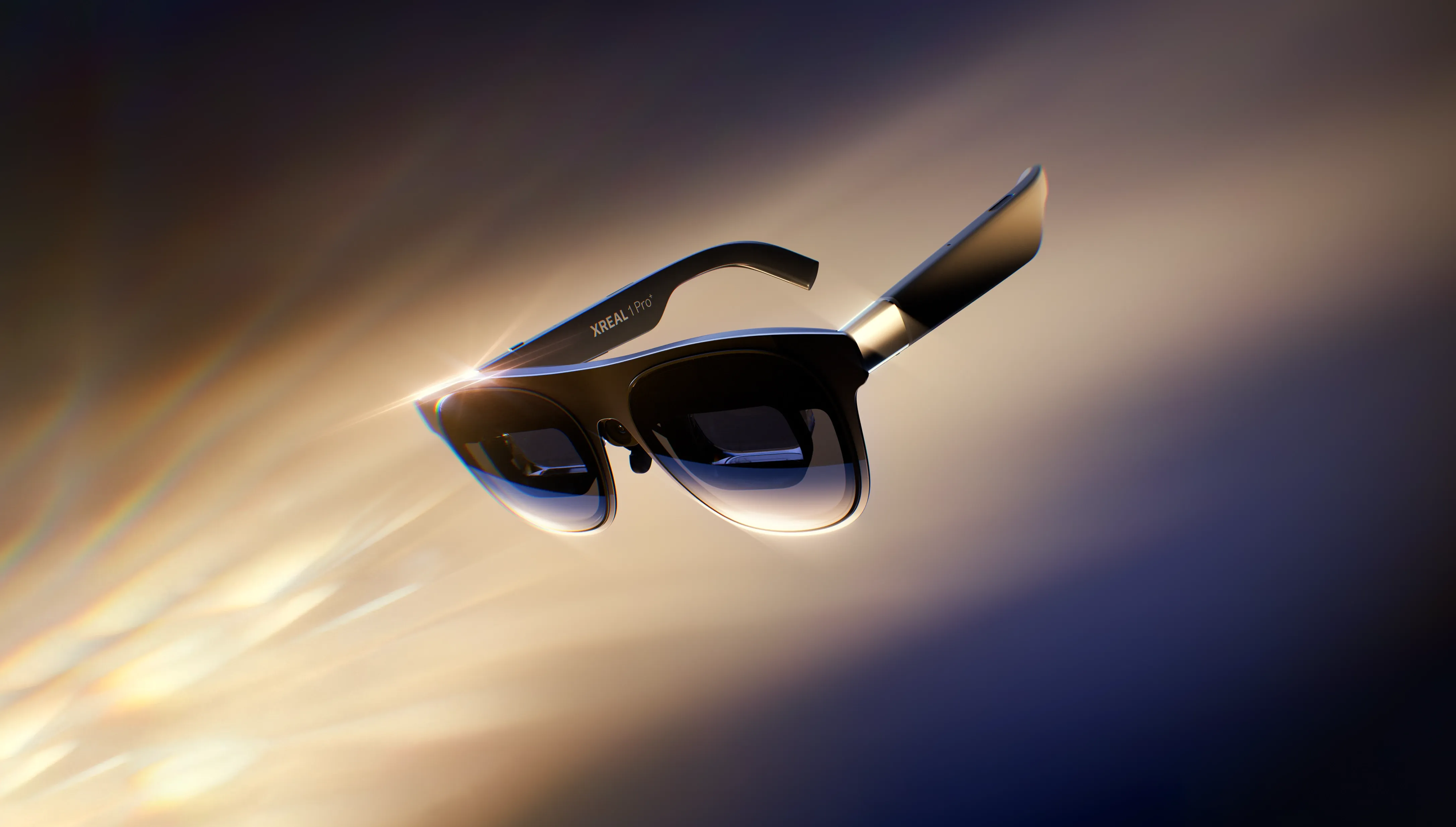
The glasses weigh 91 grams and include digital IPD adjustment to calibrate the optics to the wearer's eye spacing, per the ASUS Pressroom. Ninety-one grams is light for this category. Whether it stays comfortable across a two-hour session is a question no spec sheet can answer and it's the kind of thing early reviewers will settle quickly once units ship.
The 0.01ms panel response time and all motion-blur claims are manufacturer-supplied figures. No independent lab has validated them at time of publication.
Compatibility, controls, and how setup actually works
Via the ROG Control Dock, the R1 connects to PC, Xbox Series S/X, PlayStation 5, and Nintendo Switch through DisplayPort 1.4 and dual HDMI 2.0, per ASUS NZ. Without the dock, the glasses connect natively to smartphones and tablets that support DisplayPort over USB-C, per Tom's Hardware.
The ROG Ally pairing stands apart from both of those. A single USB-C cable connects the two with no configuration required ASUS describes it as zero-setup, per ASUS NZ. No dock needed, no software to configure. For existing Ally owners, that's a concrete advantage over how most AR accessories work.
Screen positioning is handled by the XREAL X1 chip, which delivers native 3DoF support. In Anchor mode, the virtual display stays fixed in physical space; in Follow mode, it tracks with the wearer's gaze. The virtual screen can also be resized and repositioned on demand, per ASUS NZ. That matters practically the screen doesn't have to stay locked in one position relative to the room around you.
ASUS also lists 6DoF as "supported" in the spec table, per the ASUS Pressroom, but the launch materials don't explain what that means in practice or how it differs from the native 3DoF implementation. It's listed; it's not explained.
Electrochromic lenses offer three manual tint levels, plus an automatic mode that clears when the wearer looks away from the virtual screen and tints again when they look back, per ASUS AU. Audio comes via Bose-tuned onboard speakers. They're open-frame, meaning the sound is audible to anyone nearby useful at a desk or on a long flight with an empty seat next to you, less so anywhere else. ASUS doesn't address that tradeoff in launch materials.
Who should buy now, and who should wait
The value proposition is clearest for two groups. First, ROG Ally owners: the USB-C plug-and-play connection makes the R1 a direct upgrade to how they already use that device, and no other setup path is that clean. Second, early adopters who want to be first on a spec sheet that no competitor has publicly matched.
XREAL enters this launch backed by $100 million in fresh investment, per IDC, which covered the funding announcement earlier this year. That funding matters for buyers: it signals XREAL has the resources to support ongoing software updates and what it ships in June.
The case for waiting is equally concrete. No independent review exists. Until units are in testers' hands, every performance figure on the spec sheet is self-reported. IDC also noted earlier this year that high-refresh-rate display technology is expected to reach competing AR glasses brands later in 2026, which will expand options and likely push prices down, per IDC. Buyers who hold off for three to six months may find more competition and a clearer sense of where $849 sits in the market.
Several practical questions remain unresolved before any buyer can be fully confident in the purchase. The dock bundling situation needs a straight answer from ASUS. The 6DoF spec needs an explanation. Power and battery specifics haven't surfaced in available launch materials. Whether the glasses work for prescription eyeglass wearers isn't addressed. These aren't edge-case concerns for niche users they're basic product questions that determine whether $849 buys something ready to use out of the box or something that requires additional research before it works as described.
The short version
The ROG Xreal R1 is, by ASUS and XREAL's own account, the world's first 240Hz micro-OLED gaming AR glasses, per the ASUS Pressroom. The display spec, broad device compatibility, and practical screen-positioning controls make a serious case for the gaming use case. The Ally integration, in particular, is the kind of thing that actually changes how a device fits into someone's setup.
What the spec sheet can't settle is whether any of this holds up on someone's face. Preorders are open now at Best Buy and through XREAL's store from May 17, with shipping June 1. ROG Ally owners with $849 to spend have a clear path to try it first. Everyone else should wait for the initial wave of reviews which, given the ship date, should start appearing in early June.









Comments
Be the first, drop a comment!