


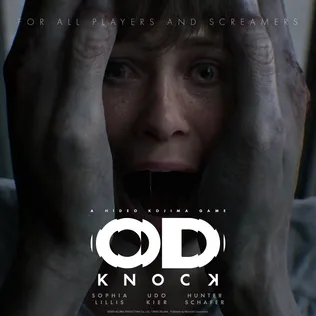
Looking at the early glimpses of OD, it's becoming clear that Hideo Kojima is channeling everything that made P.T. such an unforgettable horror experience—but this time, he's building something far more ambitious. The recent gameplay footage from the Beyond the Strand livestream feels like watching P.T.'s spiritual DNA evolve into a complete horror ecosystem. What makes this particularly compelling is that Kojima himself admits he's not entirely sure this ambitious experiment will work out, having had to rethink how he makes games from the ground up.
This uncertainty isn't a weakness, but a sign that Kojima is pushing interactive horror beyond the boundaries that even P.T.'s approach established. When the creator who turned a simple corridor into gaming's most discussed horror experience says he's venturing into uncharted territory, you know we're looking at something that could shake the genre entirely.
Why OD feels like P.T. fully realized
The connection between OD and P.T. runs much deeper than surface-level similarities. It feels like an evolution from proof-of-concept to a fully realized horror experience. Both games embrace the terrifying power of ordinary domestic spaces, but where P.T.'s corridor demonstrated the concept, OD appears to expand that claustrophobic philosophy into a complete psychological horror system. The new game adopts a first-person perspective set in what appears to be an ordinary suburban home, building on how P.T. presented horror through a home filled with unexpected encounters and bizarre mysteries.
P.T.'s revolutionary insight was turning the environment itself into the primary antagonist—no monsters to fight, no weapons to collect, just you and a house that refused to let you leave until you solved its twisted riddles. OD expands this design philosophy beyond P.T.'s single-corridor limitation, suggesting multiple rooms and environments where psychological manipulation can unfold across a broader canvas.
The puzzle mechanics demonstrate this evolution beautifully. The trailer shows protagonist Sophia Lillis lighting candles with matches, each flame triggering environmental changes that mirror P.T.'s observation-based approach while expanding its complexity. Where P.T. challenged players to crack mysteries through simple observation, using only a flashlight as their tool, OD introduces ritualistic actions that suggest multi-step ceremonies with increasingly disturbing consequences. The emphasis on lighting candles to "celebrate their [redacted]" indicates Kojima is building on P.T.'s most psychologically unsettling concept: making players unknowingly participate in something sinister, but now with the narrative space to fully explore the horror of complicity.
This expansion from single interactions to ritual sequences suggests OD will deliver the sustained psychological horror experience that P.T.'s brief format could only hint at.
The horror elements that connect past and present
OD's horror toolkit draws from P.T.'s most effective psychological weapons while amplifying them through the advantages of full game development. The game prominently features crying babies as a source of terror, building on how P.T. also prominently featured crying babies, as well as the more horrifying image of a mutated, bloody fetus lying in a bathroom washbasin. When Lillis lights that baby-shaped candle in the trailer, the immediate response of newborn shrieks filling the room demonstrates Kojima's continued mastery of audio-based horror, but now with the development space to build entire sequences around this primal fear rather than just single shocking moments.
The knocking motif represents the most personal and evolved connection between the two games. Kojima has openly admitted that he's genuinely afraid of loud knocking sounds, which explains why OD is officially subtitled "Knock" and suggests this will be more than just atmospheric audio—it's likely a core gameplay mechanic.
P.T.'s approach was brilliant but constrained: that endless corridor filled with creepy knocking that echoed through hallways as players completed each loop. OD's trailer builds tension through increasingly frantic knocking that grows louder and more desperate, but the full game format means Kojima can now develop this fear across multiple environments, creating varied contexts where knocking might signal different types of supernatural threats.
When a horror creator uses their genuine fears as source material and has unlimited development time to explore them, the result promises to be far more psychologically authentic than anything P.T.'s brief experience could achieve.
Technical innovation meets creative collaboration
What distinguishes OD from being merely a spiritual successor is the unprecedented creative and technical infrastructure enabling Kojima to realize concepts that P.T. could only suggest. Xbox Game Studios is providing extensive technical and gameplay support, specifically helping Kojima Productions implement Unreal Engine 5, representing a massive upgrade from P.T.'s limited development resources. This collaboration means OD can leverage cutting-edge technology to create horror experiences that would have been impossible during P.T.'s development.
The creative partnership extends the possibilities even further. The project features Jordan Peele as a creative collaborator, bringing his expertise in building sustained psychological dread through narrative structure—something P.T.'s brief format couldn't fully develop. Peele's understanding of how to maintain horror tension across feature-length experiences could solve one of interactive horror's biggest challenges: sustaining fear without repetition.
Most intriguingly, the development represents a fundamental shift in Kojima's service model. Kojima's mention that "this time, we're trying to change the service model from the ground up" suggests OD might pioneer new approaches to horror game distribution—perhaps episodic releases that maintain mystery between installments, or interactive elements that extend beyond the game itself.
The production's supernatural elements add authenticity that P.T. achieved through design but OD is capturing from reality. Kojima claims to have recorded actual ghost sounds from his studio for use in the game, and he and Microsoft representatives visited a shrine together to ensure the game wouldn't be haunted. This blend of traditional spiritual practices with cutting-edge game development suggests OD will achieve the authentic supernatural atmosphere that P.T. created through clever design, but now with genuinely otherworldly source material.
What makes this more than nostalgia
While the P.T. connections provide the foundation, OD represents Kojima's evolution into uncharted horror territory rather than simple repetition. The project is being developed as part of Kojima Productions' "Third Phase," with the creator focusing on laying solid foundations for future innovation. Unlike P.T., which was ultimately a playable teaser for the canceled Silent Hills project, OD represents a complete horror experience that Kojima can develop without external interference—meaning every frightening concept P.T. introduced can now be fully explored.
The game is being positioned as an anthology project, suggesting multiple interconnected horror stories that could allow Kojima to explore different aspects of psychological terror. This format means OD isn't constrained to a single horror concept like P.T.'s corridor—it can encompass various supernatural threats, domestic horrors, and psychological manipulations across different narrative segments.
The technical ambitions extend far beyond what P.T. could achieve with its limited scope. Kojima has expressed interest in scanning real haunted locations worldwide to capture authentic supernatural atmospheres. "I want to go around, all over the world where there are scary kind of places, to scan a ghost for the first time," Kojima explained. This approach suggests OD will ground its horror in real supernatural locations rather than purely fictional environments, potentially creating the most authentically haunted digital spaces ever developed.
While there's no confirmed release date yet, the collaborative development process indicates both Kojima Productions and Xbox are committed to creating something genuinely groundbreaking. This patience suggests OD will deliver the complete horror experience that P.T.'s brief glimpse promised but could never fully realize.
The horror game P.T. fans have been waiting for
OD represents more than just Kojima's return to horror—it's the complete realization of concepts that P.T. could only demonstrate in fragments. P.T. originally served as a teaser for Silent Hills, which was scrubbed from PlayStation Network after Kojima's departure from Konami, leaving fans with only memories and bootleg copies of unrealized potential. The trailer makes clear that if Physint is Kojima's spiritual successor to Metal Gear Solid, OD marks his return to P.T.'s psychological horror territory—but now with unlimited creative freedom to develop every terrifying idea that the original's brief format couldn't accommodate.
While the two games aren't canonically connected, OD appears to be everything P.T. could have become with complete development resources. The domestic horror settings, ritualistic puzzle mechanics, audio-driven scares, and psychological manipulation techniques that P.T. introduced in condensed form can now unfold across multiple environments and extended narrative sequences.
The timing feels almost prophetic for horror game enthusiasts who've spent nearly a decade hoping for this moment. P.T. influenced an entire generation of horror games, spawning countless imitators and spiritual successors, but none captured its unique blend of domestic mundanity and supernatural terror because they copied P.T.'s surface elements without understanding the deeper psychological mechanics that made brief interactions so profoundly unsettling.
With OD, Kojima isn't just revisiting old concepts—he's building the definitive horror experience that P.T.'s revolutionary glimpse suggested was possible. The collaboration with Jordan Peele brings narrative horror expertise, the technical support from Xbox enables unprecedented production values, the experimental service model promises innovative player engagement, and yes, the real ghost recordings (because only Kojima) suggest OD will blur the lines between supernatural fiction and authentic otherworldly experience.
Whether this ambitious experiment succeeds remains to be seen, and Kojima's own uncertainty about the outcome makes it more intriguing rather than concerning. His track record suggests that when he's genuinely uncertain about a project's direction, he's usually pushing creative boundaries that will influence the entire medium. For fans who've kept P.T. alive through preservation and passion, OD represents something approaching a miracle—the chance to experience the complete horror vision that P.T.'s brief but unforgettable demonstration promised was possible.









Comments
Be the first, drop a comment!