


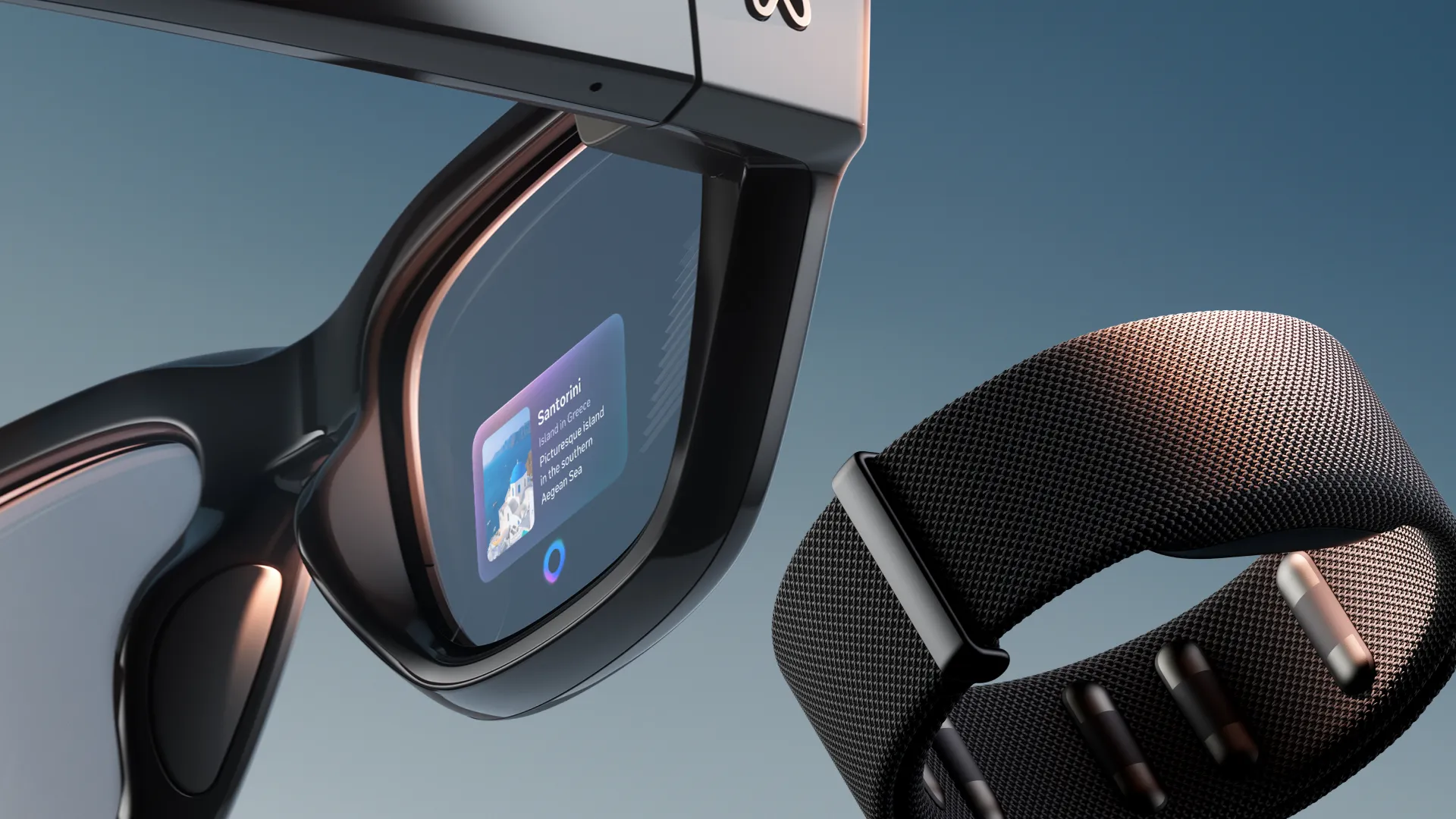
Meta's AI Glasses Just Got a Game-Changing Audio Feature—Here's Why It Matters
The world of augmented reality just took a significant leap forward with Meta's latest AI glasses update, introducing a feature that could change how we interact with our audio environment. These smart glasses now incorporate advanced AI technology to enhance conversation clarity, representing a notable step in the evolution of wearable AR devices.
What makes this development particularly significant is Meta's focus on solving practical, everyday challenges rather than pursuing flashy demonstrations. Instead of chasing features that look impressive in controlled demos, they're tackling something we all struggle with—hearing conversations clearly in noisy environments.
The integration of conversation enhancement technology into lightweight, wearable glasses demonstrates how AI is moving beyond smartphone apps into truly ambient computing experiences. It's one thing to have AI on your phone that you have to actively engage with, but it's entirely another to have it seamlessly working in the background, improving your daily interactions without conscious effort.
How the conversation enhancement actually works
The technical implementation behind Meta's conversation enhancement feature represents a sophisticated approach to real-time audio processing in wearable devices. The AI system leverages advanced noise filtering algorithms that can distinguish between target conversations and background ambient sound—a complex challenge when you consider how layered our audio environments really are.
This technology builds upon existing noise cancellation principles but advances them significantly by using machine learning to identify and prioritize human speech patterns over environmental audio interference. Rather than simply blocking out noise, the system actively understands which sounds matter most to the wearer in any given moment.
According to Meta, processing happens locally on the glasses themselves, which addresses both privacy concerns and latency issues that could make real-time conversation enhancement impractical. This edge computing approach enables the AI to respond instantly to changing audio environments without requiring constant cloud connectivity. Even a half-second delay would make conversations feel awkward and unnatural, so this local processing architecture is crucial for a seamless user experience.
The system appears to use directional microphone arrays combined with bone conduction speakers, allowing for spatial audio processing that can isolate conversations from specific directions while maintaining natural hearing of the surrounding environment.
What this means for accessibility and daily use
Meta's conversation enhancement feature opens up significant possibilities for users with hearing difficulties and anyone who frequently navigates challenging audio environments. Even with perfect hearing, most people struggle to follow conversations in crowded restaurants, busy offices, or outdoor settings where background noise interferes with clear communication.
This feature represents a shift toward more intuitive wearable technology that adapts to user needs without manual adjustments. The glasses can learn from usage patterns and automatically optimize audio enhancement based on the wearer's preferences and environmental context, reports indicate. This seamless adaptation makes technology feel less like a tool and more like a natural extension of human capabilities.
The practical implications extend to professional settings where clear communication is essential, but environmental factors often interfere with audio clarity. Consider conference calls in open offices, networking events in noisy venues, or outdoor job sites where important safety communications must be heard clearly. The potential applications span well beyond casual social interactions.
What's particularly compelling is how this addresses a universal human experience. Unlike some AR features that require users to change their behavior or learn new interaction paradigms, conversation enhancement simply makes something people already do work better—having conversations.
The bigger picture for Meta's AR strategy
This conversation enhancement update fits into Meta's broader vision of creating truly useful AR experiences that justify wearing smart glasses throughout the day. Rather than focusing solely on visual overlays or complex mixed reality features, Meta appears to be prioritizing practical applications that solve immediate user problems—a strategic approach that demonstrates maturity in understanding consumer adoption patterns.
This approach recognizes that breakthrough AR features need to provide clear, immediate value rather than impressive but impractical demonstrations. While AR demos showcasing floating holograms and hand-gesture controls look futuristic, they often fail to address when or why someone would actually want to use these features in real life.
By focusing on audio enhancement, Meta is addressing a universal need that doesn't require users to fundamentally change their behavior or social interactions. Users aren't learning new gestures or adapting to new interfaces—they're simply having better conversations. The technology works invisibly in the background, which exemplifies how effective technology should function.
This strategy positions the glasses as practical tools first and futuristic gadgets second, which could prove crucial for mainstream adoption of AR wearables. It mirrors how smartphones succeeded not merely because they were impressive pieces of technology, but because they made everyday tasks easier and more convenient.
The focus on audio also represents a less intrusive entry point into AR wearables, avoiding the social stigma and privacy concerns associated with camera-equipped smart glasses while still delivering meaningful functional benefits.
Where smart glasses are heading next
The introduction of AI-powered conversation enhancement represents just one piece of the evolving smart glasses landscape, where practical functionality is increasingly taking precedence over flashy but impractical features. This development suggests that future AR wearables will likely focus on seamlessly augmenting existing human capabilities rather than replacing them with entirely new interaction paradigms.
The success of features like conversation enhancement could establish the foundation for other subtle but powerful AI integrations. Future capabilities might include real-time language translation that happens so naturally users forget it's there, context-aware information delivery that anticipates needs before they're expressed, or adaptive audio processing that automatically adjusts to individual preferences and environmental conditions.
As the technology matures, smart glasses are positioned to become genuine productivity tools that enhance daily life without drawing attention to themselves. The most effective implementation occurs when the technology becomes invisible—when users stop thinking about the glasses as a device and start experiencing them as simply a better way to engage with the world around them.
The ultimate test will be whether users find these features compelling enough to make smart glasses a regular part of their daily routine, transforming them from experimental gadgets into essential wearable technology. Meta's emphasis on practical, immediately useful features like conversation enhancement suggests they understand that utility, rather than novelty, will drive mainstream adoption.
This measured approach to feature development indicates a broader industry shift toward AR applications that solve real problems rather than creating new ones, potentially accelerating the timeline for widespread smart glasses adoption across diverse user demographics.








Comments
Be the first, drop a comment!