


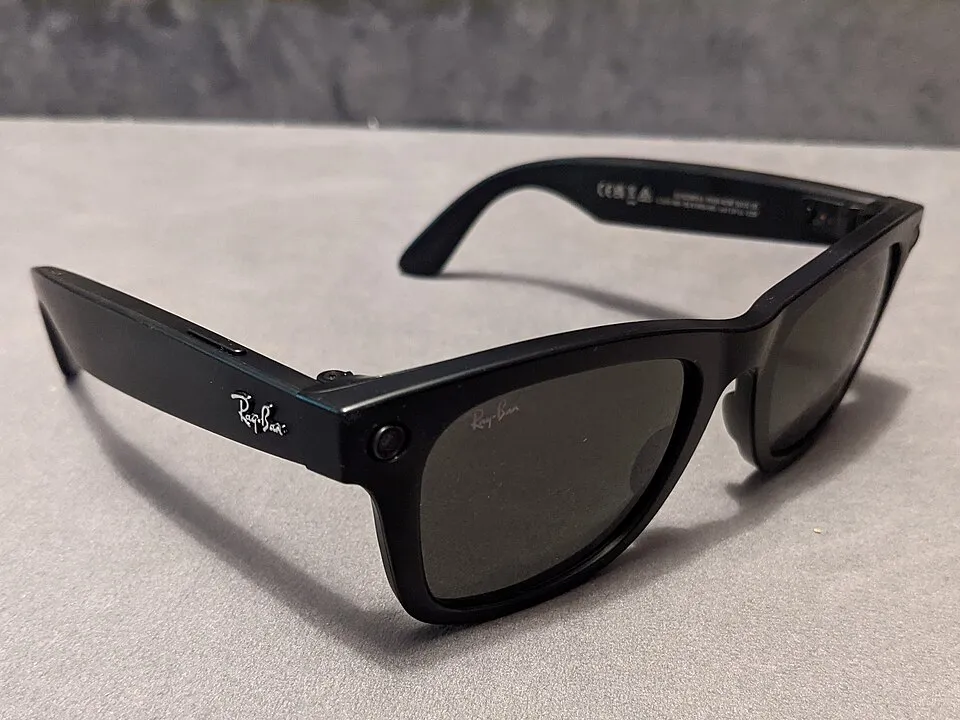
When Meta first unveiled their Ray-Ban smart glasses, the concept felt intriguing but ultimately limited—cool tech wrapped in familiar frames, but missing that crucial element that would make them truly indispensable. Now, with the Display glasses launching at $799 and their ambitious 2026 roadmap, we're looking at something fundamentally different. This isn't just an incremental upgrade—it's Meta's boldest attempt yet to bridge the gap between traditional smart glasses and true augmented reality.
The technical specifications alone tell a compelling story. We're talking about a 600×600 pixel resolution display with 42 pixels per degree and a 20-degree field of view, delivering visuals that remain crisp and readable across various lighting conditions. What's particularly impressive is the brightness reaching up to 5,000 nits—that's bright enough to remain visible even in direct sunlight, solving one of the fundamental challenges that has plagued previous attempts at smart eyewear.
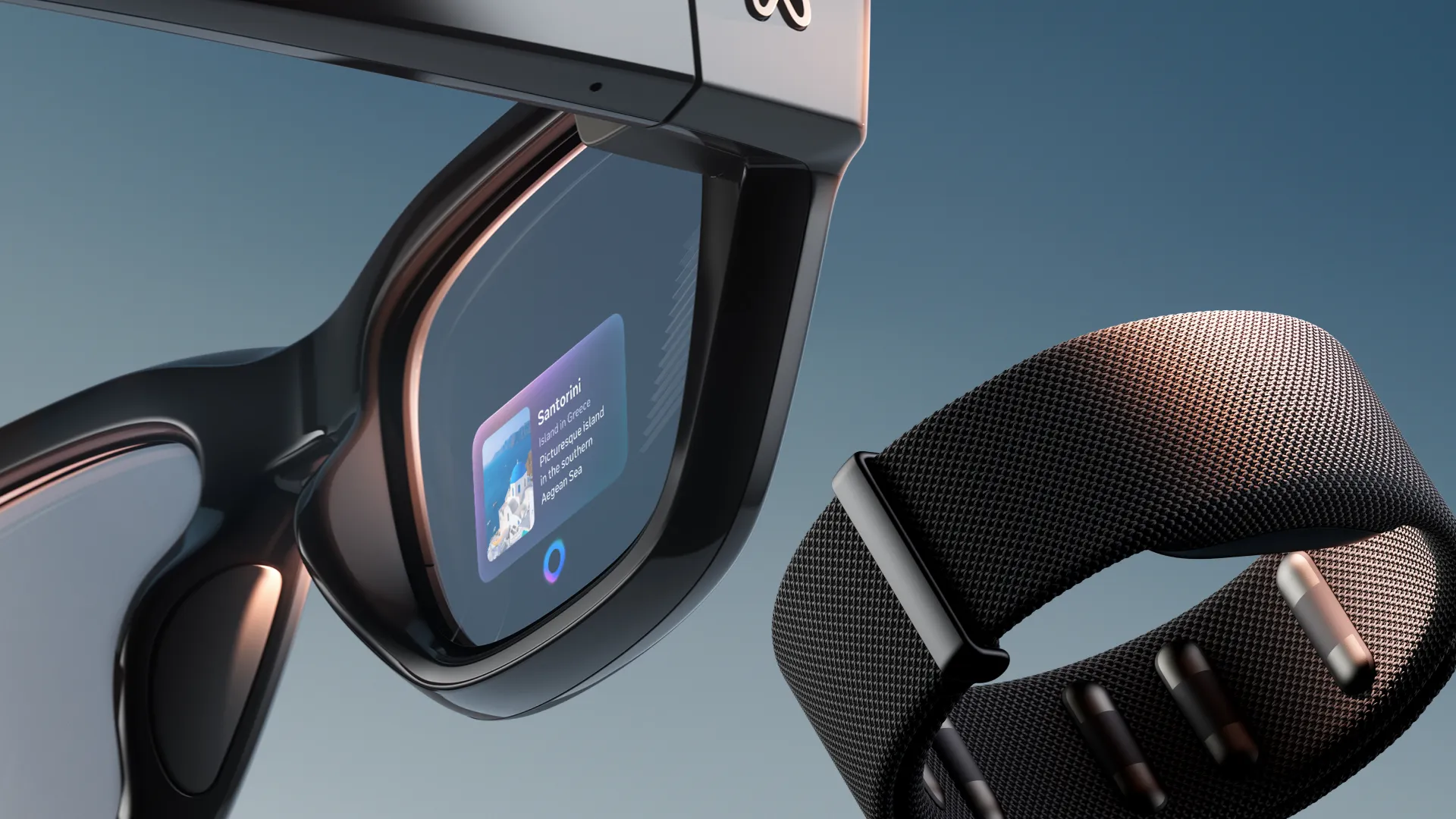
But here's where things get really interesting: the display is positioned off to the side so it doesn't obstruct vision, allowing users to maintain natural interaction with their environment while accessing digital information. It's a thoughtful design choice that addresses the social awkwardness issues that sank Google Glass years ago. The waveguide display embedded in the left lens is undetectable from the outside, even when displaying full-color images, creating what appears to be a privacy-first design that could finally achieve mainstream social acceptance.
What makes the Neural Band integration revolutionary?
Now here's the thing that separates these glasses from every other smart eyewear attempt we've seen—the Neural Band. This isn't just another wearable accessory; it's a complete reimagining of how we interact with technology. The Neural Band uses electromyography sensors on the wrist to detect muscle signals, allowing control with hand movements, effectively making finger gestures your new interface.
Think about what this means in practical terms. No more awkward voice commands in public spaces, no fumbling with tiny buttons on glasses frames. The wristband device uses differential electromyography (EMG) to detect muscle movement and translate it into digital signals, creating what feels almost like telepathic control over your digital environment.
The practical advantages are immediately apparent. The system can answer, respond to messages, provide directions, display music, and eventually allow writing messages with gestures, positioning it as a comprehensive computing interface rather than just a supplementary device. What's particularly appealing is the battery life—18 hours of battery life and a water-resistant design mean this is actually designed for all-day use, not just tech demos.
Here's what sets this apart competitively: while other companies are still working on touch interfaces or voice controls that feel clunky in public settings, Meta has created invisible interaction. The Neural Band and glasses enable users to handle tasks without pulling out a phone, which sounds simple but represents a fundamental shift toward ambient computing. You're scrolling through notifications with subtle finger movements that are practically invisible to anyone watching—it's the kind of seamless interaction that science fiction promised us, finally made practical.
How do the 2026 features expand functionality?
The roadmap Meta has outlined for 2026 reveals their true ambitions for these glasses, and it's here where we see the strategy for mainstream adoption crystallize. Virtual handwriting support will arrive in 2026, allowing users to compose messages and take notes using natural hand movements detected by the Neural Band. This feature alone could transform how we think about text input—imagine being able to jot down thoughts or respond to messages as naturally as writing on paper, but with all the advantages of digital processing.
From what I can tell from the demonstrations, this isn't about awkward air-writing that looks bizarre in public. The Neural Band's EMG sensors are sensitive enough to detect the subtle muscle movements involved in writing, even when your hand is resting at your side. It's the kind of invisible interaction that could actually work in real-world social situations, addressing the core challenge that has limited wearable adoption.
The social media integration reveals Meta's understanding of what drives daily engagement. Instagram Reels support will also launch in 2026, bringing content consumption directly into the user's field of vision without the need to constantly check smartphones. This isn't just passive viewing—it's about creating a seamless content ecosystem where the display system is useful for viewing full Instagram Reels and viewing photos instantly in front of the user, complete with gesture-based navigation through the Neural Band.
PRO TIP: The timing of these features isn't accidental. By launching with essential functionality and adding social media features in 2026, Meta is building user habits around the core interaction model first, then introducing the features most likely to drive daily usage and social adoption.
What sets the technical implementation apart?
Meta's engineering choices reveal a company that has learned from the failures of previous smart glasses attempts. The most crucial decision might be the display placement and the invisibility factor. Beyond the basic positioning, the technical execution demonstrates sophisticated optical engineering that prioritizes user comfort and social acceptance.
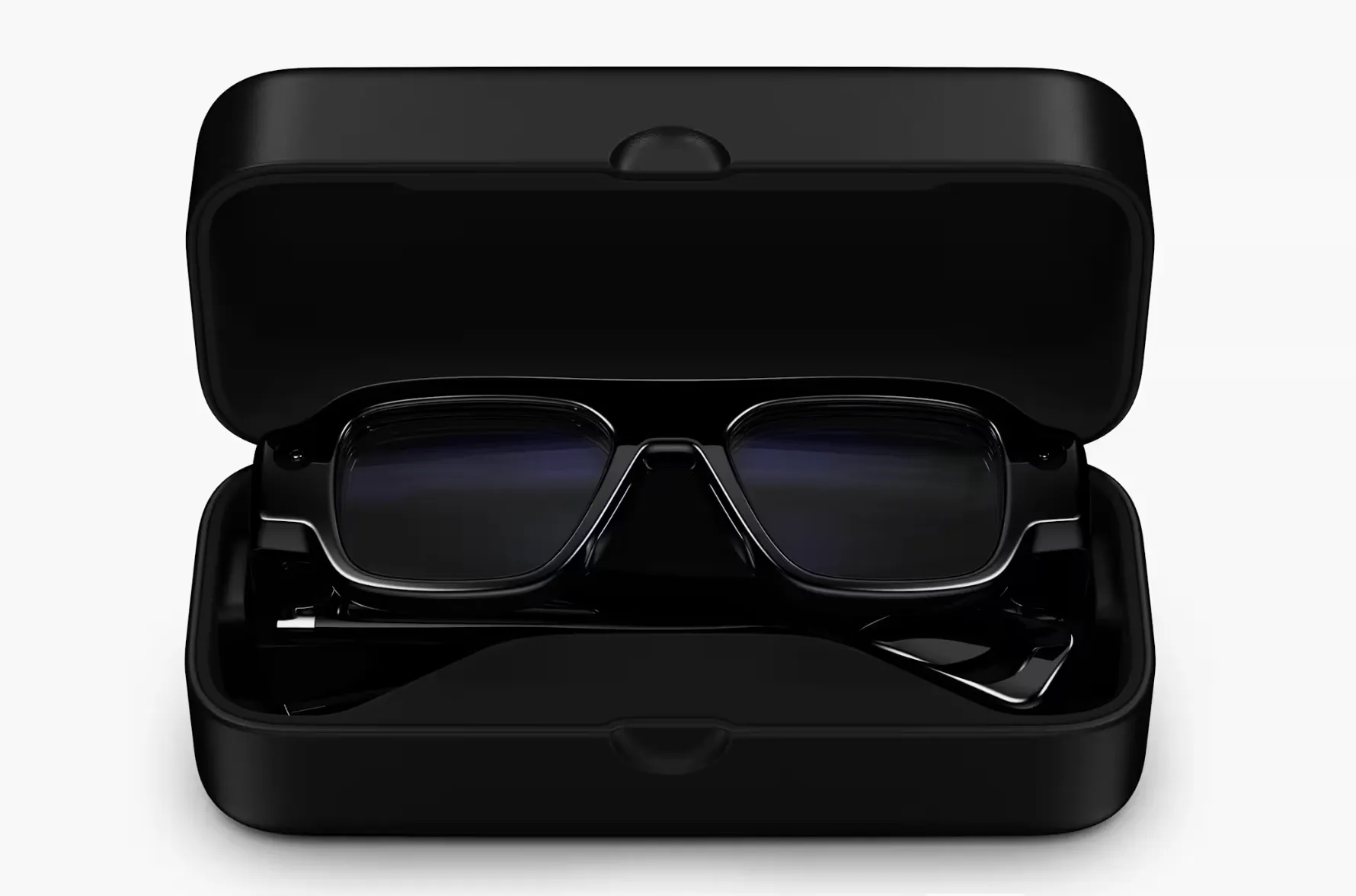
The technical specifications strike a careful balance between functionality and wearability. Battery life lasts around six hours with mixed use, which aligns with typical daily usage patterns for most people. More importantly, the charging case extends usage up to 30 hours beyond the glasses' approximately six hours of battery life, providing the kind of multi-day capability that makes these practical for travel or extended use.
Weight has always been a critical factor for wearable success, and Meta seems to have hit the sweet spot here. The glasses weigh 69 grams with titanium over-extension hinges and slimmer arms that maintain comfort during extended wear. For comparison, that's only about 20 grams heavier than standard Ray-Ban Wayfarers—noticeable but not prohibitively so for the computing power they contain.
The display technology itself represents a significant advancement in miniaturization and optical engineering. Using liquid crystal on silicon (LCOS) projection, the glasses create what appears to be a virtual 13-inch display positioned strategically to avoid interfering with natural vision patterns. The 5,000-nit brightness capability ensures usability across lighting conditions that would render most smartphone screens difficult to read, while the waveguide technology keeps the display completely invisible to observers.
Where does this technology lead us?
The Display glasses represent a crucial stepping stone in Meta's broader AR strategy, but they're also positioning the company to capture market share before competitors can respond. Meta plans to turn these into fully augmented reality devices capable of layering 3D into the world, similar to their experimental Orion prototype that generated significant buzz among tech enthusiasts.
What's particularly compelling about Meta's approach is the ecosystem building it represents. Rather than waiting for full AR technology to mature, they're building user habits and developer interest around increasingly capable smart glasses. The company's latest $800 glasses feel like a transformational gadget for life, suggesting we're witnessing the early stages of a fundamental shift in human-computer interaction that could challenge the smartphone's dominance.
The market indicators support this optimism. IDC forecasts worldwide shipments of augmented reality/virtual reality headsets and display-less smart glasses will increase by 39.2% in 2025 to 14.3 million units, thanks in part to Meta, highlighting growing consumer acceptance of wearable computing devices. Meta's expansion plans reflect confidence in global demand: international expansion in Canada, France, Italy, and the UK is planned for early 2026, indicating these aren't just experimental products for the US market, but the foundation of a global wearable computing strategy.
The dawn of ambient computing
Meta's Ray-Ban Display glasses with their 2026 feature set represent more than just another tech gadget—they signal the beginning of ambient computing, where digital interactions become as natural and invisible as conversation itself. The combination of unobtrusive display technology, gesture-based control through the Neural Band, and genuinely useful features like virtual handwriting creates a compelling use case that extends far beyond tech enthusiast curiosity.
What's most intriguing is how these glasses could fundamentally alter our relationship with smartphones. When you can check messages, navigate, respond to notifications, and consume social media content through nearly invisible gestures, the compulsive phone-checking behavior that defines modern digital life starts to seem antiquated. We're looking at the potential for technology that enhances rather than interrupts human interaction.
Meta's most advanced push into consumer eyewear, betting on AI, display technology, and gesture controls, positions the company at the forefront of what could be the next major computing paradigm shift. The 2026 features—virtual handwriting and Instagram Reels support—aren't just incremental improvements; they're the kind of breakthrough capabilities that could move smart glasses from interesting novelty to daily necessity.
As we approach 2026, these glasses promise to make augmented reality not just accessible but essential for staying connected in an increasingly digital world. For potential buyers, the question isn't whether this technology will succeed, but whether they want to be early adopters of what could become the next fundamental shift in how we interact with information. Based on what I've seen, that future is arriving faster than most people realize.



Comments
Be the first, drop a comment!