


Should You Buy Waveguide Smart Glasses Now? Not Yet
Meta built the most capable AR glasses ever demonstrated, then decided not to sell them. The reason: roughly $10,000 per unit to manufacture, two hours of battery life, and a wrist controller plus a separate compute puck required just to function. That single product decision is the cleanest summary of where waveguide smart glasses stand right now.
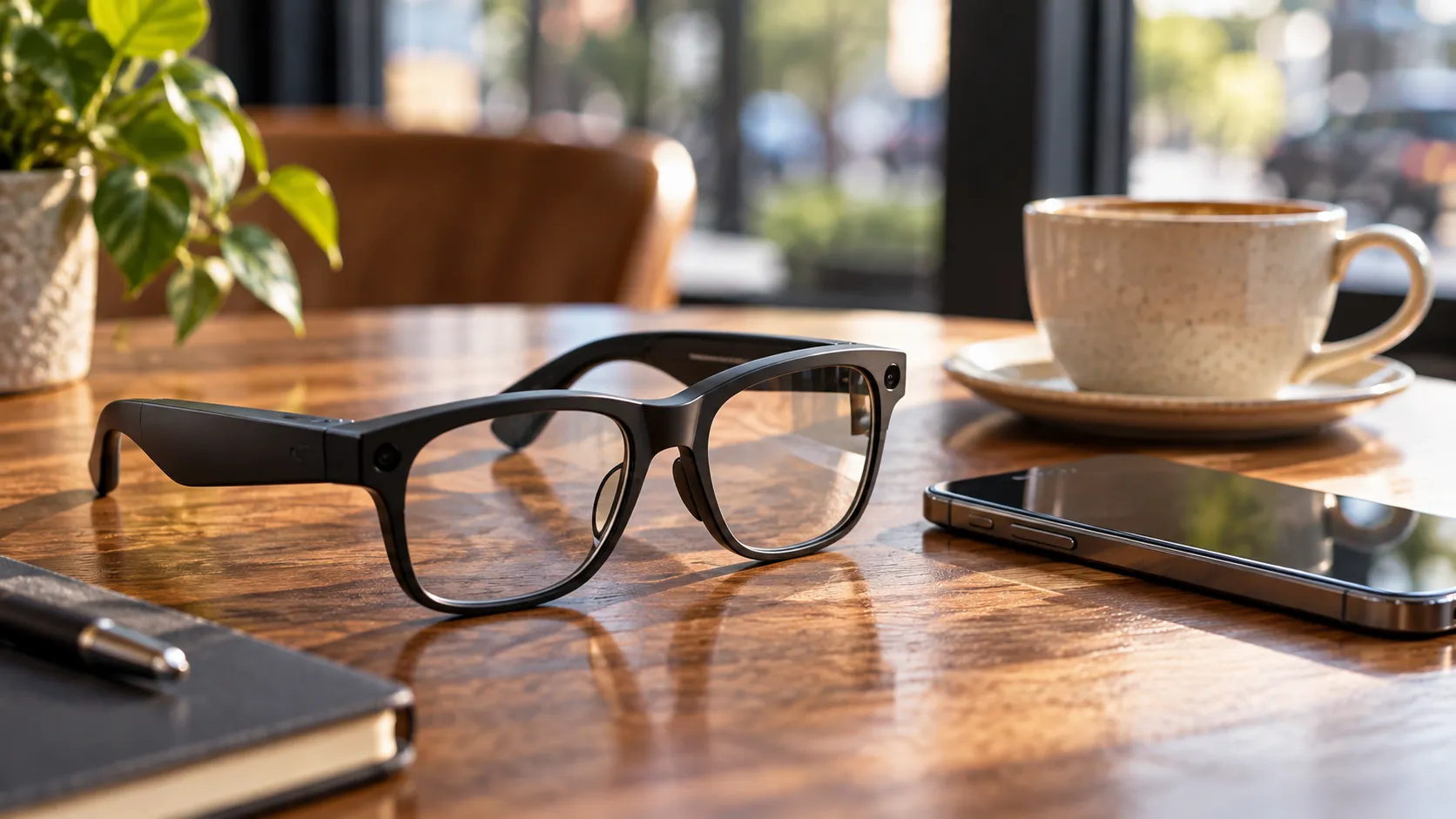
This piece is for mainstream consumers weighing whether to spend $300-$600 on a pair of smart glasses with a display in 2026. Not enterprise buyers, not optics researchers. That distinction matters because the products on sale span a wide range, and most serve different use cases than buyers expect.
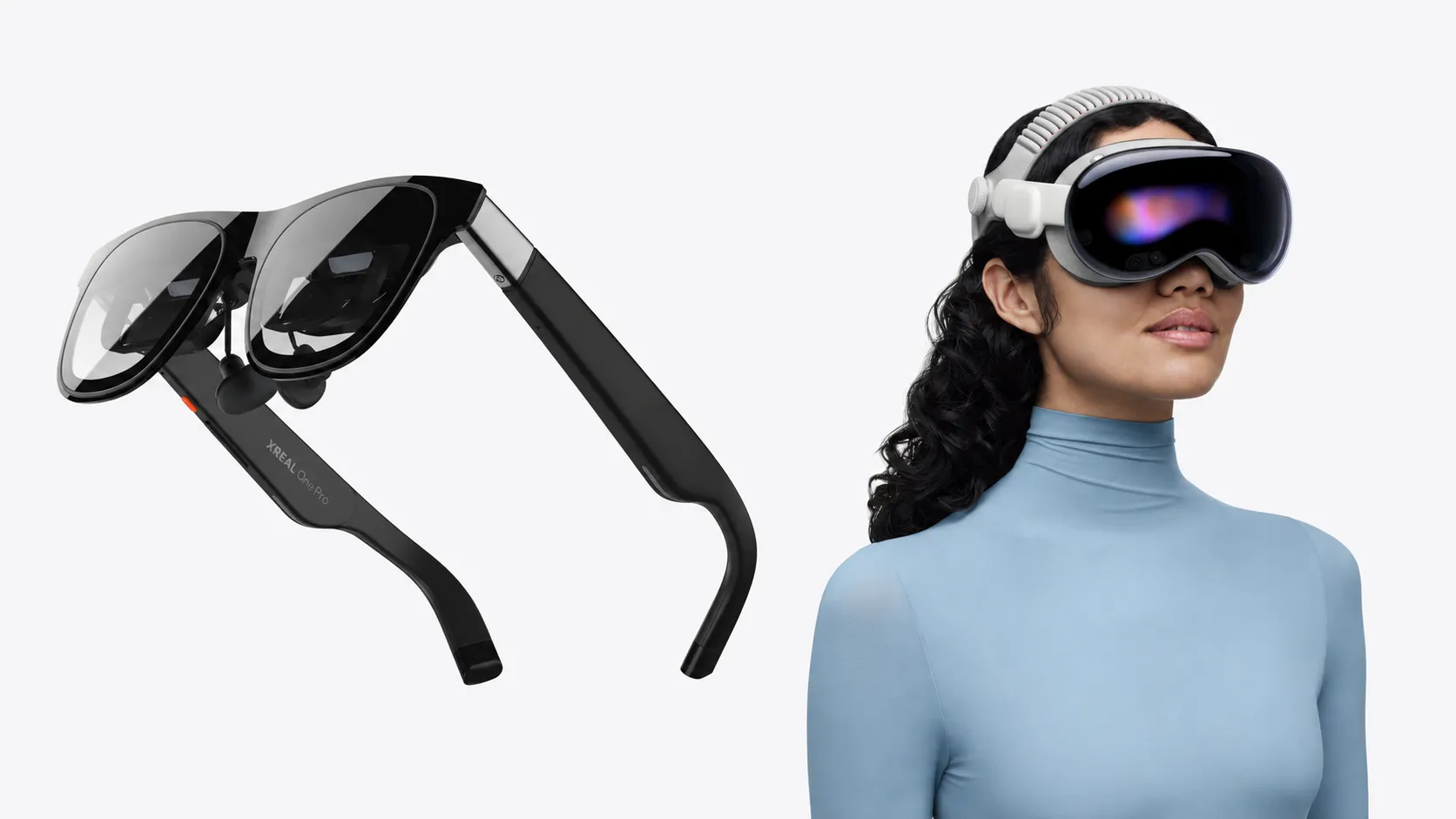
A quick distinction worth making upfront: "display glasses" like Xreal or Viture project a flat screen in front of your eyes, essentially a wearable monitor. "True AR glasses" overlay digital information on the real world and anchor it in space. Both use waveguides. The gap between them is enormous in terms of real-world usefulness, and both fall short of the all-day AR glasses evaluated here.
The thesis is simple. Waveguide optics are the strongest current path to AR glasses that look and feel like normal eyewear. But "right long-term technology" and "worth buying now" are different claims. For this article, "worth buying" means clearing three bars simultaneously: outdoor readability without squinting, all-day battery without a companion device, and prescription compatibility without aftermarket workarounds. no widely available consumer product is known to meet all three today.
Why waveguide technology is the right bet long-term
Waveguides are thin, transparent optical layers embedded directly in the lens area that route projected images to the eye while letting ambient light pass through, according to IDTechEx research published in February 2026. That structural approach is what separates them from bulkier birdbath optics, which use curved mirrors and achieve around 20% light efficiency but produce thicker, far less transparent lenses, per UBI Research analysis from January 2026.
The transparency difference is substantial. The RayNeo X2's waveguide-based design achieves over 85% lens transparency compared to the 15-25% typical of birdbath optics, Metavisi noted in mid-2024. Birdbath glasses, despite producing better image quality, require a larger optical module that makes them noticeably thick and limits how clearly you can see through them. That's the opposite of what a daily wearable needs. As manufacturing costs have declined, consumer waveguide devices have reached weights under 80 grams, meaningfully closer to ordinary glasses than any previous AR headset.
Two dominant waveguide approaches define the current landscape, and they set up the core tension. Reflective (geometric) waveguides achieve optical efficiency nearly an order of magnitude higher than diffractive designs and sidestep color accuracy problems entirely, because reflection is wavelength-independent. Diffractive (surface relief grating) waveguides achieve a wider field of view in thinner form factors, with Magic Leap demonstrating 70 degrees, and can be produced via laser etching processes suited to mass manufacturing, IDTechEx reported in February 2026. Neither has fully solved image quality and scalable cost at the same time.
That gap is structural, not incremental. The optics most likely to reach consumer price points have the worst image quality and outdoor performance. The optics with the best image quality cannot yet be manufactured cheaply enough to sell at consumer scale. Every current product is some version of that compromise, and buyers should understand that going in.
Worth noting: holographic waveguides, including nanophotonic metasurface approaches being explored in research settings, represent alternate paths. But as the IDTechEx research shows, they face their own manufacturing and field-of-view constraints and remain far from consumer products.
Are waveguide glasses worth it in 2026? The three bottlenecks that answer the question
Three specific problems limit every shipping consumer waveguide device today. They translate directly into purchase decisions.
Outdoor visibility. Diffractive waveguides, the type most likely to reach affordable consumer pricing, can have very low optical efficiency (often significantly lower than reflective designs). Under full outdoor daylight, that requires roughly 4,000 nits of luminance delivered to the eye, which demands 3 lumens into the in-coupler from the light engine, according to research published in March 2025. Diffractive designs also produce color nonuniformity, a visible rainbow effect, and image artifacts caused by the wavelength-dependent nature of diffraction, per eLight / Springer Nature. In practical terms: step outside with current consumer AR glasses and the image becomes difficult to read. That's not a software problem.
Battery and heat. To avoid uncomfortable heat buildup near the ear, each microdisplay panel should be capped at roughly 1 watt, per the same Researching.cn analysis. That power ceiling makes it very difficult to drive the brightness required for outdoor use. Optical efficiency also drops noticeably at wider field of view even within the same waveguide technology class, so scaling image size without sacrificing efficiency remains an unsolved engineering problem, IDTechEx confirmed. The display wants more power; the thermal ceiling won't allow it.
Manufacturing cost. Reflective waveguides, the higher-performing optics, are made from dozens of individually bonded and polished glass components, creating yield challenges and costs that currently put them well outside consumer pricing. Glass substrate manufacture is slow, failure-prone, and expensive at scale, per IDTechEx and eLight / Springer Nature. Polymer substrates reduce cost and weight but carry a lower refractive index, limiting field of view at equivalent thickness. One constraint traded for another.
What you can actually buy today
The Viture Beast is probably the best consumer waveguide hardware currently shipping. At $549, it offers a 58-degree field of view, reported multi-level electrochromic dimming, and a Sony micro-OLED display. The Verge hands-on coverage from January 2026 noted it weighs around 96 grams and lacks built-in myopia adjustment, a feature earlier Viture models included via per-eye dials. A 6DoF feature built around an onboard camera remains locked pending future software updates. The Beast is genuinely impressive indoors for media viewing. Outside in daylight, it runs into the same physics wall as every other device in this category.
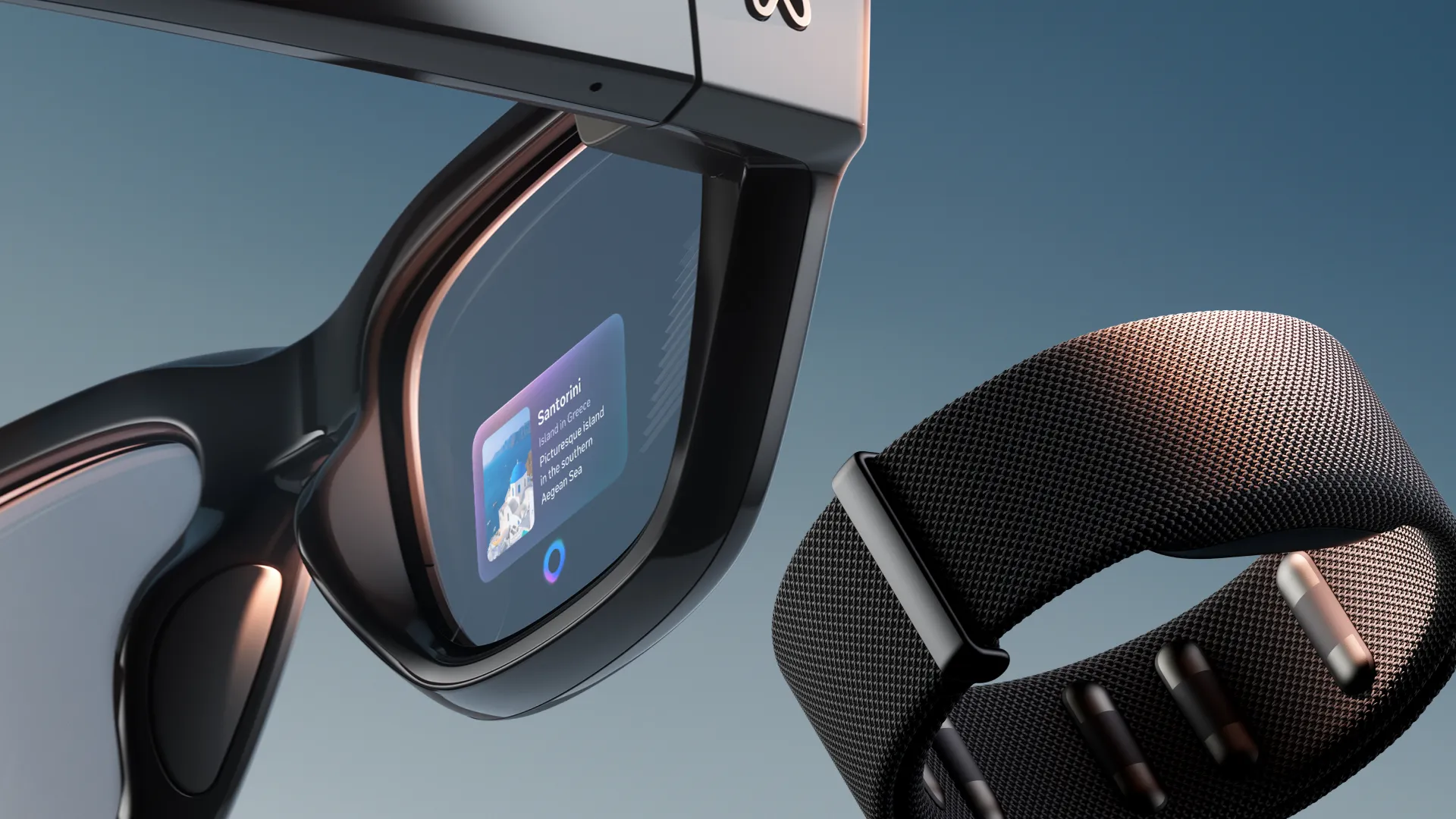
Then there's the Orion benchmark. Meta's Orion achieves a 70-degree field of view using MicroLED projectors and silicon carbide waveguides, the high-refractive-index material that allows light to fill more of the visual field without requiring thick lenses. Seven onboard cameras handle spatial anchoring, eye and hand tracking, and AI-assisted object recognition. The Verge covered the September 2024 demo in detail: the battery lasts about two hours, the hardware exists in three parts (the glasses, a neural wristband, and a wireless compute puck), and the build cost runs approximately $10,000 per unit. Meta shelved it as a consumer product precisely because of that cost. Around 1,000 units were built, for internal development and external demos only.
Orion shows what the ceiling looks like. Consumer display glasses show what's buildable today. Neither is the product most buyers picture when they hear "AR smart glasses."
What's missing from every shipping device is the combination of functional outdoor AR, all-day battery, and prescription support without aftermarket inserts. That product does not exist yet.
What has to change before waveguide AR glasses are worth buying
Two levers matter most, and both showed real movement at CES 2026 in January.
Smart dimming. The nearest practical fix for outdoor visibility isn't a brighter display. It's blocking ambient light before it competes with the display. Reducing ambient transmittance to 10% cuts required display brightness from roughly 4,000 nits to 1,300 nits, dropping optical power demand to about one-third of current requirements, per Researching.cn. Magic Leap 2 already implemented a 5,000-zone segmented smart dimmer with a contrast ratio above 300:1 and an 8-millisecond response time, but that's an enterprise device. At CES 2026, Optiple demonstrated a liquid crystal film with 0.1-second response time and Povec showed electrochromic dimming at 1 second with natural color transitions. Even halving ambient light cuts display energy consumption by 20-40%, UBI Research reported.
Manufacturable high-efficiency waveguides. Lumus's ZOE, announced at CES 2026, pushed geometric reflective field of view past 70 degrees while addressing color uniformity problems through geometric design rather than diffraction, per UBI Research. Polymer injection molding for reflective designs and grating structure innovations for diffractive designs, including adjusted aspect ratios and atomic layer deposition of high-index materials, are active research directions, not products yet, IDTechEx noted in February 2026.
The signal worth watching is yield rates and unit cost on reflective waveguides, not demo field-of-view numbers.
When evaluating any new waveguide AR glasses launch, apply this checklist in order:
Does it work outdoors, in direct sunlight, without squinting?
Does it run all day without a companion compute puck or a midday charge?
Does it support prescription lenses without aftermarket inserts?
No shipping consumer product in 2026 passes all three.
Follow the manufacturing curve, not the demo reel
Waveguide smart glasses will define the AR category. The technology direction is correct. The products available today are compromise machines, constrained by physics that haven't been solved at consumer price points, not by a lack of ambition.
Meta's Orion product lead put the challenge plainly: "The next phase is an engineering problem to get to higher resolution, higher brightness, and lower cost," per The Verge. The consumer version of Orion will already drop silicon carbide lenses and narrow the field of view just to hit a viable price.
Two groups have a reasonable case for buying now. Developers and enthusiasts who want platform familiarity before consumer AR matures, and people specifically seeking an indoor media-viewing alternative to a monitor who can live with the weight and cable trade-offs. For everyone else, waiting is the rational call.
The devices being built today, under 80 grams with transparency above 85%, are the right long-term foundation, as Metavisi data from mid-2024 shows. Smart dimming paired with better waveguide optics, the central theme at CES 2026 three months ago, is the most concrete near-term signal that the outdoor visibility problem is being addressed without requiring a display breakthrough, per UBI Research.
The future is real. It's just not yet available for purchase.

Comments
Be the first, drop a comment!