


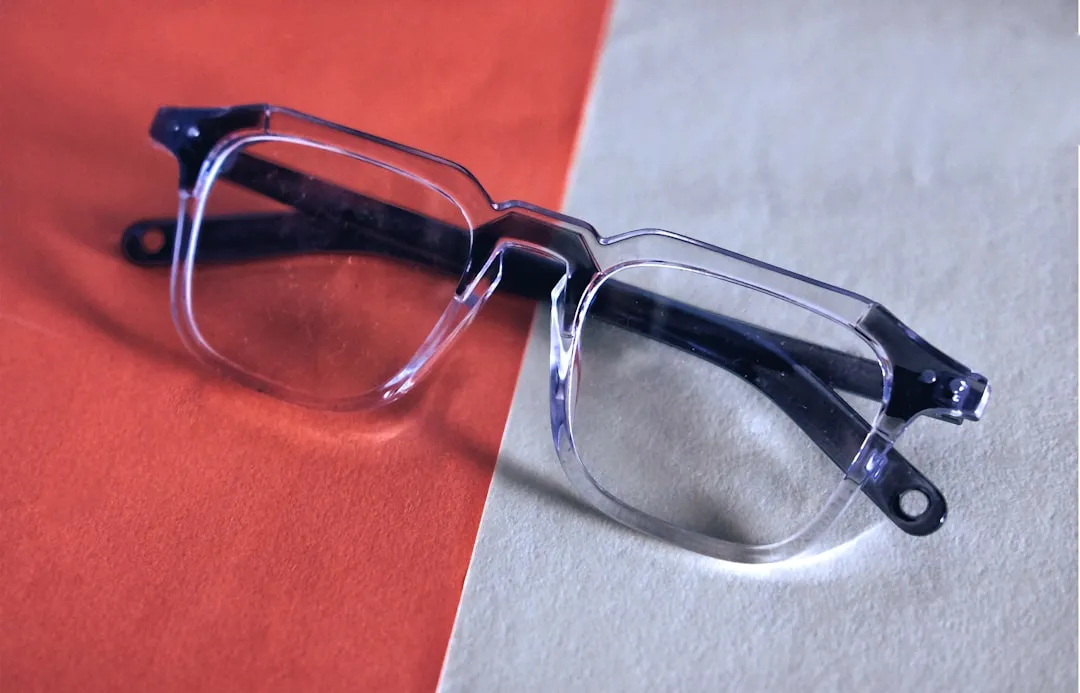
If you told someone ten years ago that the next breakthrough in smart glasses would come from doing less, they'd probably think you were crazy. Yet here we are, watching a fascinating shift in the wearable tech landscape where smart glasses companies are deliberately stripping away cameras, speakers, and all the bells and whistles to focus on one incredibly powerful feature: real-time translation with visual captions.
This isn't about technological limitations or cost-cutting (though those factors certainly play a role). Instead, it represents a strategic pivot toward solving genuine communication barriers rather than creating digital Swiss Army knives that do everything adequately but nothing exceptionally well.
The smart glasses market has been growing rapidly, with Ray-Ban Meta smart glasses sold over 1 million units in 2024. This mainstream success has created an interesting market dynamic—while consumers embrace feature-rich devices, the proven demand has opened space for specialized alternatives. Meanwhile, AR glasses can now integrate transcription software and visual presentation during conversations, creating opportunities for focused devices that prioritize communication over entertainment.
This convergence reveals something profound about technology adoption: once a category proves viable, specialization becomes not just possible but strategically advantageous for serving specific user needs that general-purpose devices can't address as effectively.
Why translation-focused glasses make perfect sense
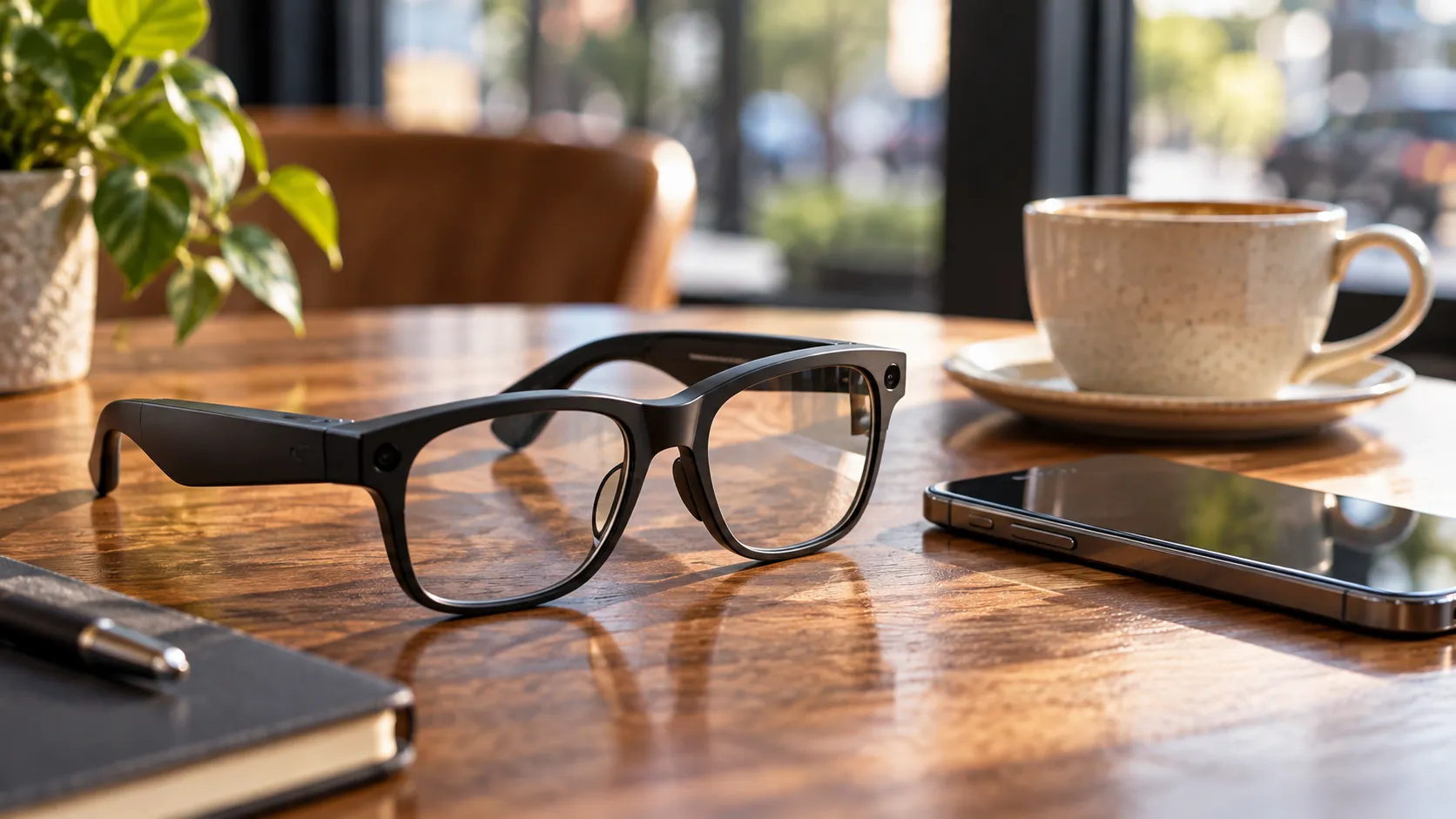
The decision to eliminate cameras and speakers isn't a limitation—it's strategic design thinking that reveals something important about how technology should actually serve human needs. When you look at what Meta packed into their Ray-Ban glasses, it's genuinely impressive: 12-megapixel cameras, speakers, five microphones, and 32GB of storage all crammed into frames that weigh just 5 grams more than regular Ray-Bans.
But here's what I've noticed from watching this space evolve—sometimes the "everything device" approach creates complexity that actually gets in the way of the core functionality users really need. Translation-focused glasses take a completely different philosophical approach that's proving remarkably effective.
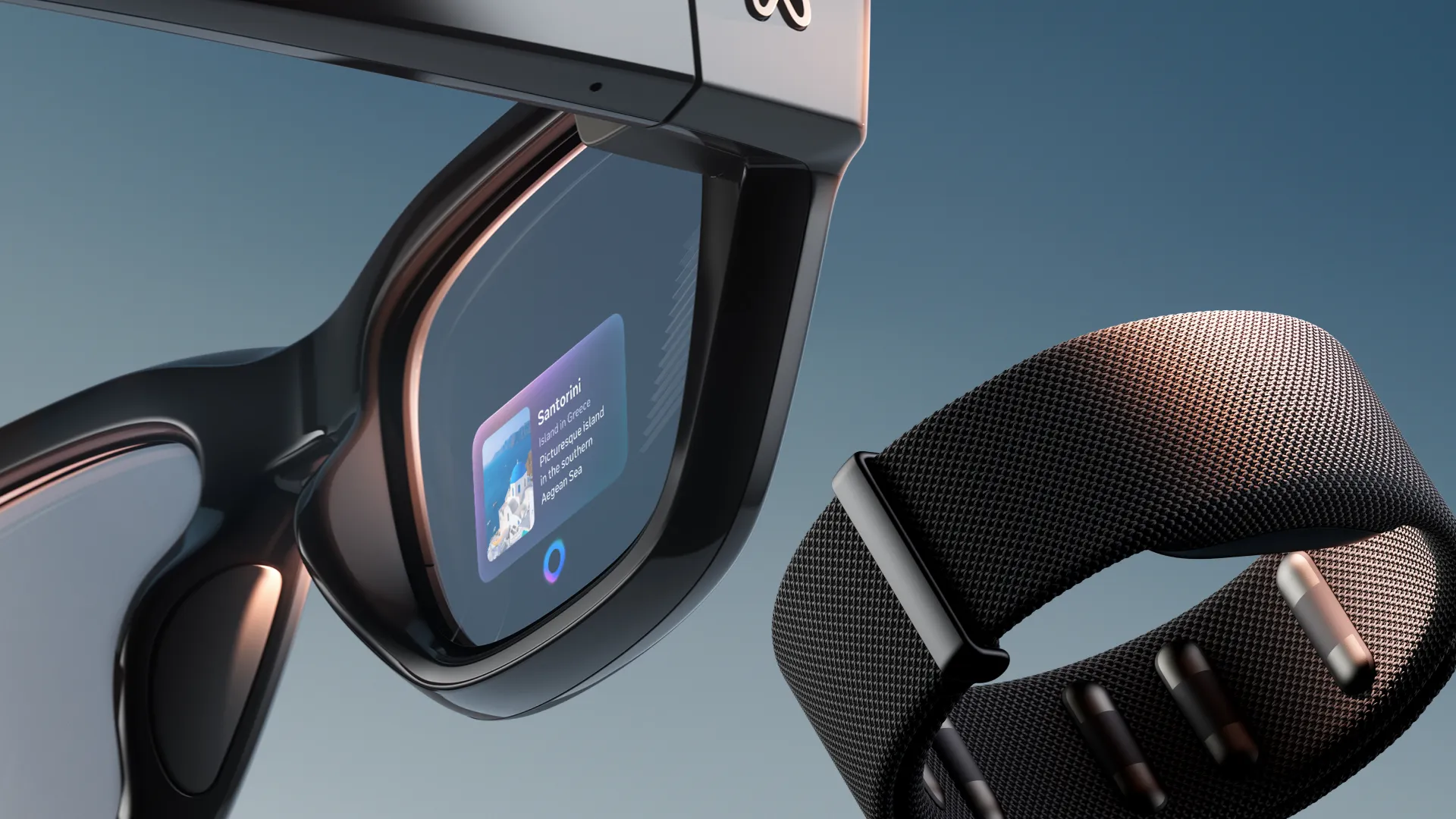
Live-captioning glasses use AR to project captions directly onto your lenses, essentially creating what amounts to a discreet captioning service integrated seamlessly into real life. Think about that for a moment—instead of fumbling with a phone app or trying to catch every word in a noisy restaurant, the translation just appears naturally in your field of vision. This approach fundamentally changes the social dynamics of multilingual conversations, reducing the cognitive burden that forces users to choose between following dialogue and managing technology. No longer do users need to rely entirely on body language and speechreading to fill communication gaps, according to research on AR captioning glasses.
The technical advantages become even more compelling when you examine resource allocation. Meta's live translation feature processes audio entirely on-device, which sounds great until you realize the engineering gymnastics required to make that work. Their system has to transcribe audio, translate it, convert it back to speech, and play it through speakers—all while optimizing models to fit within the glasses' memory constraints and avoid overheating.
By focusing exclusively on translation and captioning, these specialized devices can allocate their entire processing power, battery life, and thermal budget to perfecting this single, crucial function. This resource concentration allows for more sophisticated language models, better noise filtering, and enhanced accuracy—improvements that would be impossible when competing with camera processing and speaker output for system resources.
The engineering breakthrough behind seamless translation
Creating effective real-time translation in a glasses form factor is genuinely one of those problems that sounds simple until you try to solve it. Meta's engineering team provides a fascinating window into the complexity involved: their system transcribes audio into text, translates it, converts it back to speech, and plays it through speakers in near-real time.
What's remarkable is how they've managed to optimize this process for natural conversation flow. Engineering work has reduced end-to-end latency into the ~2–3 second range in recent research and product tests that transforms the experience from "technically impressive but awkward" to "actually useful in real conversations." That latency reduction represents the difference between disjointed exchanges and maintaining the natural rhythm that makes multilingual dialogue feel effortless.
Here's where caption-focused glasses demonstrate the power of specialized engineering. Companies like XanderGlasses have developed standalone smart glasses that operate independently without requiring a connected smartphone, which is impressive enough on its own. But what really reveals the specialization advantage is Xander's documentation lists built-in support for 26 languages and says Wi-Fi/cloud modes improve accuracy; exact percentage ranges are not independently verified.
These accuracy improvements stem from focused optimization—when you're not balancing camera processing and speaker output, you can dedicate more computational power to noise filtering, context analysis, and linguistic pattern recognition. The result is more reliable communication support precisely when users need it most.
The language support comparison reveals another specialization advantage. While Meta's Ray-Ban glasses support English, French, German, Italian, Portuguese, and Spanish, dedicated translation glasses like XanderGlasses provide 26 built-in languages and up to 140 languages with Wi-Fi access, complete with real-time translation between them. This expanded linguistic range opens these devices to global professional and accessibility markets that multipurpose glasses can't serve effectively.
Who benefits most from this focused approach
The primary beneficiaries of translation-focused glasses extend well beyond the typical tech early adopter crowd, and that's actually what makes this category so compelling. AR glasses offer new assistive communication support for select patients with hearing loss, representing a significant advancement in accessibility technology that could genuinely improve daily life for millions of people.
This accessibility application justifies the focused approach because these users need reliability and accuracy above everything else—no one cares about taking photos or checking notifications when they're trying to follow an important conversation with their doctor or participate in a business meeting. The stakes demand specialized performance rather than versatile mediocrity.
Professional applications reveal similar reliability requirements with broader market potential. Early testing of live translation technology showed that it helped people connect with family, navigate new places, and break down barriers at work and in communities. For healthcare workers in diverse communities, international business professionals, or educators working with multilingual students, communication accuracy directly impacts professional effectiveness and safety outcomes. Having instant, accurate translation without the distraction of cameras or entertainment features becomes a mission-critical tool rather than a convenient gadget.
The accessibility market demonstrates how specialized technology can create entirely new value propositions. Companies like TranscribeGlass have positioned their products as low-cost assistive technology for people with hearing loss, capable of delivering highly accurate captions even in noisy or crowded places. This capability addresses environments where traditional hearing aids struggle, expanding the potential user base beyond typical assistive device markets.
What's particularly sophisticated about this approach is the contextual intelligence these specialized devices can provide. TranscribeGlass systems can identify when different people are speaking by assigning each a number and can register a friend's voice for personalized captions. This speaker differentiation creates nuanced communication experiences that transform group conversations from confusing audio blends into structured, followable exchanges—something that would be impossible without dedicated processing power focused entirely on communication enhancement.
The competitive landscape is heating up
While Meta holds a majority share of the smart-glasses market, the translation-focused segment is attracting a fascinating array of competitors whose success could signal broader market maturation. Companies like XRAI Glass, founded with the mission to "break down communication barriers and promote communication between everyone," offer apps that work both with compatible smart glasses and standalone devices. This platform flexibility suggests these companies understand that accessibility markets require broader device compatibility than traditional consumer electronics.
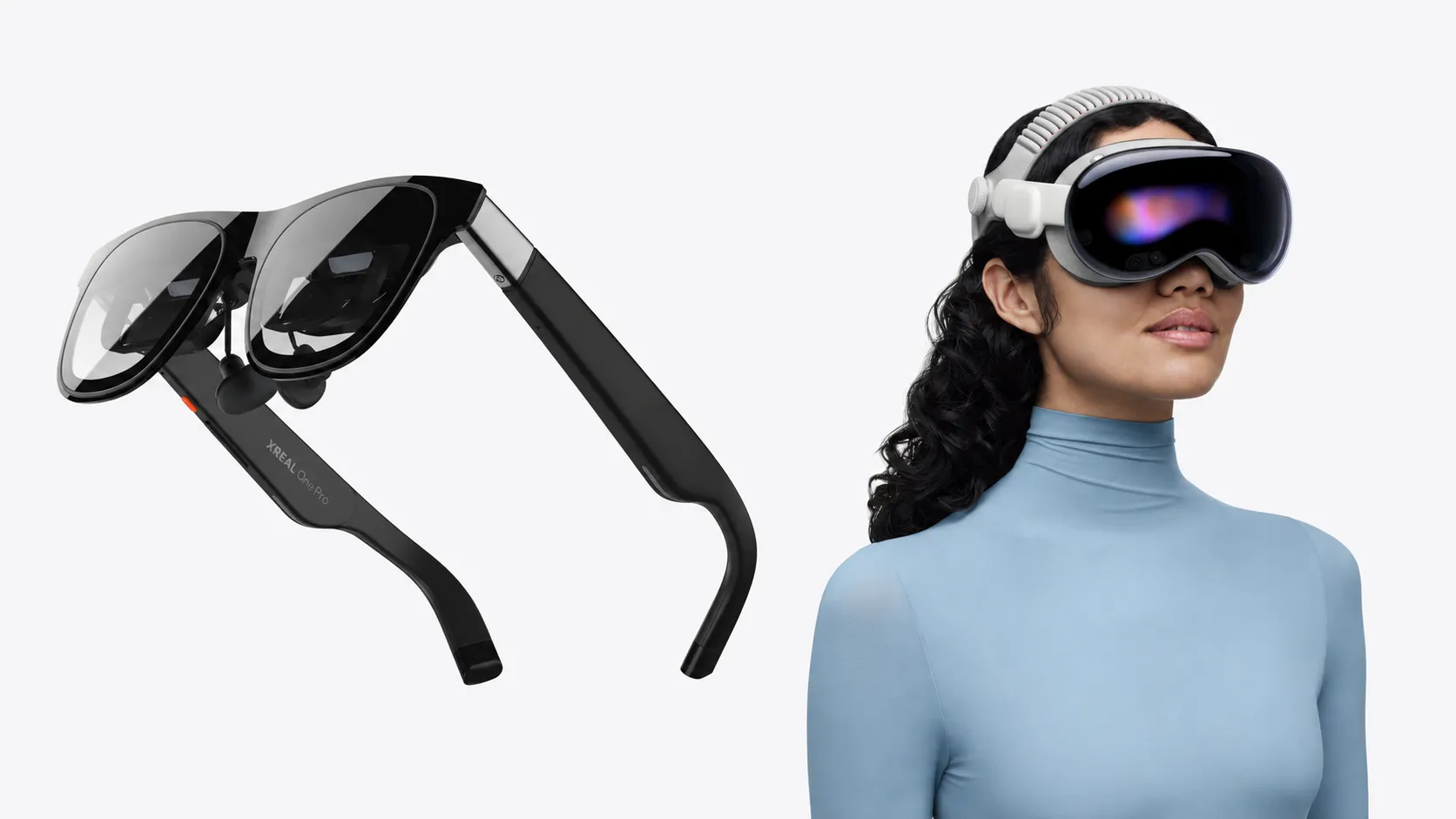
The hardware partnerships reveal industry dynamics that actually favor specialized applications over vertically integrated approaches. Many companies don't build the hardware themselves; instead, they adapt AR glasses from established manufacturers and layer on their own software for real-time speech-to-text. This collaborative model allows brands like Vuzix, XREAL, LLVISION, MICROOLED, and MYVU to offer lightweight, high-performance platforms that serve as foundations for accessibility-focused applications while enabling software specialists to focus entirely on perfecting their communication algorithms.
Innovation across this ecosystem reveals how specialization enables multiple successful approaches rather than winner-take-all competition. Hearsight's ENGO 2 smart glasses pair with their app to provide real-time subtitles for everyday conversations and offer up to 12 hours of battery life—that's the kind of all-day usability that makes these devices practical for professional environments where charging breaks aren't feasible.
Meanwhile, Captify glasses demonstrate how specialization can drive component innovation. They use dual-beamforming microphones to focus on the speaker and minimize background noise, recognizing that superior input quality enables better translation output. This focus on acoustic engineering would be difficult to justify in multipurpose devices but makes perfect sense when communication clarity is the primary value proposition.
What this means for the future of smart eyewear
The emergence of translation-focused smart glasses signals something broader and more significant than just another product category—it demonstrates how technology markets mature from "everything devices" toward specialized solutions that deliver superior experiences for specific high-value applications. This evolution parallels how smartphones initially tried to replace cameras, MP3 players, and GPS devices but eventually created space for specialized tools that serve professional and accessibility markets more effectively.
This specialization trend aligns with robust industry growth projections. Analysts forecast 18.7 million units of smart glasses by 2029, driven by advances in technology, consumer awareness, and new market entrants. What's particularly significant is that this growth is being driven by practical applications rather than flashy features—suggesting the market is maturing toward utility over novelty.
The implications extend beyond individual products to fundamental questions about human-computer interaction. Smart glasses may represent the best way to integrate generative AI into hardware, offering more natural and intuitive interfaces than traditional devices. Translation glasses demonstrate how AI can be deployed most effectively when it serves a clear, specific purpose rather than trying to replicate smartphone functionality in a different form factor. This focused approach allows AI to solve genuine human problems rather than just providing technological novelty.
Looking ahead, there's growing possibility that smart glasses could start taking market share from mobile phones, particularly in scenarios where hands-free operation provides clear advantages. Translation glasses represent an early example of this potential, offering capabilities that smartphones simply cannot match in terms of convenience and contextual integration—you can't maintain eye contact and natural conversation posture while looking at a phone screen for translations.
The technical infrastructure being developed for these specialized devices creates competitive advantages that extend beyond individual companies. Adding new languages requires bespoke model training and evaluation for each device, which means companies mastering this specialized approach are building linguistic databases and optimization techniques that become increasingly valuable as global communication needs expand.
The success of translation-focused glasses will likely influence broader smart glasses development by proving that specialized functionality can create more defensible market positions than feature proliferation. As the technology continues to mature and costs decrease, we might see these devices become as common as reading glasses in multilingual communities—not because they're the most advanced technology available, but because they solve real problems exceptionally well while remaining focused on their core mission of breaking down communication barriers.







Comments
Be the first, drop a comment!