


VITURE Beast XR Glasses Launch at 9 With Key Features Pending
The VITURE Beast XR glasses go on full sale today at $549, available through Amazon, Best Buy, and viture.com. Two specifications central to the device's premium positioning, 1200p/120Hz resolution and 6DoF spatial tracking, are not active at launch. VITURE's own product page confirms it. That gap is the story.
This is the first broad retail availability for a device that began taking pre-orders in July 2025 and shipped limited early units in December, according to Road to VR. Beast is a display extender, not a standalone AR headset. Connect it via USB-C to a phone, laptop, Steam Deck, or ROG Ally and it replaces your screen with a large virtual one. With an optional dock, it also supports PS5 and Xbox Series X|S, Digital Trends reported today. That framing matters for everything below.
What the VITURE Beast XR glasses ship with today
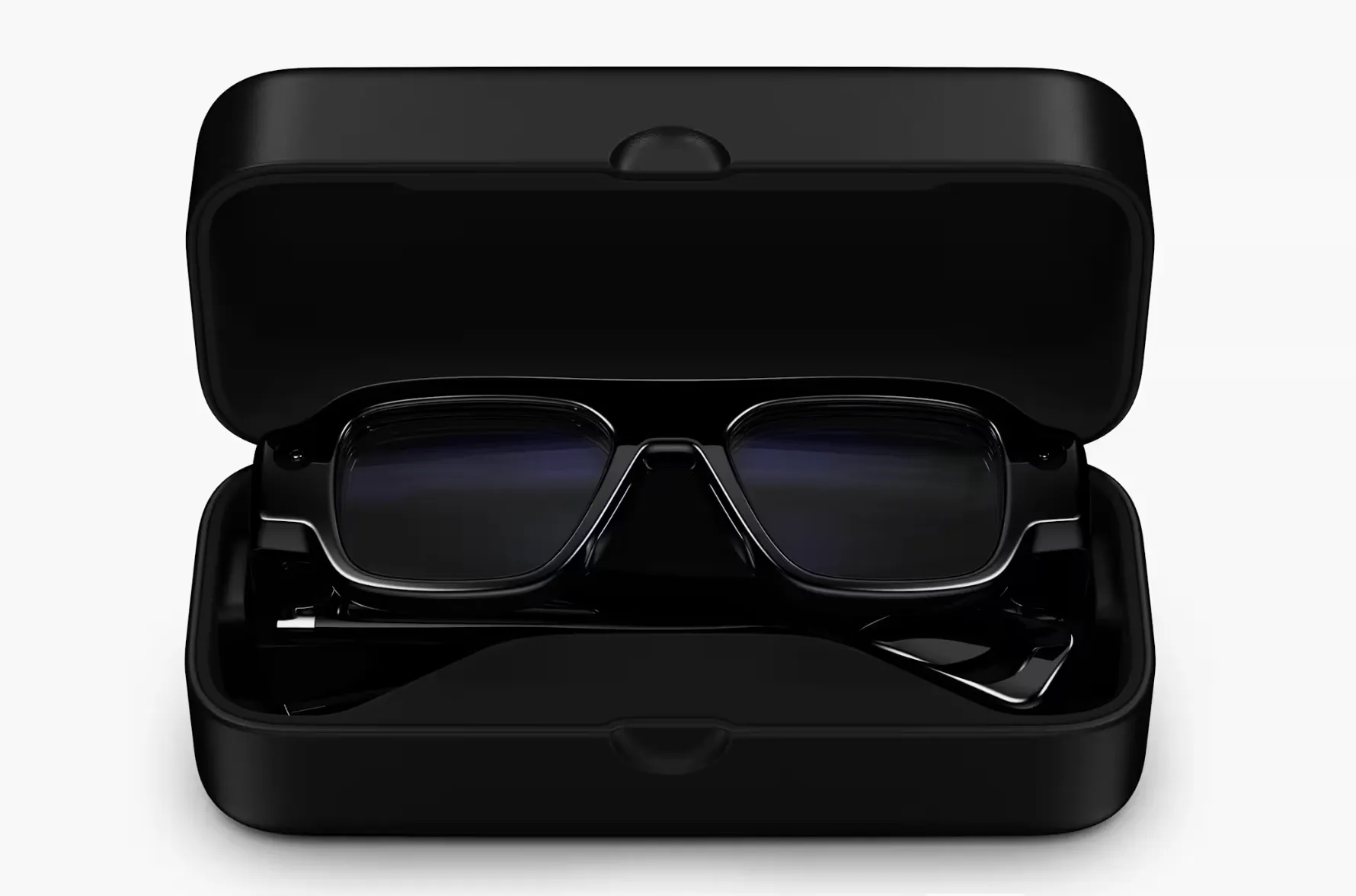
The hardware in the box is strong. Sony micro-OLED panels rated at 1,250 nits power a 174-inch virtual display estimated at 4 meters, with a 58-degree field of view, per Road to VR's comparison table. The article body at Road to VR uses 57 degrees in some places while the table shows 58; the discrepancy is minor, and VITURE and Digital Trends both cite 58 degrees. VITURE claims it offers one of the widest viewing experiences in consumer XR glasses, a position Digital Trends echoed today.
Built-in 3DoF head tracking, marketed under the VisionPair name, keeps the virtual screen anchored in space as you move rather than moving rigidly with your head. Nine-level electrochromic lens dimming lets you control immersion depth continuously, compared to three fixed levels on the Xreal 1S and none on the RayNeo Air 3s Pro. A full-metal aluminum-magnesium frame houses Harman-tuned audio, a built-in microphone, and a front-facing RGB camera. The glasses ship in two IPD-matched sizes, standard for 64.0±6.0mm and large for 68.0±6.0mm, and include a DCI-P3 107% color gamut, adjustable nose pads, and prescription lens support, per Road to VR and Digital Trends.
VITURE Beast field of view and specs that aren't ready yet
VITURE's own product page says 1200p resolution is "coming after launch to ensure full accessory compatibility," and that 3DoF spatial audio is also arriving post-launch, per viture.com. Those aren't fine-print footnotes; they're listed directly on the spec page.
Seven weeks ago, ZDNET's hands-on comparison found pre-launch units running at 1080p/60Hz, pending a firmware update. Whether today's retail units ship with the higher resolution mode already enabled has not been independently confirmed. Launch-day reviews will need to establish that.
The 6DoF tracking situation is even less defined. VITURE says the front RGB camera will be updated via software to enable 6DoF capabilities, Road to VR reported today, and ZDNET confirmed seven weeks ago that the feature remains pending future firmware. No timeline has been published. Until that update ships, Beast's spatial tracking is 3DoF only.
How Beast compares to the Xreal 1S and RayNeo Air 3s Pro
All comparison figures below come from Road to VR's published table unless otherwise noted. Two source conflicts are worth naming upfront.
Road to VR's table lists the Xreal 1S at $649 and 57 degrees FOV. ZDNET's hands-on review from seven weeks ago prices it at $449 and measured its FOV at 52 degrees. Both discrepancies remain unresolved in available sources; the figures below use Road to VR's numbers, which are the more recent publication. Similarly, Road to VR lists Beast at 88 grams while ZDNET measured it at 94 grams seven weeks ago; launch-day reviews should resolve that.
On the display metrics most associated with immersion, Beast leads across the board by Road to VR's figures: widest field of view at 58 degrees versus 57 degrees for the Xreal 1S and 46 degrees for the RayNeo Air 3s Pro, largest virtual screen at 174 inches versus 171 inches and 135 inches, and brightest panels at 1,250 nits versus 600 nits for the Xreal 1S and 1,200 nits for the RayNeo. Beast is also the only device of the three with a front camera and a stated software path to 6DoF tracking.
What the Xreal 1S offers unambiguously is a complete, working feature set on day one. Its dedicated X1 spatial computing chip handles 3DoF tracking at 3ms motion-to-photon latency, keeping the virtual screen locked in position even during fast head movements, ZDNET found seven weeks ago. ZDNET recommended the Xreal 1S for most buyers specifically because it ships with everything it advertises.
The RayNeo Air 3s Pro at $299 is the stripped-down option: 1080p, 46-degree FOV, 1,200-nit brightness, 120Hz refresh rate, no built-in tracking, no electrochromic dimming. The screen moves with your head. RayNeo's companion app attempts to add limited 3DoF tracking via a connected smartphone, but ZDNET found it unreliable in testing. At 76 grams, it's the lightest of the three. For buyers who want a portable display without firmware uncertainty, it delivers the basics for $250 less than Beast.
What today's launch actually settles
By specification, Beast arrives as the hardware leader in this category: widest field of view, brightest optics, most granular dimming control, and the only device with a stated upgrade path to 6DoF tracking, per Road to VR and Digital Trends.
What today doesn't settle is the question the $549 price point most needs to answer. The 1200p/120Hz performance and 6DoF tracking that separate Beast from its competition on paper are both pending firmware with no published timeline. Buyers paying the premium now are purchasing the device's ceiling, not its current state.
ZDNET recommended the Xreal 1S for most buyers seven weeks ago because it delivers everything it advertises on day one. Whether that calculus shifts depends on how quickly VITURE closes the gap. The first independent launch-day reviews measuring actual image quality and tracking stability under current firmware are the next thing worth reading.




Comments
Be the first, drop a comment!