


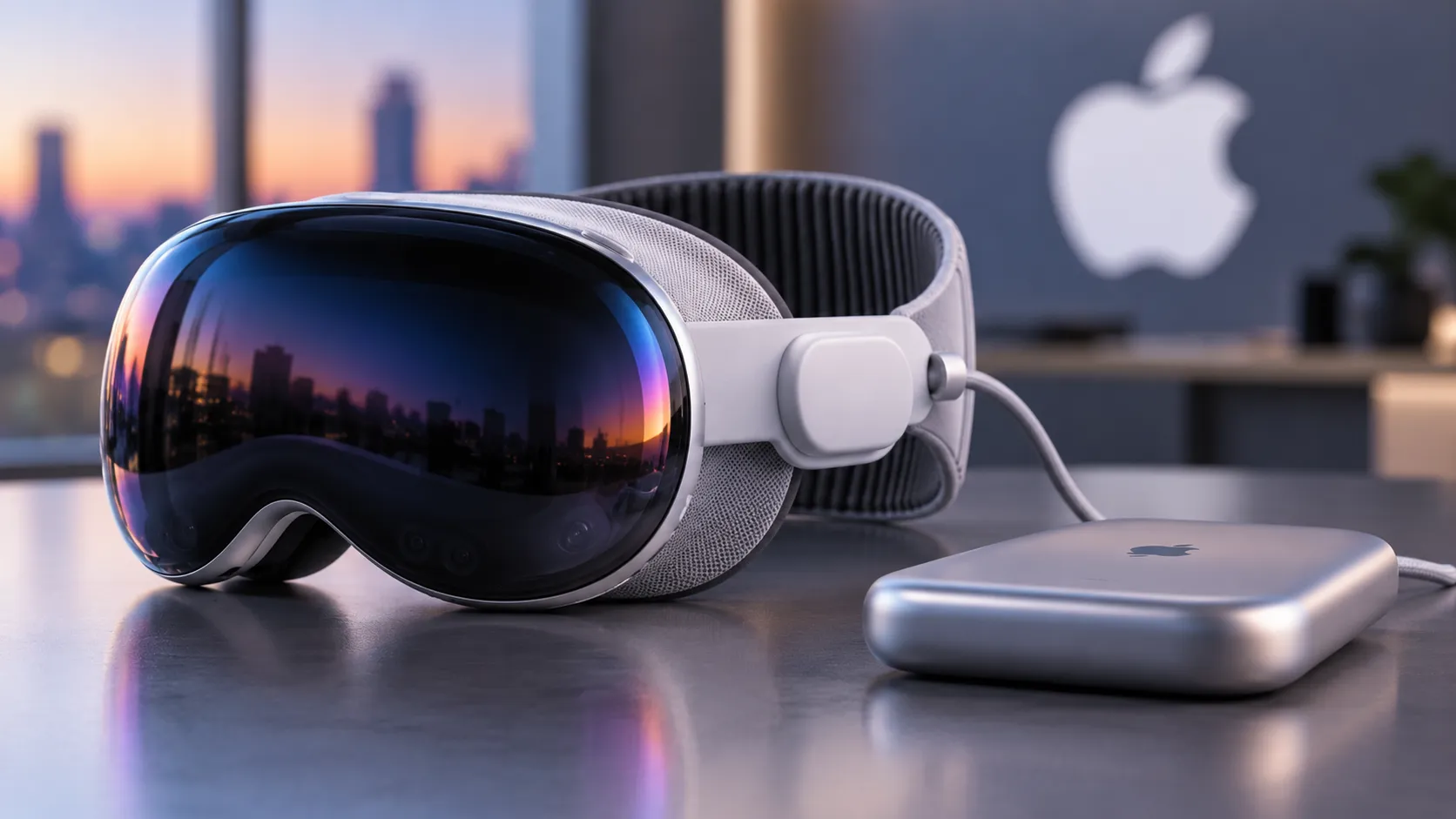
Flight simulation just took a massive leap forward, and honestly, it's about time. Apple's upcoming visionOS 26.4 update is bringing X-Plane 12 to Vision Pro, and this isn't your typical "let's port another app" situation. We're talking about the world's most advanced flight simulator finally getting the spatial computing treatment it deserves—complete with cloud streaming technology that eliminates the need for expensive local hardware and ARKit integration that blends physical controls with virtual cockpits.
What makes this particularly exciting is how it represents a fundamental shift in immersive simulation. The integration combines cutting-edge hardware, cloud streaming technology, and augmented reality to create what could be the most advanced flight experience available to consumers. For aviation enthusiasts who've been stuck with traditional monitor setups, and tech professionals watching the spatial computing space evolve, this feels like a genuine watershed moment.
The tech stack that makes it all possible
Let's dig into the engineering that's making this magic happen, because it's genuinely impressive stuff. Here's the thing—this approach elegantly solves one of VR gaming's biggest headaches: delivering ultra-realistic visuals without forcing users to own a $3,000 gaming rig.
The foveated streaming capability is where things get really clever. CloudXR delivers high-resolution visuals with minimal latency while keeping users' gaze data private. This tackles two issues that have historically made people hesitant about VR adoption—the performance bottlenecks that make you feel queasy, and those legitimate privacy concerns about devices tracking exactly where you're looking.
Apple's kept the setup process refreshingly simple, too. A companion app designed for visionOS will detect Apple Vision Pro devices automatically, making setup seamless. Users don't need advanced technical knowledge or cumbersome setups, making high-end simulation accessible to a broader audience. It's the kind of "it just works" approach that makes Apple... well, Apple.
PRO TIP: The cloud streaming approach means your Vision Pro can access graphics processing power that would cost tens of thousands of dollars in local hardware. Think of it as having a supercomputer in the cloud that streams perfectly to your headset—no local GPU required.
ARKit integration brings physical controls into the virtual cockpit
Here's where the experience moves from "pretty cool" to "genuinely revolutionary." The system leverages ARKit-based image detection to enable precise tracking of cockpit positions, merging physical and virtual elements for a truly lifelike simulation. Think about that for a moment—you can interact with actual physical flight controls while virtual instruments overlay seamlessly in your field of view.
ARKit-powered cockpit tracking ensures that virtual instruments respond naturally to the user's head and hand movements. This isn't just about gaming anymore. The implications for VR-enabled design, engineering applications, and professional training scenarios are genuinely exciting.
What's particularly impressive is how Vision Pro's spatial computing capabilities transform the entire interaction model. Users can interact naturally with cockpit controls, navigate realistic terrain, and enjoy visual fidelity far beyond traditional monitors. The result bridges that crucial gap between virtual training and real-world piloting skills in a way that traditional screen-based simulators simply can't match.
This seamless blending of physical and digital interactions enhances realism and could revolutionize not just flight simulation but also VR-enabled design and engineering applications. Instead of fumbling with virtual buttons or waving controllers around, you're actually manipulating controls that feel real because they are real.
Why this matters for professional training and gaming
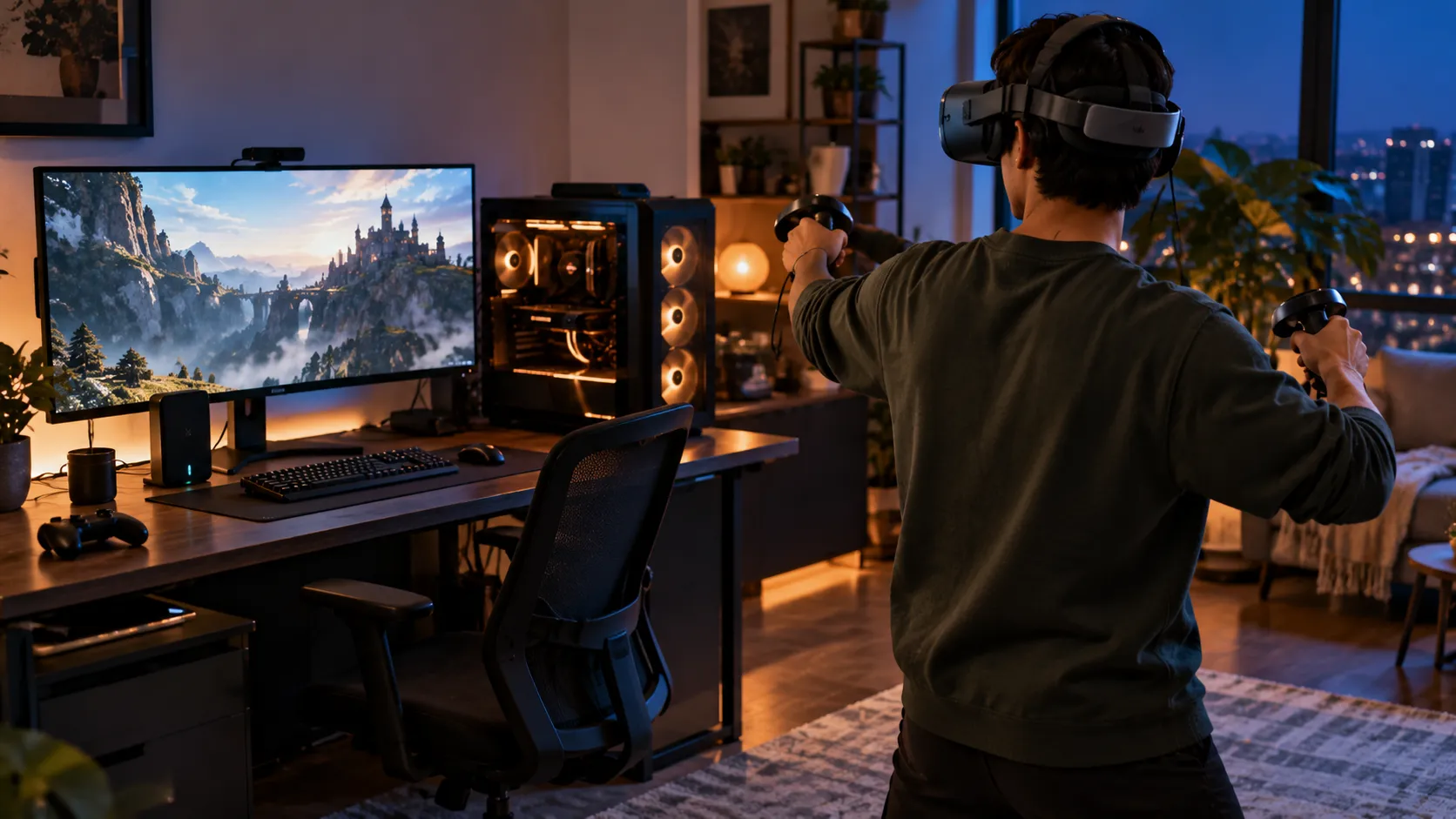
Let's talk about the real-world implications, because they're substantial. For pilot training, this technology could fundamentally reshape how both recreational and professional instruction happens. Unlike traditional flight simulators on screens, Vision Pro allows full 3D immersion, creating a more intuitive sense of depth, scale, and movement.
For professional pilots, the ability to simulate flights in a visually accurate and interactive environment could reduce costs and increase training efficiency, bridging the gap between virtual and real-world skills. When you consider the hourly rates for actual aircraft time or access to professional simulators, this could make high-quality flight training accessible to a much broader audience.
The gaming industry should definitely be paying attention here. For the gaming industry, Vision Pro with X-Plane 12 elevates immersive gameplay standards, setting a benchmark for how spatial computing and cloud streaming can merge. Game developers now have a proven blueprint for porting complex simulators to VR platforms without compromising on quality or forcing users to upgrade their hardware.
The spatial awareness and muscle memory developed in this kind of immersive environment translate more directly to actual cockpit experience than traditional flat-screen simulation. This will likely influence how both recreational and professional flight training is conducted in the future, potentially creating new standards for immersive training experiences across multiple industries.
PRO TIP: Flight schools could replace expensive physical simulators with Vision Pro setups, dramatically reducing per-student training costs while actually improving the learning experience through true 3D spatial awareness.
What this signals for the future of spatial computing
This launch represents something bigger than just one impressive app coming to Vision Pro. It's essentially a proof of concept for an entirely new category of immersive applications. The infrastructure hints at a future where other immersive training and entertainment applications could flourish. Racing simulators, architectural walkthroughs, and space exploration simulations could all benefit from this platform.
With Apple's user-friendly ecosystem, visionOS 26.4 makes immersive simulation accessible beyond hardcore enthusiasts. The potential for companion apps in the App Store could democratize high-end simulation, expanding the market for immersive experiences across both gaming and professional training sectors.
For developers, this creates a fascinating new business model. By leveraging cloud streaming and Vision Pro's hardware, developers can deliver high-quality experiences without requiring consumers to invest in high-end PCs, potentially increasing revenue streams and audience reach.
The competitive implications are substantial, too. By the end of 2026, Vision Pro could become a central hub for high-fidelity VR simulations, influencing competitors like Meta and HTC to enhance their own spatial computing ecosystems. Apple's move signals a commitment to future-proof immersive technology, positioning Vision Pro as a legitimate contender in both consumer and professional markets.
What's exciting from a technology development perspective is how this validates the entire approach. The technical challenges of delivering professional-grade simulation through spatial computing have been systematically addressed—latency through cloud streaming, interaction through ARKit integration, and usability through Apple's ecosystem polish. This creates a template that other developers can build on.
The takeoff point for immersive experiences
X-Plane 12 coming to Vision Pro isn't just about bringing flight simulation to a new platform—it's about demonstrating what becomes possible when cutting-edge hardware meets thoughtful software integration. The combination provides both enthusiasts and professional pilots a next-level training and gaming environment, making each flight feel tangible and intensely realistic.
What excites me most is the roadmap this creates for developers. The technical barriers that previously made high-end VR simulation prohibitively complex have been systematically addressed—cloud streaming handles the processing power, ARKit manages the spatial tracking, and Apple's ecosystem takes care of the user experience complexity. The result is a framework that makes previously impossible experiences not just feasible, but accessible.
Apple Vision Pro, paired with X-Plane 12, will redefine immersive flight simulation, attracting both gamers and professionals. We predict a rise in cloud-based VR gaming adoption, more flight simulators migrating to visionOS, and the expansion of immersive applications into training and entertainment industries.
As hardware and cloud infrastructure evolve, experiences like X-Plane 12 will only get richer, smoother, and more interactive, cementing Vision Pro as a serious contender in both consumer and professional markets. We're witnessing the early stages of a transformation that could redefine how we think about simulation, training, and immersive entertainment across multiple industries.
From what I can tell, this is just the beginning. Apple's move signals a commitment to making spatial computing genuinely useful rather than just impressive, and X-Plane 12 proves that professional-grade applications can thrive in this new paradigm. For anyone interested in the future of immersive technology—whether you're a pilot, developer, or just someone fascinated by the intersection of hardware and software innovation—this feels like a genuinely significant moment.



Comments
Be the first, drop a comment!